


Most people think chewing is just about breaking down food. In reality, the simple act of chewing orchestrates a complex biological response that protects your teeth, strengthens your jaw, and prevents disease. Your mouth operates as a sophisticated chemical and mechanical system where every chew triggers protective mechanisms most dental patients never consider. Understanding how mouth chemistry affects teeth reveals why chewing deserves far more attention in your oral wellness routine. This guide explores the surprising ways chewing safeguards your dental health and provides practical strategies to optimize this overlooked daily activity.
Table of Contents
- Key takeaways
- How chewing stimulates saliva and protects your teeth
- Chewing’s role in strengthening jaw muscles and maintaining bone health
- The impact of chewing habits on preventing dental diseases
- Best practical tips to optimize chewing for oral wellness
- Discover Scandi Gum: innovative chewing solutions for better oral health
- Frequently asked questions
Key Takeaways
| Point | Details |
|---|---|
| Chewing activates saliva | Chewing signals the salivary glands to increase flow, delivering minerals and enzymes that begin enamel repair and protect teeth from acid attacks. |
| Saliva protects enamel | Increased saliva buffers pH, washes away food particles, and promotes remineralization to keep enamel strong. |
| Sugar free gum boosts saliva | Chewing sugar free gum after meals can raise saliva production by up to ten times baseline, extending protection when brushing is not possible. |
| Jaw muscle strengthening | Regular chewing provides mechanical loading that maintains the tone of jaw muscles and supports bite stability and TMJ health. |
| Hydration and timing matter | Age and dehydration reduce saliva production, making deliberate chewing and postmeal timing crucial for acid neutralization. |
How chewing stimulates saliva and protects your teeth
Every time you chew, your salivary glands receive mechanical signals to increase fluid production. This isn’t random. Your body recognizes chewing as preparation for digestion and floods your mouth with saliva to begin the process. What most people miss is that saliva serves as your teeth’s primary defense system.
Saliva performs multiple protective functions simultaneously. It washes away food particles that would otherwise feed harmful bacteria. It delivers calcium and phosphate ions directly to tooth enamel, enabling a process called remineralization where your teeth literally repair themselves. When oral pH drops below 5.5, your enamel begins losing minerals. Chewing triggers increased saliva flow which helps neutralize harmful acids and strengthen enamel, shifting your mouth from a state of decay to active repair.
The buffering capacity of saliva is remarkable. After eating acidic foods or sugary snacks, your mouth becomes a hostile environment for enamel. Saliva contains bicarbonate ions that neutralize these acids within minutes, preventing the prolonged exposure that causes cavities. Without adequate saliva flow, your teeth remain vulnerable to acid erosion for extended periods.
Consider these critical saliva functions:
- Maintains optimal pH balance between 6.5 and 7.5
- Delivers antimicrobial proteins that limit bacterial colonization
- Provides enzymes that begin breaking down starches before swallowing
- Lubricates oral tissues to prevent irritation and injury
- Carries minerals essential for enamel strength and repair
Pro Tip: Chewing sugar-free gum for 20 minutes after meals can increase saliva production by up to 10 times baseline levels, providing extended protection when you can’t brush immediately.
Age and hydration status dramatically affect saliva production. Adults over 50 often experience reduced salivary flow, making deliberate chewing even more important for maintaining oral health. Dehydration compounds this problem. When you’re not drinking enough water, your salivary glands can’t produce adequate protective fluid no matter how much you chew.
The timing of chewing matters too. Stimulating saliva flow immediately after eating provides maximum benefit because it neutralizes acids during their most damaging phase. This is why how mouth chemistry affects teeth emphasizes the importance of understanding your mouth’s chemical cycles throughout the day.
Chewing’s role in strengthening jaw muscles and maintaining bone health
Your jaw functions like any other muscular system in your body. Use it regularly with adequate resistance, and it grows stronger. Neglect it, and it atrophies. Chewing provides the mechanical loading necessary to maintain muscle tone in the masseter, temporalis, and pterygoid muscles that control jaw movement.

These muscles do more than move your jaw. They stabilize your bite, support proper tooth alignment, and protect the temporomandibular joint from dysfunction. Weak jaw muscles contribute to TMJ disorders, difficulty chewing, and even changes in facial structure over time. Regular chewing contributes to jaw muscle strength and stimulates bone maintenance, reducing risks of bone loss and TMJ issues.
The bone health connection is equally important. Your jawbone, like all bones, responds to mechanical stress through a process called Wolff’s Law. When you apply force to bone through chewing, it triggers cellular activity that builds new bone tissue. Without regular loading, bone density decreases. This is why people who eat primarily soft, processed foods often develop weaker jawbones over time.
Chewing forces travel through your teeth into the surrounding alveolar bone, the specialized bone that holds teeth in place. Each chew creates micro-deformations that signal bone cells to strengthen the structure. This constant remodeling keeps your jaw robust and your teeth securely anchored.
| Food Type | Chewing Force Required | Jaw Muscle Activation | Bone Stimulation |
|---|---|---|---|
| Raw vegetables | High | 85-95% | Excellent |
| Whole grains | Moderate to high | 70-85% | Good |
| Cooked meats | Moderate | 60-75% | Moderate |
| Soft breads | Low | 30-45% | Minimal |
| Processed foods | Very low | 15-30% | Poor |
The difference between chewing fibrous whole foods and soft processed foods is substantial. Raw carrots, apples, and celery require significant force and repetition to break down. This extended chewing time provides sustained muscle engagement and bone loading. Soft foods like white bread or mashed potatoes require minimal effort, providing almost no training stimulus for your jaw.
Pro Tip: Incorporate at least one meal daily that requires extended chewing. Raw salads, nuts, and fibrous vegetables provide the resistance your jaw needs to maintain strength and bone density.
People who lose teeth and don’t replace them experience accelerated bone loss in the jaw. Without the mechanical stimulation from chewing, the bone literally disappears. This is why dentistry tips for gum enthusiasts emphasize maintaining full dental function through proper care and tooth replacement when necessary.
The muscles and bones of your jaw form an integrated system. Strong muscles generate the forces needed to stimulate bone growth. Dense, healthy bone provides stable attachment points for those muscles. Regular, vigorous chewing maintains both components of this critical system.
The impact of chewing habits on preventing dental diseases
Your chewing patterns directly influence your risk of developing cavities, gum disease, and other oral health problems. Thorough chewing mechanically dislodges food particles from tooth surfaces and between teeth, reducing the substrate available for bacterial growth. This physical cleaning action complements brushing and flossing.
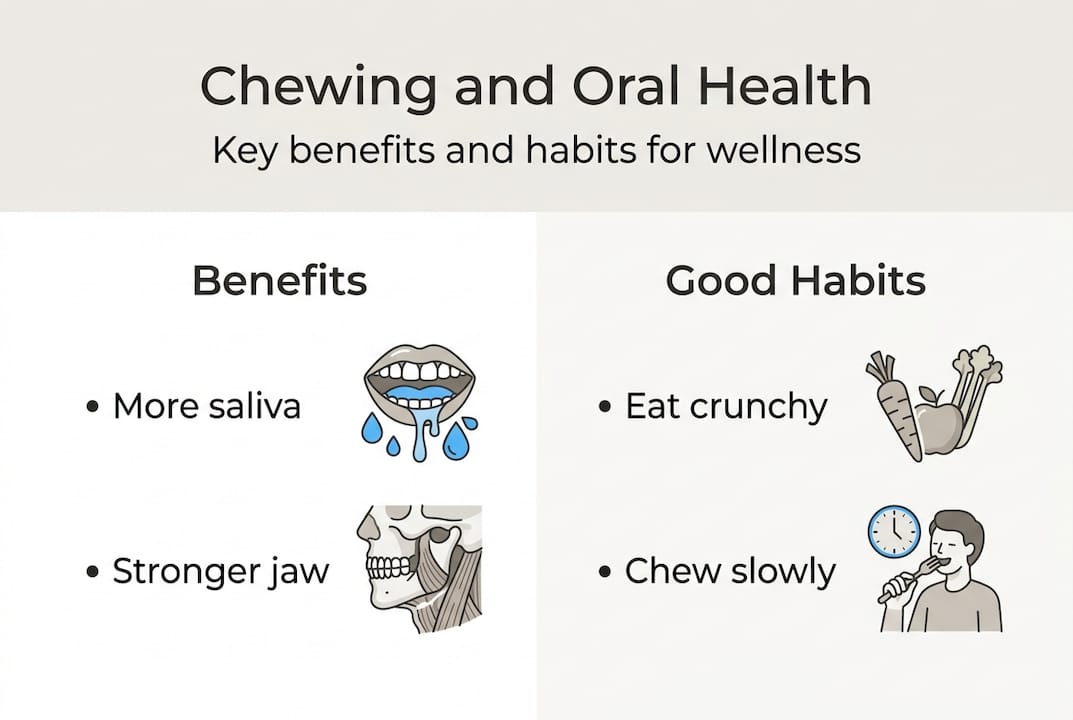
When you chew properly, you create an environment hostile to the bacteria that cause dental disease. The increased saliva flow we discussed earlier doesn’t just neutralize acids. It also contains antimicrobial compounds like lysozyme, lactoferrin, and immunoglobulin A that actively limit bacterial colonization. Proper chewing habits, including chewing sugar-free gum, can support gum health and reduce plaque.
Plaque formation follows a predictable pattern. Bacteria colonize tooth surfaces, forming a sticky biofilm that protects them from saliva’s antimicrobial effects. As plaque matures, it produces acids that demineralize enamel and toxins that inflame gum tissue. Anything that disrupts this biofilm formation reduces disease risk.
Chewing sugar-free gum plays a unique role here. It provides the mechanical stimulation and saliva production benefits without introducing the sugars that feed harmful bacteria. Studies show that chewing sugar-free gum for 20 minutes after meals can reduce plaque acid production by up to 70%.
| Chewing Habit | Plaque Formation | Cavity Risk | Gum Disease Risk | Enamel Erosion |
|---|---|---|---|---|
| Thorough chewing of whole foods | Low | Low | Low | Minimal |
| Quick chewing, whole foods | Moderate | Moderate | Moderate | Low |
| Thorough chewing, processed foods | Moderate to high | Moderate to high | Moderate | Moderate |
| Minimal chewing, soft foods | High | High | High | High |
| Sugar-free gum after meals | Very low | Very low | Very low | Minimal |
Improving your chewing habits requires deliberate practice:
- Chew each bite 20 to 30 times before swallowing to ensure thorough breakdown and maximum saliva production.
- Alternate chewing sides to distribute forces evenly across both sides of your jaw and prevent asymmetric wear.
- Choose whole, fibrous foods that require extended chewing rather than soft, processed options.
- Use sugar-free gum for 15 to 20 minutes after meals when brushing isn’t immediately possible.
- Stay hydrated throughout the day to support optimal saliva production during and between meals.
- Schedule regular dental checkups to identify and address problems before they become serious.
The connection between inadequate chewing and gum disease deserves special attention. When you don’t chew thoroughly, food particles remain trapped along the gumline. Bacteria feed on these particles, producing toxins that trigger inflammation. Over time, this chronic inflammation destroys the connective tissue and bone supporting your teeth, leading to periodontitis.
Gum enthusiast dentistry tips emphasize that maintaining healthy gums requires both mechanical cleaning and chemical balance. Chewing provides both. The mechanical action removes debris while the saliva delivers protective compounds directly to gum tissue.
People who chew gum regularly show measurably lower rates of dental caries compared to non-chewers, provided the gum is sugar-free. The key is consistency. Occasional gum chewing provides temporary benefits. Daily use after meals creates sustained protective effects.
Best practical tips to optimize chewing for oral wellness
Translating knowledge into action requires specific, practical strategies you can implement immediately. Your food choices form the foundation. Prioritize foods that demand extended chewing: raw vegetables, whole fruits with skin, nuts, seeds, and whole grains. These foods provide the resistance and duration needed to maximize saliva production and jaw exercise.
Mindful chewing transforms eating from a rushed necessity into a health practice. Slow down. Put your fork down between bites. Focus on thoroughly breaking down each mouthful before swallowing. This approach not only benefits your oral health but also improves digestion and helps with weight management by allowing satiety signals to reach your brain.
Pro Tip: Set a timer for 20 minutes at meals and don’t finish before it goes off. This forces you to slow down and chew more thoroughly, dramatically increasing the oral health benefits of eating.
Limit consumption of ultra-processed foods that require minimal chewing. White bread, pastries, chips, and similar products break down almost instantly in your mouth. They provide no training stimulus for your jaw and often stick to teeth, feeding harmful bacteria. When you do eat these foods, follow them immediately with sugar-free gum to stimulate protective saliva flow.
Sugar-free gum deserves a permanent place in your oral wellness toolkit. Keep it in your car, desk, and bag. Use it after every meal and snack when brushing isn’t practical. Innovative dental solutions like sugar-free chewing gum aid in enhancing oral health when combined with proper chewing practices. The 15 to 20 minutes immediately after eating represent a critical window when your mouth is most acidic and vulnerable.
Consider these daily implementation strategies:
- Start breakfast with raw fruit or vegetables before moving to other foods
- Pack crunchy snacks like carrots, celery, and apples for mid-day eating
- Choose whole grain bread and pasta over refined white versions
- Add nuts to salads and yogurt for extra chewing resistance
- Keep sugar-free gum accessible in multiple locations for post-meal use
- Drink water throughout the day to support saliva production
- Schedule annual dental cleanings to complement your improved chewing habits
The texture variety in your diet matters. Eating only soft foods weakens your jaw over time. Eating only hard foods can cause excessive tooth wear. Balance is key. Include a range of textures across meals and throughout the week to provide adequate stimulation without causing damage.
Hydration amplifies every benefit we’ve discussed. Water supports saliva production, helps wash away food particles, and maintains the fluid balance necessary for optimal oral function. Aim for eight glasses daily, more if you’re active or live in a dry climate.
Regular dental checkups complement these habits by catching problems early and providing professional cleaning that removes hardened plaque your chewing and brushing can’t address. Think of dental health gum tips as part of a comprehensive approach that includes both daily habits and professional care.
Your oral health reflects your daily choices. Small changes in chewing habits compound over months and years into significantly better outcomes. Start with one or two strategies from this list and build from there.
Discover Scandi Gum: innovative chewing solutions for better oral health
Understanding how chewing protects your oral health is one thing. Having the right tools to maximize those benefits is another. Scandi Gum represents a scientifically designed approach to functional chewing that goes beyond traditional gum.

While conventional gum focuses on flavor and freshness, Scandi Gum leverages the biological mechanisms we’ve explored throughout this guide. Each piece is formulated to stimulate optimal saliva production, deliver mineralizing agents directly to tooth enamel, and support the chemical balance your mouth needs to resist decay. The sugar-free formula ensures you get all the protective benefits without feeding the bacteria that cause cavities and gum disease. Explore Scandi Gum products to discover how functional chewing can elevate your daily oral wellness routine.
Frequently asked questions
What is the role of saliva in oral health?
Saliva neutralizes acids, washes away food particles, and helps repair tooth enamel. It maintains optimal pH balance in your mouth, preventing the acidic conditions that lead to decay. Saliva also contains antimicrobial proteins that limit bacterial growth and minerals that strengthen teeth through remineralization. Without adequate saliva flow, your risk of cavities, gum disease, and enamel erosion increases dramatically.
Can chewing sugar-free gum improve oral health?
Yes, significantly. Sugar-free gum stimulates saliva production and helps reduce plaque and gum disease risks. Chewing for 15 to 20 minutes after meals provides extended protection during the critical period when your mouth is most acidic. The mechanical action also helps dislodge food particles from teeth. Sugar-free gum offers all the benefits of chewing without introducing the sugars that feed harmful bacteria.
How does chewing affect jawbone strength?
Chewing provides mechanical stimulation that promotes jawbone density and muscle maintenance. Each chew creates forces that travel through teeth into surrounding bone, triggering cellular activity that builds new bone tissue. This process, governed by Wolff’s Law, keeps your jaw robust and your teeth securely anchored. Without regular chewing forces, jawbone density decreases over time, potentially leading to tooth loss and facial structure changes.
What foods provide the best chewing benefits?
Raw vegetables like carrots and celery, whole fruits with skin, nuts, seeds, and whole grains require extended chewing and provide optimal jaw exercise. These fibrous foods demand significant force and repetition to break down, stimulating both muscle development and bone maintenance. They also promote maximum saliva production due to the extended chewing time required. Contrast this with soft, processed foods that require minimal effort and provide almost no training stimulus for your jaw.
How many times should I chew each bite?
Aim for 20 to 30 chews per bite to ensure thorough breakdown and maximum saliva production. This might feel excessive at first, but it allows your saliva to begin digesting starches, neutralizing acids, and delivering protective compounds to your teeth and gums. Slowing down also helps you recognize satiety signals, potentially preventing overeating. The exact number matters less than ensuring each bite is completely broken down before swallowing.
Does chewing help prevent gum disease?
Absolutely. Thorough chewing mechanically removes food particles from along the gumline, reducing the substrate bacteria need to colonize and produce inflammatory toxins. The increased saliva flow delivers antimicrobial compounds directly to gum tissue, limiting bacterial growth. Regular chewing also maintains healthy blood flow to gums through the mechanical stimulation of surrounding tissues. Combined with proper brushing and flossing, good chewing habits significantly reduce gum disease risk.