

TL;DR:
- Enamel sensitivity and white spots signal enamel demineralization, which can be reversed with proper daily care. Using fluoride or nano-hydroxyapatite toothpaste, maintaining good hydration, and employing techniques like spitting after brushing enhance remineralization. Consistency in oral habits and diet, along with professional support, are essential for visibly improving tooth health over weeks to months.
Enamel sensitivity, white spots, and that uncomfortable feeling when cold water hits your teeth are not random. They are signs that your enamel is losing the mineral battle happening inside your mouth right now. The good news is that your teeth are not static objects. Learning how to remineralize teeth means understanding a biological process your body is already running, and giving it the right conditions to work faster and more effectively. This guide covers the science, the daily steps, and the most common mistakes people make when trying to repair enamel naturally.
Table of Contents
- Key Takeaways
- How to remineralize teeth: what you need before you start
- Your daily routine for maximum remineralization
- Common mistakes that slow down enamel repair
- What results look like and when to expect them
- My take on remineralization: what actually makes the difference
- How Scandigum supports your remineralization routine
- FAQ
Key Takeaways
| Point | Details |
|---|---|
| Start with the right products | Fluoride or nano-hydroxyapatite toothpaste, combined with xylitol, forms the foundation of effective remineralization. |
| Spit, don’t rinse | Leaving toothpaste residue on teeth after brushing reduces cavity incidence significantly more than standard brushing alone. |
| Timing matters | Wait 30 to 60 minutes after acidic foods before brushing to avoid abrading softened enamel. |
| Visible results take time | White spot lesions typically show improvement within 6 to 12 weeks of a consistent protocol. |
| Saliva is your repair fluid | Stimulating saliva flow through hydration, xylitol gum, and crunchy foods directly fuels enamel mineral redeposition. |
How to remineralize teeth: what you need before you start
Before you change a single habit, you need the right tools and a basic understanding of what you are working with. Enamel remineralization is a chemistry problem. Your enamel is made of hydroxyapatite crystals, and those crystals dissolve when your oral pH drops below 5.5 and rebuild when pH returns to neutral or alkaline. Everything you use and eat either helps or hinders that pH shift.
Products worth having
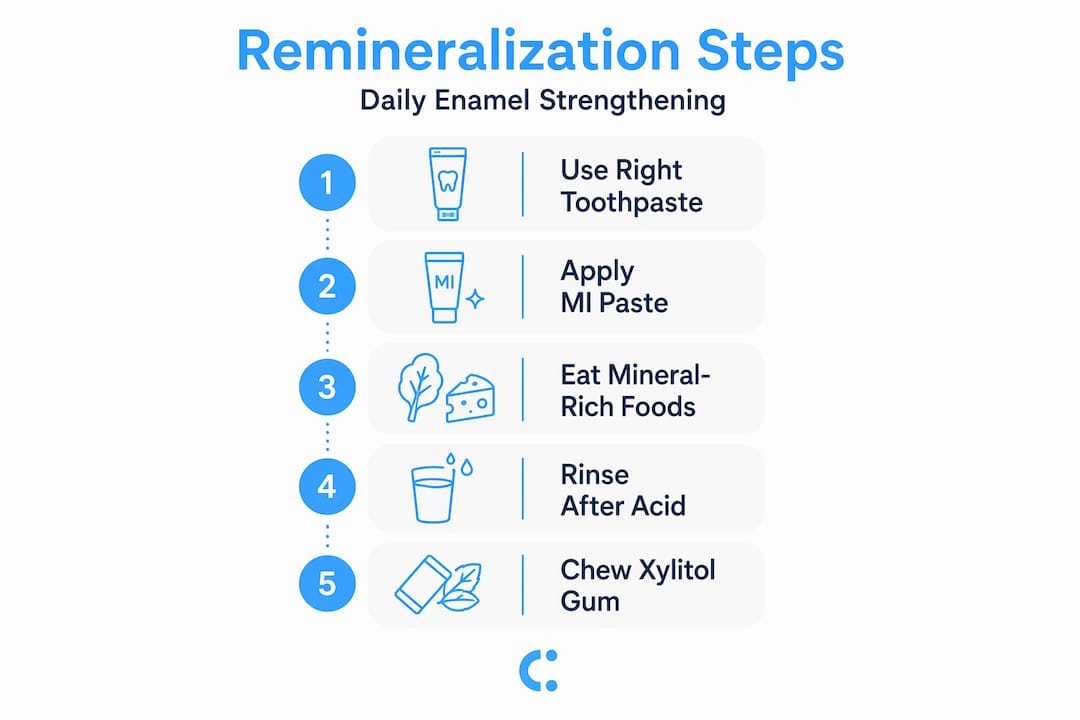
The two most clinically supported topical agents for remineralization are fluoride and nano-hydroxyapatite (nHAp). Fluoride works by incorporating fluorapatite into enamel, making it more acid-resistant. nHAp is a fluoride-free alternative that mimics the natural mineral structure of enamel and has shown real results in repairing white spot lesions. If you prefer to avoid fluoride, nHAp is not a compromise. It is a legitimate option backed by clinical research.
Beyond toothpaste, remineralizing pastes like MI Paste (CPP-ACP) applied after brushing deliver bioavailable calcium and phosphate directly to tooth surfaces, giving your enamel the raw materials it needs to rebuild. Think of it as a concentrated mineral deposit applied right where repair happens.
Here is a summary of the core tools and their functions:
| Tool | Role in remineralization |
|---|---|
| Fluoride toothpaste | Strengthens enamel structure, increases acid resistance |
| Nano-hydroxyapatite toothpaste | Fills enamel micro-defects, fluoride-free alternative |
| MI Paste (CPP-ACP) | Delivers calcium and phosphate directly to enamel surface |
| Xylitol products | Reduces cavity-causing bacteria, stimulates saliva flow |
| Vitamin D3 and K2 supplements | Supports calcium absorption and directs it into teeth and bone |
Diet as the foundation
Your enamel is rebuilt from calcium, phosphate, and supporting vitamins. A diet low in these minerals makes remineralization nearly impossible regardless of what toothpaste you use. Dairy products, leafy greens, nuts, and fatty fish all contribute to the mineral supply your saliva carries. Vitamin D3 regulates how much calcium your gut absorbs. Vitamin K2 directs calcium into bones and teeth rather than soft tissue. These two work as a pair and are commonly underestimated in any tooth remineralization guide.

Pro Tip: Saliva is your mouth’s built-in remineralization fluid. Dry mouth is one of the most underappreciated obstacles to enamel repair. Staying hydrated throughout the day, not just at meals, keeps mineral delivery consistent.
Your daily routine for maximum remineralization
Knowing what to do is only half the equation. When and how you do it determines whether your enamel is rebuilding or eroding day after day. Here is a practical, evidence-based daily protocol you can start tonight.
-
Morning: brush with fluoride or nHAp toothpaste. Use a soft-bristled brush and gentle circular motions for two full minutes. When done, spit out the toothpaste but do not rinse with water. This single habit extends fluoride contact from seconds to hours. Research shows spitting without rinsing reduces cavity incidence by approximately 25% beyond standard brushing. That is a significant return for zero additional effort.
-
Morning: apply MI Paste if using it. After brushing, apply a thin layer of MI Paste to your teeth and let it sit for a few minutes before your first meal. This deposits calcium and phosphate directly onto the enamel surface while your mouth is still clean.
-
After meals: wait before brushing. This is where most people unknowingly damage their enamel. Brushing after acidic foods risks serious abrasion because acid temporarily softens the enamel surface. Wait 30 to 60 minutes and let saliva do its neutralizing work first.
-
Throughout the day: chew xylitol gum after meals. Xylitol reduces the population of Streptococcus mutans, the primary acid-producing bacteria in your mouth. It also stimulates saliva flow, which carries calcium and phosphate back to your enamel. Using xylitol-containing products at 6 to 10 grams daily across multiple sessions produces measurable cavity reduction over time.
-
Meals: reduce sugar frequency more than total amount. Each sugar or acid exposure triggers a 20 to 40 minute acid attack on your enamel. Sipping juice slowly over an hour is far more damaging than drinking it in five minutes. The frequency of acid attacks matters more than the total quantity consumed.
-
Evening: repeat brushing with the spit technique. Nighttime is when your mouth dries out and remineralization slows. Leaving fluoride or nHAp residue on your teeth overnight creates the longest possible contact window for mineral redeposition.
-
Evening: stay hydrated and include crunchy foods at dinner. Raw vegetables at dinner stimulate saliva through chewing, and hydration keeps your saliva thin and mineral-rich through the night.
Pro Tip: If you eat something acidic (citrus, soda, vinegar-based foods), rinse with plain water immediately. This dilutes the acid and speeds up pH recovery without the abrasion risk of brushing.
Common mistakes that slow down enamel repair
Even people who genuinely care about their teeth make a few consistent errors that cancel out their remineralization efforts. Recognizing these is faster than learning the right habits from scratch.
-
Brushing right after coffee or citrus. This is one of the most widespread mistakes in daily oral care. Acid softens the top layer of enamel, and brushing against that softened surface removes mineral structure that should be redeposited, not scraped away.
-
Rinsing after brushing. Rinsing washes fluoride off your teeth within seconds. Most people do this automatically without realizing it undermines the entire point of using fluoride toothpaste.
-
Ignoring hydration. Dry mouth significantly hinders mineral delivery to enamel. Medications, mouth breathing, and low water intake all reduce saliva volume and quality. If your mouth feels dry frequently, saliva substitutes or simply increasing water intake can make a measurable difference.
-
Expecting remineralization to reverse cavities. This is a critical distinction. Remineralization works on early demineralization, white spot lesions, and subsurface mineral loss. Once a cavity has physically formed, meaning the enamel structure has broken through, you need professional intervention. No toothpaste or diet change repairs a hole.
Remineralization is a real, clinically documented process, but it has limits. If you notice persistent sensitivity, visible holes, or dark spots on your teeth, see a dentist. At-home care and professional monitoring together produce results that neither can achieve alone.
- Using whitening products aggressively during a repair phase. Many whitening strips and trays contain hydrogen peroxide at concentrations that disrupt the remineralization process. If your enamel is already compromised, whitening can deepen sensitivity and slow repair significantly.
What results look like and when to expect them
One of the most discouraging parts of remineralizing teeth is that the early improvements are invisible. You will feel them before you see them, and both happen gradually.
The most common sign of progress is reduced sensitivity. If cold water or sweet foods no longer trigger sharp discomfort within four to six weeks of starting a consistent protocol, your enamel is getting stronger. The surface texture also changes. Healthy, well-mineralized enamel feels smooth to the tongue. Demineralized areas have a slightly rough or chalky feel that softens as minerals redeposit.
Visible changes in white spot lesions take longer. Clinical research shows visible improvement in white spots typically appears within 6 to 12 weeks, but full results depend on the depth of the lesion and the consistency of the protocol.
| Approach | Timeline for results | Effectiveness |
|---|---|---|
| Fluoride toothpaste alone | 8 to 16 weeks | Moderate |
| nHAp toothpaste alone | 6 to 12 weeks | Moderate to high |
| Fluoride + MI Paste + xylitol | 4 to 8 weeks | High |
| Diet change alone | 12 to 24 weeks | Low to moderate |
| Full protocol with professional monitoring | 3 to 6 months | Highest |
Remineralization is not a one-time fix. It is a daily biological process. Even after your enamel feels stronger and white spots have faded, continuing the same habits keeps your oral environment tilted toward repair rather than decay.
My take on remineralization: what actually makes the difference
I have observed one consistent pattern in how people approach enamel repair. They invest heavily in products and almost nothing in patience or technique. They buy the best remineralizing toothpaste available, use it incorrectly, and rinse it off immediately, then wonder why nothing changed after two weeks.
In my experience, the two factors that separate people who successfully remineralize their enamel from those who plateau are brushing technique and acid management. Getting the technique right costs nothing. Not rinsing after brushing, waiting before you brush after acidic food, and keeping your mouth hydrated are all free. What they require is consistency, and that is exactly where most people fall short.
The other underestimated factor is minerals in your diet. I have seen people follow a perfect oral care routine while drinking three sodas a day and eating almost no calcium-rich foods. The minerals you apply topically can only do so much if your body is not supplying a steady baseline from within. Both sides of the equation matter.
My honest advice: treat remineralization the way you treat exercise. You would not skip three workouts and expect to maintain your fitness. The same logic applies here. Build the daily protocol, stick to it long enough to see results, and let your dentist confirm what your tongue already tells you.
— Scandigum
How Scandigum supports your remineralization routine
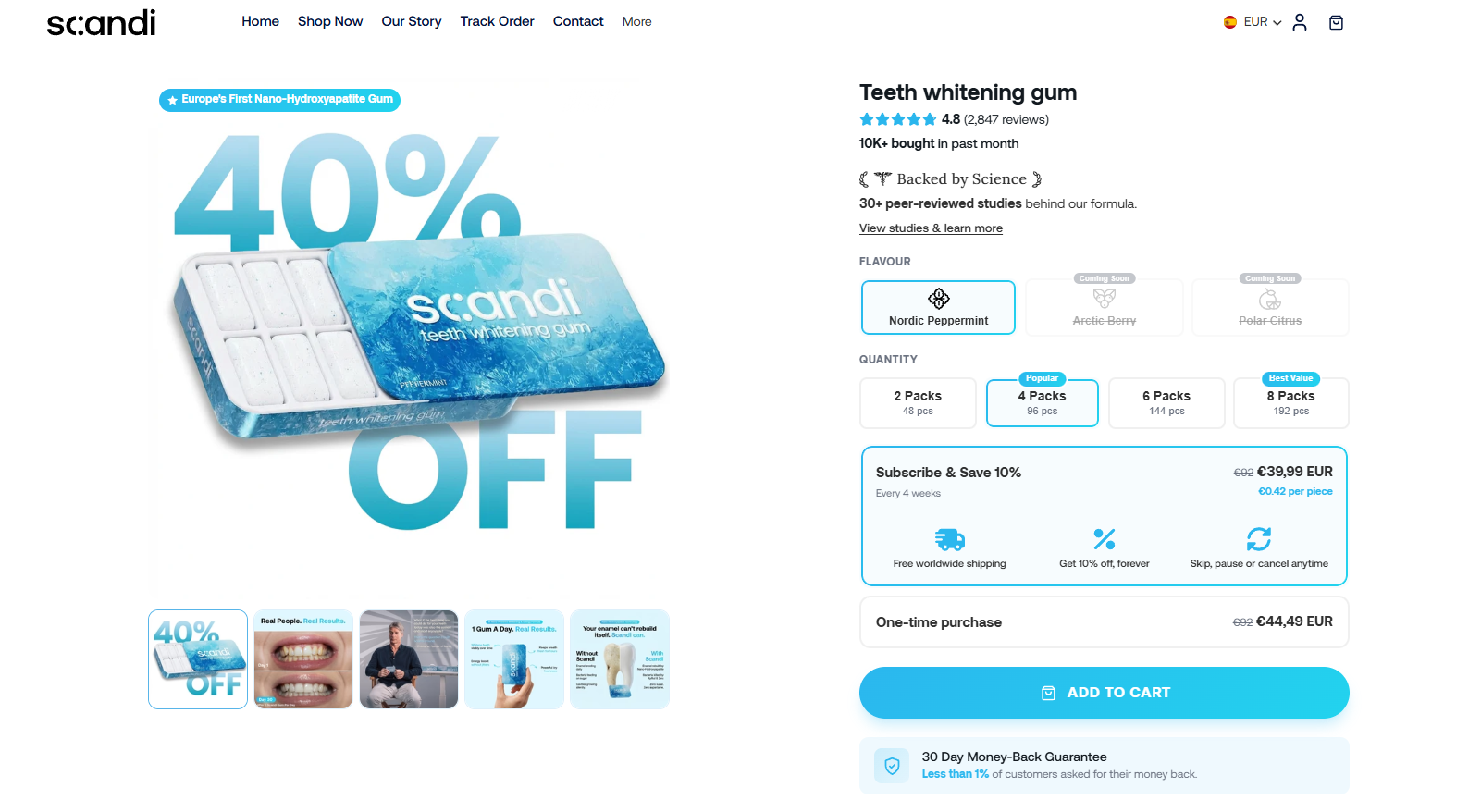
If you have built the habit of chewing gum after meals, you are already doing something useful for your teeth. The question is whether the gum is working with your biology or against it. Scandigum is designed specifically around the bio-optimization of chewing, using xylitol to shift your oral environment toward remineralization with every chew.
Xylitol is not just a sugar substitute. It actively disrupts the acid production cycle of cavity-causing bacteria while simultaneously stimulating saliva flow, which delivers the calcium and phosphate your enamel needs to repair itself. Chewing Scandigum after meals keeps your oral pH in the repair window longer, making it one of the most consistent and effortless dental remineralization tips you can add to your day.
Scandigum’s approach combines the physical act of chewing with targeted ingredients to give your mouth a genuine physiological advantage. If you want to see how it fits into your full oral care routine, explore the Scandigum product range and find the option that works best for your daily habits.
FAQ
What is the fastest way to remineralize teeth?
The fastest protocol combines fluoride or nano-hydroxyapatite toothpaste with the spit-don’t-rinse technique, MI Paste application after brushing, and xylitol gum after meals. Consistent use of this full approach can show visible results in white spots within 6 to 12 weeks.
Can you remineralize teeth naturally without fluoride?
Yes. Nano-hydroxyapatite toothpaste is a clinically supported fluoride-free alternative that mimics enamel’s mineral structure and has shown measurable results in repairing white spot lesions. Pairing it with a mineral-rich diet and xylitol products strengthens the natural approach.
How does xylitol help remineralize teeth?
Xylitol reduces acid-producing bacteria and stimulates saliva flow, which carries calcium and phosphate to the enamel surface. At 6 to 10 grams daily, it produces meaningful reductions in cavity incidence compared to fluoride-only protocols.
Can remineralization repair cavities?
No. Remineralization works on early, subsurface mineral loss and white spot lesions. Once a cavity has physically broken through the enamel surface, a dentist must restore it. At-home remineralization can prevent early decay from progressing to a cavity, but it cannot reverse one that has already formed.
How often should you use remineralizing products?
Daily use is necessary for results. Fluoride or nHAp toothpaste should be used twice daily with the spit-don’t-rinse method. Xylitol gum should be chewed after each meal for maximum bacteria reduction and saliva stimulation throughout the day.