

Most people think dental economics is a topic reserved for practice owners and insurance executives. It is not. Every time you choose what to chew after a meal, you are making a dental economics decision. Chewing sugar-free gum three times daily could prevent 740,000 cavities per year in Australia alone, saving AU$169 million in treatment costs, while the UK could see a 30% reduction in caries and £388 million in savings. That is not a dentist’s problem to solve. That is your opportunity.
Table of Contents
- What is dental economics and why does it matter?
- How supply costs and insurance shape dental expenses in 2026
- The science behind premium chewing gum: How xylitol and sugar-free gum prevent cavities
- The economics of prevention: How gum chewing reduces dental treatment costs
- Best practices: How to maximize oral health and savings with premium gum
- Experience the benefits of premium chewing gum
- Frequently asked questions
Key Takeaways
| Point | Details |
|---|---|
| Prevention pays off | Chewing premium gum regularly lowers cavity risk and dental spending. |
| Xylitol makes a difference | Xylitol gum outperforms other gums in reducing plaque and harmful bacteria. |
| Smart habits save money | Using gum alongside brushing delivers measurable health and financial benefits. |
| Market trends drive costs | Supply costs and insurance shifts are raising dental fees, so prevention matters more. |
| Gum is adjunct, not substitute | Gum complements, but does not replace, careful brushing and flossing for oral health. |
What is dental economics and why does it matter?
Dental economics is the study of how money flows through oral healthcare, from the cost of a filling to the revenue a hygiene appointment generates for a practice. But it does not stop at the clinic door. Every patient decision, including whether to brush twice a day, skip a recall appointment, or reach for a sugar-free gum after lunch, ripples through the entire system.
At the practice level, dental economics involves cash flow management, debt structure, overhead costs, and revenue from procedures, hygiene visits, and recalls. Staff wages are consistently the largest single expense. When preventive care reduces the number of complex restorative cases, it lowers the overhead burden on practices and, eventually, on you.
Here are the core pillars that drive dental economics:
- Cash flow: The timing of revenue versus expenses in a practice
- Overhead costs: Staff wages, supplies, lab fees, and facility costs
- Revenue mix: Balance between high-value procedures and routine preventive care
- Patient behavior: Recall compliance, home care habits, and preventive product use
“Prevention is not just good medicine. It is good economics. Every cavity avoided is a treatment that never needs to be scheduled, billed, or paid for.”
Understanding oral health science advances helps clarify why preventive tools like premium chewing gum are not trivial add-ons. They are active participants in the dental economics equation.
How supply costs and insurance shape dental expenses in 2026
The dental market in 2025 and into 2026 has been under significant financial pressure. Dental practices faced rising supply costs driven by tariffs, stagnant insurance reimbursements, and labor shortages that compressed margins across the board. The response was predictable: practices raised fees or dropped insurance networks entirely.
Key market shifts affecting your dental bills in 2026:
| Factor | Impact on consumers |
|---|---|
| Tariff-driven supply cost increases | Higher procedure fees passed to patients |
| Stagnant insurance reimbursements | More practices going out-of-network |
| Labor shortages | Longer wait times, reduced appointment availability |
| Dental spending up 3% in 2025 | Rising out-of-pocket costs for most households |
Two-thirds of dental practices raised their fees in response to these pressures. That means the average consumer is paying more for the same cavity filling they got three years ago. The math is straightforward: fewer cavities means fewer appointments, fewer bills, and less exposure to a market that is actively getting more expensive.
This is exactly where chewing gum technology enters the picture as a serious preventive tool, not a novelty. When the cost of treatment rises, the value of prevention rises with it.
The science behind premium chewing gum: How xylitol and sugar-free gum prevent cavities
Not all gum is created equal. The difference between a standard stick of mint gum and a premium xylitol-based formula is measurable in your mouth chemistry.
Chewing any sugar-free gum stimulates saliva flow, which washes away food debris, neutralizes acids, and begins the remineralization process on enamel. But xylitol takes this further. Xylitol gum reduces mutans streptococci (MS) counts and plaque by 25 to 47%, because xylitol is non-fermentable. Cavity-causing bacteria cannot metabolize it, so they starve and their biofilm weakens.

The clinical numbers are compelling. Salivary S. mutans drops by 17 to 33% and plaque index falls by 43 to 47% after just one month of consistent xylitol gum use. These are not marginal improvements. They represent a meaningful shift in your oral environment.
Xylitol vs. sorbitol: A quick comparison
| Feature | Xylitol gum | Sorbitol gum |
|---|---|---|
| Fermentable by bacteria | No | Partially |
| Reduces S. mutans | Yes, significantly | Minimal effect |
| Plaque reduction | 25-47% | Limited |
| Remineralization support | Strong | Moderate |
| Best for high-risk patients | Yes | Less effective |
Benefits extend to specific groups too. Orthodontic patients, who face elevated plaque accumulation around brackets, and individuals with high caries risk both show strong responses to regular xylitol gum use. For dentistry tips for gum users in these categories, the evidence is especially relevant.
Pro Tip: Chew your gum immediately after meals or snacks, when oral pH is at its lowest and acid attack on enamel is most active. This is when saliva stimulation delivers the greatest protective effect.
The economics of prevention: How gum chewing reduces dental treatment costs
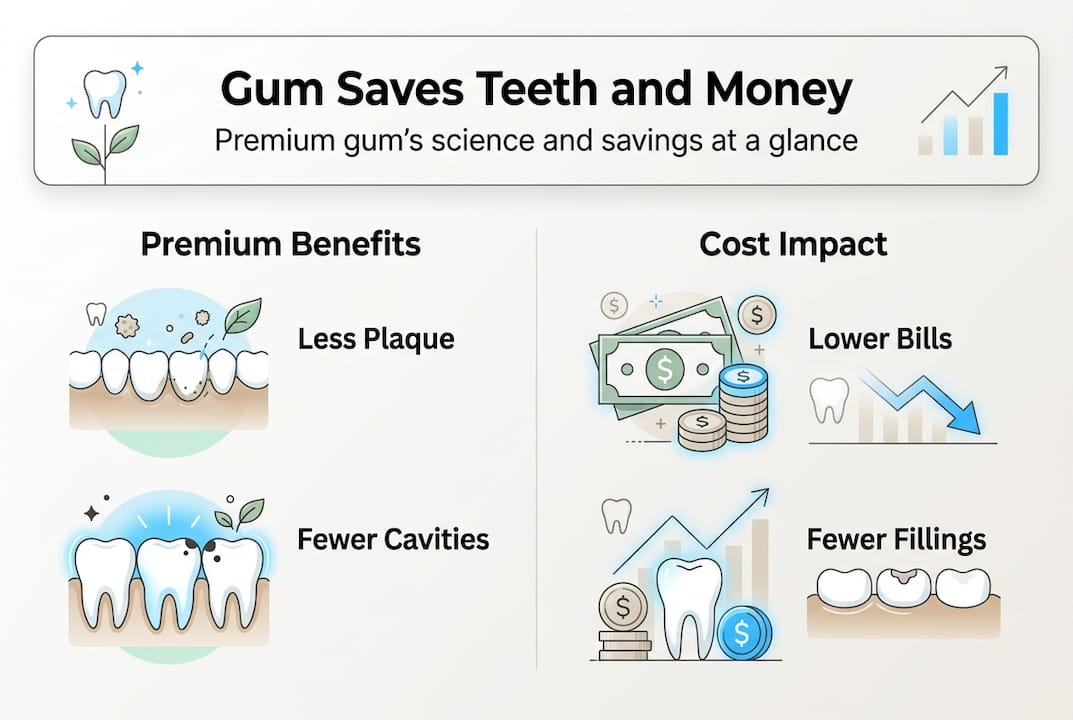
Let’s put real numbers to this. The modeling data from population-level studies is striking. Chewing sugar-free gum three times per day could prevent 740,000 caries cases annually in Australia, generating AU$169 million in savings, while the UK could see a 30% reduction in caries and £388 million saved.
Scale that down to your household. Here is how the savings chain works:
- Fewer cavities formed means fewer fillings needed, which directly reduces your annual dental spend.
- Lower plaque accumulation means cleaner teeth at hygiene appointments, reducing the risk of costly periodontal treatment.
- Stronger enamel from consistent remineralization means less sensitivity, fewer crowns, and a longer lifespan for your natural teeth.
- Reduced emergency visits because a healthier oral environment means fewer acute infections or cracked teeth from decay.
“The most expensive dental treatment is the one you need because you skipped prevention. The least expensive is the one you never needed at all.”
For individual consumers, the math is compelling. A pack of premium xylitol gum costs a fraction of a single filling. Used consistently, it functions as a daily investment in avoiding far larger expenses. Chewing gum innovations have made this preventive tool more effective than ever, with formulas designed to actively support enamel chemistry rather than simply freshen breath.
Best practices: How to maximize oral health and savings with premium gum
Knowing the science is one thing. Using it correctly is another. Here is how to get the most out of premium sugar-free and xylitol gum.
Timing and dosage:
- Chew after every meal or snack, ideally within five minutes of finishing
- Aim for 3 to 5 chewing sessions per day to maintain consistent xylitol exposure
- Each session should last 15 to 20 minutes for full saliva stimulation
- Target 5 to 10 grams of xylitol daily, spread across multiple chewing sessions, for measurable antibacterial effect
Who benefits most:
- Individuals with a history of frequent cavities
- Orthodontic patients with brackets or aligners
- People with dry mouth conditions that reduce natural saliva flow
- Anyone whose diet includes frequent acidic or sugary foods
What gum cannot do:
- It cannot remove the plaque that builds up along the gumline, which requires brushing
- It cannot replace flossing for cleaning between teeth
- It is not a treatment for existing decay or gum disease
Pro Tip: If you are in a high-caries-risk category, talk to your dentist about using xylitol gum as a formal adjunct to your hygiene routine. Some practices now recommend it as part of a structured prevention protocol, especially for patients who struggle with consistent brushing habits.
The Dental Health Organization confirms that sugar-free gum is a cost-effective preventive tool when used alongside standard oral hygiene. It is not a shortcut. It is a smart addition to a complete routine. For more on enhancing oral health with gum, the evidence base is growing every year.
Experience the benefits of premium chewing gum
The science is clear and the economics are compelling. Premium xylitol gum is one of the most cost-effective tools available for reducing your long-term dental bills while actively supporting enamel health, plaque control, and oral hygiene between meals. It works with your biology, not against it.
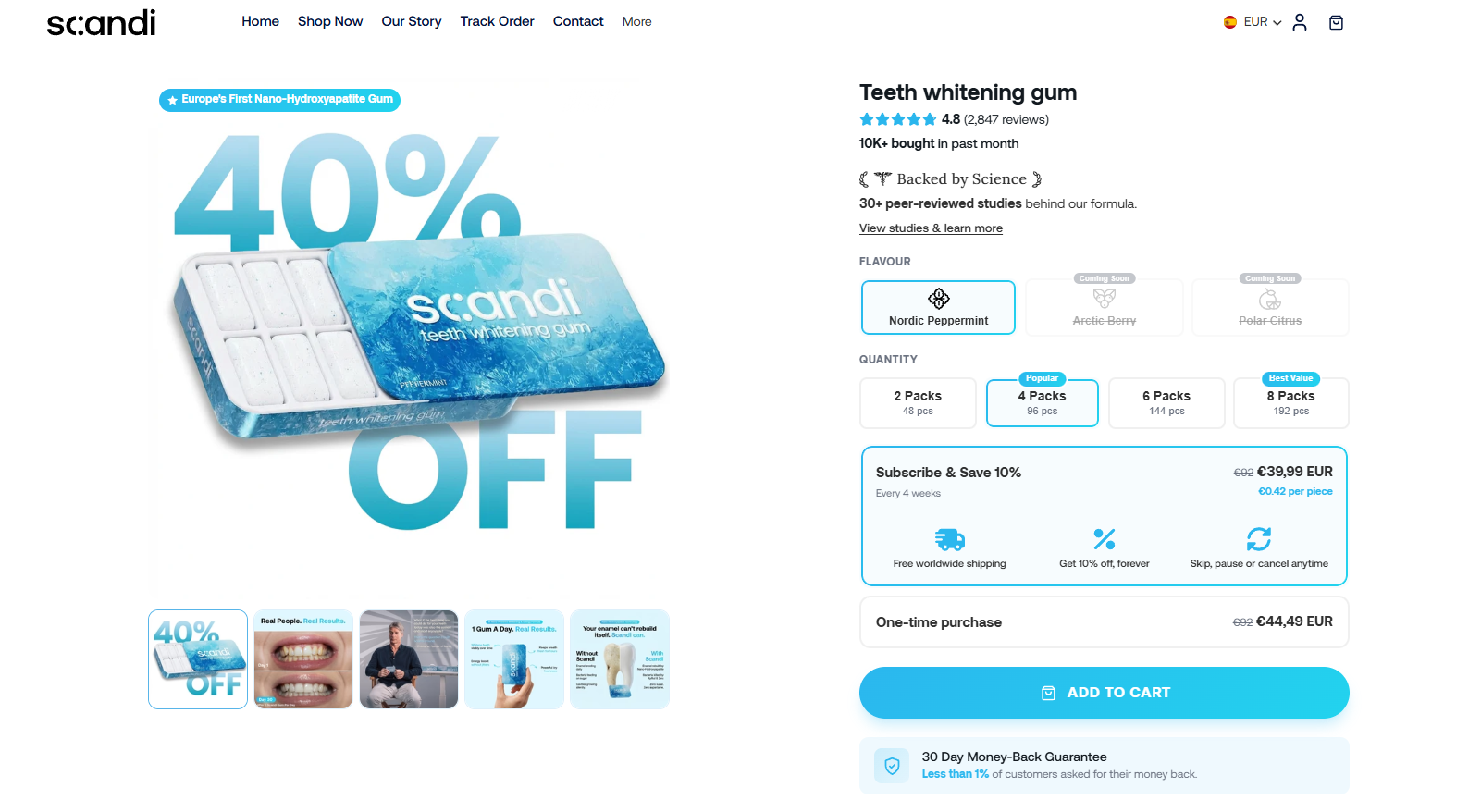
Scandigum is built on exactly this principle. Every formula is designed around bio-optimization, using the chemistry of the mouth and the act of chewing itself to deliver measurable outcomes. If you are ready to make prevention a daily habit that pays for itself, explore Scandi Gum chewing gum and find the formula that fits your routine. Your enamel, and your wallet, will notice the difference.
Frequently asked questions
How does xylitol chewing gum help prevent cavities?
Xylitol gum stimulates saliva, neutralizes mouth acids, and reduces cavity-causing bacteria by 17 to 33%, while cutting plaque by up to 47% after consistent use. It works by starving harmful bacteria of the fermentable sugars they need to thrive.
How often should I chew premium gum for best results?
Chew sugar-free or xylitol gum 3 to 5 times per day, ideally after meals or snacks, to maintain the 5 to 10 grams of daily xylitol needed for measurable antibacterial and remineralizing effects.
Can chewing gum replace brushing and flossing?
No. Gum is a powerful adjunct but not a substitute for brushing and flossing. It reduces acid exposure and bacterial load, but it cannot clean the gumline or the spaces between teeth.
Do sugar-free gums offer whitening benefits?
Yes. Sugar-free gum aids whitening by stimulating saliva that cleans surface stains and by supporting remineralization, which restores the natural brightness of enamel over time.
What are the economic benefits to consumers of chewing gum regularly?
Regular gum use prevents cavities and reduces plaque, directly lowering the number of fillings, cleanings, and restorative treatments you need, which translates to measurable savings on your annual dental bills.