

TL;DR:
- Remineralizing gum repairs enamel, reduces bacteria, and supports oral health during daily routines.
- Key ingredients like xylitol and nano-hydroxyapatite actively prevent cavities and restore enamel strength.
- It offers a convenient, fluoride-free option that enhances traditional oral care and suits busy lifestyles.
Maintaining strong teeth as an adult is harder than most people expect. Enamel does not grow back on its own, sensitivity creeps in after years of acidic foods and drinks, and squeezing a proper oral care routine into a packed schedule is a real challenge. Remineralizing gum has emerged as a science-backed, grab-and-go solution that works while you chew. It combines ingredients like xylitol and nano-hydroxyapatite to actively repair enamel, reduce harmful bacteria, and support a healthier oral environment throughout the day. This article breaks down exactly how it works, what the research says, and whether it belongs in your routine.
Table of Contents
- How remineralizing gum works: Key ingredients and science
- Top benefits of using remineralizing gum
- Comparison: Remineralizing gum vs traditional oral care products
- Situational recommendations: Who should use remineralizing gum?
- Our perspective: Why remineralizing gum deserves more attention
- Explore remineralizing gum options for improved oral health
- Frequently asked questions
Key Takeaways
| Point | Details |
|---|---|
| Science-backed benefits | Remineralizing gum uses proven ingredients, like xylitol and nano-hydroxyapatite, to support oral health. |
| Convenient protection | Gum offers cavity prevention and enamel repair on the go, making it easy to maintain healthy teeth anywhere. |
| Reduces sensitivity | Clinical studies demonstrate remineralizing gum can help lower tooth sensitivity and restore hardness. |
| Complements routines | Remineralizing gum works alongside traditional oral care, ideal for busy adults seeking enhanced oral protection. |
How remineralizing gum works: Key ingredients and science
Building on that introduction, it helps to understand how remineralizing gum actually delivers these oral health benefits at a biological level. The short answer: it works through two powerhouse ingredients that target the root causes of enamel damage and cavity formation.
Here is what each ingredient does:
- Xylitol is a natural sugar alcohol that starves cariogenic (cavity-causing) bacteria. Streptococcus mutans, the primary culprit behind tooth decay, cannot metabolize xylitol the way it processes regular sugar. This disrupts bacterial metabolism, reduces acid production, and shifts the oral microbiome toward a healthier balance. A Cochrane review on xylitol confirms that xylitol in gum and toothpaste reduces cariogenic bacteria by up to 40 to 46%, with measurable reductions in cavity rates across multiple age groups.
- Nano-hydroxyapatite (nHA) is a synthetic form of the same mineral that makes up about 97% of tooth enamel. At roughly 20 nanometers in size, these particles are small enough to physically fill micro-pores and surface cracks in enamel. They bond to the tooth surface, restore hardness, and reduce the sensitivity that comes from exposed dentinal tubules. Clinical trials published in 2025 show nHA in gum is superior or comparable to fluoride and CPP-ACP (casein phosphopeptide-amorphous calcium phosphate) in remineralizing enamel.
- Stimulated saliva flow is a third, often overlooked mechanism. Chewing itself increases saliva production, which raises oral pH, delivers calcium and phosphate ions to the tooth surface, and creates the alkaline environment needed for remineralization to occur.
The combination of these mechanisms is what makes remineralizing gum more than just a freshness product. To go deeper on functional gum science, the interplay between buccal delivery and dental chemistry is worth exploring.
Pro Tip: When shopping for remineralizing gum, check the label for both xylitol and nano-hydroxyapatite. Products with only one of these ingredients deliver partial benefits. Both together create a synergistic repair and prevention effect.
Top benefits of using remineralizing gum
Now that the science is clear, here are the practical benefits most valued by users who have made remineralizing gum part of their daily routine.
- Cavity prevention. Xylitol actively disrupts the bacteria responsible for tooth decay. Fewer harmful bacteria means less acid production, which means less enamel erosion over time. This is not a passive benefit; it is an active, ongoing process every time you chew.
- Enamel repair and stronger teeth. Nano-hydroxyapatite particles fill micro-pores in the enamel surface and restore structural integrity. Clinical data shows nHA gum restores enamel hardness to 299.5 Vickers hardness, compared to 326.4 for fully sound enamel. That is a meaningful recovery from a damaged baseline.
- Reduced tooth sensitivity. When enamel thins or micro-pores open up, hot and cold temperatures reach the nerve endings inside the tooth more easily. nHA physically seals those pathways, providing measurable relief from sensitivity with consistent use.
- A healthier oral microbiome. Xylitol does not just kill bacteria; it selectively disadvantages harmful species while leaving beneficial bacteria largely unaffected. Over time, this shifts the entire microbial landscape of your mouth toward a more balanced, less decay-prone state.
- Improved oral appearance. A remineralized enamel surface reflects light more evenly, which contributes to a brighter, smoother appearance. This is not whitening in the bleaching sense; it is structural restoration that improves how your teeth look naturally.
“The goal is not just to prevent damage. It is to actively restore what daily life erodes. Remineralizing gum turns an ordinary habit into a repair session.”
For a practical look at fitting these benefits into a daily routine, the oral health workflow tips from Scandigum offer a useful framework.

Comparison: Remineralizing gum vs traditional oral care products
Beyond individual benefits, it is essential to put remineralizing gum in context with more familiar oral care solutions. Each product has strengths, and the best routine usually involves more than one.
| Product | Active mechanism | Convenience | Frequency of use | Remineralization ability |
|---|---|---|---|---|
| Remineralizing gum | nHA, xylitol, saliva stimulation | Very high, no water needed | Anytime, anywhere | Strong |
| Fluoride toothpaste | Fluoride ion exchange | Moderate, requires brush and water | Twice daily | Strong |
| Mouthwash | Antimicrobial rinse | Moderate, requires water | Once or twice daily | Moderate |
| Fluoride varnish (dental office) | High-concentration fluoride | Low, requires dental visit | Every 3 to 6 months | Very strong |
Key differences worth noting:
- Timing flexibility. Toothpaste and mouthwash require a sink, a mirror, and a few minutes of dedicated time. Remineralizing gum works during a meeting, on a flight, or after lunch at your desk.
- Duration of contact. A 15 to 20 minute chew session keeps active ingredients in contact with enamel far longer than a two-minute brush. This extended exposure window matters for remineralization.
- Bacterial environment. Toothpaste and mouthwash mechanically or chemically disrupt bacteria in the moment. Xylitol in gum changes the bacterial environment persistently, making the mouth less hospitable to harmful species between brushing sessions.
- Fluoride-free option. For adults who prefer to avoid fluoride, nHA gum offers comparable remineralization results without it.
The honest takeaway is that remineralizing gum is not a replacement for brushing. It is a powerful addition that fills the gaps traditional products cannot reach. The functional gum science behind buccal delivery explains why chewing is such an efficient delivery method for active oral care ingredients.
Situational recommendations: Who should use remineralizing gum?
After comparing options, the next question is who stands to gain the most from adding remineralizing gum to their routine. The answer is broader than most people expect.
- Adults with a history of cavities or sensitivity. If you have had multiple fillings or wince at cold drinks, your enamel needs active support between dental visits. Both xylitol and nano-hydroxyapatite support prevention and repair across multiple age groups, making gum a practical daily tool.
- Frequent travelers and busy professionals. Airport security does not flag a pack of gum. Hotel bathrooms do not need to be involved. If your schedule makes consistent brushing after every meal difficult, remineralizing gum fills that gap effectively.
- People focused on cosmetic oral health. Remineralized enamel looks better. If you care about the appearance of your teeth and want a non-invasive way to maintain or improve that appearance, gum is a low-effort, high-return option.
- Adults reducing sugar intake. Xylitol-sweetened gum satisfies the urge for something sweet without feeding harmful bacteria. It is a behavioral substitution that actually benefits your teeth.
- Anyone who drinks coffee, wine, or acidic beverages regularly. Acidic drinks drop oral pH below the critical 5.5 threshold, triggering demineralization. Chewing remineralizing gum after these drinks helps neutralize pH and initiate repair before damage accumulates.
Pro Tip: Use remineralizing gum within 20 minutes of finishing a meal or acidic drink. This is the window when your oral pH is most disrupted and when the neutralizing and remineralizing effects of the gum are most valuable.
For a broader look at gum for oral health and how it fits different lifestyles, the science behind functional chewing is worth a read.
Our perspective: Why remineralizing gum deserves more attention
Here is the uncomfortable truth: most adults are doing the bare minimum for their teeth and calling it enough. Brush twice a day, maybe floss, done. That routine was designed around the tools available decades ago. It was not designed around what we now know about enamel chemistry, oral microbiomes, or the sustained exposure windows that remineralization actually requires.
Remineralizing gum does not ask you to overhaul your routine. It asks you to chew for 15 minutes after lunch. That is it. Yet the biological payoff, active enamel repair, bacterial suppression, and pH neutralization, is real and clinically documented.
The reason it is underutilized comes down to perception. Gum is associated with freshness and habit, not with dental repair. That perception is outdated. The functional gum benefits now documented in peer-reviewed research put it squarely in the same conversation as fluoride toothpaste and professional treatments.
Conventional wisdom says gum is a snack. The science says it is a delivery system. We think it is time more people made that distinction.
Explore remineralizing gum options for improved oral health
You now have the full picture: the ingredients, the mechanisms, the comparisons, and the scenarios where remineralizing gum adds the most value. The next step is finding a product that actually delivers on all of it.
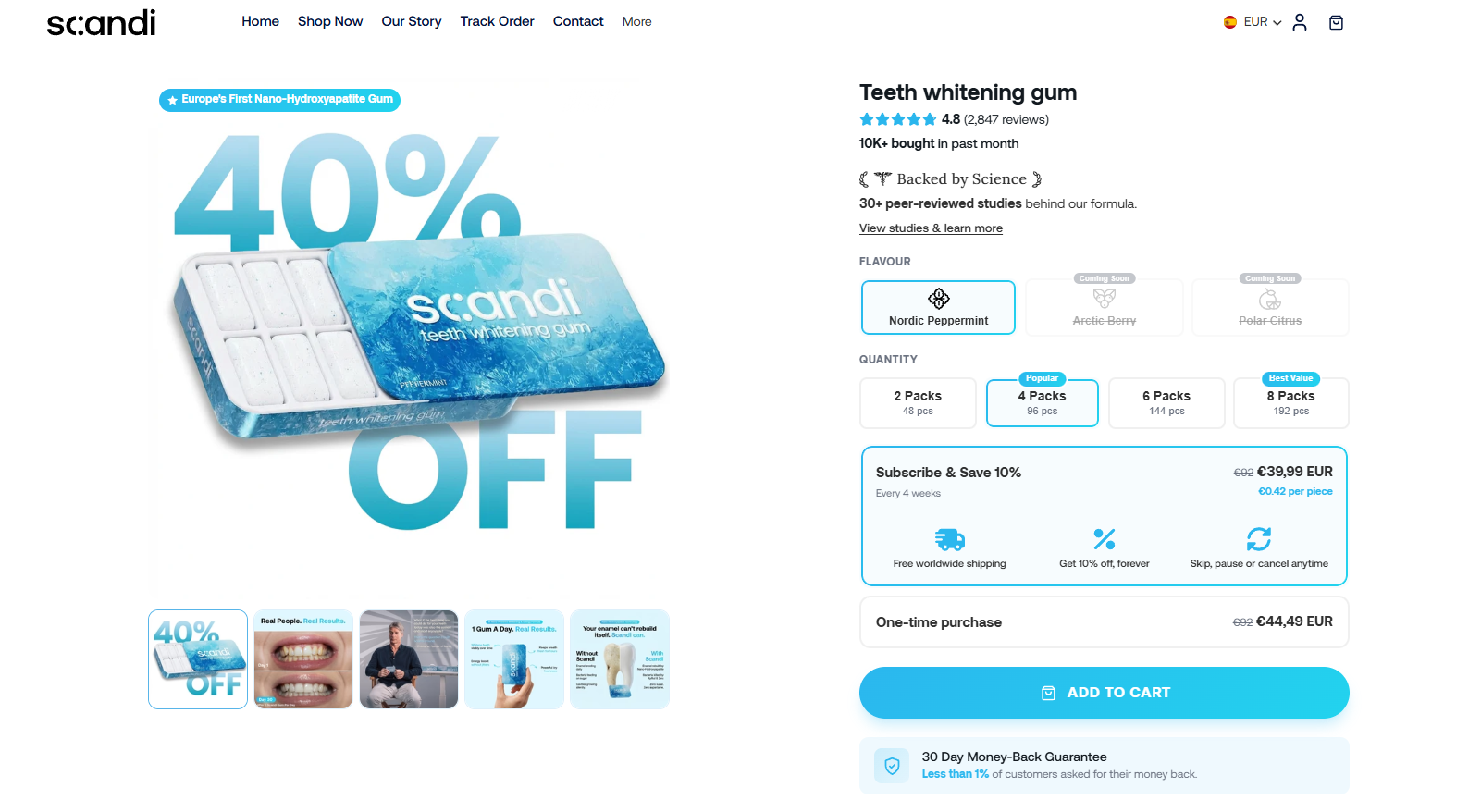
Scandi Gum is built around the same principles covered in this article. Each piece is formulated to shift your oral environment from passive maintenance to active repair, using clinically supported ingredients that work with your biology, not around it. If you are ready to make your daily chewing habit do more for your teeth, this is where to start. Your enamel will notice the difference.
Frequently asked questions
Is remineralizing gum as effective as fluoride toothpaste?
Clinical trials show nano-hydroxyapatite gum is comparable or superior to fluoride toothpaste in remineralizing enamel, making it a strong alternative or complement to traditional fluoride-based products.
Can remineralizing gum help reduce cavities?
Yes. Xylitol in remineralizing gum reduces cariogenic bacteria by up to 40 to 46%, which directly lowers the acid production responsible for cavity formation, according to Cochrane review findings.
Is remineralizing gum safe for long-term use?
Clinical studies on nHA gum indicate safety for regular use, and both key ingredients have well-established safety profiles. Always choose reputable brands and follow the usage guidelines on the package.
What side effects should I watch out for?
Most users tolerate remineralizing gum without any issues. In rare cases, high xylitol intake can cause mild digestive discomfort, and individuals with specific allergies should review ingredient lists before use.