

Your gums don’t get a warning before they start pulling back. After 30, the biological shifts are real: immune responses slow, medications become more common, and the oral microbiome grows harder to manage. Yet most adults still rely on the same two-step routine they learned as teenagers. That gap between what your gums need and what your routine delivers is where problems quietly develop. This guide lays out a practical, evidence-backed workflow that fits into a busy life, incorporating both proven fundamentals and innovative functional chewing products that work with your biology, not against it.
Table of Contents
- Understand the unique challenges to gum health after age 30
- Gather your tools: Effective products and daily essentials
- Follow the workflow: Daily and weekly practices for healthier gums
- Troubleshooting: Staying on track and avoiding common pitfalls
- A fresh perspective: Rethinking oral care routines for today’s busy adults
- Elevate your gum care workflow with proven functional chewing solutions
- Frequently asked questions
Key Takeaways
| Point | Details |
|---|---|
| Age increases gum risk | Adults over 30 face higher gum health risks due to lifestyle and biological changes. |
| Combine old and new tools | Optimal gum care mixes traditional routines with innovative products like functional chewing gum. |
| Workflow consistency matters | Daily and weekly routines, not just occasional efforts, are key to long-term gum health. |
| Adjuncts support, not replace | Functional chewing gums are helpful additions but cannot fully replace brushing, flossing, and checkups. |
Understand the unique challenges to gum health after age 30
Gum disease doesn’t discriminate, but it does favor certain conditions. After 30, those conditions become far more common. Neutrophils, the immune cells that patrol your gum tissue, become less effective with age. Saliva production drops, especially if you take medications for blood pressure, allergies, or depression. Less saliva means less natural buffering against acid and bacteria.
The NIDDK identifies smoking, diabetes, reduced saliva from medications, and a diet high in carbohydrates and sugars as the primary risk factors for gum disease in adults over 30. The diabetes connection is especially important: gum disease worsens blood sugar control, and elevated blood sugar accelerates gum inflammation. It runs in both directions.
Key risk factors for adults over 30:
- Smoking or tobacco use
- Diagnosed or unmanaged diabetes
- Dry mouth from prescription medications
- High-carb or high-sugar diet
- Infrequent professional dental cleanings
- Age-related decline in immune response
For a broader look at keeping your mouth in good shape, the oral health tips on Scandigum’s blog offer practical starting points grounded in current dentistry.
| Risk factor | How it affects gums | What to do |
|---|---|---|
| Dry mouth | Reduces acid buffering | Stimulate saliva with functional gum |
| High-sugar diet | Feeds harmful bacteria | Reduce refined sugars, add xylitol |
| Diabetes | Bidirectional inflammation | Coordinate dental and medical care |
| Smoking | Restricts gum blood flow | Cessation is the single biggest win |
| Aging immunity | Slower tissue repair | Increase professional cleaning frequency |
Statistic to know: Nearly half of American adults over 30 show signs of some form of gum disease, ranging from mild gingivitis to advanced periodontitis. The risk climbs sharply after 45.
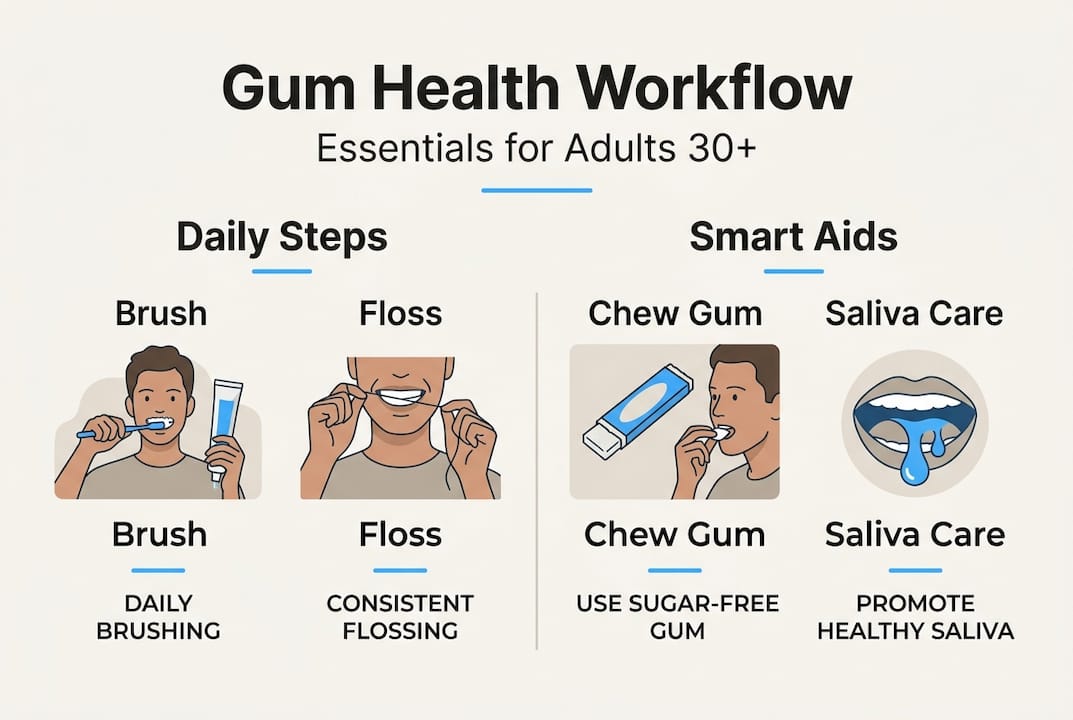
Now that you understand the challenge, let’s lay out what you need to address it.
Gather your tools: Effective products and daily essentials
A strong workflow starts with the right equipment. The good news is that the core toolkit is simple. A soft-bristled toothbrush, fluoride toothpaste, and floss or interdental brushes form the non-negotiable foundation. Beyond that, functional chewing gums add a meaningful layer of support that traditional tools simply can’t replicate.
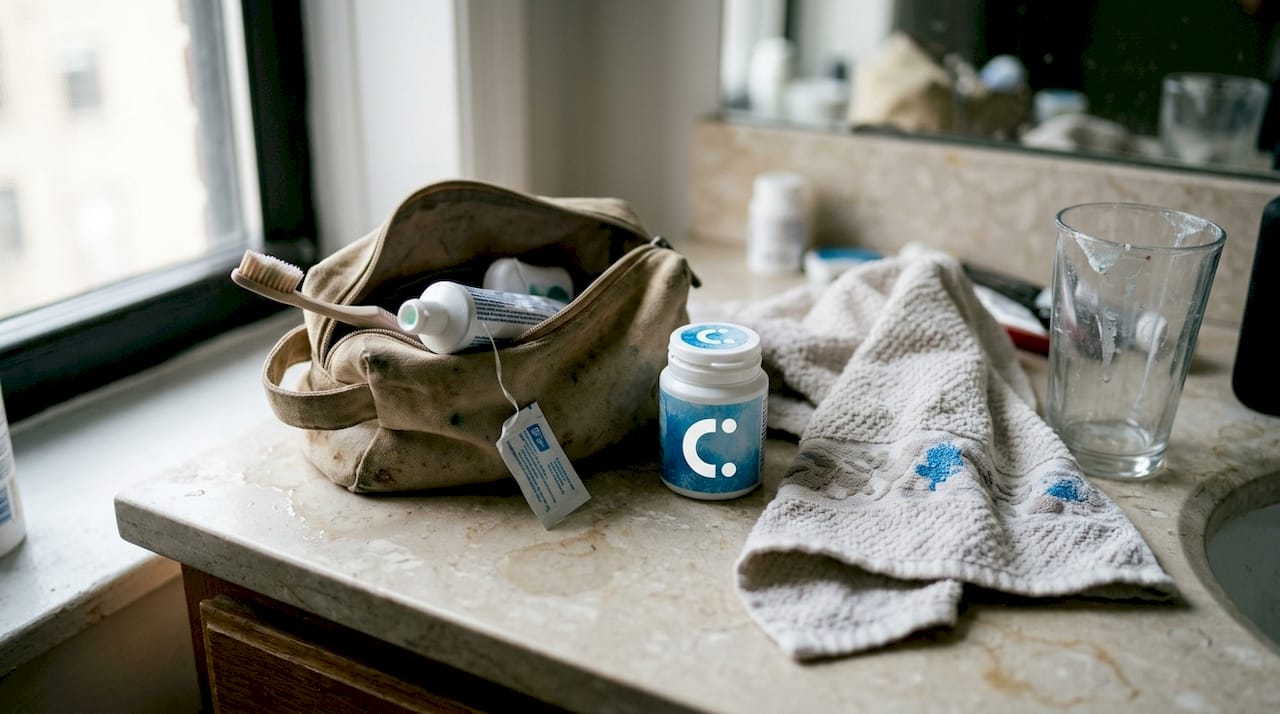
Functional gums typically contain one or more of these active ingredients: xylitol (a sugar alcohol that starves harmful bacteria), mastic (a resin with antimicrobial and anti-inflammatory properties), and propolis (a bee-derived compound with broad antibacterial activity). Together, they work to shift the oral environment toward repair rather than decay.
Dietary improvements also play a structural role. What you eat between brushing sessions shapes the bacterial landscape in your mouth far more than most people realize.
| Tool | When to use | Primary benefit |
|---|---|---|
| Soft toothbrush | Morning and evening | Plaque removal, gum stimulation |
| Fluoride toothpaste | With brushing | Enamel remineralization |
| Floss or interdental brush | Once daily | Clears interdental plaque |
| Functional chewing gum | After meals or snacks | Saliva flow, microbiome support |
| Mouthwash (optional) | After brushing | Reduces residual bacteria |
For workflow optimization tips that connect your product choices to a real daily system, Scandigum’s resources go deeper on how to sequence these tools effectively.
Professional cleanings remain essential. Tartar requires professional removal and cannot be addressed at home, which is why the ADA recommends visiting your dentist every 6 to 12 months regardless of how thorough your home routine is.
Pro Tip: Set up a visible countertop station with your toothbrush, floss, and a pack of functional gum. When your tools are in plain sight, you remove the friction that breaks routines.
Once you have everything ready, it’s time to incorporate these tools into a real-world workflow.
Follow the workflow: Daily and weekly practices for healthier gums
A workflow only works if it’s repeatable. The goal here is not perfection. It’s consistency. Here’s a structure that integrates the fundamentals with functional chewing products in a way that fits a real schedule.
Daily routine:
- Morning: Brush for two full minutes with fluoride toothpaste using a soft-bristled brush. Focus on the gum line, not just the tooth surface.
- After breakfast: Chew one piece of functional gum for 15 to 20 minutes. This stimulates saliva flow and begins shifting oral pH toward neutral.
- Midday (after lunch or snacks): Chew functional gum when brushing isn’t possible. This is where xylitol-based gum earns its place in the routine.
- Evening: Floss or use interdental brushes before brushing. Skipping this step leaves up to 40% of tooth surfaces untouched.
- Before bed: Brush again. Avoid eating or drinking anything except water afterward.
Pro Tip: Chew functional gum immediately after snacks when brushing isn’t feasible. The plaque reduction from xylitol gum is measurable: studies show a 14.8% acute plaque reduction compared to just 3.9% in control groups.
Weekly check-in:
- Review your gum line for redness, swelling, or bleeding
- Restock your functional gum supply so you never skip a dose
- Schedule or confirm your next dental appointment if it’s been more than six months
For routine enhancement tips tailored to adults managing complex schedules, Scandigum’s blog covers the nuances of building sustainable oral care habits.
Next, let’s address common roadblocks and tweak your workflow for best results.
Troubleshooting: Staying on track and avoiding common pitfalls
The most common mistake is treating functional gum as a replacement for brushing and flossing. It isn’t. It’s an adjunct, which means it adds value on top of a solid foundation, not instead of one.
Common pitfalls to avoid:
- Skipping flossing because you chewed gum after lunch
- Missing professional cleanings because your home routine feels solid
- Choosing gum with sugar instead of xylitol or other functional ingredients
- Starting a new product and abandoning it after two weeks before seeing results
- Ignoring systemic conditions like diabetes that amplify gum disease risk
The Cochrane review on xylitol is clear on this point:
“Chewing gums are supportive, not stand-alone therapies.”
For adults with diabetes or chronic dry mouth, the workflow needs an extra layer. Coordinate with your physician and dentist together. Gum disease and blood sugar dysregulation reinforce each other, so managing one without the other leaves a significant gap.
This study on gum products provides useful clinical context for understanding how different formulations perform across varied patient profiles.
| Scenario | Pitfall | Adjustment |
|---|---|---|
| Busy travel schedule | Skipping brushing entirely | Pack a travel kit with gum as backup |
| Diabetes diagnosis | Underestimating gum risk | Add quarterly dental visits |
| Dry mouth from medication | Reduced saliva buffering | Prioritize saliva-stimulating gum |
| Inconsistent routine | Losing momentum after two weeks | Anchor gum chewing to existing habits |
For workflow troubleshooting tips that go beyond the basics, Scandigum’s resources address the specific friction points that cause most adults to fall off track.
Now that your workflow is streamlined, let’s provide some broader perspective backed by real-world and research insights.
A fresh perspective: Rethinking oral care routines for today’s busy adults
Here’s something the dental industry rarely says out loud: the “perfect” oral care routine is largely a myth. The two-minutes-twice-a-day standard is a guideline, not a biological law. What actually matters is consistency over time, and consistency requires a routine you can realistically maintain.
Rigid routines fail busy adults. Life interrupts. Travel happens. Stress compresses mornings. The adults who maintain the best gum health long-term are not the ones who never miss a flossing session. They’re the ones who have flexible systems with built-in fallbacks.
Functional chewing gum is one of those fallbacks. It’s not a shortcut. It’s a bridge. When brushing isn’t possible, a piece of xylitol or mastic gum keeps the oral environment from tipping into the acidic range where demineralization begins. Research confirms that functional gums work best as part of a larger system, not as a stand-alone fix.
The shift we’d encourage is this: stop measuring your oral health by how often you hit every step perfectly, and start measuring it by how rarely your mouth goes unprotected. That reframe makes the workflow sustainable. And sustainability is what produces results at 30, 40, 50, and beyond.
For adults ready to build that kind of flexible oral care systems, the tools and the science are already there.
Elevate your gum care workflow with proven functional chewing solutions
You now have the framework. The next step is choosing products that are actually built around the biology we’ve been discussing, not just flavor or convenience.
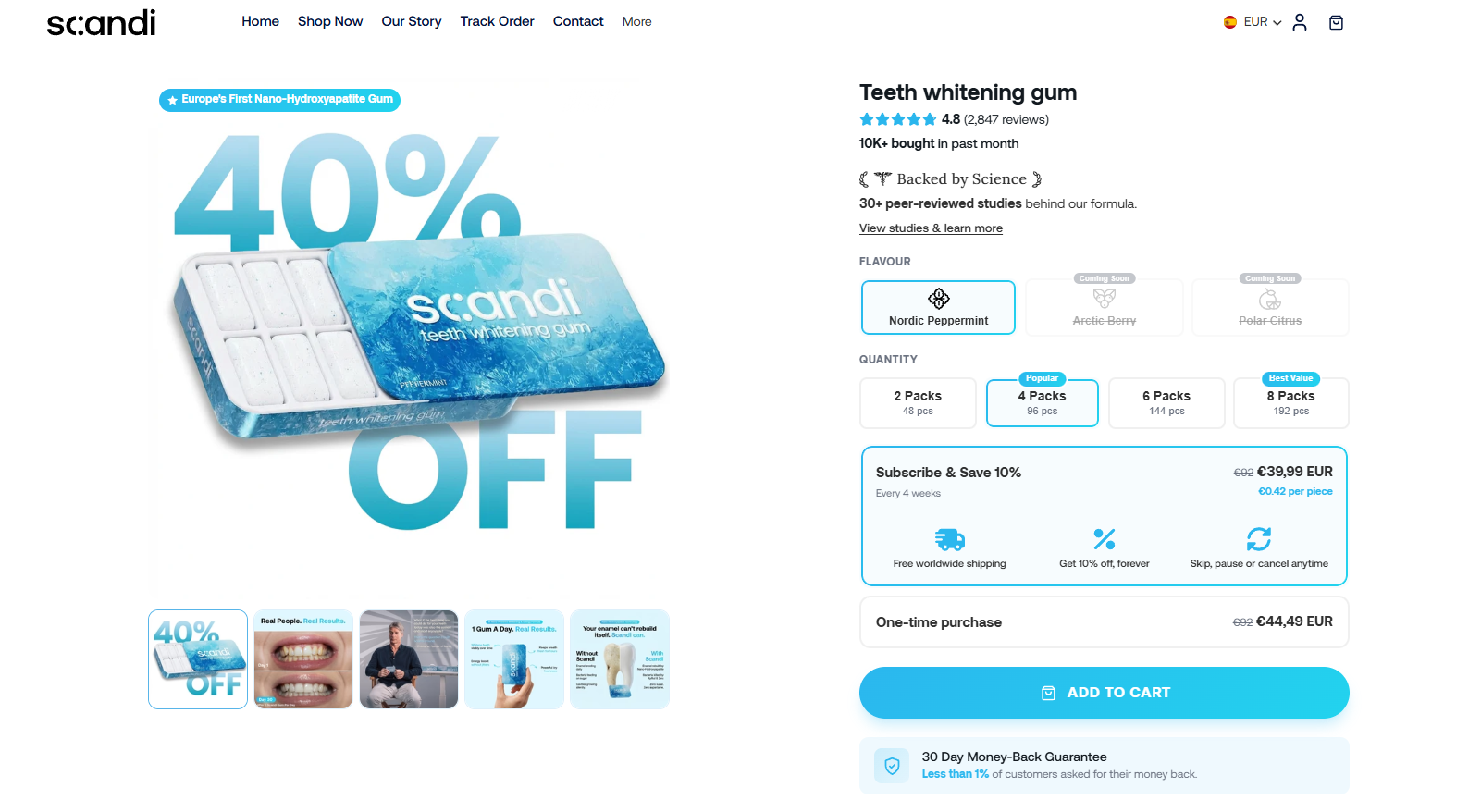
Scandigum’s functional chewing products are formulated around the same principles covered in this guide: stimulating salivary flow, shifting oral pH, and delivering active ingredients through the buccal mucosa for faster, more targeted effect. Each piece is designed to fit naturally into the workflow gaps where brushing isn’t an option. Explore Scandi Gum functional chewing products and find the formulation that fits your specific routine, risk profile, and goals. Your gums work hard every day. Give them the support that matches that effort.
Frequently asked questions
How often should I chew functional gum for gum health?
Chew functional gum after meals or snacks when brushing isn’t feasible, aiming for 15 to 20 minutes per session. It works best as an adjunct alongside regular brushing and flossing, not as a replacement.
Can chewing gum completely replace brushing and flossing?
No. Chewing gum supports oral hygiene but cannot remove plaque the way brushing and flossing do. The Cochrane review confirms it is a supportive tool, not a stand-alone solution.
What are the best ingredients to look for in functional chewing gum for gums?
Xylitol, mastic, and propolis are the most well-studied ingredients for gum health. Propolis and xylitol formulations show measurable reductions in gingivitis markers in clinical settings.
Do functional gums help if I have diabetes or dry mouth?
Yes, functional gums can stimulate saliva and support gum health in both conditions. However, diabetes worsens gum disease risk bidirectionally, so regular professional dental care remains essential alongside any adjunct product.