

You want whiter teeth without the sensitivity and enamel damage that come with chemical bleaching agents. Many conventional whitening products contain harsh peroxides that strip protective enamel and trigger painful nerve reactions. Natural alternatives offer a gentler path to a brighter smile while preserving long-term oral health. This guide explores seven evidence-backed methods that work with your body’s chemistry, not against it, to safely remove surface stains and enhance your natural tooth color over time.
Table of Contents
- Key takeaways
- Understanding natural teeth whitening methods and their benefits
- Preparing to whiten: what you need and precautions
- How to whiten teeth naturally: step-by-step guide
- Common mistakes, troubleshooting, and expected results
- Explore safe dental care with Scandi Gum
- Frequently asked questions
Key Takeaways
| Point | Details |
|---|---|
| Enamel friendly whitening | Natural whitening prioritizes enamel integrity over rapid color changes. |
| Baking soda action | Baking soda removes surface stains through mild abrasion with minimal risk to enamel when used correctly. |
| Oil pulling benefits | Oil pulling reduces plaque and gingivitis, which helps create a cleaner, brighter smile. |
| Acid and abrasive caution | Avoid harsh abrasives like charcoal and acidic remedies such as lemon juice and vinegar to protect enamel. |
Understanding natural teeth whitening methods and their benefits
Tooth discoloration falls into two categories: extrinsic stains on the enamel surface from coffee, tea, and tobacco, and intrinsic stains within the tooth structure from aging, medications, or trauma. Natural methods target extrinsic stains effectively while protecting the enamel matrix that guards against sensitivity and decay.
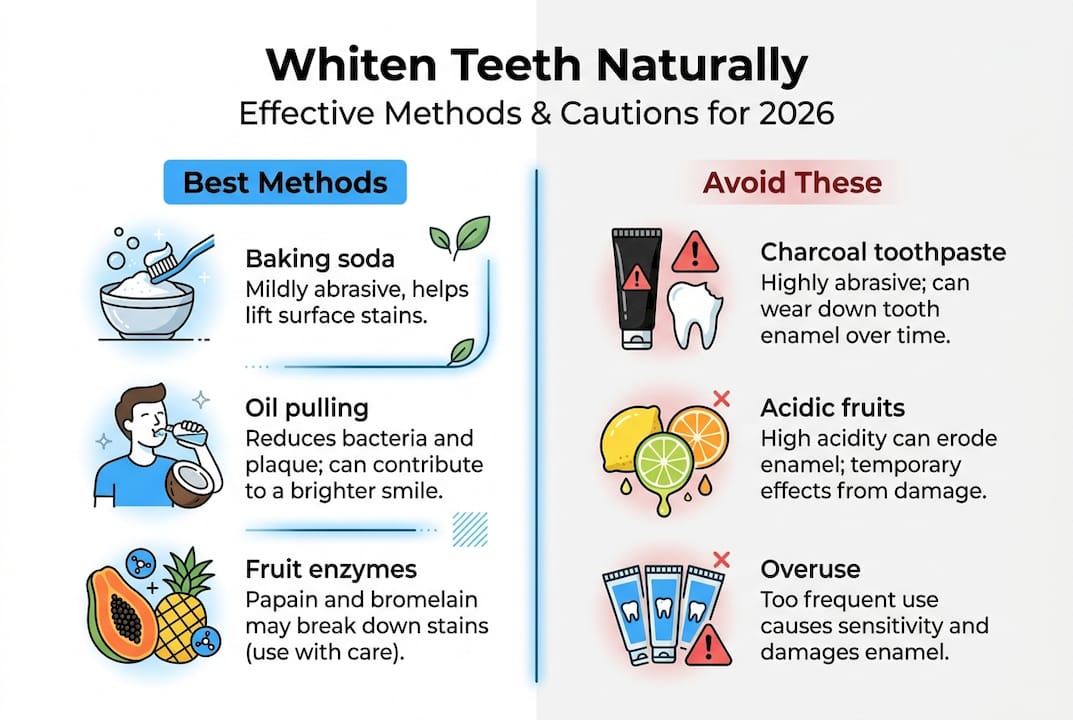
Baking soda removes extrinsic stains through mild abrasion with minimal risk to enamel when used correctly. Its slightly alkaline pH also neutralizes acids that promote demineralization. Unlike commercial whitening strips that use 10-20% hydrogen peroxide, baking soda works mechanically, polishing away surface deposits without penetrating tooth structure. This makes it ideal for maintenance whitening in adults concerned about enamel preservation.
Oil pulling reduces plaque and gingivitis through a different mechanism entirely. Swishing coconut oil for 10-15 minutes allows medium-chain fatty acids to disrupt bacterial cell membranes, reducing the biofilm that traps stains. Healthier gums recede less, exposing less yellow dentin and maintaining the appearance of whiter teeth. The practice also stimulates saliva production, which naturally remineralizes enamel and buffers acid attacks.
Pineapple contains bromelain, a proteolytic enzyme that breaks down protein pellicles on tooth surfaces where stains accumulate. While pineapple enzymes enhance whitening when combined with other methods, the fruit’s acidity requires careful use to avoid enamel softening. Brief contact times and thorough rinsing mitigate risk while preserving benefit.
Avoid harsh abrasives like activated charcoal, which scores enamel with particles harder than tooth structure. Skip acidic substances like lemon juice, apple cider vinegar, and strawberries, which dissolve hydroxyapatite crystals faster than saliva can repair them. Your white smile matters for confidence and health, but not at the cost of permanent enamel loss.
Pro Tip: Combine baking soda paste two to three times weekly with daily oil pulling for synergistic benefits. The mechanical action of baking soda removes surface deposits while oil pulling maintains a low-plaque environment that prevents new stain accumulation.
Preparing to whiten: what you need and precautions
Gather your materials before starting any natural whitening routine. You need pharmaceutical-grade baking soda, organic virgin coconut oil, a soft-bristled toothbrush, and optionally fresh pineapple. Avoid pre-mixed pastes with unknown additives. Pure ingredients give you control over concentration and contact time.
Skip these acidic substances entirely:
- Lemon juice or lemon peels
- Apple cider vinegar
- Strawberries or strawberry paste
- Orange or grapefruit extracts
DIY acidic remedies erode enamel faster than natural remineralization can compensate. The temporary whitening effect comes from dissolving the outer enamel layer, exposing fresh but thinner tooth structure underneath. Repeated use leads to translucency, increased sensitivity, and yellow dentin show-through.
Follow these preparation steps:
- Schedule a dental checkup to identify cavities, cracks, or gum disease that contraindicate whitening
- Mix baking soda paste fresh each time using one teaspoon baking soda with enough water to form a spreadable consistency
- Measure one tablespoon of coconut oil for oil pulling and let it melt in your mouth before swishing
- Cut a small pineapple wedge if using enzymes, limiting contact to 60 seconds maximum
- Have fluoride toothpaste ready to brush after any whitening treatment
Consult your dentist before starting if you have exposed dentin, receding gums, dental restorations, or a history of sensitivity. Natural methods work on natural tooth enamel only. They cannot whiten crowns, veneers, or fillings, potentially creating color mismatches. Your dentist can assess whether your discoloration responds to surface treatments or requires professional intervention for intrinsic stains.
Watch for warning signs during use. Stop immediately if you experience sharp pain, prolonged sensitivity to temperature, or gum irritation. These indicate enamel compromise or soft tissue damage requiring professional evaluation. Optimize your oral health workflow by integrating whitening with comprehensive hygiene practices, not replacing them.
Pro Tip: Test pineapple enzyme tolerance on a single tooth first. Apply a small amount of fresh pineapple juice to one front tooth for 30 seconds, rinse thoroughly, and monitor for sensitivity over 24 hours before proceeding with full application.
How to whiten teeth naturally: step-by-step guide
Execute your natural whitening routine with precision to maximize results while protecting enamel. Consistency matters more than intensity. Gradual improvement over weeks beats aggressive treatment that damages tooth structure.
Step 1: Apply baking soda paste two to three times weekly. Wet your toothbrush and dip it into the paste, coating bristles evenly. Brush gently in circular motions for 90 seconds, focusing on visible front teeth where stains concentrate. Avoid scrubbing hard or extending beyond two minutes. Rinse thoroughly with water, then brush with fluoride toothpaste to remineralize and remove residual baking soda. The alkaline residue can disrupt oral pH if left in place.
Step 2: Practice oil pulling daily for optimal plaque reduction. Take one tablespoon of coconut oil first thing in the morning before eating or drinking. Let it melt, then swish gently through teeth for 10 to 15 minutes while showering or preparing breakfast. Do not gargle or swallow. Spit into a trash can, not your sink, as solidified oil clogs drains. Rinse with warm water and brush normally. The lipid layer disrupts bacterial adhesion and reduces the biofilm that traps chromogens from food and beverages.

Step 3: Use pineapple enzymes as an occasional adjunct, not a primary method. Rub a small piece of fresh pineapple directly on front teeth for 60 seconds maximum once or twice weekly. The bromelain enzyme enhances whitening by breaking down protein pellicles where stains bind. Rinse immediately and wait 30 minutes before brushing to let enamel reharden after acid exposure. Never use canned pineapple, which contains added sugars and lacks active enzymes.
| Method | Mechanism | Frequency | Time | Results Timeline |
|---|---|---|---|---|
| Baking soda | Mechanical abrasion | 2-3x weekly | 90 seconds | 2-4 weeks |
| Oil pulling | Plaque reduction | Daily | 10-15 minutes | 4-6 weeks |
| Pineapple enzymes | Protein breakdown | 1-2x weekly | 60 seconds | 3-5 weeks |
| Combined routine | Synergistic action | As above | Varies | 2-6 weeks |
Expect gradual improvement rather than dramatic transformation. Natural methods typically produce a one to two shade improvement over two to six weeks of consistent use. This modest change comes without the sensitivity, gum irritation, or enamel thinning associated with peroxide-based products. Your smile brightens as surface stains lift and oral health improves, not because chemicals force rapid color change.
Maintain results by limiting stain-causing substances. Rinse with water after coffee, tea, or red wine. Use a straw for dark beverages to minimize tooth contact. Continue oil pulling indefinitely as part of your hygiene routine. Reduce baking soda to once weekly for maintenance after achieving desired results.
Common mistakes, troubleshooting, and expected results
Avoid these errors that compromise safety and effectiveness:
- Using baking soda daily or scrubbing aggressively, which wears enamel over time
- Expecting peroxide-level whitening from natural methods designed for surface stain removal
- Applying acidic substances like lemon or vinegar, which cause irreversible enamel erosion
- Neglecting regular brushing and flossing while focusing solely on whitening
- Using activated charcoal toothpastes with abrasive particles that scratch enamel
Natural whitening works best on extrinsic stains from external sources. Intrinsic discoloration from tetracycline antibiotics, fluorosis, or internal tooth changes requires professional treatment. If you see no improvement after six weeks of consistent use, consult your dentist about the underlying cause of discoloration.
Natural methods prioritize enamel health over rapid shade changes. A one to two shade improvement achieved safely beats three to four shades gained through enamel damage that requires costly restoration later.
Natural methods yield modest improvement in two to six weeks, slower but safer than chemical alternatives. This timeline reflects the gradual removal of accumulated stains without forcing chemical reactions that penetrate tooth structure. Your teeth brighten as their natural color emerges from beneath surface deposits.
Troubleshoot sensitivity by reducing frequency and duration. If baking soda causes discomfort, drop to once weekly or dilute the paste further. If oil pulling triggers jaw fatigue, reduce swishing time to five minutes and build up gradually. Sensitivity that persists beyond 48 hours after stopping treatment indicates enamel damage requiring professional evaluation.
Maintain realistic expectations about final results. Natural methods restore your teeth closer to their baseline color by removing acquired stains. They cannot change your genetically determined tooth shade or whiten beyond your natural color. If your teeth were never bright white, natural methods will not create that appearance. They optimize what you have rather than transforming it artificially.
Combine whitening with comprehensive oral care for best results. Brush twice daily with fluoride toothpaste, floss once daily, and visit your dentist every six months. Oral health and whitening work together. Healthy gums frame teeth better, proper pH prevents new stains, and intact enamel reflects light more effectively than damaged surfaces.
Pro Tip: Monitor sensitivity by tracking which teeth react and when. Note whether discomfort occurs during treatment, immediately after, or hours later. This information helps your dentist identify whether you have enamel wear, exposed dentin, or gum recession requiring intervention before continuing whitening.
Explore safe dental care with Scandi Gum
Your natural whitening routine works best when supported by daily habits that protect enamel and reduce plaque. Maintaining oral pH balance throughout the day prevents the acid attacks that demineralize teeth and create conditions for new stains to form.

Scandi Gum functional chewing gum leverages the physical act of chewing to stimulate saliva production, neutralize acids, and deliver remineralizing compounds directly through the highly vascularized buccal mucosa. Unlike traditional gum focused on flavor alone, this approach optimizes the oral environment between brushing sessions. The sustained release during 15 to 20 minutes of chewing creates conditions that support both enamel health and the brightness you are working to achieve through natural methods. Combining evidence-based whitening with strategic oral care products gives you a complete system for maintaining your white smile confidently and safely.
Frequently asked questions
How long does natural teeth whitening take?
Natural methods typically produce visible results in two to six weeks with consistent use. Baking soda shows effects fastest at two to four weeks, while oil pulling requires four to six weeks as plaque reduction gradually reveals cleaner tooth surfaces. Results depend on stain severity and adherence to the recommended frequency.
Is baking soda safe for daily use?
No, daily use risks enamel wear over time despite baking soda’s relatively low abrasivity. Limit application to two or three times weekly for active whitening, then reduce to once weekly for maintenance. Always brush with fluoride toothpaste afterward to remineralize any microscopic surface changes.
Can I use fruit enzymes without damaging my teeth?
Fresh pineapple used briefly and infrequently is safe for most people. Limit contact to 60 seconds maximum, use only once or twice weekly, and rinse thoroughly afterward. Avoid citrus fruits entirely, as their high acid content and low pH cause enamel erosion that outweighs any whitening benefit.
Does oil pulling replace brushing?
Oil pulling complements but never replaces mechanical brushing and flossing. It reduces plaque and supports gum health through antimicrobial action, but cannot remove established calculus or clean below the gumline. Practice oil pulling before your regular brushing routine for synergistic benefits.
Why avoid activated charcoal toothpastes?
Activated charcoal particles are more abrasive than tooth enamel, causing microscopic scratches that accumulate into visible wear over time. These grooves trap stains more readily than smooth enamel, ultimately making teeth appear darker. The temporary whitening effect comes from removing surface deposits, not from any chemical action, and is not worth the long-term structural damage.