

Teeth whitening after 30 is a different game. Enamel thins over time, dentin darkens naturally, and years of coffee, wine, and dietary acids leave stains that a basic whitening toothpaste can barely touch. For adults 30 and older, age-related sensitivity risks make choosing the wrong method genuinely costly. The good news is that evidence-backed options now range from effortless daily habits to fast professional treatments, and this guide walks through each one so you can pick what fits your life, your budget, and your enamel.
Table of Contents
- How to choose safe, effective whitening solutions
- ADA-approved whitening toothpaste: Minimal effort, gradual results
- Whitening strips: Fast at-home whitening with proven results
- Dentist take-home trays: Custom strength, long-term benefits
- Professional in-office whitening: Rapid change, higher intensity
- New innovations: Dissolving strips and PAP+ for sensitive teeth
- Pre-whitening steps: Minimize sensitivity for adults 30+
- Maintaining whiter teeth: Diet, habits, and long-term care
- Ready to brighten your smile? Explore more solutions
- Frequently asked questions
Key Takeaways
| Point | Details |
|---|---|
| ADA-approved products matter | Using products with ADA approval dramatically improves safety and whitening results for adults. |
| Pretreat for sensitivity | Desensitizing toothpaste before whitening lowers the risk of discomfort and damage. |
| Innovations reduce effort | Dissolving strips and PAP+ options offer whitening with minimal sensitivity and easy use. |
| Diet supports long-term results | Limiting stain-causing foods and embracing mineral-rich diets help preserve brightness. |
| Professional vs. at-home | In-office whitening works fastest, but supervised at-home options achieve similar results long-term for most adults. |
How to choose safe, effective whitening solutions
Not every whitening product on the market is worth your time or your enamel. The first filter is simple: look for the ADA Seal of Acceptance. The ADA Seal products have been independently tested for both safety and efficacy, which matters more as you get older and your enamel becomes less forgiving.
Beyond the seal, consider these selection criteria:
- Peroxide concentration: Higher isn’t always better. Adults with existing sensitivity do better starting at lower concentrations (6 to 10% hydrogen peroxide) before stepping up.
- Abrasiveness: Check the Relative Dentin Abrasivity (RDA) score on toothpastes. Anything above 250 is too aggressive for daily use.
- Oral pH support: Whitening works best in a neutral oral environment. Understanding oral pH and dental health helps you time treatments and choose supporting products wisely.
- Frequency: Overuse of any peroxide product stresses enamel. Follow the product schedule, not your impatience.
“The safest whitening approach for adults combines ADA-approved products with consistent oral hygiene and dietary awareness, not maximum peroxide concentration.”
For a broader look at whitening risks for adults, Johns Hopkins Medicine outlines what to watch for before starting any regimen.
ADA-approved whitening toothpaste: Minimal effort, gradual results
Whitening toothpaste is the lowest-effort entry point, and the results are more significant than most people expect. These formulas use mild abrasives and chemical agents like hydrogen peroxide or blue covarine to lift surface stains without bleaching the underlying tooth structure.
The numbers back this up. Whitening dentifrices reduce stain area by 94.45% and stain intensity by 77.78% in clinical testing. That is a meaningful improvement from a product you are already using twice a day.
For adults over 30, the benefits go beyond aesthetics:
- Fluoride-containing whitening toothpastes support remineralization alongside stain removal.
- Low-abrasion formulas protect thinning enamel while still delivering results.
- Pairing with minerals for stronger enamel amplifies the protective effect.
Pro Tip: Brush for a full two minutes and let the toothpaste sit for 30 seconds before rinsing. This gives the active agents more contact time with the enamel surface.
For a curated list of ADA-approved whitening options, Clinical Advisor breaks down the top dentist-recommended products by category.
Whitening strips: Fast at-home whitening with proven results
When toothpaste alone is not moving the needle, strips are the logical next step. ADA-approved strips use a thin peroxide gel layer applied directly to the tooth surface, delivering a more concentrated treatment than toothpaste without requiring a dentist visit.
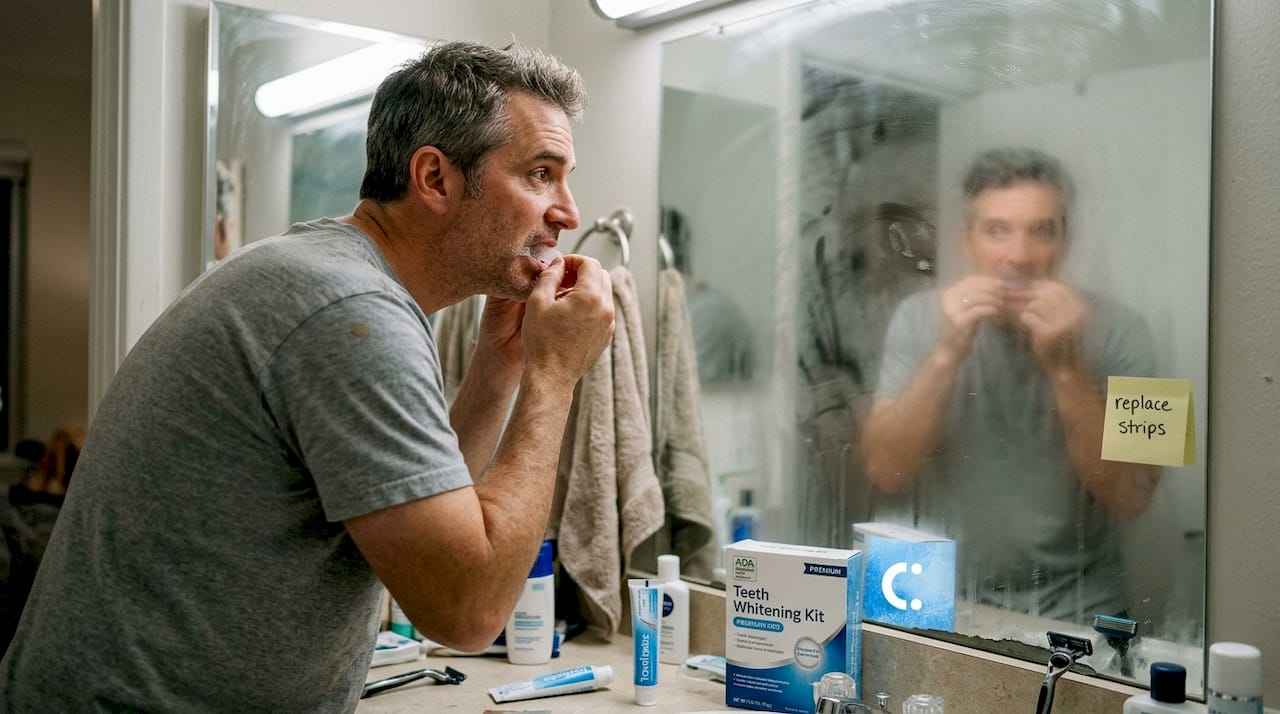
ADA-approved strips remove stains equivalent to up to 10 years of discoloration in just 14 days. That is a significant result for a product you apply at home.
To get the most from strips without triggering sensitivity:
- Start with a lower-peroxide strip (around 6%) if you have not whitened before.
- Apply strips to clean, dry teeth for better adhesion and penetration.
- Never exceed the recommended wear time. More time does not mean more white.
- Space treatments at least 6 months apart to give enamel time to recover.
- Support enamel between sessions with enamel-strengthening minerals.
“For adults with existing sensitivity, using a desensitizing toothpaste for two weeks before starting a strip regimen significantly reduces discomfort during treatment.”
For a comparison of ADA-accepted strips by strength and format, Clinical Advisor’s guide is a reliable starting point.
Dentist take-home trays: Custom strength, long-term benefits
For those ready for a stronger solution, dentist trays are next. Custom trays from your dentist use higher peroxide concentrations than over-the-counter options, but the real advantage is fit. A tray molded to your exact teeth keeps the gel where it belongs and away from your gums.
Custom trays deliver a 2.5 shade improvement and results that last approximately two years with proper maintenance. That longevity makes them cost-effective compared to repeated strip purchases.
| Feature | Whitening strips | Custom dentist trays |
|---|---|---|
| Peroxide concentration | 6 to 14% | 10 to 22% |
| Fit | Generic | Molded to your teeth |
| Shade improvement | 2 to 5 shades | Up to 2.5 shades (sustained) |
| Result duration | 3 to 6 months | Up to 2 years |
| Sensitivity risk | Moderate | Moderate to high |
Who benefits most from custom trays:
- Adults with uneven staining that strips cannot fully address.
- Those who want longer-lasting results without repeated treatments.
- Anyone whose dentist has confirmed healthy enamel and gum tissue.
Pro Tip: Ask your dentist for a lower-concentration gel (10% carbamide peroxide) and wear the tray overnight. Slower release means less sensitivity and comparable results. Supporting enamel support with minerals during the treatment period helps buffer the process.
The custom tray evidence from peer-reviewed research confirms their effectiveness across multiple shade measurement systems.
Professional in-office whitening: Rapid change, higher intensity
Some prefer the fastest change, and here is what to know about professional whitening. In-office treatments use high-concentration hydrogen peroxide (up to 40%) activated by light or heat, delivering dramatic results in a single session.
Professional whitening yields the fastest results but also carries the highest sensitivity risk, particularly for adults over 30 with thinner enamel.
Key considerations before booking:
- Speed: Up to 8 shades of improvement in one 60 to 90 minute visit.
- Supervision: A dentist monitors gum protection and gel application, reducing the risk of soft tissue damage.
- Sensitivity: Post-treatment sensitivity can last 24 to 72 hours. Plan accordingly.
- Longevity: In-office results are not necessarily more durable than supervised at-home options. Maintenance matters more than the initial treatment.
For adults who want the fastest visible change before an event, in-office whitening is hard to beat. For long-term value, combining a single in-office session with custom take-home trays and attention to diet and enamel health produces the best sustained outcome.
For a full breakdown of in-office whitening details including cost ranges and procedure steps, Dr. Peter Hazim’s guide covers the essentials.
New innovations: Dissolving strips and PAP+ for sensitive teeth
Let’s review the latest innovations designed for your needs. Two technologies are changing the game for adults who want results without the sensitivity trade-off.
Dissolving strips use a water-soluble film that adheres to teeth and disappears during wear. No peeling, no mess, and no uneven coverage from a strip that shifts.
PAP+ (phthalimidoperoxycaproic acid) whitens without peroxide, targeting chromogens (stain molecules) directly without oxidizing the enamel structure. This makes it significantly gentler for adults with existing sensitivity.
| Technology | Mechanism | Sensitivity risk | Enamel impact |
|---|---|---|---|
| Traditional peroxide strips | Oxidizes enamel chromogens | Moderate to high | Can stress enamel with overuse |
| PAP+ strips | Targets chromogens directly | Low | Minimal enamel stress |
| Nano-HA + CP formula | Whitens and remineralizes | Low | Actively repairs enamel |
The science supports combining these approaches. 12% CP plus nano-HA balances whitening efficacy with enamel preservation, making it a strong option for adults prioritizing long-term dental health. For more on how hydroxyapatite for enamel works at the mineral level, the mechanism is worth understanding before you choose a product.
For a look at innovative whitening strips using these newer technologies, Snow’s dissolving strip format is one of the more accessible options currently available.
Pre-whitening steps: Minimize sensitivity for adults 30+
Before any whitening, protect your enamel with these easy steps. Sensitivity is the number one reason adults abandon whitening regimens, and most of it is preventable.
Pretreating with potassium nitrate toothpaste reduces whitening sensitivity by up to 68%. That is a significant buffer from a simple two-week habit before you start.
Here is a practical pre-whitening protocol:
- Switch to a potassium nitrate or stannous fluoride toothpaste two weeks before treatment.
- Avoid acidic foods and drinks (citrus, soda, vinegar-based dressings) for 48 hours before each session.
- Do not whiten immediately after brushing. Wait 30 minutes to let saliva restore your enamel’s surface layer.
- Check your maintaining pH balance habits. A neutral oral environment reduces enamel stress during treatment.
- If you have crowns, veneers, or significant recession, consult your dentist before starting any peroxide-based regimen.
Pro Tip: Keep a desensitizing gel on hand during your whitening period. Applying it in your tray for 10 minutes after a whitening session can cut post-treatment discomfort significantly.
For additional pre-whitening sensitivity advice, Bianca Bright’s guide covers product-specific recommendations worth reviewing.
Maintaining whiter teeth: Diet, habits, and long-term care
Once you have achieved whiter teeth, here is how to keep them bright. Whitening is not a one-time fix. The same dietary and lifestyle factors that caused staining in the first place will bring it back if you do not address them.
Stain-preventing habits and a calcium-rich diet are among the most effective tools for maintaining whitening results over time.
Practical maintenance habits:
- Rinse after staining drinks. Coffee, tea, and red wine are the top culprits. A water rinse within 30 minutes of consumption reduces stain adhesion.
- Use a straw for cold staining beverages to limit contact with front teeth.
- Eat crunchy vegetables like celery and carrots. Their texture provides mild mechanical cleaning between brushing sessions.
- Prioritize calcium and phosphate. Dairy, leafy greens, and nuts support the remineralization cycle that keeps enamel dense and reflective.
Pro Tip: A touch-up strip session every 3 to 4 months is far more effective than waiting until staining is visible again. Maintenance is always easier than correction.
For the mineral side of long-term enamel care, diet for enamel strength explains how specific nutrients interact with your tooth structure at the chemical level.
Ready to brighten your smile? Explore more solutions
Whitening is one piece of a larger oral health picture. The methods above address surface stains and enamel protection, but the chemistry happening inside your mouth every day determines how well those results hold.
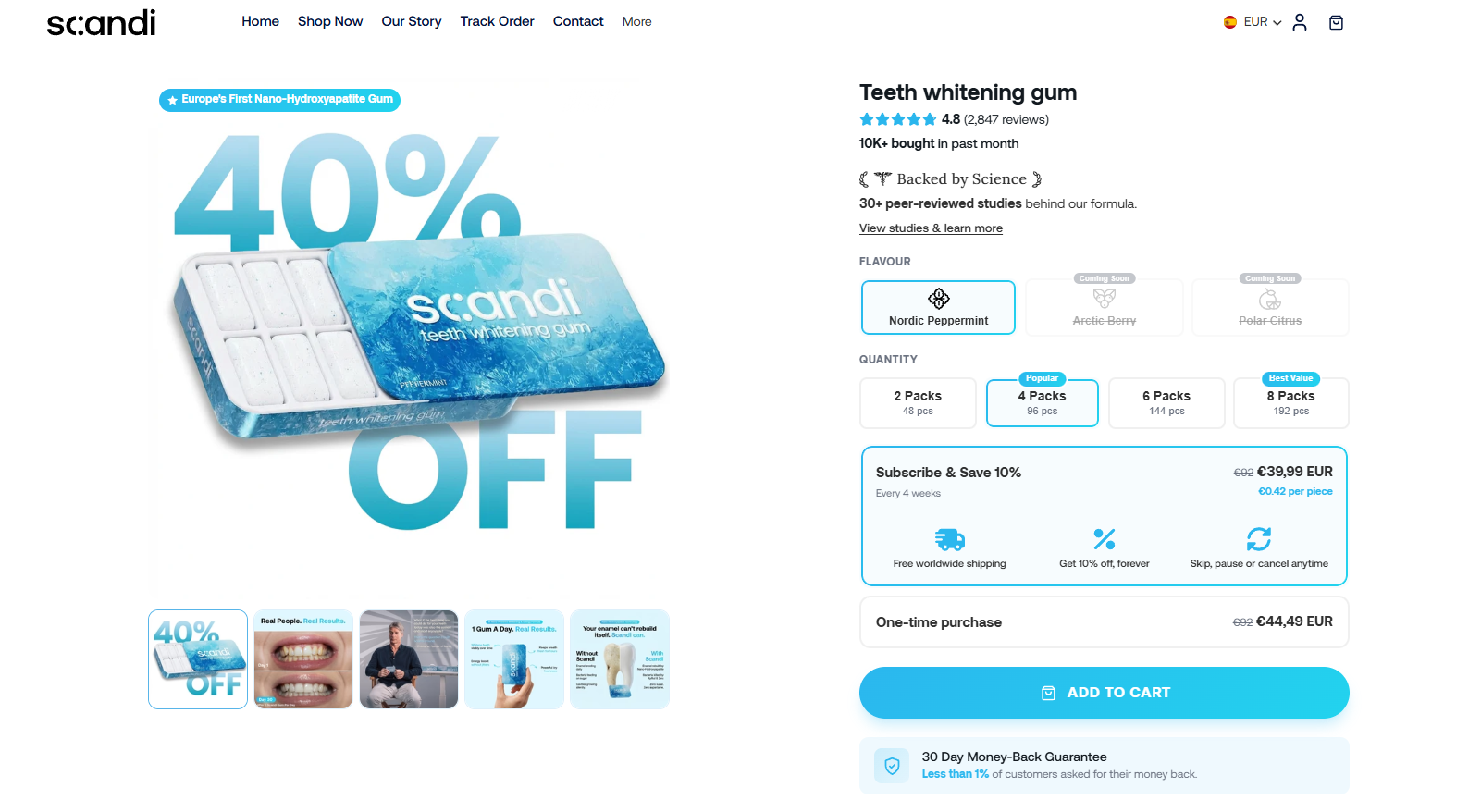
Scandigum approaches oral health from the inside out, using the biology of chewing and buccal absorption to support remineralization and a healthier oral environment. If you want to go beyond surface whitening and support the enamel chemistry that makes results last, explore innovative oral care solutions designed around how your mouth actually works. You can also learn about enamel minerals and how targeted mineral support fits into a complete whitening and maintenance strategy.
Frequently asked questions
Is it safe to whiten teeth after age 30?
Yes, but adults 30 and older should use ADA-approved methods and screen for sensitivity risks before starting any peroxide-based regimen to avoid enamel damage.
How quickly can whitening strips show results?
ADA-approved strips can remove up to 10 years of stains in 14 days, with noticeable shade improvement visible after the first few applications.
What can I do if whitening causes sensitivity?
Pre-treat with a potassium nitrate toothpaste for two weeks before starting. Pre-treating reduces sensitivity by up to 68%, and your dentist can recommend stronger desensitizing options if discomfort persists.
Are natural remedies effective for whitening?
Most natural remedies deliver minimal whitening benefit and carry real risks. Baking soda overuse in particular can erode enamel over time, making the problem worse rather than better.
Can whitening weaken enamel?
Overuse or high-intensity methods can stress enamel structure. Follow product guidelines strictly, and the ADA bleaching safety guidelines confirm that approved products used as directed carry minimal long-term risk.