

Your teeth aren’t just sitting there waiting to decay. Every moment, a microscopic battle unfolds on your enamel surface. Minerals like calcium, phosphate, and fluoride work to repair damage caused by acids and bacteria. This process, called remineralization, happens naturally when your saliva contains the right mineral balance. The challenge is that modern diets and lifestyle factors often tip the scales toward demineralization. Innovative oral care products, including functional chewing gum enriched with bioavailable minerals, offer a scientifically backed way to support your enamel’s natural repair mechanisms. Understanding which minerals matter and how to deliver them effectively transforms oral care from reactive damage control to proactive enamel strengthening.
Table of Contents
- Key takeaways
- Understanding enamel and the essential minerals for remineralization
- Innovative mineral delivery through functional chewing gum
- Comparing mineral compounds: nano-hydroxyapatite, fluoride, and synergistic blends
- Special considerations: mineral oral care for dry mouth and high-risk individuals
- Explore Scandi Gum’s mineral-enriched chewing gum for oral health
- Frequently asked questions
Key Takeaways
| Point | Details |
|---|---|
| Essential minerals for remineralization | Calcium and phosphate ions in saliva must be balanced to rebuild enamel during remineralization. |
| Fluoride strengthens enamel | Fluoride becomes fluorapatite, making enamel more resistant to acid attacks. |
| Gum mineral delivery | The chewing gum uses CPP-ACP to stabilize and keep calcium and phosphate bioavailable in saliva. |
| Saliva governs remineralization | Saliva chemistry and flow, pH above 5.5, and buffers determine whether minerals strengthen enamel throughout the day. |
Understanding enamel and the essential minerals for remineralization
Tooth enamel stands as the most mineralized tissue in your body, composed of 96% hydroxyapatite mineral crystals. This crystalline structure gives teeth their incredible hardness, but it also makes them vulnerable to a constant cycle of mineral loss and gain. When you consume acidic foods or when bacteria produce acid from sugars, hydrogen ions attack the hydroxyapatite lattice, pulling calcium and phosphate ions out of the enamel. This demineralization creates microscopic pores and weaknesses in the tooth surface.
The repair process depends entirely on three essential minerals working together. Calcium and phosphate ions must be present in your saliva at the ideal 10:6 ratio to rebuild the hydroxyapatite structure. These ions migrate into the microscopic pores created by acid attacks, gradually filling them and restoring enamel integrity. The process requires your saliva to be supersaturated with these minerals, meaning it contains more calcium and phosphate than would normally dissolve in solution.
Fluoride transforms this repair process by incorporating itself into the enamel structure. When fluoride ions are present during remineralization, they replace some hydroxyl groups in the hydroxyapatite crystal, forming fluorapatite. This modified crystal structure resists acid dissolution far better than the original hydroxyapatite. The result is enamel that not only repairs itself but becomes stronger and more resistant to future acid attacks.
Your saliva chemistry determines whether your teeth experience net mineral gain or loss throughout the day. Several factors influence this balance:
- Salivary flow rate affects how quickly minerals reach tooth surfaces
- pH levels must stay above 5.5 to prevent demineralization
- Protein buffers in saliva neutralize acids and stabilize mineral ions
- Dietary choices either flood the mouth with acids or support alkaline conditions
Maintaining proper oral chemistry means your enamel can perform continuous self-repair. Modern dentistry tips for gum enthusiasts emphasize supporting these natural processes rather than relying solely on professional interventions. The key lies in ensuring your mouth maintains mineral supersaturation throughout the day, especially after meals when acid levels peak.
Innovative mineral delivery through functional chewing gum
Functional chewing gum represents a breakthrough in delivering minerals exactly where your teeth need them. Unlike toothpaste that gets rinsed away or supplements that must travel through your digestive system, chewing gum keeps bioavailable minerals in direct contact with your enamel for 15 to 20 minutes. This extended contact time, combined with the mechanical stimulation of chewing, creates ideal conditions for remineralization.
The science behind mineral-enriched gum centers on a compound called casein phosphopeptide-amorphous calcium phosphate, or CPP-ACP. This complex keeps calcium and phosphate ions stable and bioavailable in your saliva. Without this stabilization, these minerals would normally bind together and precipitate out of solution before reaching your tooth surfaces. CPP-ACP in chewing gum elevates salivary calcium and phosphate, with studies showing 36.6% remineralization when using 60% CPP-ACP formulations.
Chewing itself triggers a cascade of beneficial effects beyond mineral delivery. The mechanical action stimulates your salivary glands to produce 10 to 12 times more saliva than resting flow rates. This saliva surge accomplishes several critical functions:
- Dilutes and neutralizes acids produced by bacteria or consumed in foods
- Carries buffering proteins that stabilize pH levels above the critical 5.5 threshold
- Delivers natural antimicrobial compounds that reduce bacterial populations
- Provides the liquid medium necessary for mineral ions to reach enamel surfaces
- Washes away food particles and debris that would otherwise fuel bacterial growth
The convenience factor makes functional chewing gum benefits particularly valuable for real-world oral care. You can use it immediately after meals when acid levels peak, during travel when brushing isn’t practical, or throughout the day to maintain mineral saturation. People with dry mouth conditions find chewing gum especially helpful because it compensates for reduced natural saliva production.
Pro Tip: Chew mineral-enriched gum for at least 15 minutes after meals to maximize both saliva stimulation and mineral delivery to your enamel. This timing coincides with the peak acid challenge period when your teeth need the most protection.
Regular use creates a protective cycle. Each chewing session deposits minerals onto your enamel while simultaneously removing the acids and bacteria that cause demineralization. Over weeks and months, this consistent mineral supplementation strengthens enamel structure, reduces sensitivity, and prevents the progression of early decay lesions. The cumulative effect transforms your oral environment from one of constant mineral loss to one of net mineral gain.
Comparing mineral compounds: nano-hydroxyapatite, fluoride, and synergistic blends
The oral care industry has evolved beyond single-agent approaches to enamel protection. Nano-hydroxyapatite, or nHA, emerged as a biomimetic alternative that literally mimics your natural tooth mineral. These particles measure 20 to 80 nanometers in diameter, small enough to penetrate into enamel pores and bond directly to the tooth surface. Research demonstrates that nHA provides biomimetic remineralization comparable to fluoride, with studies showing 39% mineral gain for nHA versus 41% for fluoride treatments.

The mechanism differs fundamentally from fluoride’s approach. While fluoride incorporates into the crystal structure during remineralization, nHA particles physically fill microscopic defects and serve as nucleation sites for further mineral deposition. This creates a scaffold that guides your body’s natural remineralization process. The particles also release calcium and phosphate ions slowly over time, maintaining local mineral supersaturation even between brushing or chewing sessions.
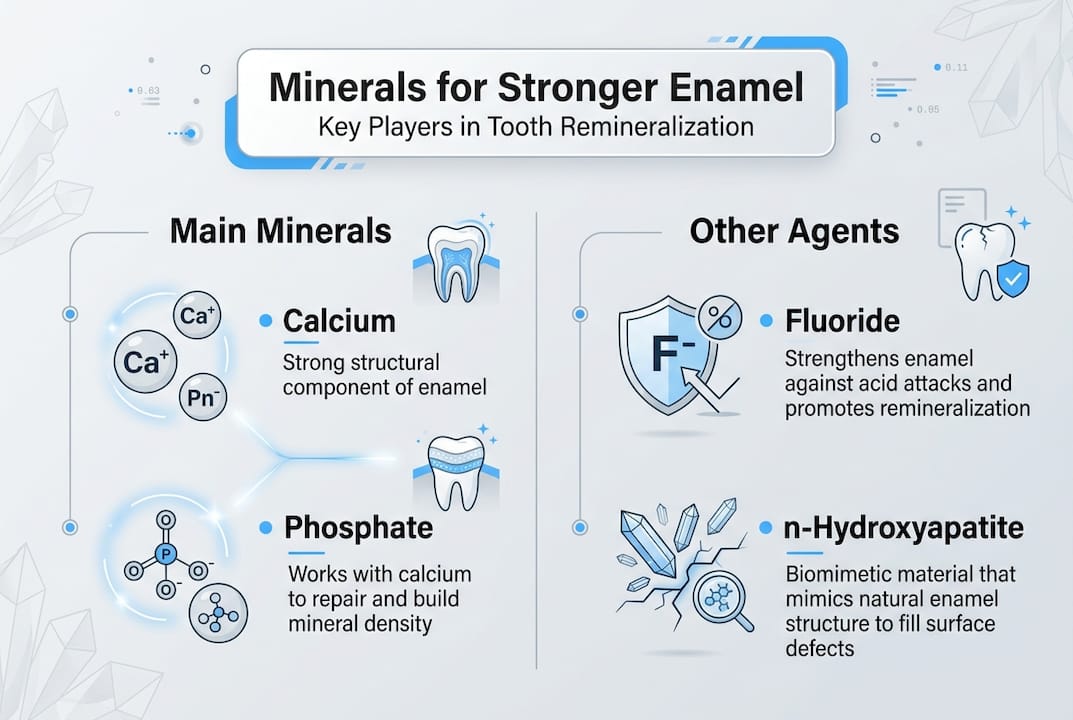
Fluoride remains the gold standard for reducing enamel solubility. Fluoride reduces enamel dissolution by 25% when incorporated into the crystal lattice as fluorapatite. This acid resistance proves critical for people with high sugar consumption or acidic diets. However, fluoride requires the presence of calcium and phosphate to work effectively. Without adequate mineral ions in saliva, fluoride alone cannot rebuild enamel structure.
Combination formulations leverage the strengths of multiple approaches:
| Formulation type | Key components | Primary benefit | Best for |
|---|---|---|---|
| CPP-ACPF | Casein peptides, calcium, phosphate, fluoride | Enhanced mineral delivery plus acid resistance | Daily prevention, early decay |
| Hydroxyapatite plus fluoride | nHA particles, sodium fluoride | Physical repair plus chemical strengthening | Sensitive teeth, erosion |
| Tri-calcium phosphate with fluoride | Functionalized TCP, fluoride | Sustained mineral release, strong fluorapatite formation | High-risk patients, dry mouth |
| Biomimetic mineral complex | nHA, calcium, phosphate, trace minerals | Comprehensive enamel reconstruction | Post-whitening, enamel hypoplasia |
Some research introduces important nuances about product formulation. Evidence shows HAP may not always outperform fluoride in erosion prevention, with results varying based on particle size, concentration, and delivery vehicle. This underscores the importance of choosing products with clinical backing rather than assuming all mineral formulations work equally well.
Pro Tip: Look for products that combine minerals with fluoride rather than choosing one or the other. The synergistic effect typically provides better protection than either agent alone, especially if you face multiple risk factors like dry mouth or frequent snacking.
Understanding mouth chemistry and mineral efficacy helps you select the right products for your situation. Your saliva pH, buffering capacity, and baseline mineral content all influence how well different formulations work. People with naturally low salivary calcium benefit more from CPP-ACP products, while those with high acid exposure may need the extra protection that fluoride provides. The most effective strategy often involves rotating or combining different mineral delivery systems throughout your daily routine.
Special considerations: mineral oral care for dry mouth and high-risk individuals
Xerostomia, or chronic dry mouth, fundamentally disrupts the natural remineralization process. Saliva serves as the delivery vehicle for minerals, the buffer against acids, and the protective coating that prevents bacterial adhesion. When salivary flow drops below normal levels, your enamel loses its primary defense mechanism. The mineral deficit becomes severe because both the quantity and quality of saliva decline. Reduced flow means fewer calcium and phosphate ions reach your teeth, while lower pH and reduced buffering capacity create an environment that favors demineralization.
High-risk individuals require aggressive mineral supplementation strategies. Patients with low salivary calcium and phosphate benefit from 5000ppm fluoride combined with biomimetic hydroxyapatite or CPP-ACP products. This multi-pronged approach compensates for the missing natural protection. The high fluoride concentration provides maximum acid resistance, while the mineral complexes ensure adequate calcium and phosphate availability despite reduced saliva.
Chewing gum offers particular advantages for people with dry mouth:
- Mechanical stimulation triggers any remaining salivary function
- Mineral-enriched formulations directly supplement the depleted ion pool
- Extended chewing time keeps protective compounds in contact with teeth
- Sugar-free gums with xylitol provide additional antimicrobial benefits
- Convenient for frequent use throughout the day without additional brushing
Dental restorations face accelerated degradation in mineral-poor oral environments. Crowns, fillings, and bonded veneers all depend on healthy surrounding enamel for long-term success. When the natural tooth structure weakens from ongoing demineralization, restoration margins fail and secondary decay develops. Mineral supplementation preserves the tooth structure supporting these restorations, extending their functional lifespan and reducing the need for replacement.
Tailored mineral regimens for high-risk patients typically follow this protocol:
- Morning application of high-fluoride toothpaste to establish baseline protection
- Post-meal use of mineral-enriched chewing gum to neutralize acids and supplement ions
- Midday application of CPP-ACP cream or mousse to vulnerable areas
- Evening brushing with nHA toothpaste for overnight repair
- Before-bed application of prescription-strength fluoride gel for maximum overnight protection
The goal is maintaining constant mineral supersaturation in whatever saliva remains. This intensive approach prevents the rapid enamel breakdown that would otherwise occur. People undergoing cancer treatment, taking medications that reduce saliva, or dealing with autoimmune conditions like Sjögren’s syndrome need this level of intervention to preserve their teeth. Oral care for dry mouth becomes a critical health priority rather than just a cosmetic concern.
Monitoring and adjustment prove essential. Your dental professional should assess mineral balance through saliva testing and track enamel changes with advanced imaging. As your condition evolves or treatments change, your mineral supplementation strategy may need modification. The investment in targeted mineral products pays dividends by preventing costly dental work and preserving your natural teeth for decades longer than would otherwise be possible.
Explore Scandi Gum’s mineral-enriched chewing gum for oral health
Your enamel deserves more than passive protection. Scandi Gum delivers active mineral support through functional chewing gum formulated with CPP-ACP and bioavailable calcium phosphate complexes. Each piece transforms the simple act of chewing into a scientifically designed enamel strengthening session.
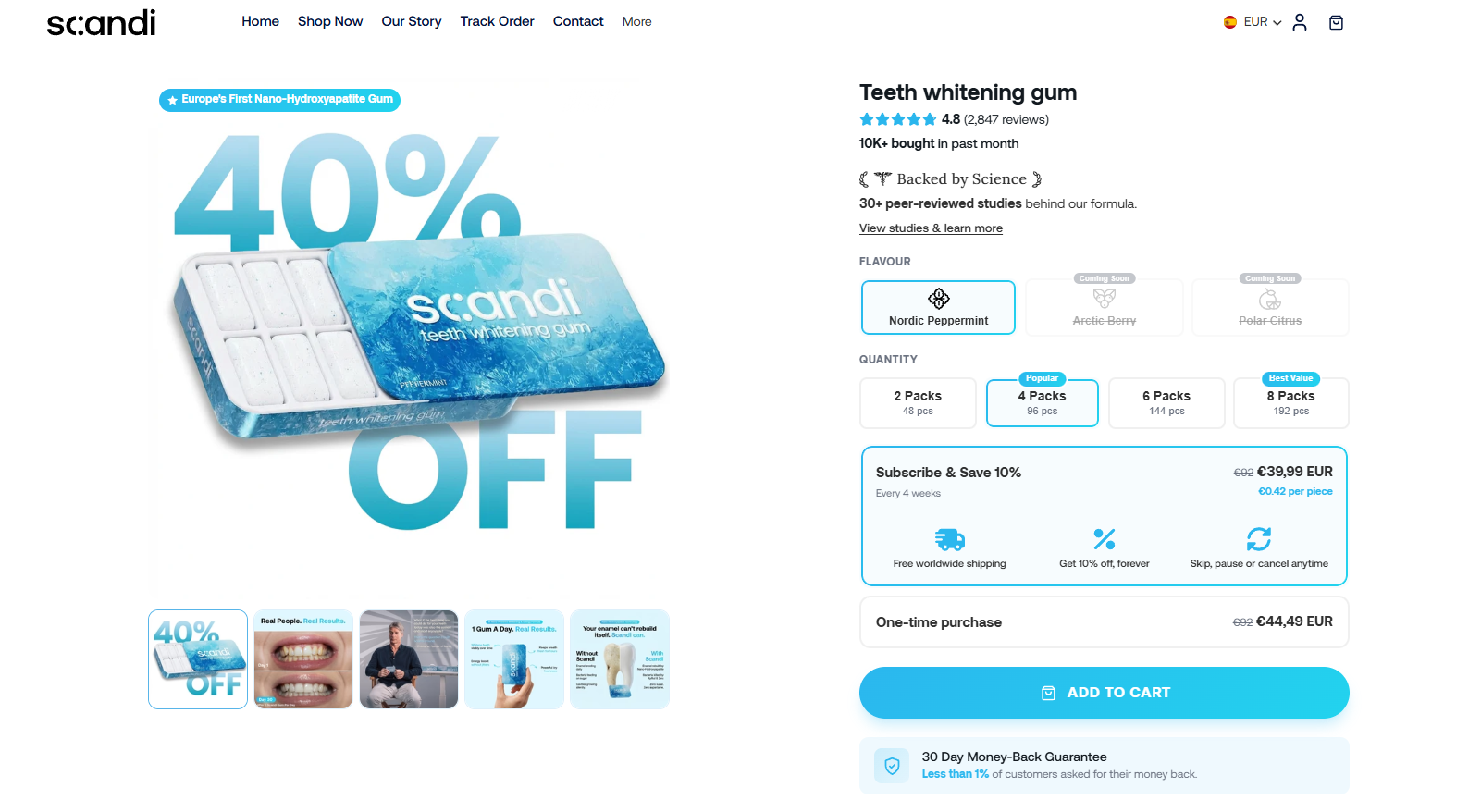
The innovation lies in combining mineral delivery with saliva stimulation. While you chew, your salivary glands flood your mouth with protective fluids carrying the minerals your teeth need most. The CPP-ACP complex keeps these minerals stable and ready for enamel absorption. This dual-action approach addresses both the supply side, providing minerals, and the demand side, creating the optimal environment for remineralization. Whether you’re managing dry mouth, recovering from whitening treatments, or simply want stronger enamel, mineral-enriched gum fits seamlessly into your daily routine. Discover how our story of bio-optimization translates into practical oral health benefits, and explore Scandi Gum products designed to support your enamel’s natural repair mechanisms.
Frequently asked questions
What minerals are most important for oral health?
Calcium and phosphate form the structural foundation of tooth enamel, making them essential for any remineralization process. Your saliva must maintain these minerals at a 10:6 ratio for optimal enamel repair. Fluoride enhances this process by incorporating into the crystal structure, creating acid-resistant fluorapatite that protects against future demineralization. Trace minerals like magnesium and zinc support enzymatic processes in saliva, while strontium may offer additional crystal stability. The combination of adequate calcium, phosphate, and fluoride creates the mineral environment your teeth need for continuous self-repair and strengthening throughout your life.
How does fluoride work with minerals to protect teeth?
Fluoride acts as a catalyst and enhancer for the natural remineralization process rather than working independently. When calcium and phosphate ions deposit onto your enamel surface, fluoride ions can substitute for hydroxyl groups in the crystal lattice. This creates fluorapatite, which reduces enamel solubility by 25% compared to natural hydroxyapatite. The fluoride also lowers the critical pH threshold at which demineralization begins, giving your teeth a wider safety margin against acid attacks. Synergistic combinations like CPP-ACPF or hydroxyapatite with fluoride deliver both the building blocks for repair and the chemical modification for enhanced protection, making them more effective than either component alone.
Can chewing gum help with enamel remineralization?
Functional chewing gum containing minerals like CPP-ACP directly supports enamel repair through multiple mechanisms. The chewing action stimulates saliva production up to 12 times normal flow, flooding your mouth with natural buffers and minerals. CPP-ACP gum elevates salivary calcium and phosphate, with clinical studies demonstrating 36.6% remineralization rates. The extended contact time of 15 to 20 minutes keeps bioavailable minerals in direct contact with your enamel, maximizing absorption into early decay lesions. Post-meal chewing proves especially effective because it neutralizes acids precisely when your teeth face the greatest demineralization risk. For people with dry mouth, mineral-enriched gum provides both the missing saliva stimulation and the supplemental minerals their reduced natural flow cannot deliver, making it an ideal oral care solution for multiple oral health challenges.