


TL;DR:
- Functional gums contain ingredients like xylitol and caffeine designed for specific health benefits.
- Chewing gum stimulates saliva, aiding oral health and disrupting cavity-causing bacteria.
- Buccal absorption allows caffeine in gum to enhance focus within about 5 minutes.
Gum has a reputation problem. For decades, it’s been filed under “breath freshener” and nothing more. But that framing ignores a growing body of research showing that chewing gum affects oral and cognitive health in measurable, meaningful ways. Functional gum takes that science seriously, engineering each piece around specific physiological outcomes rather than just flavor. This article breaks down exactly how it works, what the evidence says, and how you can use it to support both your dental health and your mental performance every day.
Table of Contents
- What makes a gum ‘functional’?
- Oral health benefits of functional gum
- Functional gum and cognitive enhancement: What the science says
- Beyond the basics: Shelf life, formulation, and real-life application
- Our perspective: Gum’s real-world role in modern health routines
- Try functional gum: Take charge of your wellness
- Frequently asked questions
Key Takeaways
| Point | Details |
|---|---|
| Functional gum delivers real benefits | Scientific evidence shows functional gum can support both oral health and mental sharpness. |
| Xylitol and caffeine are proven actives | Gums with xylitol reduce cavities, while caffeine-infused gum enhances focus quickly. |
| Chewing itself matters | The act of chewing boosts blood flow to the brain and mouth, unlocking key health effects. |
| Formulation impacts longevity | Modern functional gums use antioxidants to ensure freshness and maximize shelf life. |
What makes a gum ‘functional’?
Not every stick of gum earns the “functional” label. The distinction comes down to formulation intent. A standard gum is designed to taste good and temporarily mask bad breath. A functional gum is designed around a biological target, whether that’s remineralizing enamel, sharpening focus, or both.
The active ingredients are what separate the two categories. Functional gums contain xylitol, caffeine, and antioxidants to deliver specific health benefits rather than just a pleasant chew. These aren’t marketing add-ons. Each ingredient is selected because it interacts with a specific biological pathway.
Here’s what you’ll typically find in a well-formulated functional gum:
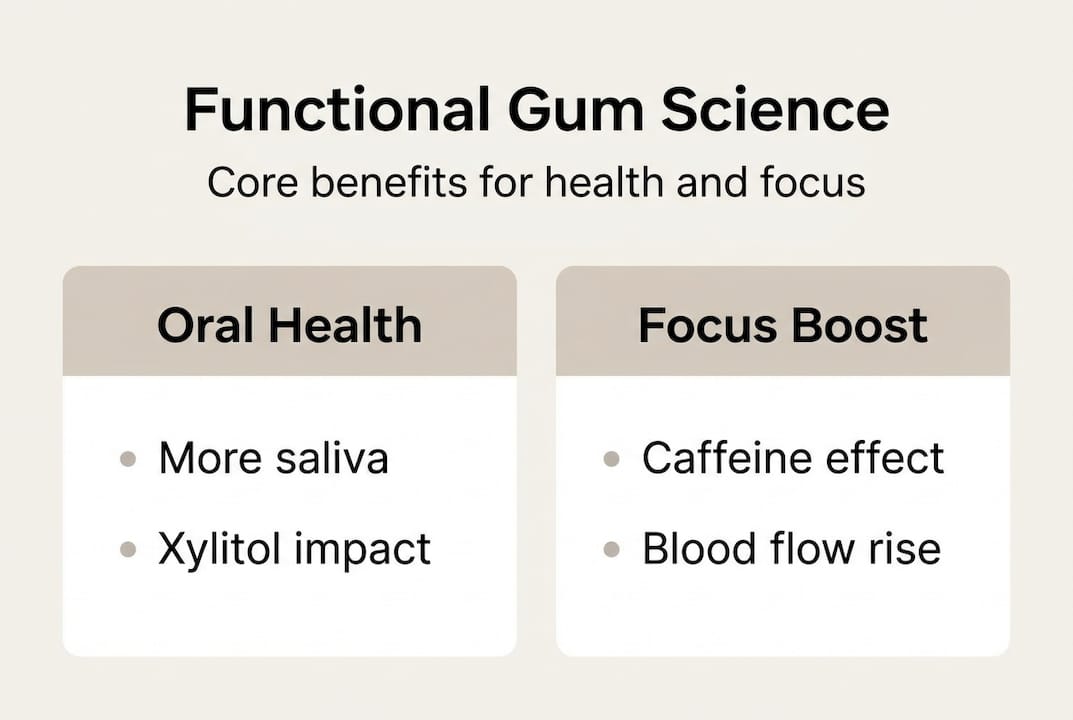
- Xylitol: A sugar alcohol that disrupts the bacteria responsible for tooth decay and supports enamel remineralization
- Caffeine: A central nervous system stimulant that, when absorbed through the buccal mucosa (the lining of your cheeks), reaches the bloodstream faster than coffee or energy drinks
- Phenolic extracts and antioxidants: Plant-derived compounds that reduce oxidative stress in oral tissue and extend product shelf life
- Mineralizing agents: Calcium and phosphate compounds that help restore the hydroxyapatite lattice in tooth enamel
Formulation also matters beyond the ingredient list. Quick-release gum bases are engineered to break down active compounds within the first few minutes of chewing, maximizing absorption through the mouth’s highly vascularized tissue. This is a fundamentally different delivery mechanism than swallowing a supplement.
Pro Tip: Look for gums that list xylitol as the first or second ingredient. That placement signals a meaningful dose, not a trace amount added for label appeal.
If you want to optimize gum chewing for both dental and cognitive outcomes, understanding what’s in your gum before you chew it is the smartest starting point.
Oral health benefits of functional gum
The mouth is a dynamic chemical environment. Every meal, every sip of coffee, and every hour of dry-mouth breathing shifts its pH and bacterial balance. Functional gum works with that chemistry rather than against it.
The most immediate effect is mechanical. Chewing triggers the salivary glands to produce more saliva, and saliva is one of the body’s most underrated defense systems. Chewing stimulates saliva flow, reducing plaque acids and cleaning debris, which lowers the risk of cavities and gum disease. More saliva means more bicarbonate, which neutralizes the acid produced by oral bacteria after you eat.
Xylitol adds a targeted layer on top of that. Unlike regular sugar, xylitol cannot be fermented by Streptococcus mutans, the primary bacteria responsible for tooth decay. When those bacteria consume xylitol instead of sucrose, they produce no acid and eventually die off. Regular xylitol gum use has been shown to reduce cavity-causing bacteria in the mouth over time.
Here’s a quick summary of the key oral health mechanisms at work:
- Saliva buffering: Neutralizes acids that erode enamel after meals
- Debris clearance: Physical chewing dislodges food particles between teeth
- Bacterial disruption: Xylitol starves and kills decay-causing bacteria
- Remineralization support: Mineralizing agents redeposit calcium and phosphate into softened enamel
“Functional gum isn’t a replacement for brushing. It’s a between-meal tool that keeps your oral environment tilted toward repair rather than decay.”
For a deeper look at the mechanisms behind this, the oral health complete guide covers the full picture of how chewing supports dental health from the inside out.
Functional gum and cognitive enhancement: What the science says
Dental health is only one side of the coin. Functional gum is also marketed for mental sharpness. What does the research truly show?

The physiological case is strong. Mastication increases cerebral blood flow by up to 25%, particularly to regions involved in focus and sensorimotor processing. That’s not a small effect. More oxygenated blood reaching your prefrontal cortex means better decision-making capacity, and more activity in the hippocampus supports working memory.
Caffeine gum amplifies this further. Caffeine gum (100 to 400mg) improves cognitive performance with peak effect at 5 minutes via buccal absorption, which is dramatically faster than drinking coffee and waiting 30 to 45 minutes for GI absorption. That speed matters for real-world use.
| Delivery method | Absorption route | Time to peak effect |
|---|---|---|
| Coffee or energy drink | GI tract and liver | 30 to 45 minutes |
| Caffeine pill | GI tract and liver | 45 to 60 minutes |
| Caffeine gum | Buccal mucosa | ~5 minutes |
Key stat: A 25% increase in cerebral blood flow from chewing alone, before any active ingredient is factored in, is a meaningful neurological lever that most people never think to pull.
That said, the research is not uniformly positive. Some studies report no significant effect on complex cognitive tasks, and a few note that excessive chewing during demanding mental work can actually compete for attentional resources. Context matters. Functional gum works best for tasks requiring sustained alertness, like a long drive, a pre-meeting focus window, or a study session, rather than during deep analytical work that requires silence and stillness.
Pro Tip: Chew for 15 to 20 minutes before a focused work block, not during it. You get the blood flow and caffeine benefit without the sensory distraction of active chewing.
For more on optimizing gum for focus, timing and dosage are the two variables that make the biggest difference.
Beyond the basics: Shelf life, formulation, and real-life application
Understanding how functional gum is formulated and how to use it day-to-day is just as important as knowing what it does.
Formulation science has advanced significantly. Phenolic extracts and antioxidants in gum extend shelf life to nearly 20 months while preserving ingredient quality. This matters because a functional gum that degrades on the shelf delivers a fraction of its intended benefit. Antioxidants protect both the active ingredients and the gum base itself from oxidative breakdown, keeping the product stable and effective from the first piece to the last.
Here’s how functional gum compares to other common delivery formats:
| Format | Speed | Portability | Oral health benefit | Cognitive benefit |
|---|---|---|---|---|
| Functional gum | Fast (5 min) | High | Yes | Yes |
| Energy drink | Moderate (30 min) | Medium | No (acidic) | Yes |
| Supplement capsule | Slow (45 min) | Medium | No | Yes |
| Coffee | Moderate (30 min) | Low | No (staining) | Yes |
Functional gum wins on portability and speed, and it’s the only format that actively supports oral health at the same time.
For practical daily use, here’s a simple framework:
- Morning commute: One piece after breakfast to neutralize post-meal acids and prime your alertness for the day ahead
- Pre-meeting: Chew 15 minutes before a high-stakes conversation to increase cerebral blood flow and reduce cortisol
- After lunch: A xylitol-forward piece to disrupt bacteria and clear debris when brushing isn’t an option
- Afternoon slump: A caffeine-containing piece to sustain focus without the late-day crash of a second coffee
For more health and focus tips on building this into a real routine, small habits compounded over time produce the most durable results.
Our perspective: Gum’s real-world role in modern health routines
Here’s what we think most wellness conversations miss: functional gum isn’t trying to replace anything. It’s filling a gap that supplements, drinks, and dental products all leave open.
Most adults over 30 already understand that small, consistent actions compound into meaningful health outcomes. What they lack isn’t motivation. It’s accessible tools that do more than one thing at once. Sugar-free functional gums with xylitol and caffeine offer dental protection and acute cognitive boosts without adding another pill to your morning stack or another drink to your desk.
The mainstream gum industry spent decades optimizing for flavor and freshness. That’s a commercial choice, not a scientific one. The biology of the mouth has always supported more. The buccal mucosa absorbs compounds directly into the bloodstream. Chewing itself drives blood to the brain. Saliva is a mineralization system. None of that is new. What’s new is formulating around it intentionally.
We see gum chewing benefits as a daily practice, not a performance hack. The adults getting the most out of functional gum are the ones who treat it like a habit with a purpose, not a novelty.
Try functional gum: Take charge of your wellness
You now understand the mechanisms, the evidence, and the practical applications. The next step is putting that knowledge to work.
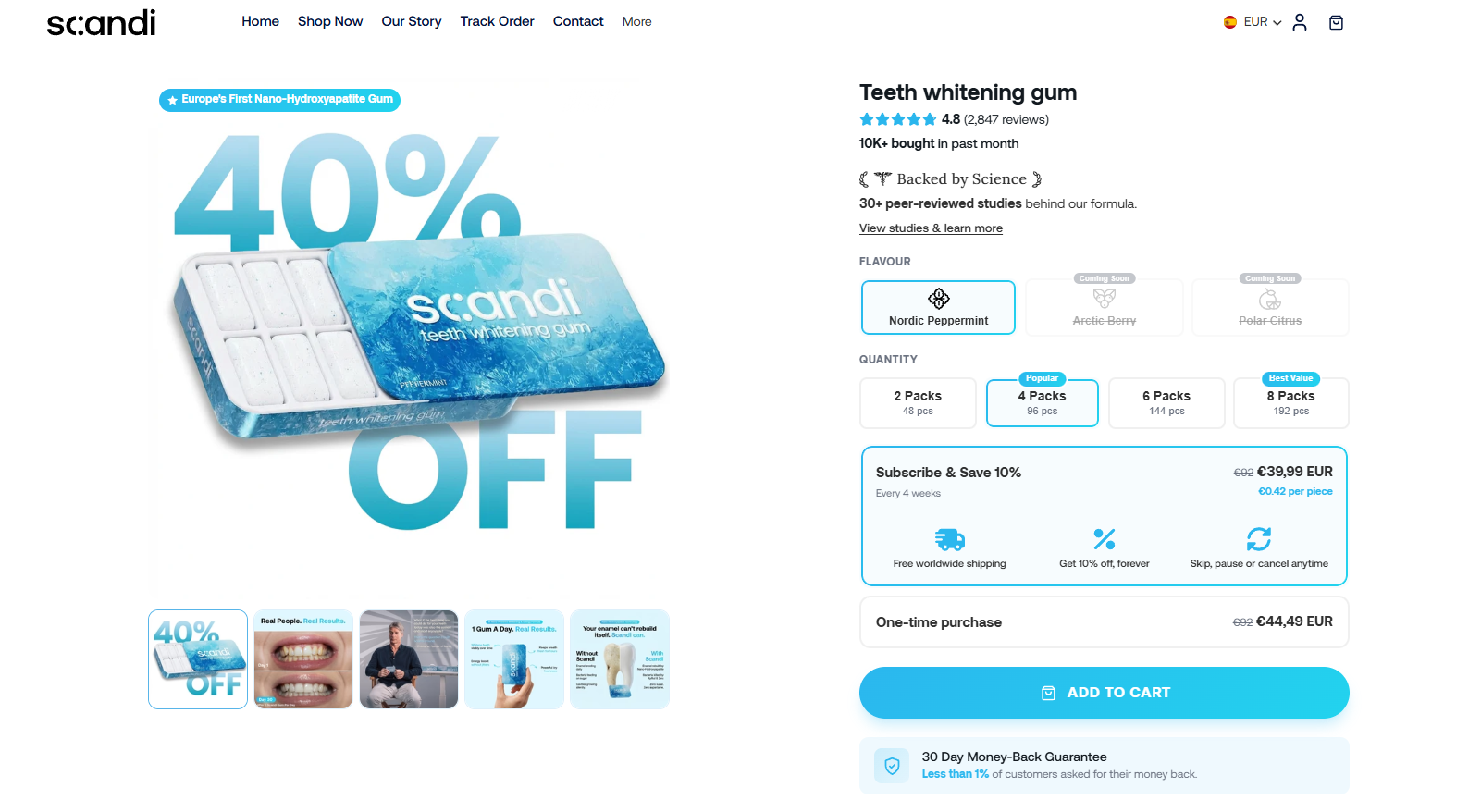
Scandi Gum functional gum is formulated around the exact science covered in this article. Every piece is engineered for buccal absorption, enamel support, and sustained cognitive lift without the spike-and-crash pattern of liquid caffeine. It’s not a novelty product. It’s a delivery system built on biology. If you’re ready to make your chewing habit work harder, explore gum optimization tips to build the routine that fits your day.
Frequently asked questions
What makes functional gum different from regular gum?
Functional gum includes health-oriented ingredients like xylitol or caffeine that deliver proven oral health or cognitive benefits, not just breath freshening. Regular gum is formulated for taste and texture with no therapeutic intent.
Can chewing gum really improve my focus and alertness?
Yes. Caffeine gum improves cognitive performance and alertness through rapid buccal absorption and the physiological effects of mastication on cerebral blood flow. The effect is faster and more controlled than drinking caffeine.
Is xylitol gum better for dental health than regular gum?
Xylitol gums prevent caries by disrupting the bacteria that produce tooth-decaying acids, making them measurably superior to sugar-sweetened or flavorless gum for oral health.
How quickly does functional gum provide effects?
Buccal absorption brings peak effects in about 5 minutes, which is significantly faster than any orally ingested supplement or caffeinated drink that must travel through the GI tract first.