


TL;DR:
- Truly dental-friendly gum actively supports oral health through saliva stimulation and mineral delivery.
- Xylitol is proven to reduce bacteria, plaque, and promote remineralization in controlled studies.
- Remineralizing gums with CPP-ACP or nano-hydroxyapatite aim to repair enamel and are best used after meals.
Not all sugar-free gums are created equal. Walk down any pharmacy aisle and you will find dozens of options all claiming to support your teeth, but the gap between a basic sugar-free stick and a genuinely functional gum is significant. The real differentiator comes down to specific ingredients, the science behind saliva stimulation, and whether a product is built to shift your oral environment from passive to actively protective. Understanding those distinctions means you can stop guessing and start choosing gum that actually moves the needle on your oral health.
Table of Contents
- What makes a gum truly ‘dental-friendly’?
- Xylitol gum: The proven antibacterial champion
- Remineralizing gums: CPP-ACP and nano-hydroxyapatite options
- Choosing your gum: Comparison and real-world recommendations
- Our take: The future of functional gum and dental health
- Explore innovative dental gum solutions
- Frequently asked questions
Key Takeaways
| Point | Details |
|---|---|
| Xylitol gums outperform sorbitol | Clinical reviews show xylitol reduces harmful bacteria and cavities better than other sugar-free gums. |
| Remineralizing gums repair enamel | CPP-ACP and nano-hydroxyapatite gum ingredients help rebuild tooth enamel and reduce erosion risk. |
| Chewing gum is adjunct care | Dental gum aids oral health but should always accompany brushing and flossing routines. |
| ADA Seal indicates trust | Gums with ADA Seal of Acceptance are proven to reduce plaque acids and support tooth strength. |
What makes a gum truly ‘dental-friendly’?
The first thing to understand is that “sugar-free” is a starting point, not a finish line. A gum qualifies as dental-friendly when it does more than avoid sugar. It needs to actively support the oral environment through one or more biological mechanisms.
The most fundamental mechanism is saliva stimulation. Chewing triggers the salivary glands to produce more fluid, which does several things at once. It washes away food debris, dilutes acids produced by bacteria, and delivers calcium and phosphate ions to the tooth surface. These ions are the raw materials your enamel needs to repair itself after an acid attack.
The American Dental Association (ADA) Seal of Acceptance is the most reliable shortcut for identifying evidence-backed products. To earn it, a gum must demonstrate measurable oral health benefits and use only safe ingredients. Sugar-free gums stimulate saliva and reduce plaque acids, which is exactly why brands like Trident and Orbit have held that seal for years.
Beyond the seal, look for these functional markers when evaluating any gum:
- Polyol sweeteners (xylitol, sorbitol, or erythritol) instead of fermentable sugars
- Active mineralizing agents such as CPP-ACP or nano-hydroxyapatite
- Buffering capacity to neutralize oral acids quickly
- Antimicrobial properties that reduce decay-causing bacteria
The chewing technology innovations behind modern functional gums have made it possible to embed these properties into a single piece of gum without compromising texture or taste.
Statistic: Saliva flow can increase up to ten times its resting rate during active chewing, creating a powerful natural defense window that lasts roughly 20 minutes.
Pro Tip: Chew your gum for at least 20 minutes immediately after a meal. That window is when oral pH is at its lowest and saliva stimulation delivers the most acid-neutralizing benefit.
With the criteria clear, you can now look at the specific ingredients that separate good gums from genuinely great ones.
Xylitol gum: The proven antibacterial champion
Xylitol is a naturally occurring sugar alcohol found in birch bark and many fruits. What makes it remarkable for dental health is not just what it avoids (fermentable sugar) but what it actively does to oral bacteria.

The primary decay-causing bacterium in the mouth is Streptococcus mutans. It feeds on regular sugars and produces lactic acid as a byproduct, which is what drives enamel erosion. Xylitol is absorbed by these bacteria but cannot be metabolized. The bacteria essentially starve, reproduce less, and lose their ability to stick to tooth surfaces.
Compared to sorbitol, xylitol’s advantage is clear. Xylitol-sweetened gums reduce mutans streptococci, plaque levels, and caries occurrence more effectively, according to a Cochrane systematic review. That said, the same review notes that much of the existing evidence is low to moderate quality, so results should be interpreted with some caution.
For practical use, the key benefits of xylitol gum include:
- Reduces S. mutans counts significantly over consistent use
- Lowers plaque formation and acid production
- Supports remineralization by keeping oral pH above the critical 5.5 threshold
- Suitable for people with diabetes since it has a low glycemic index
On dosing, the research from gum research advances aligns with clinical guidelines: optimal xylitol dose sits between 5 and 10 grams per day, spread across multiple chewing sessions. Most xylitol gums contain 1 to 2 grams per piece, so three to five pieces daily is a practical target.
“While xylitol shows consistent antibacterial effects in controlled settings, researchers emphasize that real-world results depend heavily on dose, frequency, and baseline oral hygiene. It works best as part of a complete care routine, not as a standalone solution.”
Pro Tip: Keep xylitol gum completely away from dogs. Even small amounts are acutely toxic to them and can cause rapid blood sugar drops and liver failure.
With xylitol’s antibacterial role established, the next layer of innovation focuses on gums that go further and actively rebuild enamel mineral structure.
Remineralizing gums: CPP-ACP and nano-hydroxyapatite options
Remineralizing gums represent the most advanced category in functional oral care. Rather than simply preventing damage, they aim to repair it by delivering mineral compounds directly to the tooth surface during chewing.
CPP-ACP (casein phosphopeptide-amorphous calcium phosphate) is derived from milk protein. When released in the mouth, it binds to tooth surfaces and acts as a mineral reservoir. It slowly releases calcium and phosphate ions in response to changes in oral pH, essentially topping up the enamel when it needs it most. CPP-ACP gums increase salivary calcium and phosphate, supporting active remineralization with a mean increase of 2.16 mg/dL in calcium levels.
Nano-hydroxyapatite (n-HA) is a newer and rapidly growing ingredient. Hydroxyapatite is the mineral that makes up roughly 97% of tooth enamel, and the nano-sized version can physically integrate into micro-cracks and surface lesions. Nano-hydroxyapatite gum research shows it is non-inferior to fluoride in some randomized controlled trials, making it a compelling fluoride-free option for those who prefer it.
Here is how the main remineralizing gum types compare:
| Ingredient | Primary effect | Research grade | Best for |
|---|---|---|---|
| CPP-ACP | Calcium/phosphate delivery | Moderate | Post-meal repair |
| Nano-hydroxyapatite | Enamel surface integration | Moderate to strong | Sensitivity and erosion |
| Fluoride-enhanced | Acid resistance | Strong | High-caries-risk users |
For those exploring cutting-edge gum formulations, n-HA is particularly interesting because it works without the systemic considerations associated with fluoride, and early data suggests real enamel repair potential.
The key practical points for remineralizing gums:
- Chew after meals when enamel is most vulnerable
- CPP-ACP products are not suitable for people with milk protein allergies
- n-HA gums are still gaining clinical traction but show strong early results
- Neither type replaces fluoride toothpaste in high-risk individuals without professional guidance
With remineralizing options mapped out, the next step is putting all three major categories side by side for a practical decision.
Choosing your gum: Comparison and real-world recommendations
Now that you understand what each gum type does, the practical question is which one fits your specific oral health goal. The answer depends on your risk profile, your daily routine, and what you are trying to achieve.
Here is a direct comparison of the three main dental gum categories:
| Gum type | Key benefit | ADA accepted | Best use case |
|---|---|---|---|
| Xylitol | Antibacterial, caries reduction | Some variants | Daily use, high bacteria load |
| CPP-ACP | Remineralization, mineral delivery | Limited | Post-meal, enamel repair |
| Nano-hydroxyapatite | Enamel surface repair | Emerging | Sensitivity, fluoride-free preference |
| Basic sugar-free | Saliva stimulation | Yes (many) | General maintenance |
Sugar-free gums establish benefit via saliva stimulation, but they work best when combined with brushing and flossing rather than used as a standalone strategy. The gum is a useful layer, not a replacement.
For a practical selection framework, follow these steps:
- Identify your primary goal. Cavity prevention points to xylitol. Enamel repair points to CPP-ACP or n-HA. General maintenance points to any ADA-accepted sugar-free option.
- Check the ingredient label. Look for xylitol listed as the first sweetener and a minimum of 1g per piece.
- Time your chewing sessions. Always chew after meals, not before, to get the most acid-neutralizing benefit.
- Combine with core hygiene. Gum works as an adjunct. Brush twice daily and floss once. The gum for health and focus research reinforces that functional gum delivers the most value when layered onto solid oral hygiene habits.
- Reassess every few months. Your oral health needs change. A gum that fits your needs today may not be the best choice after a dental treatment or dietary shift.
For more on how gum fits into a broader wellness picture, the gum health guide offers a solid overview of the broader benefits beyond just cavity prevention.
Our take: The future of functional gum and dental health
Functional gum is not hype. There is real innovation happening, and there are also real limitations that the marketing rarely mentions. The honest picture is somewhere in the middle.
What we have learned watching this category evolve is that evidence quality matters enormously. Cochrane low-quality evidence for xylitol alone reminds us that even the most celebrated ingredient has gaps in its research base. That is not a reason to dismiss xylitol. It is a reason to use it intelligently, at the right dose, consistently, and as part of a complete routine.
The emergence of nano-ionic ingredients like n-HA marks a genuine frontier. The idea that a gum can physically integrate into enamel structure is not science fiction anymore. But it is also not fully proven at scale yet. The functional gum science is advancing fast, and the next five years will likely produce much stronger clinical data.
Our position is simple. Dental gum is a powerful adjunct, not a replacement for core care. Use it strategically, choose ingredients with evidence behind them, and do not expect any single product to carry the full load of your oral health.
Explore innovative dental gum solutions
If you have made it this far, you already think about oral health differently than most people. You are not just looking for a fresh breath fix. You want gum that does something measurable.
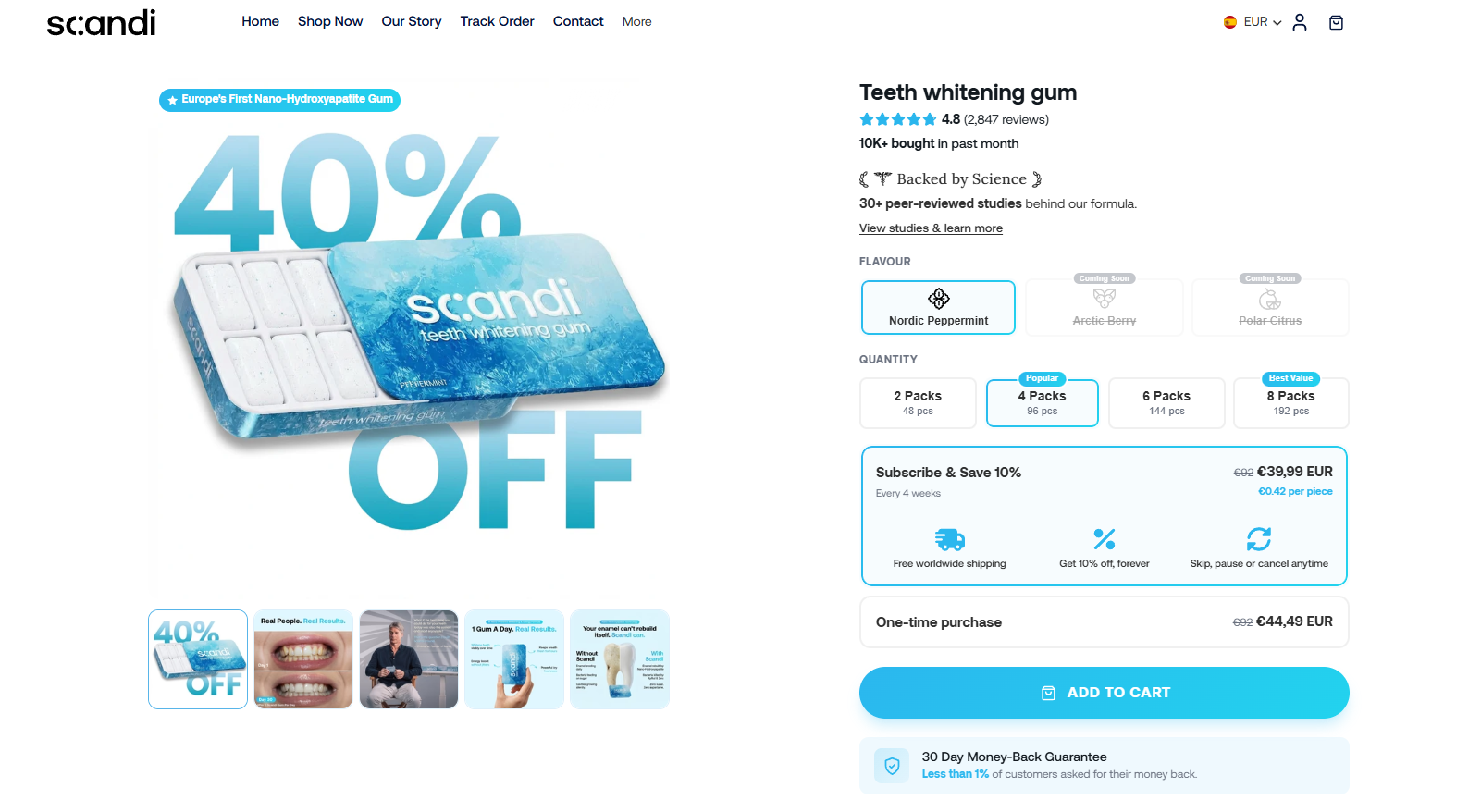
That is exactly the space Scandi Gum solutions are built for. Scandigum’s formulations are designed around bio-optimization, using the buccal delivery advantage and evidence-backed ingredients to support real physiological outcomes. Whether your focus is enamel protection, daily maintenance, or exploring the next generation of functional ingredients, browsing the full range is a natural next step toward aligning your gum choice with your health goals.
Frequently asked questions
Which gum ingredient offers the strongest cavity protection?
Xylitol-sweetened gums research shows xylitol outperformed sorbitol in 12 out of 14 studies, making it the most evidence-backed option for cavity prevention. It works by starving decay-causing bacteria rather than just avoiding sugar.
How often should I chew xylitol gum for dental benefits?
Chewing xylitol gum three to five times per day, reaching a total of 5 to 10 grams, delivers optimal xylitol dose results according to clinical guidelines. Spreading sessions throughout the day after meals is more effective than a single long session.
Are remineralizing gums as effective as fluoride toothpaste?
Nano-hydroxyapatite gum research shows n-HA is non-inferior to fluoride in some randomized controlled trials, but gum-specific evidence is still developing. For high-caries-risk individuals, fluoride toothpaste remains the clinical standard.
Can dental gum replace brushing and flossing?
No. Dental gum is a helpful adjunct that supports your oral hygiene routine but cannot replicate the mechanical plaque removal that brushing and flossing provide. Always use gum in addition to, not instead of, your core hygiene habits.
Are there any risks or side effects with functional gum?
At recommended doses, side effects are rare, but exceeding 10 grams of xylitol daily can cause digestive upset and pet toxicity. Keep all xylitol products stored away from dogs, as even small amounts can be life-threatening for them.