

TL;DR:
- A structured daily routine with proper tools and gum can protect and strengthen gums.
- Chewing sugar-free gum with xylitol or propolis supports saliva production and reduces bacteria.
- Lifestyle habits like quitting smoking and reducing sugar significantly improve long-term gum health.
Gum disease affects nearly half of adults over 30, yet most people still rely on a rushed two-minute brush and call it done. The real cost shows up later: receding gums, sensitivity, and dental bills that climb year after year. The good news is that a structured daily routine, paired with evidence-based innovations like functional chewing gum, can shift your oral environment from reactive damage control to active protection. This guide walks you through every step, from gathering the right tools to understanding which gum ingredients actually move the needle, so you can build a smarter, more affordable approach to lasting gum health.
Table of Contents
- Gather your gum health essentials
- Step-by-step: Build your daily gum health routine
- Innovative gum options: Chewing for health
- Lifestyle upgrades for lasting gum health
- Why step-by-step gum routines work and the breakthrough of chewing gum
- Upgrade your gum health routine with Scandi Gum
- Frequently asked questions
Key Takeaways
| Point | Details |
|---|---|
| Daily routine matters | Consistent brushing, flossing, and mouthwash are the foundation of gum health. |
| Sugar-free gum benefits | Chewing xylitol and propolis gum after meals can reduce plaque and support saliva production. |
| Lifestyle impacts results | Diet, hydration, and stress management have lasting effects on gum health and dental costs. |
| Evidence guides choices | Modern studies and expert approvals point to gum innovations as valuable additions to routines. |
Gather your gum health essentials
Now that you understand why gum health matters, let’s set up everything you’ll need for your daily routine. Before any habit sticks, you need the right tools within arm’s reach. Think of this as your gum health toolkit: a soft-bristled toothbrush, waxed dental floss, an antiseptic mouthwash, sugar-free chewing gum, a small dental mirror, and a reusable water bottle. Each one plays a specific role in keeping your gum tissue healthy and your enamel protected.
Here’s a quick breakdown of what each tool does:
- Soft-bristled toothbrush: Cleans without abrading gum tissue. Replace every three months.
- Waxed dental floss: Slides between tight contacts without shredding. Clears biofilm from below the gumline.
- Antiseptic mouthwash: Reduces bacterial load in areas your brush misses.
- Sugar-free chewing gum (xylitol or propolis): Stimulates saliva, neutralizes acid, and supports remineralization between meals.
- Dental mirror: Lets you spot early redness or recession before your next checkup.
- Water bottle: Hydration keeps saliva flowing, your mouth’s built-in defense system.
For chewing gum specifically, the ingredient label matters. Look for xylitol listed as the first sweetener, or propolis extract for added anti-inflammatory support. Avoid gums with sucrose or glucose, which feed the bacteria you’re trying to control. A good workflow for healthier gums starts with choosing products that work with your biology, not against it.
| Tool | Primary benefit | Frequency |
|---|---|---|
| Soft-bristled toothbrush | Plaque removal, gum protection | Twice daily |
| Dental floss | Subgingival cleaning | Once daily |
| Antiseptic mouthwash | Bacterial reduction | Once or twice daily |
| Xylitol/propolis gum | Saliva stimulation, acid neutralization | After each meal |
| Water bottle | Hydration, saliva support | Throughout the day |
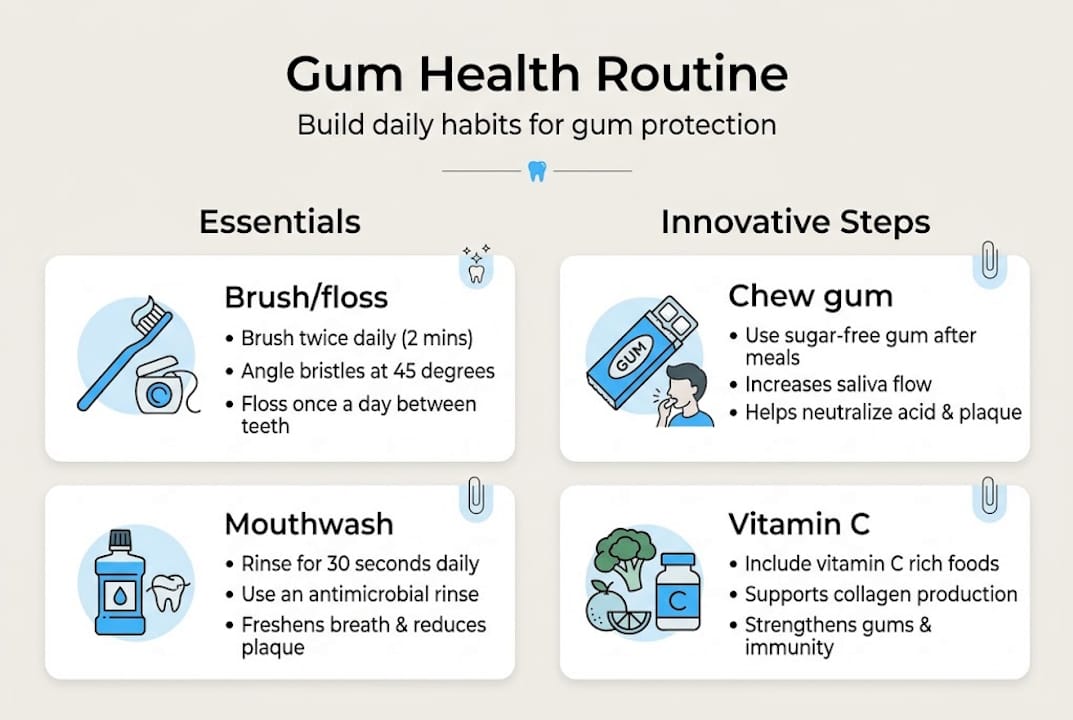
For diet, prioritize vitamin C-rich foods like bell peppers, citrus, and strawberries. Vitamin C is essential for collagen synthesis in gum tissue, and a deficiency shows up fast as bleeding and inflammation. Following gum health essentials means brushing twice daily with a soft-bristled toothbrush held at a 45-degree angle to the gumline using gentle circular motions, flossing daily, and using antiseptic mouthwash consistently.
Pro Tip: When shopping for gum, look for the ADA Seal of Acceptance on the packaging. It confirms the product has been independently tested for safety and effectiveness in reducing cavities.
Step-by-step: Build your daily gum health routine
With your essentials ready, here’s exactly how to execute each step for maximum gum health, from wake-up to bedtime.
- Morning brush: Use your soft-bristled toothbrush at a 45-degree angle to the gumline. Two minutes, gentle circular strokes. Never scrub side to side.
- Floss before or after brushing: Slide floss below the gumline on each tooth, curving it into a C-shape against the tooth surface. This removes the biofilm your brush cannot reach.
- Rinse with antiseptic mouthwash: Swish for 30 seconds. This step targets bacteria in pockets and between teeth.
- Post-breakfast gum: Chew one to two pieces of xylitol or propolis gum for 20 minutes after eating. This is when acid attack risk is highest.
- Midday hydration and gum: Drink water consistently. After lunch, chew gum again to stimulate saliva and clear food debris.
- Vitamin C with meals: Include one vitamin C-rich food at lunch or dinner to support gum tissue repair.
- Evening brush and floss: Repeat your morning brush and floss routine. Evening is critical because saliva flow drops during sleep, leaving gums more vulnerable.
- Final mouthwash rinse: Use before bed to minimize overnight bacterial activity.
The core of this routine maps directly to what the evidence supports: brush and floss daily, chew xylitol gum post-meals, schedule biannual dental visits, and maintain healthy hydration and diet. Research confirms that xylitol reduces mutans streptococci more effectively than sorbitol gum, which translates to better plaque control and a healthier gum environment over time.
| Time of day | Action | Why it matters |
|---|---|---|
| Morning | Brush, floss, mouthwash | Clears overnight bacterial buildup |
| Post-breakfast | Chew xylitol gum 20 min | Neutralizes post-meal acid |
| Midday | Hydrate, chew gum after lunch | Sustains saliva flow |
| Afternoon | Vitamin C snack | Supports collagen in gum tissue |
| Evening | Brush, floss, mouthwash | Reduces overnight bacterial activity |
For more on the science behind gum chewing for health, the buccal delivery mechanism explains why chewing gum works faster and more efficiently than many people expect.
Pro Tip: Keep a pack of xylitol gum at your desk and one in your bag. When gum is visible and accessible, you’re far more likely to use it consistently after meals.
Innovative gum options: Chewing for health
Beyond traditional steps, chewing gum offers unique benefits for gum health. Let’s unpack the science and practical guidance.
Every time you chew, your salivary glands ramp up production. Saliva is not just moisture. It contains calcium, phosphate, and bicarbonate ions that actively remineralize enamel and neutralize acid. The physical act of chewing is, in a real sense, a biological reset button for your oral environment.
Not all gum delivers the same outcome, though. Here’s how the main types compare:
- Xylitol gum: Disrupts the energy metabolism of Streptococcus mutans, the primary cavity-causing bacteria. Bacteria absorb xylitol but cannot ferment it, so they starve. Xylitol vs sorbitol benefits research confirms xylitol’s superiority for reducing harmful bacterial populations.
- Sorbitol gum: Still sugar-free and still stimulates saliva, but bacteria can partially ferment sorbitol, making it less effective than xylitol for cavity prevention.
- Propolis gum: Propolis is a resin collected by bees with natural antimicrobial and anti-inflammatory properties. Propolis gum for gum health research shows it reduces plaque index, bleeding, and gingival inflammation comparably to mouthwash in gingivitis patients after just one week.
The ADA-approved sugar-free gum category covers products that have earned the ADA Seal, confirming their role in reducing cavities. The ADA is clear that gum is an adjunct, not a replacement, for brushing and flossing. But as an adjunct, it is one of the most practical tools available because it works in situations where brushing is not possible.
“Propolis chewing gum reduces plaque index, bleeding, and gingival inflammation similarly to mouthwash in gingivitis patients after one week of use.”
For specific situations, the guidance is practical. If you experience dry mouth, chewing gum to stimulate saliva is a direct and effective intervention. If you are managing early gingivitis, propolis gum works well as an adjunct to your brushing routine. For high cavity risk, aim for five to ten grams of xylitol daily, which typically means three to five pieces of gum spread across the day.

Explore the full health benefits of gum chewing to understand how this simple habit connects to broader cognitive and metabolic outcomes beyond just oral health.
Lifestyle upgrades for lasting gum health
No routine is complete without healthy lifestyle choices to support your gums for the long term. Here are practical upgrades for lasting results.
Your gums respond to everything you do, not just what happens in the bathroom. Smoking is one of the most damaging factors for gum tissue because it restricts blood flow and impairs the immune response that fights infection. Quitting smoking is, without exaggeration, one of the highest-impact moves you can make for gum health. Sugar reduction follows closely. Every time you eat sugar, oral bacteria produce acid for about 20 minutes. Frequent snacking means your gums and enamel are under near-constant acid attack.
Here are the lifestyle upgrades that compound your routine’s results:
- Quit smoking: Restores blood flow to gum tissue and improves healing capacity.
- Reduce added sugar: Cuts the frequency and duration of acid attacks on enamel.
- Eat vitamin C-rich foods: Bell peppers, kiwi, and citrus support collagen production in gum tissue.
- Stay hydrated: Water keeps saliva flowing and washes away food debris between meals.
- Manage stress: Chronic stress elevates cortisol, which suppresses immune function and worsens gum inflammation. Even short walks or breathing exercises help.
- Time your meals: Fewer, structured meals give your oral environment time to recover between acid exposures.
These lifestyle habits for gum health are not optional extras. They are the foundation that makes your brushing, flossing, and gum-chewing routine actually stick.
The financial case for this approach is striking. Widespread sugar-free gum chewing three times daily could prevent 740,000 caries cases per year in Australia alone, saving AU$169 million in dental costs annually. That is 1.14% of the national dental spend, eliminated by a habit that costs less than a dollar a day. Similar savings are projected in comparable countries. For more on cutting dental costs through preventive habits, the math is straightforward: small daily actions compound into significant long-term savings.
For diet and gum chewing tips that connect nutrition and oral health, the synergy between what you eat and how you chew is more powerful than most people realize.
Why step-by-step gum routines work and the breakthrough of chewing gum
Most people treat gum health like a light switch: they either ignore it entirely or panic after a bad checkup and overhaul everything for two weeks before sliding back. Neither approach works. What actually works is a layered daily routine where each small action reinforces the next.
Brushing alone leaves roughly 40% of tooth surfaces untouched. Flossing alone does not neutralize post-meal acid. Mouthwash alone does not remineralize enamel. But stack them together, add functional chewing gum after meals, and you have a system that addresses every phase of the oral environment’s chemistry throughout the day.
Chewing gum is not a gimmick here. It is a genuinely disruptive tool because it works in the moments your other habits cannot reach: after lunch at your desk, on a flight, between meetings. The preventive routine plus gum combination reduces dentist visits and costs while protecting enamel brightness over time. The functional gum care routines that integrate chewing into daily life are not complicated. They just require consistency. And consistency, compounded over months, is what separates people who maintain healthy gums from those who cycle through expensive treatments.
Upgrade your gum health routine with Scandi Gum
If you’re ready to put this routine into action, check out gum options that fit perfectly with your new regimen.
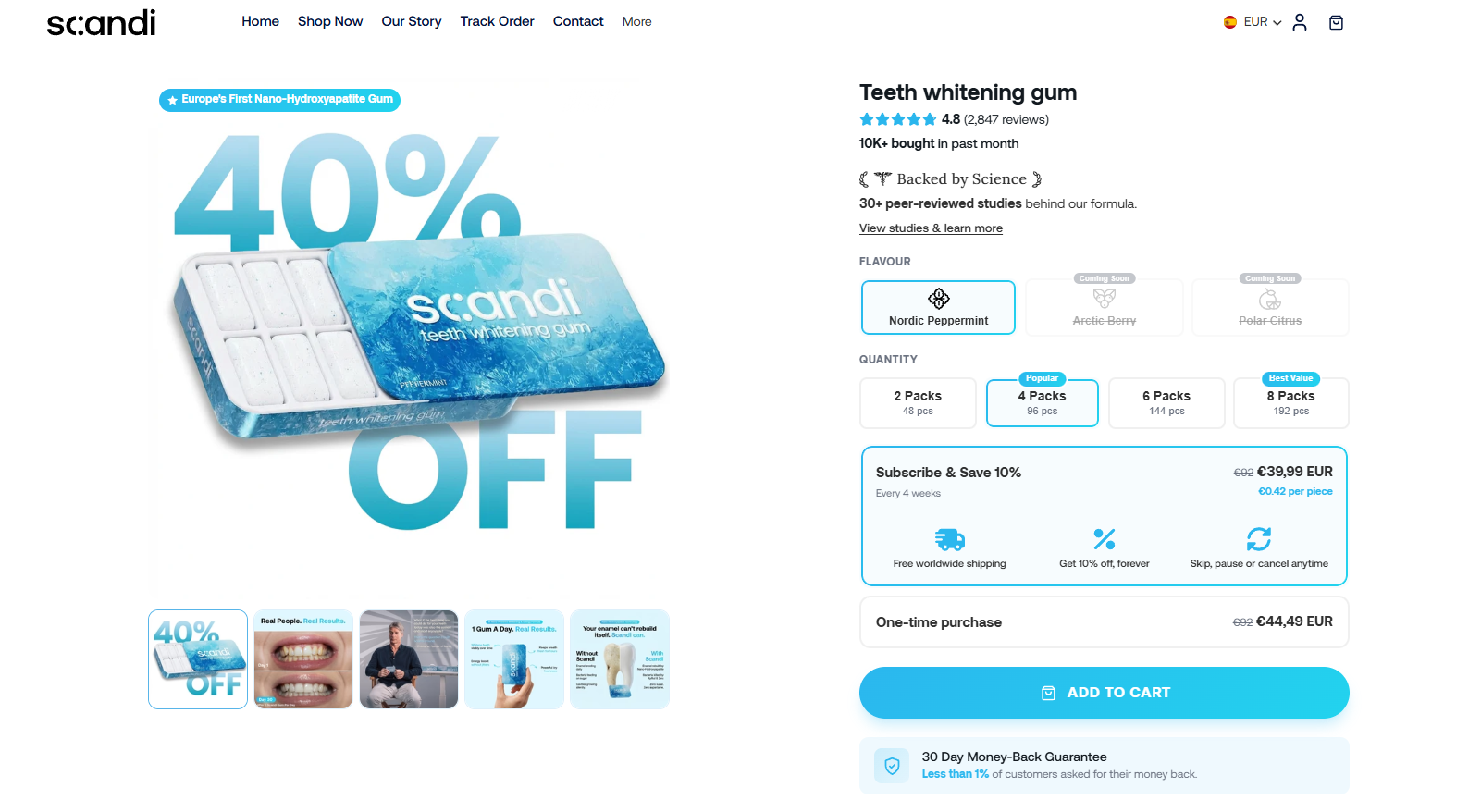
Scandigum is built around the same bio-optimization principles this article covers: stimulating saliva, neutralizing oral acid, and delivering active ingredients through the buccal mucosa for fast, efficient absorption. Every piece is formulated to slot into the post-meal window your routine already calls for. No extra steps, no complicated protocols. Visit the Scandi Gum product page to explore the full range and find the option that fits your specific goals, whether that’s enamel protection, gum support, or the added cognitive edge that comes with functional chewing. Your routine is already built. Now give it the right fuel.
Frequently asked questions
How often should I chew gum for gum health?
Chewing sugar-free gum after each meal, roughly three times daily, is the evidence-backed target. Xylitol-based gum is particularly effective because it reduces the harmful bacteria responsible for plaque and decay more than sorbitol alternatives.
Is chewing gum a replacement for brushing and flossing?
No. Gum supports your oral environment between brushing sessions but cannot remove the plaque and debris that accumulate on tooth surfaces and below the gumline. The ADA is clear that sugar-free gum with its Seal reduces cavities as an adjunct, not a substitute, for brushing and flossing.
Can gum help with dry mouth?
Yes. Chewing gum is one of the most direct ways to stimulate saliva production, which relieves dry mouth and restores the mouth’s natural defense chemistry. For those managing dry mouth or gingivitis, propolis gum offers additional anti-inflammatory support.
What diet changes support best gum health?
Reduce added sugar, eat vitamin C-rich foods like citrus and bell peppers, stay well hydrated, and avoid smoking. These lifestyle habits work alongside your brushing and gum-chewing routine to keep gum tissue strong and inflammation low.
How much money can gum routines save on dental costs?
The numbers are significant. Regular sugar-free gum use three times daily is projected to prevent hundreds of thousands of caries cases annually in countries like Australia, translating to hundreds of millions in avoided dental treatment costs each year.