

TL;DR:
- Chewing xylitol gum after meals helps neutralize acid and strengthen enamel between brushings.
- Consistent, enjoyable habits like flavored gum can significantly improve long-term oral health.
- Choosing eco-friendly, natural-base gums enhances protection and supports sustainable practices.
You finish lunch, pop a piece of gum, and move on with your day. Simple. But what if that single habit was actively repairing your enamel, neutralizing acid, and keeping your mouth in a state of defense rather than decay? Most people treat oral wellness as a twice-daily chore. The reality is that the time between brushing matters just as much as the brushing itself. This guide walks you through a complete, modern approach to oral health, one that’s built around real science, practical steps, and gum that actually does something.
Table of Contents
- Essentials for a modern oral wellness routine
- Step-by-step: Incorporating xylitol gum into daily life
- Choosing the best gum: Flavors, bases, and health impact
- Tracking progress and avoiding common gum mistakes
- A smarter routine: Why small, flavorful changes make a big impact
- Try flavorful, effective oral wellness solutions today
- Frequently asked questions
Key Takeaways
| Point | Details |
|---|---|
| Gum boosts effectiveness | Chewing xylitol gum after meals reduces plaque and prevents cavities—an easy and enjoyable health upgrade. |
| Routine matters | Consistent use of dental tools and xylitol gum delivers the best oral wellness results. |
| Smart selection counts | Choosing birch xylitol, natural bases, and appealing flavors drives both effectiveness and daily adherence. |
| Track and adjust | Monitor your oral health and tweak your routine for lasting freshness and protection. |
Essentials for a modern oral wellness routine
A complete oral wellness routine in 2026 is not just about brushing harder or longer. It’s about creating a system where every habit reinforces the next. Think of it as layered protection rather than a single defensive move.
The non-negotiables remain: brushing twice daily with fluoride toothpaste, flossing once a day, and scheduling dental checkups every six months. But those three habits only cover a fraction of your day. You eat three meals, drink coffee, snack between meetings, and your oral environment shifts with every bite. That’s where functional gum earns its place.
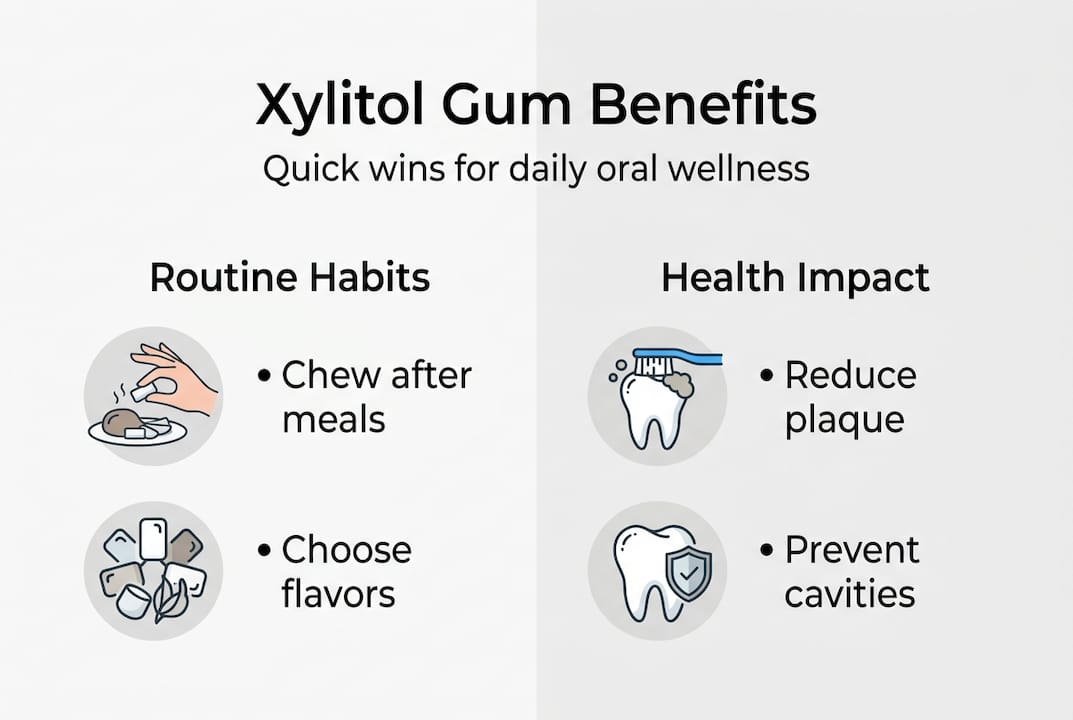
Chewing xylitol gum after meals reduces plaque and prevents cavities, making it one of the most accessible adjuncts you can add without restructuring your entire day. It works by stimulating saliva, which neutralizes acid and delivers calcium and phosphate back to the enamel surface. No sink required.
Understanding which best gum types for dental health suit your lifestyle is a useful starting point before building out the rest of your routine.
| Habit | Tools needed | Primary benefit |
|---|---|---|
| Brushing with fluoride toothpaste | Soft-bristle brush, fluoride paste | Removes plaque, strengthens enamel |
| Flossing | Floss or interdental brush | Clears debris between teeth |
| Dental checkups | Professional appointment | Early detection, professional cleaning |
| Xylitol gum after meals | Sugar-free xylitol gum | Neutralizes acid, stimulates saliva, reduces cavities |
The xylitol evidence and reviews from independent research continue to support its role in preventive care, particularly for adults who can’t always brush immediately after eating.
Pro Tip: Chew your xylitol gum within five minutes of finishing a meal. This is when oral acid levels peak. Getting ahead of the acid curve is far more effective than waiting until you feel discomfort or notice bad breath.
Step-by-step: Incorporating xylitol gum into daily life
With your essentials in place, follow these steps to seamlessly add xylitol gum into your wellness routine.
- After breakfast: Chew one to two pieces of xylitol gum for 10 to 20 minutes. This primes your salivary flow for the morning and counteracts the acid from coffee or juice.
- After lunch: Repeat the same process. Lunch is often the meal most people skip post-meal dental care for, making this step particularly high-value.
- After dinner: Same routine. If you’ve had a sweet or acidic dinner, prioritize this session before brushing later in the evening.
- After snacks: If you snack between meals, keep gum nearby. Each snack creates an acid window, and each piece of gum closes it.
- Mid-afternoon slump: This is also when you may reach for a sweet. Chewing gum here serves double duty, satisfying the urge while actively protecting your teeth.
Research confirms that xylitol gum after meals (5g, 10 to 20 minutes, 3 to 5 times per day) delivers the strongest cavity-prevention results. Consistency matters more than perfection.
| Time of day | When to chew | Xylitol amount | If gum unavailable |
|---|---|---|---|
| Morning | After breakfast | 5g | Xylitol mints |
| Midday | After lunch | 5g | Rinse with water |
| Afternoon | After snack | 5g | Xylitol toothpaste |
| Evening | After dinner | 5g | Fluoride rinse |
For those building out a more intentional practice, exploring recommended dental gum options alongside chewing technology insights can help you make a more informed product choice.
Pro Tip: Rotate between two or three flavors throughout the week. Your taste receptors adapt quickly to a single flavor, and novelty keeps the habit from feeling like a chore. Treat it like switching up your playlist, not your medication.
Choosing the best gum: Flavors, bases, and health impact
Understanding when and how to chew is just part of the equation. Choosing the right gum makes all the difference.
Not all xylitol is created equal. Birch xylitol and natural chicle bases are preferred for eco-friendliness, and they also tend to deliver a cleaner chew without synthetic aftertastes. Corn-derived xylitol is more widely available and usually less expensive, but it comes with a larger environmental footprint and occasionally causes more GI sensitivity in higher doses.

When comparing gum types, consider the base material alongside the sweetener source.
| Factor | Birch xylitol + natural base | Corn xylitol + synthetic base |
|---|---|---|
| Eco-friendliness | High | Moderate |
| Flavor quality | Clean, natural | Can have aftertaste |
| GI tolerance | Generally better | More variable |
| Availability | Specialty stores | Widely available |
| Cost | Higher | Lower |
Flavor is not just a preference, it’s a strategy. Here’s what trending options bring to the table:
- Peppermint: Classic antibacterial properties, strong breath neutralizer, pairs well with post-coffee moments
- Spearmint: Milder than peppermint, a better choice if you’re sensitive to strong menthol sensations
- Citrus blends: Stimulate saliva production faster, great for post-meal use
- Herbal infusions (chamomile, green tea extract): Bring mild anti-inflammatory properties alongside pleasant flavor
- Cinnamon: Contains cinnamaldehyde, which has shown some antimicrobial activity in the mouth
Choosing a flavor you genuinely enjoy is not vanity. It’s behavioral design. If the gum tastes good, you chew it consistently. Consistent chewing means consistent cavity protection. The flavor becomes the mechanism.
Tracking progress and avoiding common gum mistakes
Selecting your favorite flavor and best gum base is just the start. Learning how to verify your routine is working is the real key.
You don’t need a lab to know if your oral health is improving. These simple signals tell the story:
- Fewer reports of sensitivity during your next dental checkup
- Reduced morning breath intensity over three to four weeks
- Longer time between cleanings before visible plaque buildup
- A dentist noting reduced cavity risk at your six-month visit
Keep a brief log for the first 30 days. Note when you chewed, how long, and whether you noticed freshness or dryness afterward. This kind of lightweight tracking surfaces patterns you’d otherwise miss.
Here are the most common mistakes people make when adding xylitol gum to their routine:
- Chewing for less than five minutes: The remineralization and acid-neutralizing effects require adequate time. Under five minutes, you’re barely scratching the surface.
- Using gum with insufficient xylitol: Many commercial gums contain trace amounts. Check the label. You need gum where xylitol is the primary sweetener, not a secondary additive.
- Skipping days because the habit feels optional: Consistency is what builds cumulative protection. Sporadic use provides minimal benefit.
- Relying on gum instead of brushing: Gum is an adjunct, not a replacement. It fills the gaps, it does not substitute the foundation.
- Ignoring flavor fatigue: When one flavor stops being enjoyable, people quietly drop the habit without realizing it. Rotate early, not after you’ve already stopped.
“Xylitol gum routines have shown greater effectiveness than rinses or tablets in some studies, suggesting the delivery mechanism matters as much as the ingredient itself.”
For a deeper look at the evidence behind these claims, the independent xylitol reviews from Cochrane offer a rigorous, unbiased perspective. Reviewing the data on common gum mistakes can also help you course-correct before small slip-ups become permanent gaps in your routine.
A smarter routine: Why small, flavorful changes make a big impact
Once you’ve begun tracking your results and fine-tuning your routine, it’s time for some personal perspective on what truly makes an oral wellness habit stick.
Rigid routines built around obligation tend to collapse under real-world pressure. Meetings overrun, travel disrupts schedules, and the habits that require effort get dropped first. The oral health habits that actually survive the chaos are the ones that feel like small pleasures rather than medical obligations.
This is not a soft argument. It’s practical behavior science. When a habit is enjoyable, the activation threshold drops. You don’t have to convince yourself to do it. A piece of well-formulated gum with a flavor you love after lunch isn’t a compromise. It’s a sustainable system.
At Scandigum, we think the biggest missed opportunity in preventive care is treating efficacy and enjoyment as opposites. They aren’t. The unexpected science behind gum shows that the act of chewing itself drives physiological outcomes, from increased salivary flow to improved focus. Pairing that mechanism with genuinely good flavor is not a marketing trick. It’s the design. Adults who enjoy their routine follow it. That’s the whole point.
Try flavorful, effective oral wellness solutions today
Ready to experience real results from your new oral wellness routine? Here’s where to start.
Scandigum was built on one idea: that what you chew should do more than freshen your breath. Every formula is designed around buccal delivery, salivary activation, and enamel-supporting chemistry, wrapped in flavors that make the habit something you look forward to rather than something you schedule.
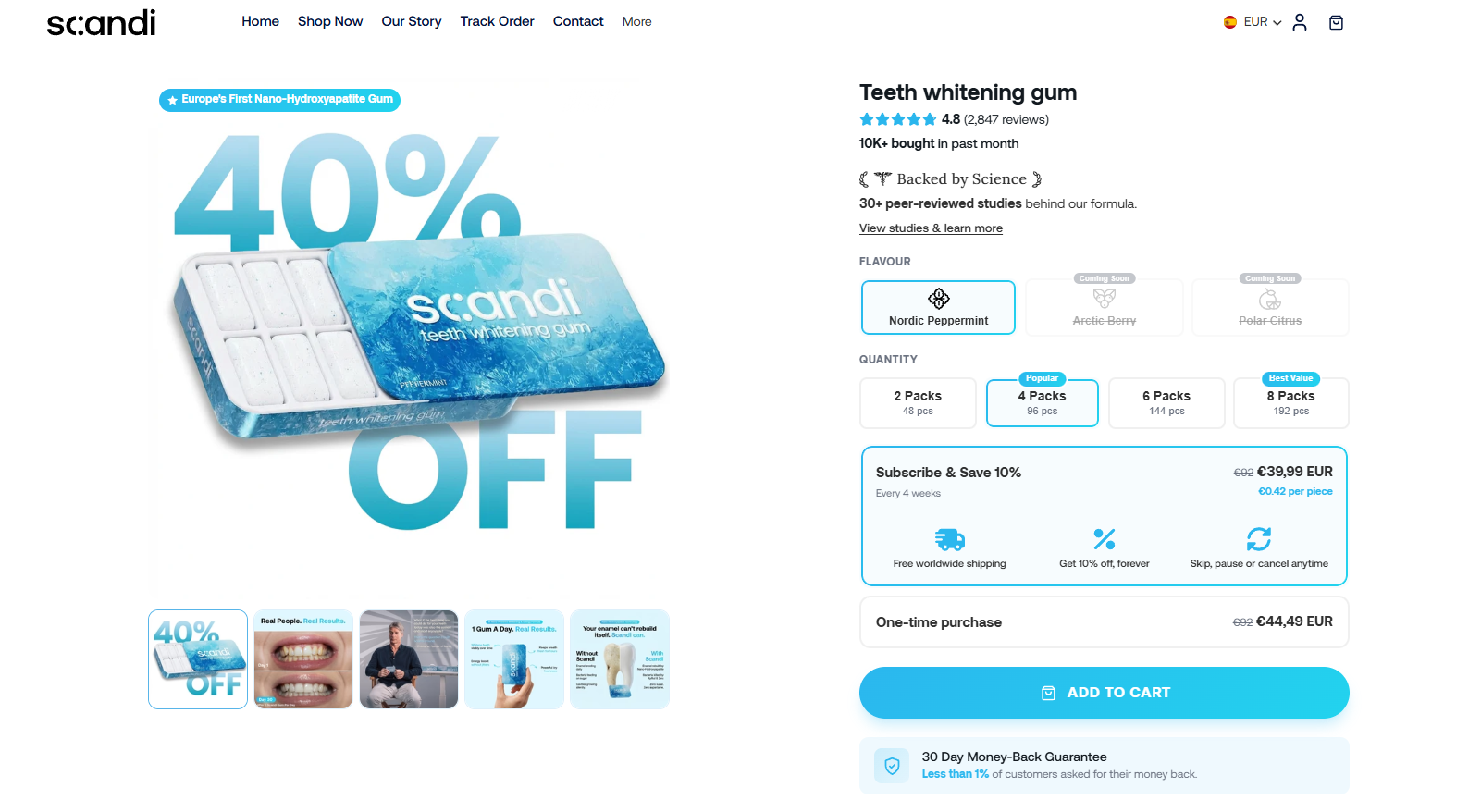
Whether you’re just starting to explore functional gum or you’re ready to replace your current go-to, the Scandi Gum product range gives you science-backed options without sacrificing the sensory experience. If you want to understand the thinking behind the formulas, the Scandi Gum story explains why we built something different. Your routine deserves better than ordinary gum.
Frequently asked questions
How much xylitol gum should I chew each day for oral health?
Aim for 5 grams of xylitol per session, chewed after meals for 10 to 20 minutes, repeated 3 to 5 times throughout the day for consistent cavity prevention.
Is xylitol gum more effective than mouthwash or tablets?
Some studies suggest xylitol gum outperforms rinses and tablets for reducing cavities, likely because the chewing mechanism itself enhances delivery and salivary response.
What flavors and types of gum are best for a modern oral wellness routine?
Choose sugar-free gums where xylitol is the primary sweetener, ideally using birch-derived xylitol and a natural chicle base for cleaner flavor, better eco-credentials, and improved GI tolerance.