

TL;DR:
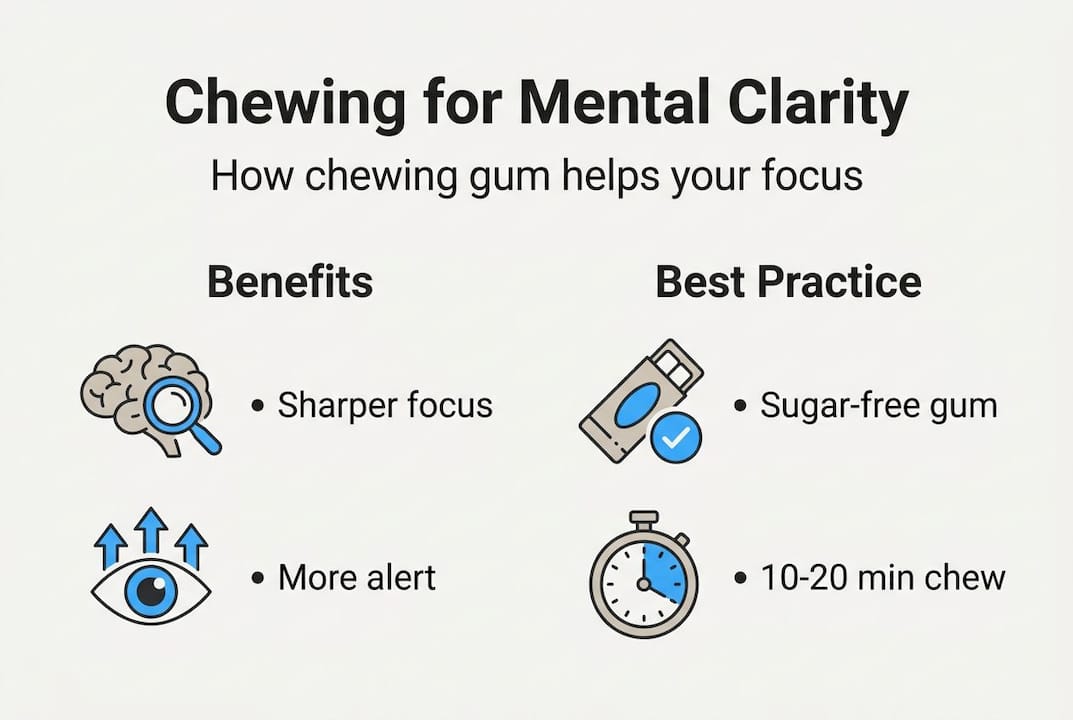
- Chewing sugar-free gum increases blood flow and activates brain regions, improving focus and alertness.
- Optimal sessions last 10 to 20 minutes, ideally before or at the start of demanding tasks.
- Results vary individually, but tracking and using proper gum enhances cognitive boosting effects.
You’re deep into a report, a lecture, or a critical deadline, and your brain just… drifts. Sound familiar? Most professionals and students reach for another coffee or scroll their phone, neither of which actually fixes the underlying problem. What if the answer was something far simpler and already in your pocket? Research suggests that chewing, done deliberately and with the right product, can measurably improve sustained attention and mental alertness. This guide walks you through the science, the setup, and the practical steps to make chewing a real part of your cognitive toolkit.
Table of Contents
- Understanding the science behind chewing and cognitive focus
- Preparing for cognitive chewing: What you need and why it matters
- Step-by-step: How to use chewing to enhance your focus
- Tracking your results and troubleshooting common pitfalls
- A nuanced perspective on chewing for focus: What most guides overlook
- Ready to try cognitive chewing? Your next steps
- Frequently asked questions
Key Takeaways
| Point | Details |
|---|---|
| Chewing boosts attention | Chewing can measurably improve alertness and focus, especially during repetitive or low-energy tasks. |
| Method and material matter | Firm, sugar-free gum chewed moderately offers the best cognitive benefit while minimizing jaw strain. |
| Track your results | Monitor your attention before and after chewing to personalize your approach and maximize results. |
| Chewing isn’t a cure-all | It works best as a support to healthy routines, not a replacement for good sleep and nutrition. |
Understanding the science behind chewing and cognitive focus
Chewing is not just a digestive reflex. It is a neurological event. When you chew, your jaw muscles send signals through the trigeminal nerve directly to the brain’s reticular activating system, the network responsible for regulating wakefulness and alertness. At the same time, rhythmic chewing increases oxygenated blood flow to the prefrontal cortex (the seat of decision-making) and the hippocampus (critical for memory encoding). This is what researchers call mastication-induced arousal, and it is measurable.
The practical upside? Chewing reduces errors on sustained attention tasks like digit vigilance tests, which mimic the kind of repetitive, focus-heavy work most of us face daily. The effect is not subtle. Research cited by National Geographic shows chewing boosts alertness by ~10% and reduces stress markers, though results for memory are more mixed. Texture also matters: hard chewing activates the caudate nucleus and frontal brain regions associated with cognition more than soft chewing does.
Here is a quick breakdown of the core mechanisms:
- Increased cerebral blood flow: Chewing raises heart rate slightly, pushing more oxygenated blood to focus-critical brain regions.
- Trigeminal nerve activation: Direct neural signaling boosts the brain’s arousal centers.
- Cortisol reduction: Rhythmic chewing can lower salivary cortisol, reducing mental noise.
- Theta wave modulation: Chewing influences frontocentral brain wave patterns linked to attention.
| Cognitive outcome | Evidence strength | Notes |
|---|---|---|
| Sustained attention | Strong | Most consistent finding across studies |
| Alertness | Strong | ~10% improvement reported |
| Stress reduction | Moderate | Salivary cortisol decreases noted |
| Memory | Mixed | Some positive, some null results |
| Executive function | Emerging | Linked to frontal lobe activation |
“The benefits of chewing gum are most pronounced during low-alertness states and repetitive tasks, which is exactly when most people need a mental edge.”
That said, chewing is not a universal fix. Individual baseline alertness, task type, and even jaw strength can all influence how much benefit you actually experience. The science is promising, but honest: it works best as a targeted tool, not a magic switch.
Now that you understand why chewing might work as a cognitive booster, let’s look at what you’ll need to try it effectively.
Preparing for cognitive chewing: What you need and why it matters
Not all gum is created equal, and the wrong choice can undermine the very benefits you’re chasing. Sugar-based gum introduces a glucose spike and crash that muddies any focus benefit. The clear winner for cognitive chewing is sugar-free gum with xylitol, which supports oral health, avoids blood sugar disruption, and still delivers the mechanical stimulation your brain responds to.

Texture is the other critical variable. Harder chewing activates more brain regions than soft chewing, but excessive force over long sessions risks jaw fatigue or, in predisposed individuals, temporomandibular joint (TMJ) discomfort. The sweet spot is a firm but not aggressive chew, sustained for 10 to 20 minutes. Functional gums that incorporate chewing technology advances are specifically engineered to maintain texture and deliver active compounds through the buccal mucosa (the inner lining of your cheeks), bypassing the digestive system entirely for faster uptake.
What you need to get started:
- Sugar-free, xylitol-based gum (firm texture preferred)
- A quiet or semi-quiet environment for the first few sessions
- A simple focus log (notebook or phone app)
- A timer set for 15 minutes
- Water nearby to stay hydrated
| Gum type | Cognitive benefit | Oral health | Risk |
|---|---|---|---|
| Sugar-free, xylitol | High | Positive (remineralizes enamel) | Low |
| Sugar-based | Moderate (short-term) | Negative | Blood sugar spike |
| Soft texture | Lower activation | Neutral | Minimal |
| Firm texture | Higher activation | Neutral | TMJ risk if overused |
Pro Tip: If you have any history of jaw pain or TMJ issues, start with a softer gum and shorter sessions (5 to 10 minutes) before building up. Cognitive gains are not worth chronic jaw discomfort.
Best times to chew for focus:
- Right before or at the start of a demanding task
- During the post-lunch energy dip (roughly 1 to 3 PM)
- Before a meeting or exam that requires sustained attention
- During long reading or coding sessions
Avoid chewing immediately after eating a large meal or when you are already highly alert, as the arousal effect is most pronounced when your baseline alertness is low.
With your materials ready, let’s explore the practical steps to integrate cognitive chewing into your focus routine.
Step-by-step: How to use chewing to enhance your focus
Having the right gum is step one. Using it with intention is what actually moves the needle. Here is a practical sequence built around what the research supports.
- Identify your focus window. Pick a task that requires sustained attention: writing, analyzing data, studying, coding. Chewing works best at the start of these sessions, not halfway through when your mind has already wandered.
- Set your environment. Reduce obvious distractions. You don’t need silence, but you do need a context where focused work is the goal.
- Start chewing before you start the task. Give yourself 2 to 3 minutes of chewing before diving in. This primes the trigeminal nerve and begins increasing cerebral blood flow before cognitive demand peaks.
- Chew steadily for 10 to 20 minutes. Research shows that frontocentral theta power, the brain wave pattern linked to attention and working memory, is modulated during active chewing. Steady, rhythmic chewing sustains this effect better than sporadic bursts.
- Note your subjective focus level. On a simple 1 to 10 scale, rate your clarity before and after the chewing session. This takes five seconds and builds useful personal data over time.
- Stop chewing, keep working. The cognitive activation outlasts the chew. Most users find the heightened focus persists for 20 to 40 minutes after stopping.
- Log your session. Time on task, errors noticed, subjective focus rating. Even a brief note builds a pattern you can act on.
Pro Tip: Pair your chewing session with a chewing gum benefits for brain routine by stacking it with a glass of water and two minutes of slow breathing before a high-stakes task. The combination of hydration, reduced cortisol from breathing, and mastication-induced arousal creates a measurable pre-task state shift.
Stat to know: Chewing boosts sustained attention by ~10%, which may not sound dramatic, but on a 3-hour study session, that translates to roughly 18 additional minutes of genuine on-task focus.
Once you’re chewing with intention, it’s important to know what to expect and how to track your results.
Tracking your results and troubleshooting common pitfalls
The biggest mistake people make with any cognitive intervention is assuming it either works or it doesn’t, with no middle ground. Chewing for focus is dose-dependent, context-dependent, and individual. You need to observe your own data.
How to track objectively:
- Task timing: How long before your attention drifts? Time it on chewing days vs. non-chewing days.
- Error rates: If your work involves editing, coding, or math, count errors per session.
- Subjective focus score: 1 to 10, logged immediately after a session.
- Energy level: Note whether the afternoon dip felt less severe.
| Tracking method | Effort level | Insight quality |
|---|---|---|
| Focus score (1-10) | Very low | Good for trends |
| Task timing | Low | Highly objective |
| Error counting | Medium | Best for detail work |
| Full journal entry | High | Richest context |
A University of Groningen review found that while studies show improvements in memory, attention, and executive function, there are also adverse effects and replication difficulties worth acknowledging. This is not a reason to dismiss chewing as a tool. It is a reason to track your own response rather than assuming the average study result applies directly to you.
Common pitfalls to avoid:
- Chewing as procrastination: If you find yourself chewing instead of starting the task, you’ve turned a focus tool into a delay tactic.
- Overuse: Chewing for hours at a stretch will fatigue your jaw and may trigger headaches. Stick to 10 to 20 minute sessions.
- Ignoring the basics: Chewing cannot compensate for poor sleep, dehydration, or skipped meals. If those are off, no amount of gum will fix your focus.
- Expecting memory miracles: The evidence for memory improvement is inconsistent. Target attention and alertness, where the data is strongest.
- Choosing the wrong gum: Sugar-based gum introduces variables that muddy your results. Use a clean, sugar-free product.
“Track two weeks of chewing sessions before drawing conclusions. One good day proves nothing. A consistent pattern tells you something real.”
With a grasp of tracking and tweaking your routine, it’s useful to take a step back and consider the broader context and limitations of chewing for focus.
A nuanced perspective on chewing for focus: What most guides overlook
Most self-improvement content treats chewing gum for focus as either a quirky hack or a groundbreaking discovery. Neither framing is accurate or useful. The honest picture is more interesting.
Chewing works. But it works within a context. The effects are most robust for sustained attention in low-alert states and during repetitive tasks, not as a substitute for sleep or nutrition. If you are well-rested and already highly engaged, the marginal gain from chewing is smaller. If you are running on five hours of sleep and three coffees, chewing will not save you.
What chewing does exceptionally well is lower the activation cost of getting into focus. It is not about peak performance. It is about reducing the friction between you and the work. That is a genuinely useful function, especially for the 2 PM slump or the third hour of a long study session.
The other thing most guides miss: the delivery mechanism matters as much as the act. A functional gum designed around more about cognitive gum and buccal absorption gives you the mechanical benefit of chewing plus targeted compounds entering your bloodstream faster than any drink or pill. That is a meaningful upgrade over standard gum. Use the right tool, track your results, and treat chewing as one solid layer in a broader cognitive strategy.
Ready to try cognitive chewing? Your next steps
You now have the science, the setup, and the steps. The next move is putting it into practice with a product that is actually built for this purpose.
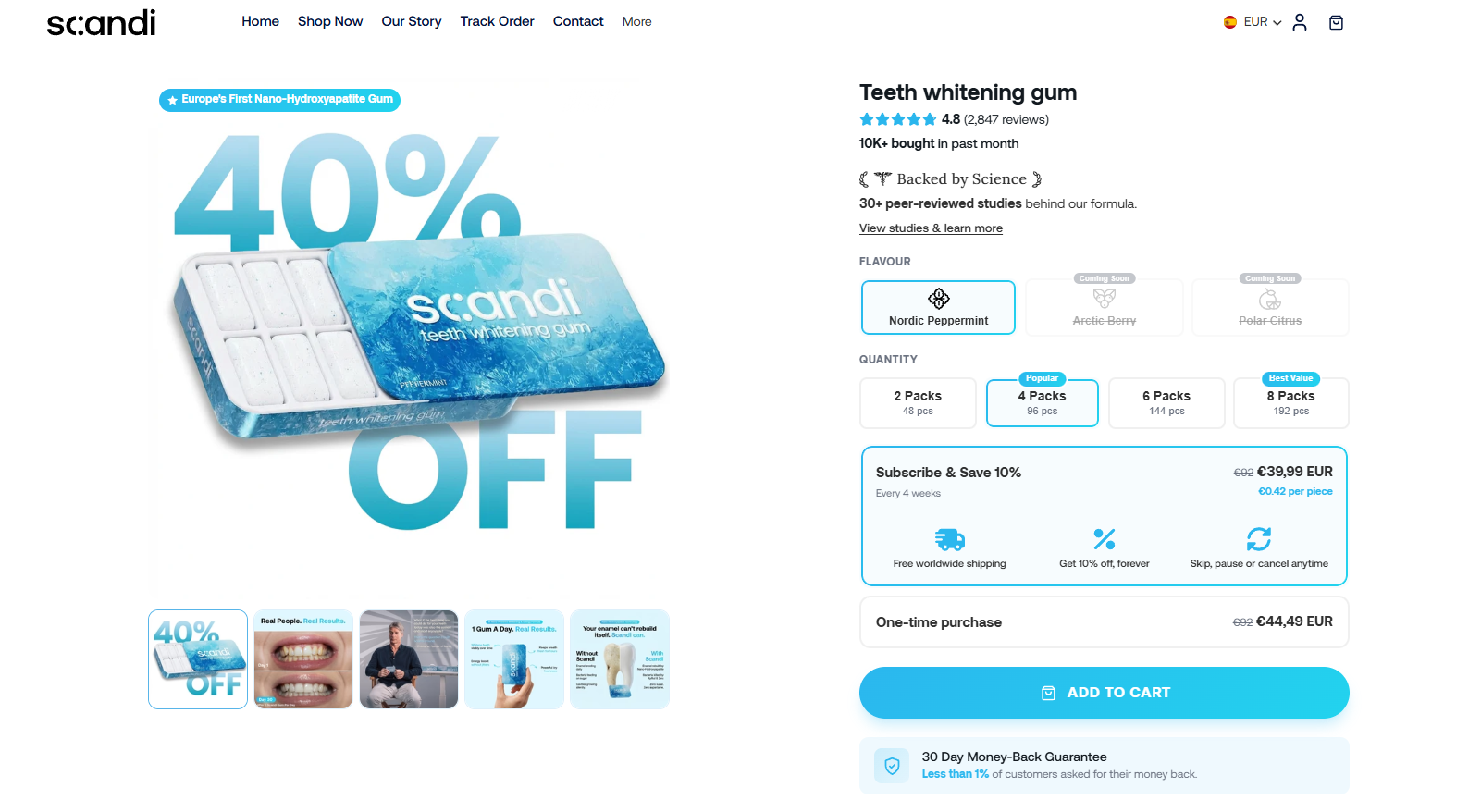
Scandigum is engineered around the biology you just read about: buccal absorption for faster delivery, firm texture for stronger cognitive activation, and a formula that supports both mental clarity and dental remineralization simultaneously. If you want to explore Scandi Gum and see what a purpose-built cognitive gum looks like, the product page breaks down exactly what goes into each piece. You can also read more about gum benefits to go deeper on the research before you commit. Start with one session tomorrow morning. The data will follow.
Frequently asked questions
Does chewing actually improve focus for everyone?
Chewing tends to enhance focus for most people, especially during low-alertness tasks, but individual factors like baseline alertness and task type mean results vary. Some people experience distraction rather than benefit, particularly if the chewing itself becomes the focus.
Is it better to chew hard or soft gum for mental clarity?
Hard chewing activates the caudate nucleus and frontal brain regions more than soft chewing, but overdoing it can strain your jaw. Moderate, steady chewing with a firm sugar-free gum is generally the best balance.
How long should I chew to see cognitive benefits?
Most research points to 10 to 20 minutes as the effective window, with alertness improving by ~10% during that period. Starting your chew at the beginning of a task tends to yield the strongest effect.
Are there any side effects to chewing for cognitive focus?
Harder chewing risks TMJ issues with excessive use, and jaw fatigue is common if sessions run too long. Monitor your body and keep sessions to 20 minutes or less.
Is chewing enough to replace other cognitive strategies?
No. The effects are most robust for sustained attention and are not a substitute for sleep or nutrition. Treat chewing as a useful booster within a broader, well-rounded cognitive routine.