

TL;DR:
- Dental gum activates saliva production and reduces bacteria, aiding in oral health between brushing sessions.
- Chewing xylitol gum post-meal significantly lowers plaque and bacterial levels, supporting cavity prevention.
- It is a valuable supplement for dry mouth, travel, and high-caries-risk individuals, but cannot replace brushing and flossing.
Brushing twice a day and flossing regularly puts you ahead of most adults, but even the most disciplined routine has blind spots. The window between meals, the dry mouth that sets in during a long meeting, the acid exposure after coffee — these are moments your toothbrush simply cannot reach. Research now shows that xylitol gum research points to functional dental gum as a legitimate, science-backed layer of protection. This guide breaks down exactly how dental gum compares to traditional oral care, who benefits most, and how to fold it into a routine that actually works.
Table of Contents
- How dental gum works vs. traditional oral care
- Benefits and limitations: Dental gum compared to brushing, flossing, and mouthwash
- Who benefits most? Target users and use cases
- How to integrate dental gum into your daily oral health routine
- What most people (and even dentists) miss about dental gum
- Ready to elevate your oral care routine?
- Frequently asked questions
Key Takeaways
| Point | Details |
|---|---|
| Dental gum complements basics | Chewing xylitol dental gum provides added benefits but should not replace brushing and flossing. |
| Optimal use maximizes results | Using gum after meals, 3-5 times daily at 5-10g, yields the greatest oral health impact. |
| Most effective for high-risk users | Dental gum especially helps adults with dry mouth, braces, or high cavity risk. |
| Science backs xylitol gum | Clinical research supports significant reduction of bacteria and plaque using xylitol-based gum. |
How dental gum works vs. traditional oral care
With traditional routines as the default for most, it’s important to understand what makes dental gum unique.
Your toothbrush removes plaque mechanically. Your floss clears the spaces a brush can’t reach. Mouthwash delivers a chemical rinse that kills surface bacteria. These are all physical or chemical interventions applied at specific times. Dental gum works differently. It activates a biological system that runs continuously: your saliva.
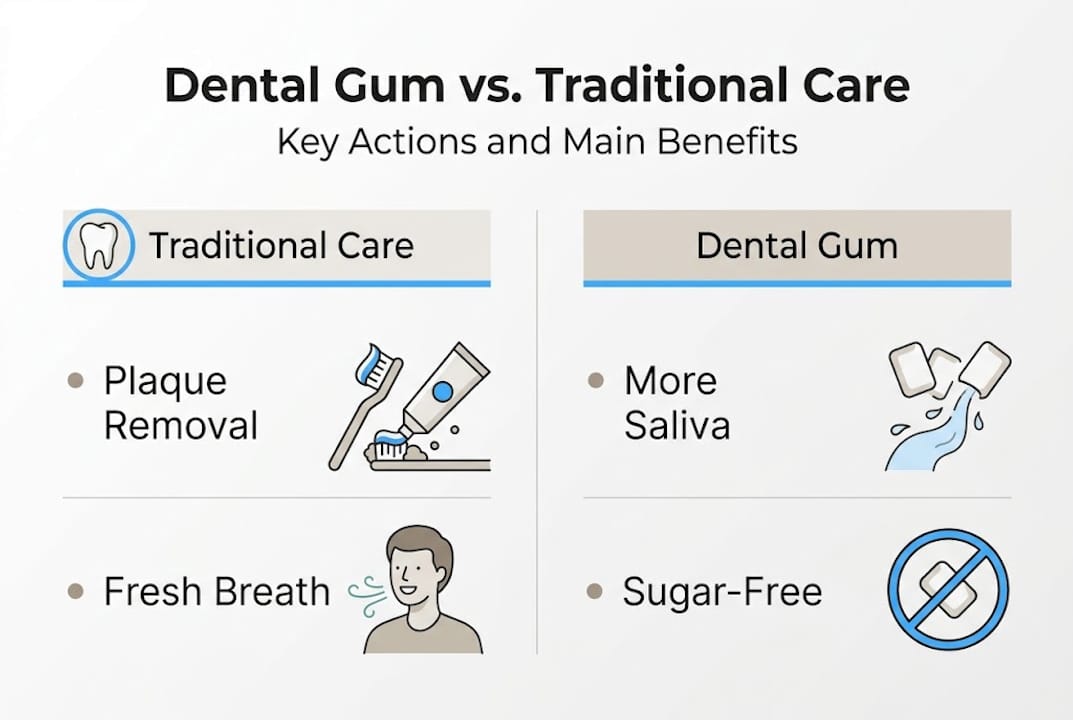
Every time you chew, your salivary glands increase output. That saliva neutralizes acid, washes away food debris, and delivers calcium and phosphate ions to the enamel surface. When the oral pH drops below 5.5, enamel begins to lose minerals. Saliva is the body’s built-in correction mechanism, and chewing functional gum is one of the fastest ways to trigger it.
Xylitol adds another layer. Unlike sugar, xylitol cannot be fermented by Streptococcus mutans, the bacteria most responsible for cavities. Bacteria absorb xylitol, fail to metabolize it, and gradually lose their ability to stick to enamel. Xylitol gum reduces MS levels compared to sorbitol gum across 12 out of 14 studies, acting as an adjunct to toothbrushing by reducing caries-associated bacteria and plaque.
Here’s a quick comparison of how each method stacks up:
| Method | Primary mechanism | Best timing | Replaces gum? |
|---|---|---|---|
| Toothbrushing | Mechanical plaque removal | Morning, evening | No |
| Flossing | Interproximal cleaning | Once daily | No |
| Mouthwash | Chemical disinfection | After brushing | No |
| Dental gum | Saliva stimulation, xylitol | Post-meal, between brushing | N/A |
Key advantages of dental gum at a glance:
- Stimulates saliva flow within seconds of chewing
- Disrupts bacterial adhesion via xylitol’s non-fermentable structure
- Encourages remineralization by raising oral pH
- Works in the gaps between brushing sessions
- Portable and usable anywhere, no water or mirror needed
Pro Tip: Chew dental gum for at least 20 minutes after a meal to maximize salivary stimulation. Shorter chews still help, but the remineralization window is most active in that first 20-minute period. For a deeper look at best chewing gum types and how they differ, the ingredient profile matters more than most people realize.
Benefits and limitations: Dental gum compared to brushing, flossing, and mouthwash
Understanding how dental gum works sets the stage for a direct comparison of its strengths and tradeoffs.
Let’s start with the numbers. Chewing xylitol gum reduces plaque scores by 14.8% versus just 3.9% in control groups after a single use. That’s not a marginal difference. For something you can do at your desk or in the car, that’s a meaningful clinical result.
The American Dental Association recommends sugar-free gum after meals specifically because of this saliva-stimulating effect. It’s not a fringe suggestion — it’s a mainstream preventive recommendation backed by decades of research.

But dental gum has real limits. It cannot dislodge the calcified plaque (tartar) that forms at the gumline. It won’t clean between teeth the way floss does. And it offers no mechanical scrubbing action on the buccal surfaces of teeth. For gum and caries reduction, the evidence is strong, but the mechanism is biological, not physical.
| Scenario | Best tool |
|---|---|
| Morning plaque removal | Toothbrush |
| Interproximal debris | Floss |
| Post-meal acid neutralization | Dental gum |
| Travel or no-brush situation | Dental gum |
| Gum disease treatment support | Mouthwash + dentist |
When dental gum wins:
- Right after a meal when brushing isn’t possible
- During travel or long commutes
- As a mid-afternoon reset between brushing sessions
- For people prone to dry mouth or acid reflux
When traditional methods win:
- First thing in the morning (biofilm has built up overnight)
- Before bed (removing the day’s accumulation is non-negotiable)
- After procedures like whitening or scaling
Exploring oral health chewing advances reveals how the science behind functional gum has evolved well beyond simple flavor delivery.
Who benefits most? Target users and use cases
With strengths and limitations outlined, it’s valuable to know exactly who should prioritize dental gum.
Not everyone gets equal benefit from dental gum, but the profiles that gain the most are more common than you’d think. Adults with dry mouth (xerostomia) are at the top of that list. Saliva production drops with age, stress, and many common medications. When saliva is low, the mouth’s natural defense system is compromised. Chewing gum is one of the most direct ways to compensate.
People with a high caries risk, meaning frequent cavities despite regular brushing, are another strong candidate. The xylitol mechanism specifically targets the bacteria responsible for decay. Dental gum benefits adults with dry mouth, orthodontic needs, or high caries risk in ways that brushing alone cannot address.
Orthodontic patients face a more nuanced situation. Traditional braces make gum off-limits, but clear aligner users can chew between sessions and benefit significantly from the antibacterial and remineralizing effects.
Practical scenarios where dental gum delivers real value:
- At the office: No sink nearby after lunch. Two pieces of xylitol gum neutralize acid and reduce bacterial load within minutes.
- During travel: Airports, flights, and road trips make brushing impractical. Gum bridges the gap without any setup.
- Post-snacking: Grazing throughout the day creates repeated acid attacks. Gum after each snack resets the oral environment.
- After acidic foods or drinks: Coffee, citrus, and soda drop oral pH fast. Chewing gum raises it back above the critical 5.5 threshold.
- Gym sessions: Post-workout snacks and protein shakes can be surprisingly acidic. Gum is easy to keep in a gym bag.
“The act of chewing itself increases salivary flow and, when combined with xylitol’s antibacterial properties, creates a meaningful preventive effect that is especially valuable for patients who cannot always access a toothbrush.” — Preventive dentistry research consensus
Pro Tip: Aim for 5 to 10 grams of xylitol per day, spread across 3 to 5 chewing sessions after meals. That dose consistently shows up in clinical research as the threshold where bacterial reduction becomes statistically significant. Check dental gum options to find products that list xylitol content clearly on the label.
How to integrate dental gum into your daily oral health routine
Once you know you can benefit, the next step is making dental gum a practical part of everyday life.
The goal is not to overhaul your routine. It’s to fill the gaps that brushing and flossing leave open. Here’s a realistic daily structure:
- Morning: Brush with fluoride toothpaste for two minutes. Floss. Skip gum here — mechanical cleaning is the priority.
- After breakfast: Chew two pieces of xylitol gum for 20 minutes. This neutralizes the acid from coffee or juice and resets the oral environment before your day starts.
- Post-lunch: Another chewing session. This is the most important one for most people, since brushing at work is rarely practical.
- Afternoon snack: If you graze, chew gum after. Keep a pack in your desk drawer.
- Evening: Brush again, floss, and consider a fluoride mouthwash. No gum needed after this — you want the fluoride to sit on the enamel overnight.
Research supports 5 to 10g of xylitol daily, chewed 3 to 5 times post-meal for the best effect on saliva stimulation and bacterial reduction.
Habit-building locations to keep gum accessible:
- Desk drawer at work
- Car center console
- Gym bag front pocket
- Travel toiletry kit
- Kitchen counter next to the coffee maker
Tracking progress is simpler than most people expect. Within a few weeks, you’ll notice a cleaner feeling between brushing sessions, fewer dry mouth episodes in the afternoon, and fresher breath that lasts longer. These are not placebo effects — they reflect measurable changes in salivary flow and bacterial load.
Pro Tip: Pair your post-meal gum session with a remineralizing toothpaste in the evening. Xylitol gum during the day reduces bacterial activity, and fluoride or hydroxyapatite toothpaste at night rebuilds the enamel surface. The two work in sequence, not in competition. For a choose dental gum guide that breaks down ingredients by use case, the right formula makes this pairing even more effective.
What most people (and even dentists) miss about dental gum
After settling the science and applications, let’s challenge what most think about gum’s place in oral care.
The conventional conversation about oral health is almost entirely about cleaning. Remove the plaque. Kill the bacteria. Rinse and repeat. That frame is useful, but it ignores something fundamental: your mouth is a biological system, not a surface to be scrubbed.
Functional gum doesn’t just clean. It activates. The chewing motion itself increases cerebral blood flow and stimulates the trigeminal nerve, which has direct connections to the brain’s alertness centers. The xylitol antibacterial effect outperforms sorbitol not just because of chemistry, but because the chewing mechanism amplifies every ingredient’s delivery. That’s a distinction most people, and many clinicians, overlook.
There’s also a misconception that the long-term cavity data is weak. It is heterogeneous, meaning studies vary in design and duration. But that heterogeneity reflects the difficulty of isolating a single variable in real-world oral health, not a failure of the ingredient. The short-term and medium-term data on plaque reduction, salivary flow, and bacterial load are consistent and compelling.
For modern oral care gum users who pay attention to ingredients and dosage, the results in daily comfort, breath quality, and gum health are real and noticeable. Treating gum as a serious preventive tool, rather than a breath freshener, is the shift that changes outcomes.
Ready to elevate your oral care routine?
Now that you understand both the science and strategy, here’s how to take the next step.
Scandigum is built on the premise that what you chew should do more than freshen your breath. Every formula is designed around bio-optimization — using the mouth’s high vascularity, the power of mastication, and targeted ingredients to deliver real physiological outcomes.
If you’re ready to move beyond the basics, explore Scandi Gum to see the full product range, with transparent ingredient lists and dosages that match the clinical research. Want to understand the thinking behind the formulas? Our story explains the science-first approach that drives every product decision. Your routine deserves tools that work as hard as you do.
Frequently asked questions
Can dental gum replace brushing and flossing?
No. Dental gum is a powerful supplement but cannot replace mechanical cleaning for thorough plaque removal. Think of it as a high-value addition, not a substitution.
What is the optimal amount of xylitol gum per day?
Most studies support 5 to 10 grams daily, chewed 3 to 5 times after meals for consistent saliva stimulation and bacterial reduction.
Is xylitol gum safe for daily use?
Yes. Regular use within the suggested 5 to 10g dosage shows no adverse side effects in clinical trials, making it a safe daily habit.
How fast does dental gum improve oral health?
Plaque scores drop 14.8% even after a single use, with more significant and sustained improvements building over weeks to months of consistent use.