

TL;DR:
- Oral pH below 5.5 causes enamel demineralization and sensitivity.
- Strategies like water rinsing and yogurt after acidic foods help restore pH and support remineralization.
- Saliva stimulation through chewing and dietary adjustments are key to maintaining a healthy oral chemistry.
You’re brushing twice a day, flossing regularly, and still noticing sensitivity or a smile that looks a little duller than you’d like. The culprit is often hiding in plain sight: your oral pH. Most adults face a constant tug-of-war between the acids that attack enamel and the natural buffering system that tries to protect it. Diet, age, medication, and even stress all push that balance toward the acidic side. The good news is that oral pH and dental health are deeply connected, and the right strategies can shift your mouth into a chemistry that actively supports remineralization and a noticeably brighter smile.
Table of Contents
- Understanding dental pH and why it matters
- What you need before improving dental pH
- Step-by-step methods to improve dental pH
- Evaluating results and fixing common challenges
- Why conventional dental pH advice often falls short
- Explore easy oral care solutions for healthier pH
- Frequently asked questions
Key Takeaways
| Point | Details |
|---|---|
| Diet affects dental pH | Foods like yogurt quickly raise oral pH and help remineralize teeth after acid exposure. |
| Saliva stimulation is crucial | Using sugar-free gum or oral aids is vital, especially for adults with dry mouth or medications. |
| Monitor for meaningful results | Routine pH checks and visible whitening can signal successful dental pH improvement. |
| Professional advice makes a difference | Dental consultations guide safe, effective pH strategies for lasting oral health. |
Understanding dental pH and why it matters
Think of your mouth as a constantly shifting chemical environment. pH measures how acidic or alkaline that environment is on a scale from 0 to 14. A neutral pH sits at 7.0. Below that, conditions become acidic. Above it, they become alkaline.
For your teeth, the critical number is 5.5. When oral pH drops below that threshold, the hydroxyapatite crystals that form your enamel begin to dissolve. Calcium and phosphate ions leach out. Enamel softens. Over time, that process shows up as sensitivity, discoloration, and cavities. When pH rises above 5.5 and trends toward 7.0 or slightly higher, those same ions can redeposit back into the enamel in a process called remineralization. That is when repair happens.
“Diet can meaningfully shift salivary pH; after a cariogenic challenge (candy), both rinsing with water and consuming yogurt improved the salivary pH, with yogurt showing stronger remineralization-related effects.”
Several everyday habits and foods can drive your oral pH down fast:
- Sugary candy and processed snacks feed acid-producing bacteria, creating lactic acid as a byproduct
- Carbonated beverages, even sparkling water, introduce carbonic acid directly
- Citrus fruits and juices carry citric acid that lingers on enamel surfaces
- Dry mouth, whether from aging or medication, removes the buffering capacity that saliva normally provides
- High-stress periods can reduce saliva flow and shift bacterial populations toward more acid-producing strains
The relationship between whitening and oral pH is also worth noting. Enamel that is actively remineralizing reflects more light and appears brighter. This is not a cosmetic trick. It is basic surface chemistry. A healthier pH environment literally supports a more luminous smile.
| Oral pH level | Condition | Effect on enamel |
|---|---|---|
| Below 5.5 | Highly acidic | Demineralization begins, enamel softens |
| 5.5 to 6.5 | Mildly acidic | Risk zone, buffering needed |
| 6.5 to 7.2 | Neutral to slightly alkaline | Stable, remineralization supported |
| Above 7.2 | Alkaline | Optimal repair environment |
Now that we know dental pH underpins oral health, let’s review what you’ll need to start improving it.
What you need before improving dental pH
Jumping into pH improvement without any baseline measurement is like trying to navigate without knowing where you started. A little preparation goes a long way here, and none of it requires expensive equipment.
Essential supplies to gather:
- pH test strips designed for saliva: These are inexpensive, widely available at pharmacies, and give you a reliable color-coded reading within seconds
- Plain water: Your most accessible rinsing tool and a first-line response to acidic challenges
- Plain yogurt: A research-backed food intervention with real remineralization effects
- Sugar-free gum: A clinically recognized tool for stimulating saliva flow
- A food and drink log: Tracking what you eat and when helps you identify pH-dropping triggers you might not otherwise notice
Your first measurement matters. Test your saliva pH first thing in the morning before eating or drinking anything, then again about 30 minutes after a meal. Record both numbers. That gap between your fasting pH and your post-meal pH tells you how aggressively your diet is challenging your enamel and how well your saliva is buffering the drop.
Recommended dietary adjustments before you begin:
- Reduce candy, sodas, and highly processed snack foods
- Increase calcium-rich foods like dairy, leafy greens, and fortified plant milks
- Drink water with meals rather than acidic juices or sodas
- Avoid brushing immediately after acidic food since softened enamel is more vulnerable to abrasion
Understanding the full picture of mouth chemistry guide will sharpen your approach considerably before you start.
| Strategy | Cost | Ease of use | pH impact |
|---|---|---|---|
| pH test strips | Low | Very easy | Measurement baseline |
| Water rinsing | Free | Very easy | Moderate, immediate |
| Plain yogurt | Low | Easy | Strong, remineralizing |
| Sugar-free gum | Low | Very easy | Moderate, sustained |
| Professional dental assessment | Moderate | Requires appointment | High, personalized |
Pro Tip: Test your saliva pH at two consistent times each day for a full week before making changes. That baseline data will let you clearly see whether your interventions are actually working, rather than guessing.
With your preparation in place, let’s explore step-by-step methods to improve dental pH.
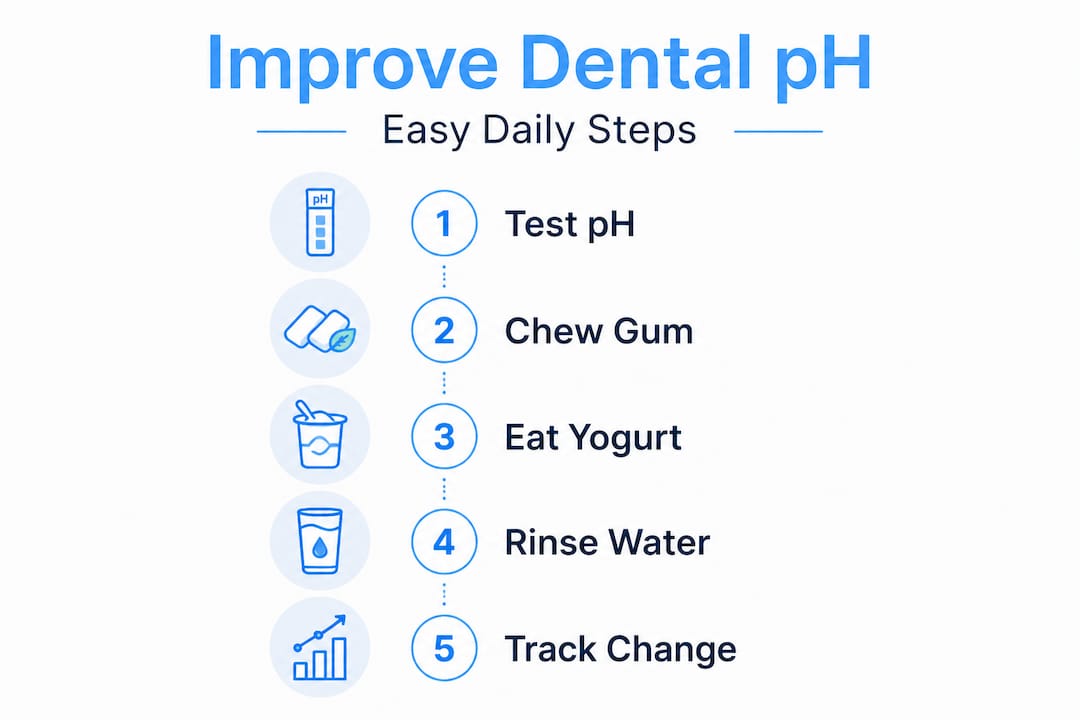
Step-by-step methods to improve dental pH
The methods below are ranked by immediacy of effect. Start with the fastest-acting strategies and layer in the longer-term habits as they become routine.
-
Rinse with plain water immediately after acidic food or drink. Within seconds of finishing a soda, citrus juice, or candy, swish water around your mouth for 30 seconds and spit. This dilutes residual acids and helps salivary pH begin recovering faster. It is the simplest habit and one of the most effective for damage control.
-
Eat plain yogurt after cariogenic (tooth-damaging) foods. Plain yogurt is mildly alkaline, rich in calcium and phosphate, and contains lactic acid bacteria that actually support oral microbiome balance rather than harming it. Research confirms that yogurt outperforms water rinsing alone in restoring salivary pH and supporting remineralization. Aim for two to four tablespoons, not a sweetened fruit variety.
-
Chew sugar-free gum for 15 to 20 minutes after meals. The mechanical act of chewing dramatically increases saliva production. Saliva is your mouth’s natural buffering system, packed with bicarbonate ions that neutralize acids. The act of chewing stimulates saliva flow and directly accelerates pH recovery, especially useful if you cannot brush after a meal or if you have borderline dry mouth.
-
Eliminate candy and minimize processed sugars. This is not just about sugar’s caloric profile. Sugar feeds Streptococcus mutans and other acid-producing bacteria in your biofilm. Every time these bacteria metabolize sugar, they produce lactic and acetic acids that drop your oral pH for up to 40 minutes per exposure. Cutting back on sugar frequency, not just total amount, matters enormously. Three small sugar hits across a day are worse than one larger portion, because each exposure triggers a new acid attack cycle.
-
Monitor your progress weekly with pH strips. Take readings at the same two time points you established during baseline. Look for your post-meal pH to recover toward 6.8 or above within 20 to 30 minutes of intervention. If it is not recovering that quickly, your next step is identifying which specific exposures are the biggest offenders.
-
Incorporate calcium-rich foods across your day. Cheese, plain yogurt, leafy greens, almonds, and fortified oat milk all contribute calcium and phosphate that saliva can use for remineralization. Think of these dietary strategies for oral pH as restocking the raw materials your enamel needs to repair itself.
-
Use fluoride toothpaste at night. Fluoride helps convert hydroxyapatite into fluorapatite, a harder and more acid-resistant crystal form. Brushing at night when salivary flow naturally decreases means fluoride has hours to work without being diluted by food or drink.
Statistic to know: Each sugar or acid exposure drops oral pH below the critical 5.5 threshold for 20 to 40 minutes. Three sugar exposures per day means your enamel spends up to two hours in active demineralization mode every single day.
Pro Tip: Pair your post-meal gum-chewing habit with a small portion of cheese or plain yogurt for a compounding effect. The saliva stimulation from chewing combines with the calcium delivery from the food, giving your enamel both the trigger to remineralize and the raw materials to do it with.
After following these methods, you might notice changes in your oral health. Let’s discuss how to evaluate your results and troubleshoot.
Evaluating results and fixing common challenges
Progress with dental pH is rarely dramatic in the short term. But the signs of improvement are real and measurable if you know what to look for.
Signs your pH strategies are working:
- Post-meal pH readings recovering to 6.5 or above within 20 to 30 minutes
- Reduced tooth sensitivity to cold or sweet foods over four to six weeks
- Teeth appearing slightly brighter as surface remineralization improves light reflection
- Less “furry” or “coated” sensation on teeth after meals
- Decreased frequency of bad breath, which often correlates with reduced acid-producing bacterial dominance
The healthy target range for resting salivary pH is 6.8 to 7.2. If your baseline readings consistently fall below 6.5, you are likely dealing with a structural challenge beyond just dietary habits.
“If you have dry mouth (xerostomia) or take medications that reduce saliva flow, pH recovery and buffering are likely worse, so the pH improvement strategy should prioritize saliva stimulation and professional evaluation.”
This is especially important for adults over 40. Many common medications, including antihistamines, antidepressants, blood pressure drugs, and diuretics, list dry mouth as a side effect. If your salivary flow is pharmacologically reduced, no amount of yogurt or water rinsing will fully compensate without also addressing the saliva volume problem directly.
How to troubleshoot persistent acidity:
- Increase your water-rinsing frequency to after every meal and snack, not just the obviously acidic ones
- Add a mid-day sugar-free gum session specifically targeted at your lowest-pH reading time
- Ask your dentist about prescription-strength fluoride applications or remineralizing agents
- Consider a saliva substitute spray if dry mouth is moderate to severe
- Review your medication list with your doctor and ask whether alternatives with fewer oral side effects exist
Pro Tip: Check the whitening and pH outcomes connection before investing in any whitening treatment. Applying whitening agents to an enamel surface that is actively demineralizing can increase sensitivity without delivering lasting results. Stabilize your pH first.
For older adults specifically: Saliva production naturally declines with age even without medication. If you are over 50, consider your saliva stimulation strategies as non-negotiable rather than optional. They are the most direct lever you have on oral pH outside of a clinical setting.
With actionable steps and troubleshooting advice in mind, let’s explore a unique perspective on dental pH improvement.
Why conventional dental pH advice often falls short
Here is the uncomfortable truth: most dental pH advice treats the mouth as if it operates in isolation. “Brush twice a day.” “Cut out sugar.” “Drink more water.” That advice is not wrong, but for adults navigating the real complexity of aging, polypharmacy, and modern stress, it is woefully incomplete.
Brushing addresses bacterial biofilm on tooth surfaces. It does not restore the chemistry of your saliva. It does not replace buffering capacity lost to dry mouth. It does not accelerate the ion redeposition process that enamel actually needs. Brushing is maintenance. Remineralization is repair. Those are two different biological processes, and most generic advice conflates them.
What most adults with pH challenges actually need is a saliva-first strategy. Saliva is the central actor in oral pH regulation. It delivers bicarbonate to neutralize acids. It carries calcium and phosphate ions to remineralize enamel. It physically flushes away food debris and dilutes acidic compounds. When saliva is insufficient, every other strategy underperforms.
The science-backed mouth chemistry perspective recognizes that targeted interventions, like chewing-based saliva stimulation paired with mineralizing foods, address the root mechanism rather than just the symptoms.
The other gap in conventional advice is self-monitoring. Your dentist sees you twice a year. Your mouth operates every single day. pH test strips, food logs, and consistent timing of interventions give you a feedback loop that a biannual checkup simply cannot. Professional evaluation remains critical, but between appointments, you are the primary observer. That role is worth taking seriously.
Explore easy oral care solutions for healthier pH
Improving your dental pH does not require an overhaul of your entire lifestyle. The right daily tools make a measurable difference with minimal friction.
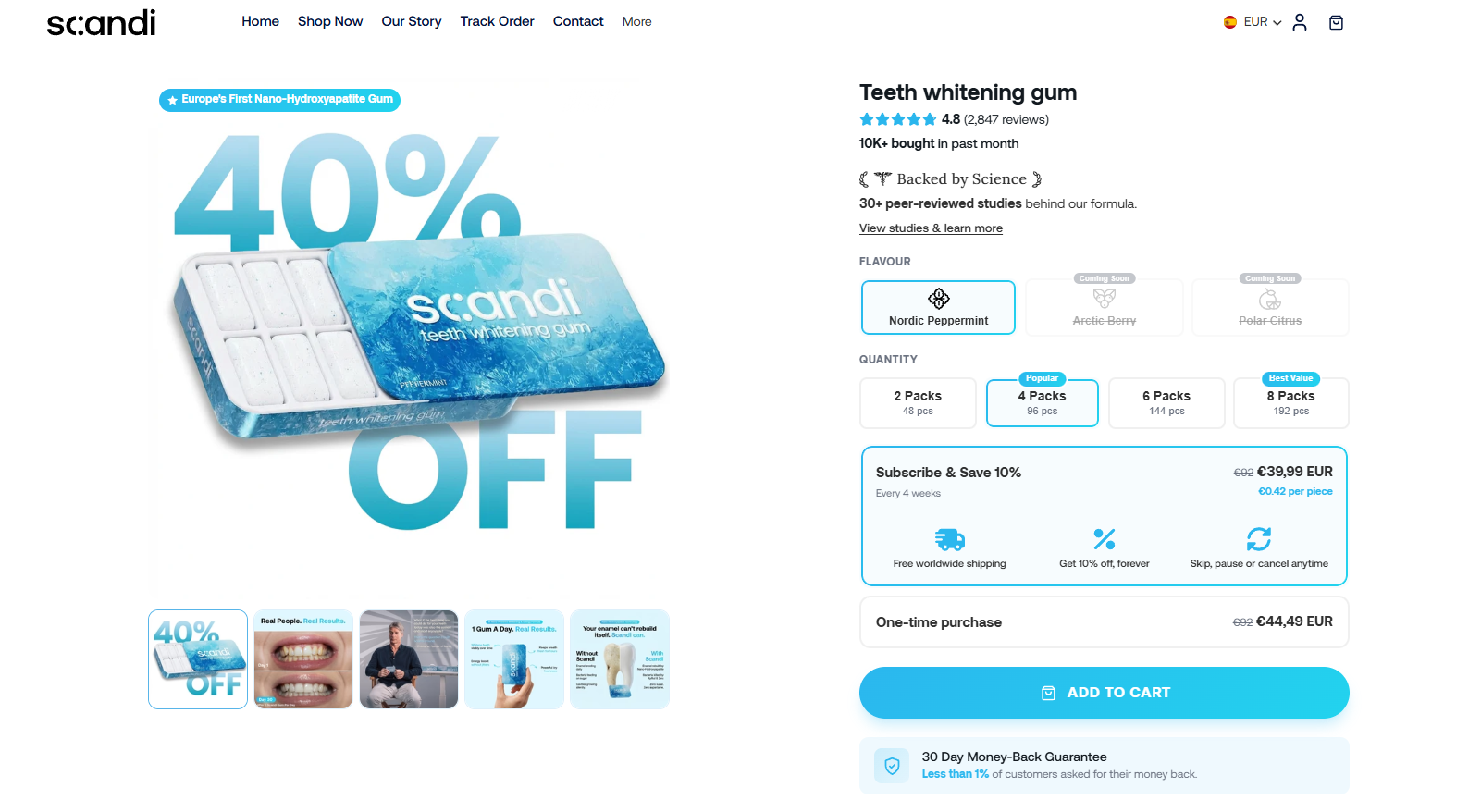
At Scandigum, we designed our functional gum specifically around the biology of oral pH recovery. The act of chewing stimulates saliva production, and our formula layers in mineralizing agents that work with your mouth’s natural buffering system rather than around it. Whether you’re managing post-meal acidity or dealing with the compounding effects of dry mouth, Scandi Gum oral care is built to support your enamel from the inside of your oral environment outward. It is a practical, science-grounded addition to the strategies covered in this guide, and it fits seamlessly into the routines you are already building.
Frequently asked questions
What is a safe dental pH range for adults?
Healthy adult dental pH typically ranges from 6.8 to 7.2, which supports enamel protection and active remineralization between meals.
How quickly can eating yogurt improve my dental pH?
Yogurt can improve salivary pH within minutes after consumption, shifting acidity back toward baseline while delivering calcium and phosphate that support remineralization.
Can dry mouth or medications affect my dental pH recovery?
Yes, dry mouth and medications that reduce saliva flow can significantly slow pH recovery. Research confirms that saliva stimulation strategies, such as sugar-free gum, become even more critical for these individuals.
Do oral care products like gum really help dental pH?
Sugar-free gum stimulates saliva production, which is your mouth’s primary buffering mechanism. Studies show that chewing gum after meals accelerates oral pH recovery and supports the remineralization process.