

TL;DR:
- Up to 50% of heart attacks are linked to oral pathogens, highlighting the importance of oral health.
- Chronic gum inflammation can trigger systemic inflammation and increase risk for diseases like diabetes and heart disease.
- Preventative oral care, diagnostics, and integrated strategies are essential for overall health and longevity.
Up to 50% of heart attacks are linked to oral pathogens. That’s not a dental statistic. That’s a cardiology wake-up call. Most people treat oral care as a cosmetic concern, something you manage to avoid cavities or bad breath. But the mouth is a direct gateway to your bloodstream, your immune system, and your brain. If you’re optimizing your diet, your sleep, and your cognitive performance but ignoring your gums, you’re leaving a massive variable uncontrolled. This guide breaks down the science of oral systemic health, explains the mechanisms driving disease, and gives you a clear path to act on it.
Table of Contents
- Defining oral systemic health: The missing link
- How oral inflammation drives disease: Key mechanisms
- Major systemic connections: What the evidence says
- Innovative approaches: Prevention, diagnostics, and integration
- The uncomfortable truth: Prevention trumps treatment
- Next steps: Enhance your oral systemic health
- Frequently asked questions
Key Takeaways
| Point | Details |
|---|---|
| Oral health impacts whole body | Poor oral hygiene can increase your risk for major diseases like diabetes and heart disease. |
| Chronic inflammation is central | Inflamed gums release substances that disrupt your body’s immune, metabolic, and vascular systems. |
| Prevention and integration are key | Prioritizing prevention and integrated medical-dental care boosts cognition and supports remineralization. |
| Innovative diagnostics emerging | Salivary tests and functional dentistry are changing how we spot and manage systemic risks. |
Defining oral systemic health: The missing link
Oral systemic health is not a niche concept. It is the foundation of how your body maintains or loses balance. As Smilepedia explains, oral-systemic health describes the two-way relationship between oral health and systemic health. That bidirectional dynamic is what makes it so easy to overlook. Most people think of disease as moving in one direction. Oral systemic health breaks that assumption entirely.
Here’s what that looks like in practice. Periodontitis, a chronic bacterial infection of the gum tissue, creates a persistent inflammatory environment in the mouth. That inflammation doesn’t stay local. It triggers immune responses that circulate through the entire body, raising the baseline level of systemic inflammation. At the same time, systemic diseases like diabetes impair blood flow to gum tissue, making the gums more vulnerable to infection. The disease loop feeds itself.
Conditions that both drive and are driven by poor oral health include:
- Periodontitis (advanced gum disease with bone loss)
- Dental caries (tooth decay from acid-producing bacteria)
- Gingivitis (early-stage gum inflammation)
- Oral dysbiosis (microbial imbalance in the mouth)
Each of these conditions can act as a trigger for systemic inflammation, and each can be worsened by systemic disease. Understanding oral health and total wellness as an integrated system rather than separate concerns is the first cognitive shift that changes how you approach your health.
“The mouth is not isolated from the rest of the body. It is a mirror of what’s happening systemically, and sometimes it’s the first place a problem shows up.”
Most people don’t get this until a dentist finds something alarming during a routine cleaning. By then, the inflammatory process has often been running quietly for years. That’s the real cost of treating oral care as a cosmetic routine.
How oral inflammation drives disease: Key mechanisms
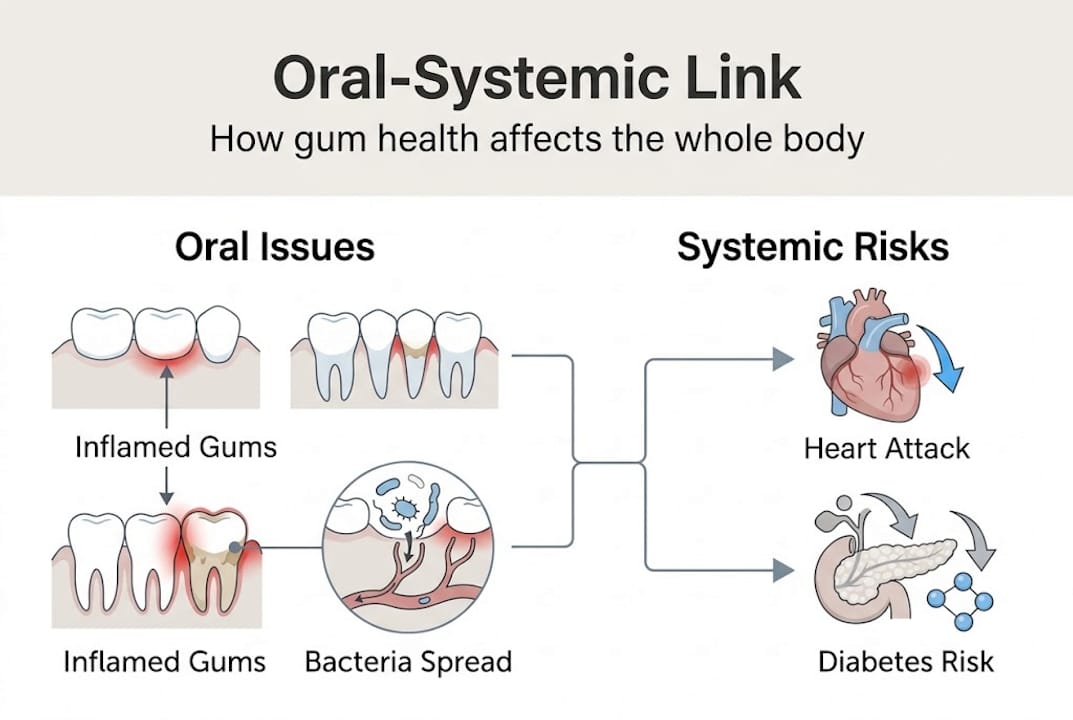
Oral problems don’t stay in your mouth because the mouth is not a sealed system. The gum tissue is highly vascularized, meaning it has dense blood vessel coverage. When that tissue becomes infected or inflamed, bacteria and inflammatory molecules enter the bloodstream directly.

Chronic periodontal inflammation releases cytokines and bacteria into the bloodstream, triggering immune responses far beyond the gum line. The key players are interleukin-6 (IL-6), tumor necrosis factor-alpha (TNF-α), and C-reactive protein (CRP). These are the same markers elevated in cardiovascular disease, type 2 diabetes, and metabolic syndrome.
| Inflammatory marker | Role in the body | Elevated by periodontitis |
|---|---|---|
| IL-6 | Drives systemic inflammation | Yes |
| TNF-α | Promotes insulin resistance | Yes |
| CRP | Cardiovascular risk indicator | Yes |
| Fibrinogen | Blood clotting factor | Yes |
The downstream effects are serious. Endothelial dysfunction, where the lining of blood vessels becomes impaired, is one result. Insulin resistance is another. Both are direct risk factors for heart disease and diabetes. The good news is that periodontal therapy reduces markers like HbA1c and CRP, showing that treating the source of oral inflammation has measurable systemic benefits.
Pro Tip: If you’re already tracking inflammation through bloodwork, ask your doctor to cross-reference your CRP levels with your periodontal health history. The correlation is often striking and actionable.
Think of it this way: your gums are like a slow leak in a pressurized system. The leak seems small and localized, but over time it drops the pressure everywhere. Patching the leak, meaning treating gum disease, restores pressure throughout the whole system. Building strong oral wellness habits is how you prevent the leak from forming in the first place.
Major systemic connections: What the evidence says
The research on oral-systemic links has matured significantly. We’re no longer talking about correlations. We’re talking about mechanisms, risk multipliers, and clinical outcomes.
Periodontitis increases diabetes risk by three to four times, with moderate evidence also linking it to hypertension and cardiovascular events. Those are not small numbers. For context, smoking increases cardiovascular risk by roughly two times. Gum disease, left untreated, can be a more powerful risk factor than many people realize.
| Systemic condition | Strength of oral health link | Key mechanism |
|---|---|---|
| Type 2 diabetes | Strong (3-4x risk increase) | TNF-α, insulin resistance |
| Cardiovascular disease | Moderate to strong | Endothelial dysfunction, CRP |
| Hypertension | Moderate | Systemic inflammation |
| Respiratory infections | Moderate | Aspiration of oral bacteria |
| Alzheimer’s disease | Emerging | Porphyromonas gingivalis in brain tissue |
| Rheumatoid arthritis | Moderate | Shared inflammatory pathways |
The Alzheimer’s connection deserves special attention. Researchers have found Porphyromonas gingivalis, a primary periodontal pathogen, in the brain tissue of Alzheimer’s patients. This is not proof of causation yet, but it’s a signal that oral pathogens may cross the blood-brain barrier and contribute to neurodegeneration.
Women face a distinct set of oral-systemic challenges. Hormonal changes during menopause, pregnancy, and hormonal therapy all influence gum tissue sensitivity, oral microbiome balance, and systemic inflammation. For women, oral health is not just a hygiene issue. It’s a longevity variable.
Key risk groups who should prioritize oral-systemic monitoring:
- Adults over 45 with any cardiovascular risk factors
- Women in perimenopause or postmenopause
- Individuals with prediabetes or insulin resistance
- Anyone with a family history of Alzheimer’s or dementia
- People with autoimmune conditions like rheumatoid arthritis
If you fall into any of these categories, your oral-brain health habits are not optional maintenance. They are part of your core health protocol.
Innovative approaches: Prevention, diagnostics, and integration
The standard dental visit, clean, X-ray, repeat, is not built for systemic risk management. But that’s changing fast. Here’s what a more complete approach looks like in 2026.
- Salivary diagnostics: Saliva contains biomarkers for systemic conditions including cortisol, glucose, and inflammatory cytokines. Non-invasive salivary tests can flag systemic risk before symptoms appear, making the dental chair a surprisingly powerful diagnostic environment.
- Medical-dental integration: Integrated care strategies that connect dental providers with physicians reduce costs and improve outcomes for patients with chronic disease. When your dentist knows your HbA1c and your doctor knows your periodontal status, care becomes genuinely coordinated.
- Functional dentistry: This approach goes beyond teeth to address airway health, oral microbiome balance, and jaw function. It treats the mouth as a system, not a collection of individual teeth.
- Oral microbiome management: Targeting the bacterial balance in your mouth, rather than just removing plaque, is a more precise strategy for reducing pathogen load and systemic inflammation.
- Remineralization support: Maintaining a neutral to slightly alkaline oral pH supports enamel repair and reduces the bacterial conditions that drive gum disease.
Pro Tip: Chewing stimulates salivary flow, which naturally buffers oral pH and delivers calcium and phosphate ions to enamel surfaces. It’s one of the most underutilized remineralization tools available.
Periodontal therapy, oral microbiome balance, and medical-dental integration together form the strongest evidence-based framework for reducing systemic risk through oral care. And 90% of systemic diseases show oral signs first, which means your mouth is often the earliest warning system you have.
“Prevention is not a passive strategy. It’s the most aggressive form of health optimization available to you.”
Exploring oral-systemic prevention strategies now, before symptoms emerge, is where the real leverage lives.
The uncomfortable truth: Prevention trumps treatment
Here’s the part that most oral health content skips. The research doesn’t just say that oral health matters. It says that 90% of systemic diseases show oral signs before they’re diagnosed elsewhere. Your mouth is telling you something long before your bloodwork does.
The uncomfortable part is that the healthcare system is not designed to catch this early. Dental and medical care are still largely siloed. Most people see their dentist twice a year and their physician once. Neither provider is typically asking the questions that would connect the dots between gum inflammation and rising CRP levels.
We think this needs to change at the individual level first. You don’t have to wait for the system to catch up. Treating total oral wellness as a non-negotiable part of your longevity protocol is something you can decide today. The habits that prevent chronic oral inflammation, consistent hygiene, microbiome support, remineralization, and reduced sugar load, are not complicated. They’re just consistently undervalued. That’s the real gap.
Next steps: Enhance your oral systemic health
You now understand the mechanisms, the risks, and the leverage points. The next move is applying that understanding with tools built for it.
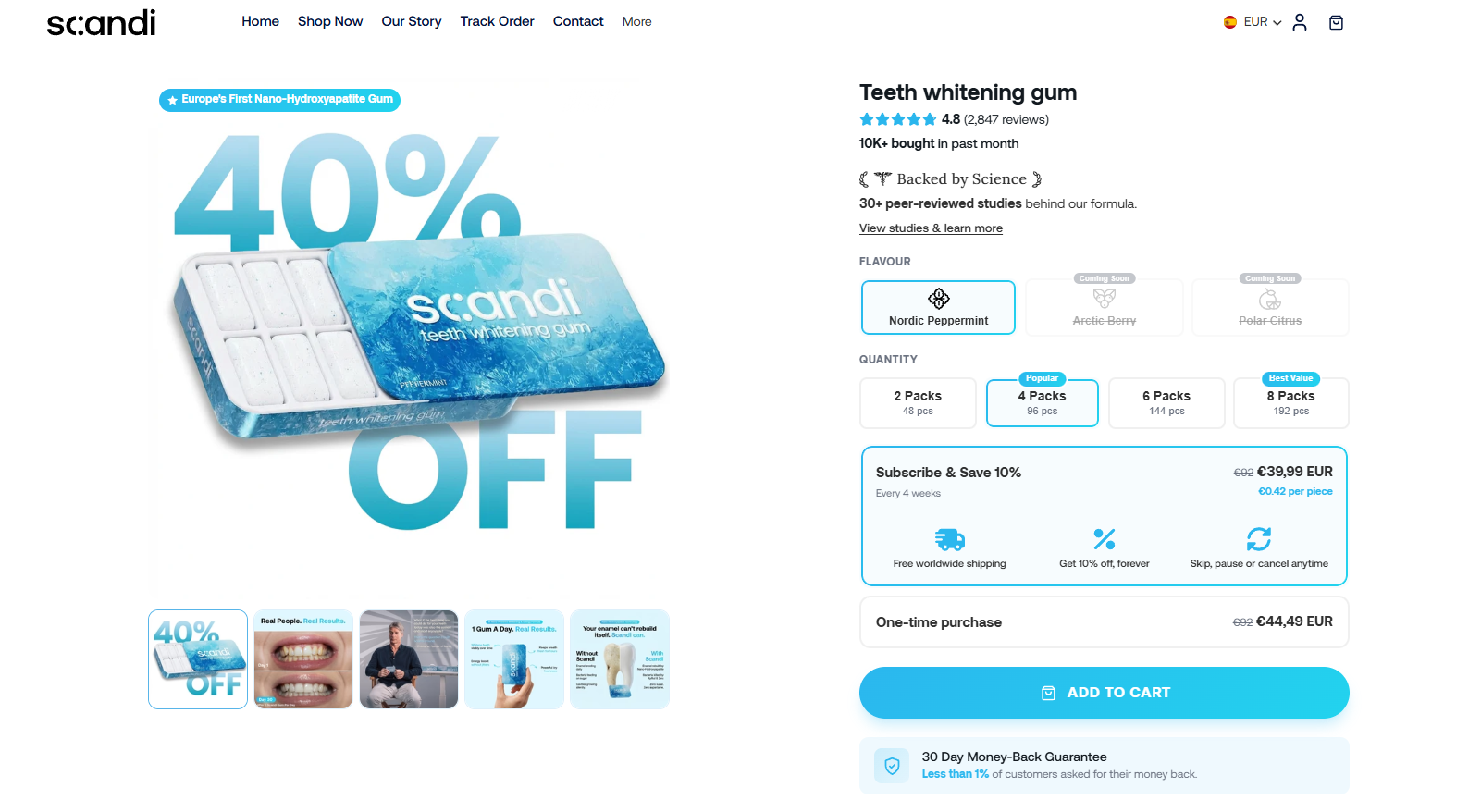
Scandigum is designed around exactly this framework. It uses the buccal mucosa for direct absorption, stimulates salivary flow to support remineralization, and activates the mastication-brain loop to support cognitive performance. It’s not a supplement you swallow and forget. It’s a delivery system that works with your oral biology in real time. If you’re ready to move from understanding to action, explore innovative oral care solutions that align with everything this guide covers. Your mouth is the starting point. Make it work for you.
Frequently asked questions
What does oral systemic health mean in everyday life?
It means your oral health directly influences your risk for diabetes, heart disease, and cognitive decline. The bidirectional relationship between oral and systemic health means problems in your mouth can both cause and reflect problems throughout your body.
Can improving my oral hygiene really lower my risk of systemic disease?
Yes. Periodontal therapy reduces HbA1c and CRP, two key markers tied to diabetes and cardiovascular disease, showing that treating gum disease has measurable effects beyond the mouth.
Are there new technologies for detecting oral-systemic conditions?
Salivary diagnostics are emerging as a non-invasive way to detect systemic biomarkers including cortisol, glucose, and inflammatory cytokines through simple oral tests.
How do women’s health and hormones affect oral systemic health?
Hormonal shifts during menopause and pregnancy increase gum tissue sensitivity and alter the oral microbiome, making prevention especially important for women’s long-term systemic health.