

TL;DR:
- Oral vascularity, the blood flow in gum tissues, influences systemic health and signals early inflammation.
- Current measurement tools are primarily research-led, and while chewing impacts blood flow temporarily, long-term benefits require further evidence.
Most people think oral health is about brushing twice a day and avoiding sugar. But the tissue holding your teeth in place is a living, vascular network that connects directly to your cardiovascular and nervous systems. Inflammation-driven endothelial dysfunction links oral disease to systemic vascular health in ways that extend far beyond cavities. Your gums are a window into the health of your blood vessels, your brain, and your body. This guide breaks down the actual science of oral vascularity, how it’s measured, what modern research shows, and what that means for how you approach gum health and functional products.
Table of Contents
- What is oral vascularity and why does it matter?
- How is oral vascularity measured? Key diagnostic technologies
- Oral vascularity, gum disease, and systemic health: The real connection
- Does chewing gum boost oral vascularity or cognitive health?
- A reality check: What most people miss about oral vascularity and functional gum
- Explore advanced gum options for oral and cognitive support
- Frequently asked questions
Key Takeaways
| Point | Details |
|---|---|
| Oral vascularity explained | Healthy blood flow in gum tissue is vital for oral and overall vascular health. |
| Measuring methods vary | Non-invasive imaging tools can assess vascularity, but each has unique pros and cons. |
| Gum and whole-body link | Gum inflammation can influence systemic wellness through blood vessel health. |
| Chewing’s real effects | Chewing can boost brain blood flow and nitric oxide, but gum products’ claims need scrutiny. |
| Use innovation wisely | Bio-optimizing gums can supplement oral health routines but are not proven cure-alls. |
What is oral vascularity and why does it matter?
Oral vascularity refers to the blood flow circulating through your gum tissue, the microscopic network of capillaries and vessels that keeps the periodontium (the system of structures supporting your teeth) alive and functioning. This is not a passive system. Blood flow in the gums is actively regulated, and when it changes, the effects ripple outward.
At a basic level, gingival blood flow does four critical things:
- Nourishes gum tissue by delivering oxygen and nutrients continuously to cells under constant mechanical stress from chewing
- Clears metabolic waste and toxins produced by the billions of bacteria that colonize the oral environment every day
- Supports tissue healing after injury, scaling, or any microtrauma from brushing and eating
- Signals inflammation by dramatically increasing blood flow and vascular permeability when the immune system detects bacterial invasion
That last point is where things get clinically interesting. Research confirms that oral vascular perfusion changes can be quantified and used as a diagnostic signal for gingival inflammation, meaning blood flow patterns in your gums are not just a side effect of disease. They are an early biomarker of it.
Statistic callout: Studies show that the endothelial cells lining oral blood vessels respond to bacterial toxins the same way cardiovascular endothelial cells do, explaining why the oral-systemic vascular link is increasingly recognized in cardiology research.
Understanding the role of functional gum and oral inflammation matters here because the mouth is not a sealed compartment. What happens in your gum vasculature feeds directly into your systemic circulation. That connection is what makes oral vascularity a genuine priority, not a dental marketing buzzword.
With an understanding that oral vascularity is more than a dental detail, let’s explore how it can be measured and what the current science shows.
How is oral vascularity measured? Key diagnostic technologies
Measuring blood flow in soft tissue is technically challenging. Gum tissue is thin, constantly moving, and exposed to saliva, temperature changes, and mechanical pressure. Researchers have developed several non-invasive approaches, each with real strengths and genuine limitations.

Multiple non-invasive modalities now exist to assess oral soft-tissue blood flow, ranging from laser-based techniques to high-resolution ultrasound. Here’s how the main approaches compare:
| Technology | How it works | Coverage area | Pros | Cons |
|---|---|---|---|---|
| Laser Doppler flowmetry | Measures frequency shift of laser light scattered by moving red blood cells | Very small (single point) | High temporal resolution, well-validated | Probe placement sensitivity, no spatial mapping |
| Laser speckle contrast imaging | Captures random interference patterns from laser light to map relative perfusion | Wider field of view | Real-time 2D perfusion maps, no contact required | Affected by ambient light, motion artifacts |
| Ultrasound (Doppler) | Sound waves detect blood velocity in vessels | Moderate, vessel-level | Shows deeper vessel anatomy | Lower resolution for surface capillaries |
| Imaging angiography (optical coherence) | Interferometry-based cross-sectional imaging of microvascular flow | Subsurface, detailed | Extremely high resolution | Expensive, mainly experimental |
The critical limitation across all these methods is context. A laser Doppler probe placed 1 millimeter off from the inflamed site gives you entirely different data. Laser speckle imaging solves the spatial problem but is sensitive to even minor patient movement during measurement.
Pro Tip: Vascular imaging is a genuinely exciting frontier, but it remains a tool for specialists and research settings. If a wellness brand claims it is measuring your oral vascularity at home with a consumer device, ask for the peer-reviewed validation before trusting the output.
Advances in oral blood flow imaging are moving fast, but clinical translation takes time. The current evidence positions these tools as adjuncts for researchers and periodontists, not replacements for the standard dental probe and patient history.
Moving from what oral vascularity is to how it’s measured highlights why research is still evolving. Next, we’ll examine how oral vascularity links to inflammation and total body health.
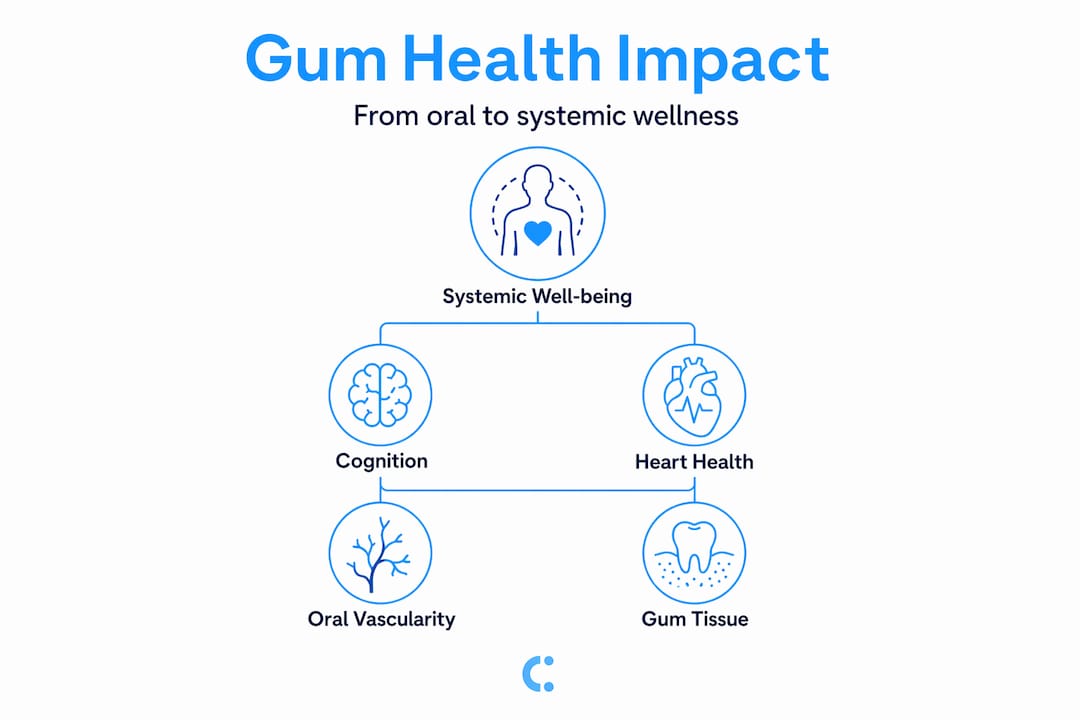
Oral vascularity, gum disease, and systemic health: The real connection
Gum disease does not just sit quietly in your mouth. The inflammatory cascade that begins in gingival tissue can alter local blood flow in complex and sometimes contradictory ways. Early-stage gum disease typically produces hyperemia (increased blood flow) as immune cells flood the area. Chronic, advanced disease can then result in erratic perfusion, tissue hypoxia, and structural changes to the vessel walls themselves.
“Endothelial function is impaired by periodontal inflammation, linking gum and cardiovascular risks.”
This is not a loose association. Periodontal inflammation and oxidative stress directly impair endothelial function, which is the same mechanism underlying atherosclerosis and hypertension. The oral cavity and the cardiovascular system share the same endothelial vulnerabilities.
Recent research has taken this even further. Scientists have now identified specific endothelial remodeling signatures in aggressive, rapidly advancing periodontitis and peri-implantitis (the gum disease that can develop around dental implants). These findings suggest the disease process is not just inflaming vessels but actively reshaping their architecture.
Here is how that progression typically unfolds:
- Bacterial biofilm accumulates at the gum line, triggering an immune response
- Local inflammation increases vascular permeability and blood flow, causing the redness and bleeding most people recognize as early gum disease
- Endothelial dysfunction develops as chronic inflammation damages the vessel lining, reducing its ability to regulate blood pressure, clotting, and immune trafficking
- Systemic effects emerge as inflammatory mediators and bacteria enter the bloodstream, contributing to elevated cardiovascular risk, and in some populations, metabolic and neurological strain
Understanding inflammation and oral vascularity as a systemic issue is what separates modern periodontal thinking from older models that treated gum disease as purely a local problem. Your gums are a gateway, and what passes through that gateway affects your whole body.
Now that you see the bridge between oral blood flow and systemic wellness, let’s turn to what current evidence really says about gum products, chewing, and cognitive performance.
Does chewing gum boost oral vascularity or cognitive health?
This is where it gets interesting, and where the nuance matters most. There are real physiological effects from the act of chewing. There are also some significant gaps between those effects and the claims you’ll see on product packaging.
The most compelling data involves brain blood flow. Chewing can acutely increase brain blood flow by approximately 20% in some studies, and chewing is associated with increased nitric oxide related metabolites through the oral nitrate-nitrite pathway. These are real, measurable effects.
| Variable | Chewing condition | Swallowing/control condition | Net effect |
|---|---|---|---|
| Cerebral blood flow | Elevated ~15 to 20% during active chewing | Baseline | Acute, returns to baseline |
| Salivary nitric oxide metabolites | Increased via oral bacteria reducing nitrate | Minimal oral conversion | Transient increase |
| Reaction time and alertness | Modest short-term improvements reported | Neutral | Small, task-dependent |
| Gingival vascularity | No direct evidence of sustained improvement | N/A | Not established |
The honest read of this data: chewing produces acute physiological changes that are real and measurable. Whether those changes translate into improved gingival vascularity, lasting cognitive gains, or long-term oral health outcomes is a very different and much harder question to answer.
Oral health and periodontal status have been studied in relation to cognitive function, but biomarker and microbiome signals are often inconsistent across populations. The benefits seen in some studies tend to concentrate in older adults, people with cognitive frailty, or those with significant periodontal disease at baseline. Extrapolating those findings to a healthy, alert 35-year-old is a stretch.
Key takeaways for a grounded view:
- Acute vs. long-term effects are different. A temporary boost in alertness during a 15-minute chew session is not the same as structural improvement in gum vascularity over months
- Cognitive benefits appear most pronounced in older adults or those with higher baseline inflammation, not necessarily in healthy younger populations
- Active ingredients matter. Xylitol, for example, has strong evidence for reducing Streptococcus mutans activity. Other ingredients in functional gums vary widely in their evidence base
- The delivery mechanism is genuinely interesting. Buccal absorption via the highly vascularized oral mucosa bypasses first-pass liver metabolism, which is a pharmacologically real advantage for certain compounds
Pro Tip: When evaluating any gum for focus and oral health, look for disclosed active ingredients with cited research, transparent dosing information, and claims that distinguish between acute physiological effects and long-term health outcomes. Products that blur those lines are not giving you the full picture. The chewing science and blood flow connection is legitimate, but it requires honest framing.
A reality check: What most people miss about oral vascularity and functional gum
Here’s the perspective that most content in this space avoids: the science of oral vascularity is genuinely exciting, and it is also far more complex than any single product can address.
Vascular perfusion imaging of gum tissue is real technology. Researchers can now map blood flow in gingival tissue with impressive resolution and use those maps to detect inflammation before it becomes clinically obvious. But perfusion imaging is best viewed as an adjunct or research tool, not a replacement for standard clinical periodontal diagnosis. Your dentist’s probe depth measurements and visual assessment are still the diagnostic gold standard in a clinical setting. That’s not a failure of ambition. It reflects the reality that translating research tools into everyday clinical practice takes rigorous validation, and we’re not there yet for most of these imaging technologies.
The second thing most people miss is the gap between mechanism and outcome. Yes, chewing increases cerebral blood flow. Yes, oral inflammation impairs endothelial function. Yes, the buccal mucosa is highly vascularized and capable of absorbing compounds quickly. These are all real physiological facts. But the real science of functional gum also shows that evidence for bio-optimizing gum products directly improving oral vascularity or cognitive function in healthy adults remains preliminary. The mechanisms are plausible. The clinical proof is still catching up.
What does that mean practically? It means functional gum products that are grounded in honest ingredient science and realistic claims are a genuinely interesting category worth watching and using thoughtfully. They work best as complements to established habits: consistent brushing and flossing, regular dental visits, adequate hydration, and a diet that supports gum tissue health. Not as substitutes for any of those things.
Pro Tip: Prioritize daily oral hygiene as your baseline. Treat functional gum products as a smart addition to that foundation, not a shortcut around it. The most credible products in this space are the ones that make precise, ingredient-specific claims rather than sweeping promises about “bio-optimization.”
The broader lesson here is that oral health is a systemic issue dressed in local clothing. When you invest in your gum health, you are investing in your vascular health, your inflammatory burden, and, emerging evidence suggests, your cognitive resilience over time. That’s worth taking seriously.
Explore advanced gum options for oral and cognitive support
If the science of oral vascularity and buccal delivery has your attention, Scandigum is one of the most technically grounded options in the functional gum category right now. The formula is built around three specific physiological targets: dental remineralization through pH management and salivary stimulation, rapid buccal absorption of active compounds bypassing GI metabolism, and mastication-induced cognitive arousal through the trigeminal-reticular pathway.
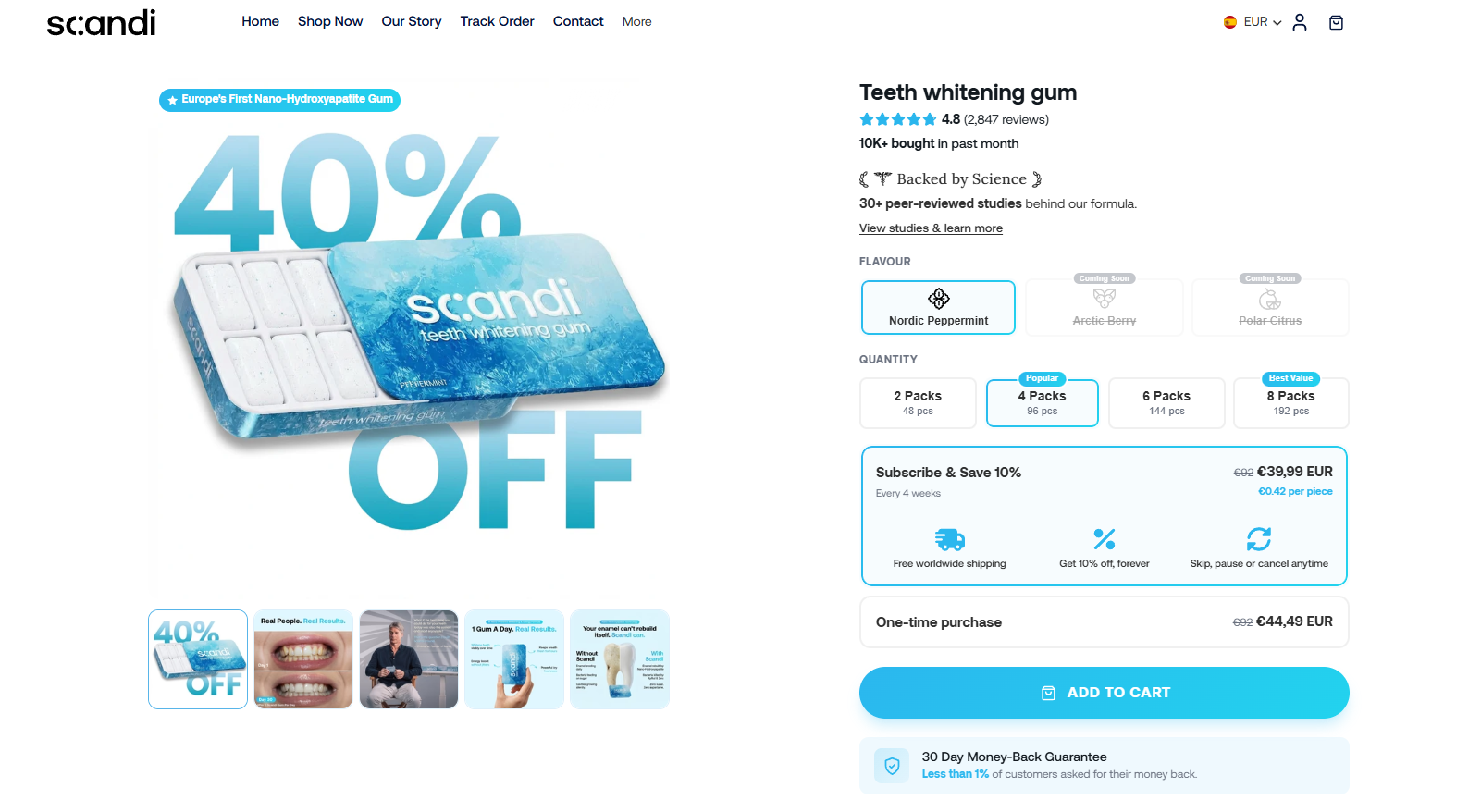
This is not a flavor-forward product dressed in wellness language. The ingredient logic, delivery mechanism, and dosing rationale are disclosed and tied to actual physiological mechanisms. If you’re ready to go beyond the standard mint and into advanced functional gum designed around bio-optimization, Scandigum is worth exploring as a thoughtful complement to your oral and cognitive health routine.
Frequently asked questions
Can improving gum vascularity prevent heart disease?
There is a real mechanistic link between gum inflammation and cardiovascular risk via endothelial dysfunction, but improving oral vascularity alone does not guarantee heart disease prevention. Total oral and systemic health management together matter far more than any single intervention.
Do any functional gums directly improve oral vascularity?
Evidence for over-the-counter gum directly improving gingival vascularity in healthy adults is limited and preliminary. The most credible products work through adjacent mechanisms like pH control, salivary stimulation, and buccal absorption rather than direct vascular improvement.
How does chewing gum affect brain blood flow?
Chewing can acutely increase cerebral blood flow by roughly 15 to 20% during active mastication, with some associated increases in nitric oxide metabolites. Whether this translates into meaningful long-term cognitive gains in healthy adults is still being studied.
Is measuring oral vascularity part of routine dental visits?
Not currently. Specialized vascular perfusion imaging is used mainly in research and specialist settings, while routine dental visits still rely on probing depth, visual examination, and X-rays as the clinical standard for gum disease assessment.