

TL;DR:
- Modern dental science offers effective treatments like CAF+CTG for gum recession and root coverage.
- Consistent daily habits and proper nutrition are crucial for long-term smile restoration after 40.
- Combining professional procedures with sustained routine care leads to lasting, significant improvements.
Most adults over 40 carry a quiet assumption: that their smile has already seen its best days. Gums pull back, enamel fades, and teeth shift in ways that feel permanent. But that assumption is wrong, and modern dental science is proving it every year. From regenerative gum procedures that deliver 88-96% root coverage to functional daily habits that actively rebuild tooth strength, the tools available right now are more powerful than most people realize. This article gives you the specific steps, the real data, and the honest timeline to start reclaiming a vibrant, healthy smile.
Table of Contents
- Why your smile changes after 40
- Medical and lifestyle innovations for restoring your smile
- Diet, nutrition, and functional routines for a brighter smile
- What to expect: results, risks, and your timeline
- The truth most people miss about restoring your smile after 40
- Take the next step toward your best smile
- Frequently asked questions
Key Takeaways
| Point | Details |
|---|---|
| Smile changes are normal | Aging naturally brings shifts in teeth and gums, but improvement is always possible. |
| Advanced gum care works | Modern procedures can reverse gum recession with high success rates and stability. |
| Daily routine matters most | Consistent care and smart nutrition make a big impact in restoring your smile. |
| Set realistic expectations | Results can be gradual, but long-term improvements are supported by evidence. |
Why your smile changes after 40
Now that you know it’s not too late, let’s understand what’s actually changing in your smile after 40. The changes are real, but they’re also predictable. And predictable means manageable.
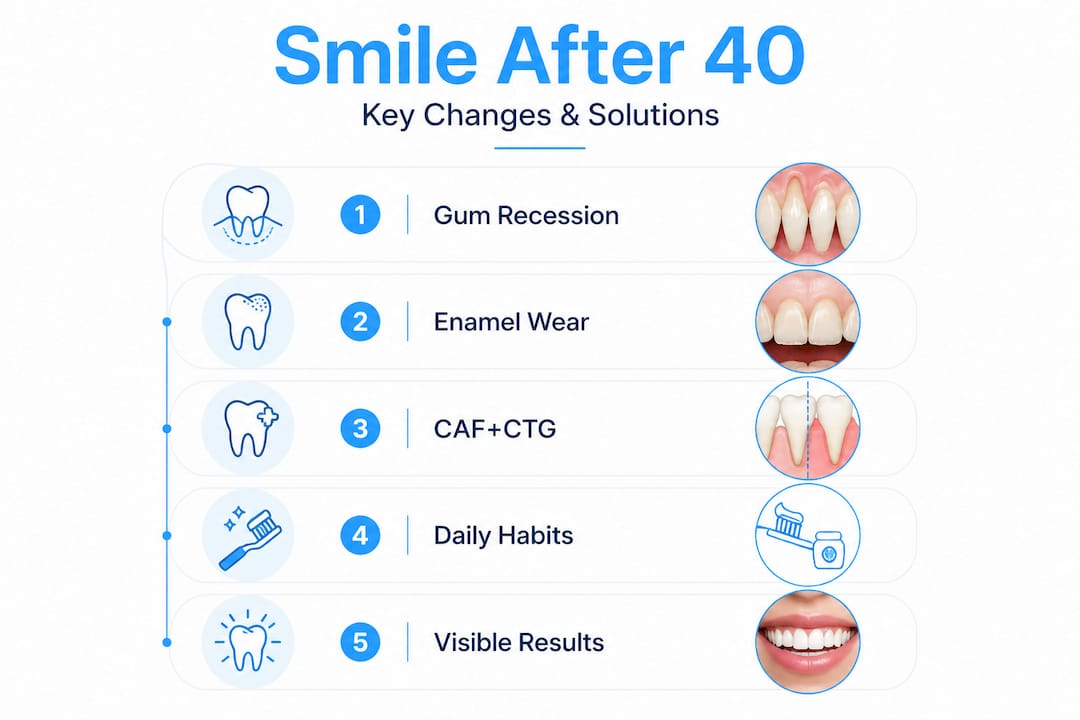
Gum recession is one of the most common shifts. The gum tissue that protects tooth roots gradually pulls away from the enamel, exposing sensitive areas and creating that “long tooth” appearance. Enamel wear follows closely behind, driven by years of acidic foods, grinding, and reduced saliva production. Discoloration deepens as enamel thins and staining compounds accumulate in microscopic surface cracks. Tooth loss risk climbs too, especially when gum disease goes untreated for years.
But the biology goes deeper than just wear and tear.
Hormonal changes play a serious role, particularly for women moving through perimenopause and menopause. Estrogen decline reduces bone density in the jaw and increases gum inflammation. Medications become more common after 40, and many prescription drugs, including antihistamines, antidepressants, and blood pressure medications, cause dry mouth. Saliva is your mouth’s natural defense system. Without enough of it, bacteria thrive, acid goes unchecked, and enamel erodes faster.
Nutrition also shifts in ways that directly affect dental health. Calcium and vitamin D intake tends to drop, weakening the bone structure that holds teeth in place. Collagen production slows, reducing the integrity of gum tissue.
One of the most overlooked forces is simply habit accumulation. Forty-plus years of coffee, wine, acidic foods, and inconsistent flossing create compounding effects that become visible all at once.
The good news is that cutting-edge procedures have been developed specifically for these issues. The Coronally Advanced Flap plus Connective Tissue Graft, known as CAF+CTG, is now the gold standard for treating gum recession. Long-term studies confirm up to 22 years of stability and consistent root coverage rates that far exceed older techniques.
Understanding oral health for adults over 40 means accepting that change is happening, then choosing to meet it with the right tools.
Key causes of smile changes after 40 include:
- Gum recession driven by inflammation, thin tissue, or aggressive brushing
- Enamel thinning from acid exposure and reduced saliva buffering capacity
- Tooth discoloration from surface staining and structural changes in enamel
- Bone loss in the jaw accelerated by hormonal shifts
- Dry mouth from medications reducing saliva’s protective function
- Nutritional gaps in calcium, vitamin D, and collagen precursors
Medical and lifestyle innovations for restoring your smile
With these sources of change in mind, let’s explore what’s actually possible for restoring your smile, both in the dentist’s chair and your daily routine.
The CAF+CTG procedure explained
CAF+CTG combines two surgical techniques. The Coronally Advanced Flap (CAF) repositions existing gum tissue upward to cover exposed roots. The Connective Tissue Graft (CTG) reinforces that coverage with tissue harvested from the palate, adding thickness and long-term stability. Together, they create a robust, durable result that older, simpler techniques simply can’t match.
Clinical evidence shows 88-96% root coverage in long-term follow-up studies spanning more than five years, with documented stability reaching up to 22 years. That’s not a temporary fix. That’s a structural restoration.
Treatment and lifestyle comparison
| Approach | Effectiveness | Recovery time | Best for |
|---|---|---|---|
| CAF+CTG gum surgery | Very high (88-96%) | 2-4 weeks | Significant recession |
| Professional whitening | High for staining | Immediate | Surface discoloration |
| Remineralizing products | Moderate, cumulative | Ongoing | Enamel strength |
| Orthodontic alignment | High for structure | Months to years | Bite and spacing issues |
| Daily home care routine | Moderate, long-term | None | Maintenance, prevention |
| Dietary optimization | Moderate, supportive | Ongoing | Systemic gum health |
Your step-by-step action plan
- Book a full periodontal assessment. Don’t just see your general dentist. A periodontist can map recession depth, bone levels, and tissue quality to give you a real baseline.
- Address active gum disease first. No restoration works well on inflamed tissue. Deep cleaning (scaling and root planing) comes before any cosmetic or restorative procedure.
- Discuss CAF+CTG candidacy. If recession is present, ask your periodontist specifically about this technique and whether your tissue type and recession depth make you a good candidate.
- Create a maintenance schedule. Professional cleanings every three to four months, not six, are standard after gum treatment.
- Build a functional home routine. Pair professional care with evidence-based daily habits (covered in detail in the next section).
- Track progress with photos. A simple monthly photo of your smile helps you see changes that feel invisible day to day.
Pro Tip: When consulting a specialist, ask specifically about long-term stability data for any procedure they recommend. The enhancing gum health tips that actually move the needle are backed by multi-year evidence, not just short-term clinical trials.
Diet, nutrition, and functional routines for a brighter smile
Medical and professional support is crucial, but what you do every day makes a lasting impact. In fact, many people who undergo gum procedures see faster recovery and better outcomes when their nutrition and daily habits are dialed in before and after treatment.
Foods and supplements that matter most
Calcium isn’t just for bones. It’s the primary mineral in tooth enamel and the jaw bone that keeps your teeth anchored. Adults over 40 need consistent dietary calcium from sources like dairy, leafy greens, and fortified foods. Vitamin D is what makes calcium absorbable. Without adequate vitamin D, even a calcium-rich diet won’t deliver the protection your teeth need.
Vitamin C is critical for collagen synthesis. Your gums are largely made of collagen. Low vitamin C intake is directly linked to gum fragility and slower healing. Omega-3 fatty acids reduce systemic inflammation, including in gum tissue. Research consistently links higher omega-3 intake with lower rates of gum disease.
Polyphenols found in green tea, berries, and dark chocolate actually inhibit the growth of oral bacteria. They’re not a replacement for brushing, but they actively shift the bacterial balance in your mouth in a favorable direction.
Key nutritional priorities for smile health after 40:
- Calcium: 1,000-1,200 mg daily from dairy, leafy greens, or fortified foods
- Vitamin D: 1,500-2,000 IU daily, ideally tested and adjusted by your doctor
- Vitamin C: 75-120 mg daily for collagen integrity in gum tissue
- Omega-3s: 1-2 grams of EPA and DHA daily to reduce gum inflammation
- Water: Consistent hydration maintains saliva flow and oral pH balance
- Magnesium: Supports enamel hardness and bone structure in the jaw
Functional daily habits that compound over time
Hydration is the most underrated habit. Dry mouth is an accelerant for decay and gum disease. Drinking water consistently throughout the day, especially after meals, neutralizes acid and keeps the oral environment stable.

The physical act of chewing matters more than most people realize. Chewing stimulates saliva production, increases blood flow to the gums, and activates the remineralization process that restores enamel strength. Choosing nutritional gum health strategies that leverage this mechanism gives you a daily oral health advantage that doesn’t require an appointment.
Exploring a structured workflow for healthier gums helps you build habits in the right sequence, so each one reinforces the next rather than working in isolation.
Pro Tip: Brush with a soft-bristled brush at a 45-degree angle to the gumline, not the teeth. The goal is to clean the junction between tooth and gum without abrading the tissue. Aggressive brushing is one of the most common causes of recession that people create themselves.
What to expect: results, risks, and your timeline
Once you start your journey, it’s vital to know what results to expect and how to balance progress with safety.
Expected outcomes by method
| Method | Visible improvement | Long-term durability | Key risk factor |
|---|---|---|---|
| CAF+CTG surgery | 4-8 weeks post-op | Up to 22 years | Requires specialist expertise |
| Professional whitening | Immediate to 2 weeks | 1-3 years with maintenance | Sensitivity, enamel thinning |
| Remineralizing products | 4-12 weeks consistent use | Ongoing with continued use | Low if used correctly |
| Improved nutrition | 2-4 months systemic change | Permanent with consistency | None if balanced |
| Daily home care | 4-8 weeks for gum changes | Permanent with consistency | Incorrect technique causes damage |
Risks to understand before you start
Advanced gum procedures are safe when performed by qualified periodontists. But there are real risks to account for. Post-surgical swelling and sensitivity are common and typically resolve within two to four weeks. Incomplete healing can occur if the patient smokes or has uncontrolled blood sugar, both of which significantly impair tissue regeneration.
Whitening treatments can cause temporary sensitivity and, if overused, contribute to enamel erosion. Always discuss frequency with your dentist. At-home whitening strips vary widely in concentration and quality.
Nutritional supplements carry their own cautions. Fat-soluble vitamins like D and K2 accumulate in the body and should be monitored, not maximized without guidance.
Your realistic timeline
- Weeks 1-4: Commit to daily habits. Brushing technique, hydration, and dietary shifts create the foundation.
- Months 1-2: Complete a professional assessment and any necessary deep cleaning.
- Months 2-4: If surgery is indicated, schedule and complete CAF+CTG. Focus on post-op recovery.
- Months 4-6: Begin noticing measurable changes in gum coverage, tooth sensitivity reduction, and overall appearance.
- Year 1-2: Establish a three to four month professional maintenance rhythm.
- Year 2+: Enjoy the compounded results of consistent care, professional and daily, working together.
The healthy gum workflow mapped out by dental professionals consistently points to this kind of layered, staged approach as the most reliable path to lasting improvement.
Stat worth remembering: CAF+CTG delivers 88-96% root coverage in documented long-term studies. That’s the kind of result worth planning your timeline around.
The truth most people miss about restoring your smile after 40
Here’s the perspective you won’t usually hear from traditional dental guides.
Most people approach smile restoration as a one-time event. They get a procedure, buy a product, or commit to a routine for a few months and then declare it a success or failure. That’s exactly the wrong frame. The biology of your mouth is continuous. It doesn’t stop changing after your procedure or after you reach your goal. What you’re actually building is a system, not a result.
The adults who see the most dramatic and lasting improvements aren’t the ones who found the best single treatment. They’re the ones who combined the best available clinical science with daily habits that support it, then stayed consistent long after the initial motivation faded.
We’ve seen the evidence on this. The long-term gum care perspective isn’t complicated. It’s consistent. Most adults dramatically underestimate what’s achievable. They’ve been told for years that gum recession is irreversible, that enamel can’t be restored, that the window for dramatic improvement is closed. Modern science disagrees with all of that.
The uncomfortable reality is that most people who don’t see results after 40 simply didn’t combine methods. They tried one thing in isolation, or they did the hard part (the procedure) and skipped the easy part (daily maintenance). Consistency without clinical support stalls out. Clinical support without consistency backslides.
The winning formula isn’t a secret. It’s just underused.
Take the next step toward your best smile
After understanding what’s possible through scientific guidance and sustained daily effort, it’s worth considering practical tools that make the whole journey easier and more effective. Professional care creates the foundation, but what you do between appointments is where real momentum builds.
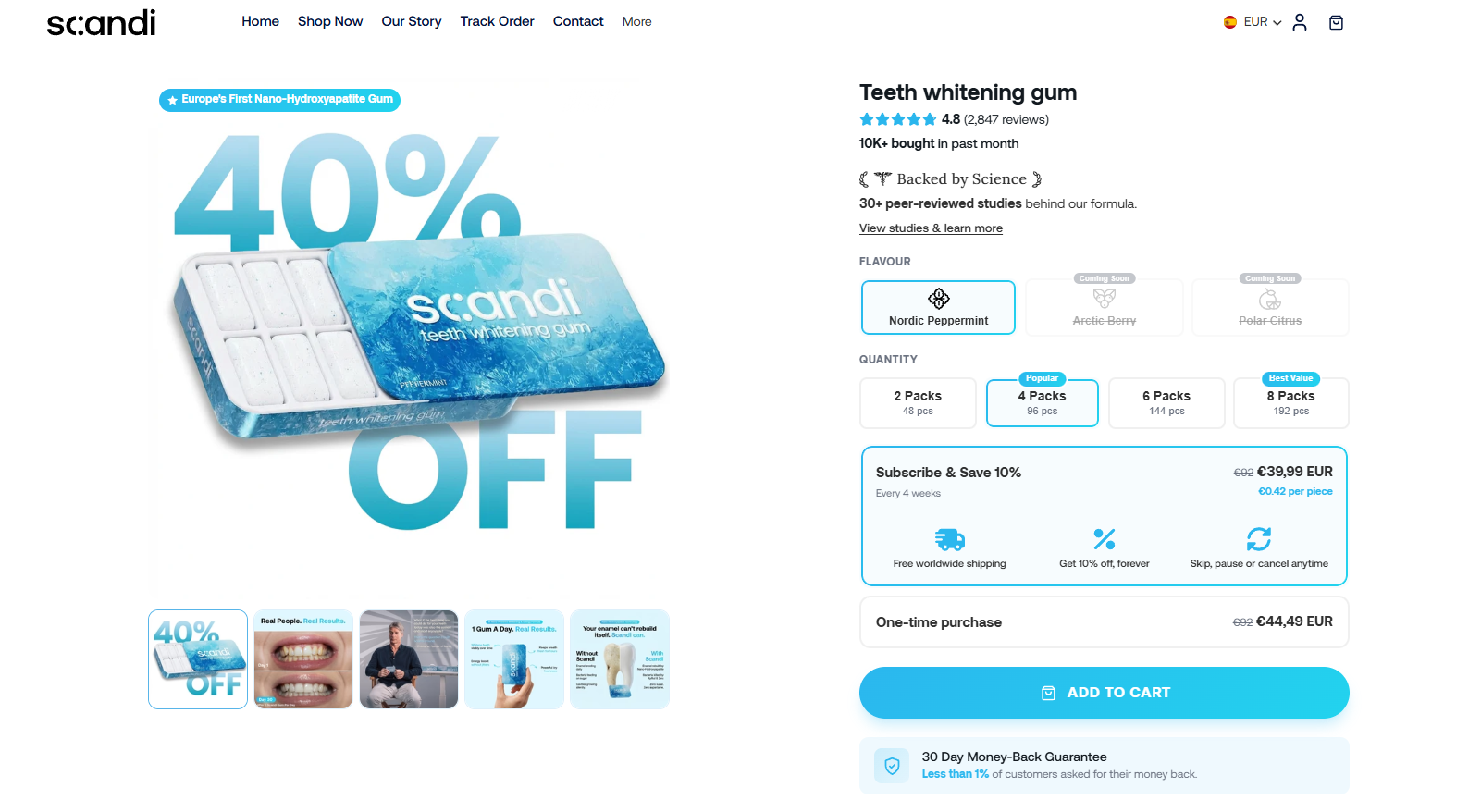
Scandigum was built around exactly this gap. Most oral care products focus on flavor or convenience. Scandigum focuses on bio-optimization, using the act of chewing to stimulate saliva, support remineralization, and deliver functional ingredients through the buccal mucosa directly into your bloodstream. It’s designed for adults who want their daily habits to actually move the needle. If you’re ready to support your smile from the inside out, explore Scandigum’s functional gum and see how it fits into the restoration plan you’re building.
Frequently asked questions
Is it really possible to restore gum health after 40?
Yes, research confirms that advanced gum procedures achieve 88-96% root coverage with documented stability, making significant restoration genuinely achievable at any age over 40.
What are the best daily habits for a brighter smile after 40?
Daily brushing with fluoride toothpaste, consistent flossing, a diet rich in calcium and vitamin C, proper hydration, and chewing functional products that stimulate saliva all contribute meaningfully to smile brightness and gum health.
How long does it take to see results from smile restoration treatments?
Whitening and home care improvements often show visible changes within weeks, while advanced gum procedures like CAF+CTG deliver up to 22 years of stability with significant coverage visible within one to two months after surgery.
Are advanced gum procedures safe for older adults?
Yes, gold-standard treatments like CAF+CTG are well-documented and stable for many years when performed by a qualified periodontist, with manageable recovery and low complication rates in healthy adults.
Can dietary changes alone restore my smile?
Diet is a powerful supporting factor for gum and tooth resilience, but the best outcomes come from combining nutritional improvements with both professional clinical treatment and a consistent at-home oral care routine.