

Stress doesn’t just tighten your shoulders or cloud your thinking. It actively reshapes your mouth, from the chemistry of your saliva to the condition of your gum tissue, often before you notice anything is wrong. For professionals running on deadline pressure and disrupted sleep, the mouth is frequently the first place the body signals distress. The good news is that once you understand the mechanism, you can interrupt it. This article breaks down exactly how stress harms your teeth and gums, what the research actually says, and which practical steps will protect your smile even during your most demanding seasons.
Table of Contents
- How stress affects your mouth: The science explained
- The link between stress, gum disease, and immune health
- Bruxism: The stress habit damaging your smile
- Effective strategies: Protecting your dental health under stress
- What most dental advice misses about stress and oral health
- How to keep your smile healthy, no matter your stress
- Frequently asked questions
Key Takeaways
| Point | Details |
|---|---|
| Stress impacts oral health | Chronic stress triggers harmful biological and behavioral changes that increase your risk of gum disease and tooth damage. |
| Bruxism is stress-related | Teeth grinding, often caused by stress, can seriously harm your smile but is preventable with the right tools. |
| Practical solutions work | Night guards, streamlined routines, and stress management can protect your teeth and gums even during the busiest times. |
| Personalized care matters | Discuss stress and oral health with your dentist to get strategies that fit your unique needs. |
How stress affects your mouth: The science explained
The connection between your stress levels and your oral health isn’t abstract. It runs through measurable biology. When stress activates the body’s fight-or-flight response, cortisol floods the bloodstream. Cortisol is a powerful hormone, and in short bursts it’s useful. But when it stays elevated day after day, it begins to suppress the immune system, reduce saliva production, and trigger inflammation throughout the body, including in the gums.
Saliva is one of your mouth’s most underrated defenses. It neutralizes acids, washes away food particles, and delivers minerals that help repair enamel. When cortisol is chronically high, saliva flow drops. That means acids linger longer, bacteria multiply faster, and the natural remineralization process slows to a crawl.
Research confirms this pathway directly. Stress contributes to periodontal disease through elevated cortisol, immune suppression, and behavioral changes like neglected oral hygiene. The behavioral piece matters just as much as the physiological one.
Under high stress, people skip brushing, reach for sugary comfort foods, drink more coffee or alcohol, and sleep poorly. Every one of those behaviors compounds the biological damage already underway.
| Stress factor | Oral health impact |
|---|---|
| Elevated cortisol | Gum inflammation, immune suppression |
| Reduced saliva | Acid buildup, enamel erosion |
| Poor diet choices | Increased cavity risk |
| Missed hygiene steps | Plaque and tartar accumulation |
| Sleep disruption | Slower tissue repair |
“The mouth is a stress barometer. When the body is under pressure, the oral environment is one of the first systems to show measurable change.”
Here’s what that looks like in practice:
- Skipping your evening brush after a long workday
- Grinding your teeth during a tense call without realizing it
- Sipping acidic drinks throughout the day to stay alert
- Ignoring bleeding gums because you’re too busy to schedule a checkup
Building oral wellness habits that are simple enough to survive a high-pressure week is the first line of defense. The science gives you the why. The next step is understanding what’s happening specifically to your gums.
The link between stress, gum disease, and immune health
Your immune system is the primary reason stress and gum disease are so tightly connected. Healthy gum tissue depends on a functioning immune response to keep the oral bacteria population in check. When cortisol suppresses that response, opportunistic bacteria in the mouth get a window to thrive, and they use it.
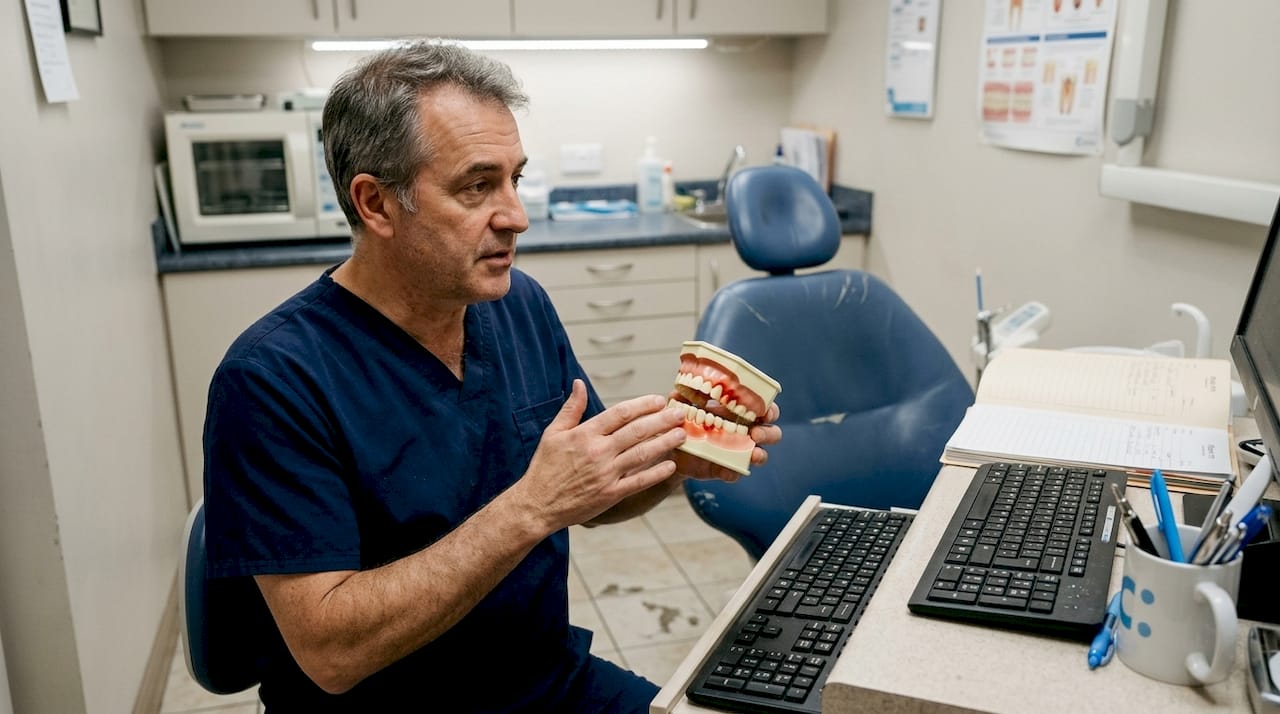
The result is accelerated gum inflammation, known clinically as gingivitis in its early form and periodontitis when it progresses deeper into the tissue and bone. The difference in progression between low-stress and high-stress individuals is measurable.
| Group | Gum inflammation severity | Progression rate |
|---|---|---|
| Low stress | Mild, controlled | Slow |
| High stress | Moderate to severe | Faster |
| High stress, poor hygiene | Severe | Significantly faster |
Empirical data supports salivary cortisol as a biomarker for the stress-periodontitis link, and routine measurement in dental evaluations is recommended for personalized care. In other words, your dentist could potentially flag your gum disease risk before it becomes visible, simply by testing your saliva.
Knowing the early warning signs is critical, especially when you’re too busy to schedule frequent checkups. Watch for:
- Gums that bleed when you brush or floss
- Persistent bad breath that doesn’t resolve with brushing
- Gum tissue that looks redder or puffier than usual
- Teeth that feel slightly loose or sensitive near the gumline
These are not cosmetic issues. They are biological signals. Catching them early, when the inflammation is still in the gum tissue and hasn’t reached the bone, makes a significant difference in outcome.
Pro Tip: If you notice bleeding gums during a particularly stressful week, don’t assume it’s just from brushing too hard. It’s worth mentioning at your next dental visit, even if it seems minor.
Supporting minerals and gum health through your daily routine adds a layer of protection that works even when your immune system is under pressure. Calcium and phosphate, the building blocks of enamel, can be actively replenished when the oral environment supports it.
Bruxism: The stress habit damaging your smile
Teeth grinding, known clinically as bruxism, is one of the most common and most overlooked consequences of chronic stress. Most people who grind their teeth do it at night, which means they have no awareness of it until a dentist points out the wear patterns or a partner mentions the noise.
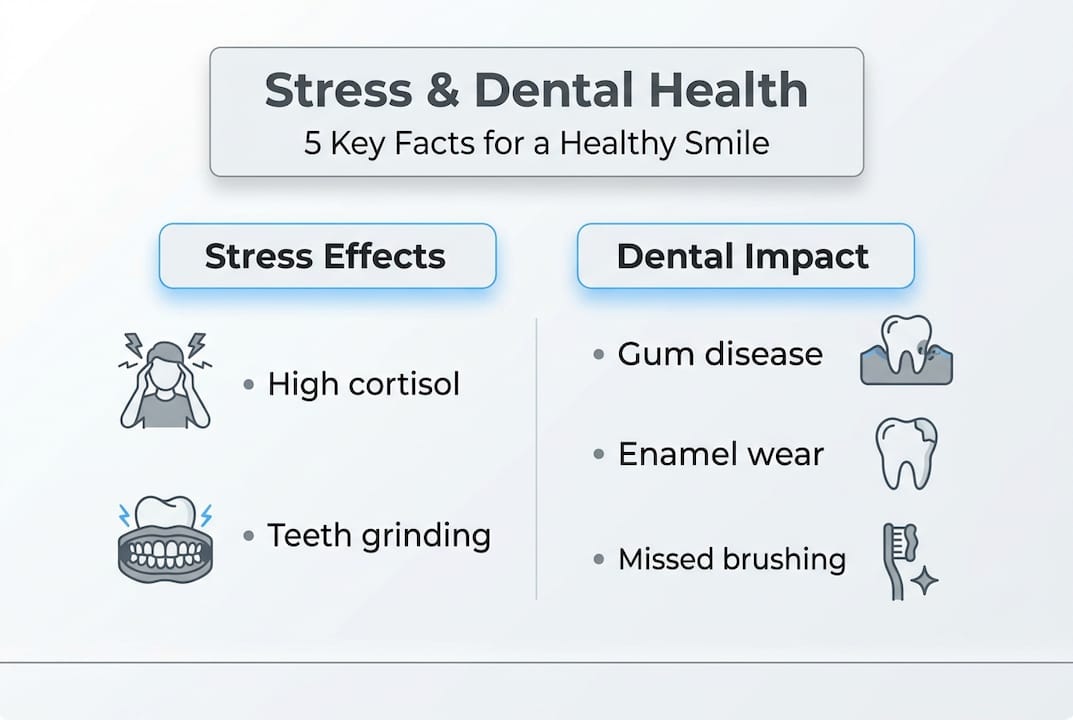
Stress induces bruxism, leading to tooth wear, fractures, TMJ (temporomandibular joint) pain, and potential periodontal mobility. The damage accumulates slowly, which is exactly why it’s so dangerous. By the time you notice sensitivity or a cracked tooth, months or years of grinding may have already occurred.
Common signs you may be grinding:
- Waking up with jaw soreness or headaches
- Teeth that look flatter or shorter than before
- Increased tooth sensitivity, especially to temperature
- Clicking or popping in the jaw joint
- Unexplained facial muscle tension
“Bruxism is stress made physical. The jaw becomes the outlet for tension the mind hasn’t processed.”
Here’s where the science offers some reassurance. No direct association exists between bruxism or TMJ symptoms and accelerated periodontal disease progression. So while grinding damages the tooth structure itself, it doesn’t appear to fast-track gum disease. That’s an important distinction, because it means protecting your teeth from grinding and protecting your gums from stress-related inflammation are two separate but equally important goals.
Night guards remain the most practical solution for bruxism. A custom-fitted guard from your dentist is the gold standard, though over-the-counter options provide some protection when cost or access is a barrier.
Pro Tip: If you clench your jaw during the day at your desk, set a reminder on your phone every hour to check your jaw position. Teeth should rest slightly apart, not touching. This simple habit can reduce daytime grinding significantly.
Integrating wellness routines that address the stress source directly, not just the dental symptom, is what separates short-term fixes from lasting results. Explore bruxism solutions that combine protective devices with behavioral strategies for the best outcomes.
Effective strategies: Protecting your dental health under stress
Knowing the risks is only useful if it leads to action. The challenge for most stressed professionals isn’t motivation. It’s bandwidth. Routines that require too many steps or too much time get abandoned fast. So the goal is building a system that’s resilient enough to survive your worst weeks.
Convenient solutions for stressed professionals include night guards for bruxism protection, consistent hygiene routines despite stress, and stress management through mindfulness or exercise to reduce immune suppression. Here’s how to make each one practical:
- Use a night guard consistently. Keep it on your nightstand, not in a drawer. Visibility drives compliance. If you travel frequently, get a second guard to keep in your bag.
- Simplify your oral routine. A two-minute brush with a fluoride toothpaste and a quick floss takes less than four minutes total. That’s achievable even on your most exhausted nights. Don’t let perfect be the enemy of done.
- Add a mineralizing step. Functional chewing gum that stimulates saliva and delivers calcium and phosphate ions supports enamel repair between brushing sessions. It fits into a commute, a meeting break, or a post-lunch moment.
- Schedule a stress check-in. Even five minutes of box breathing or a short walk lowers cortisol measurably. You’re not doing it for mental health alone. You’re doing it for your gums.
- Book your dental checkup before you need it. Stressed people postpone appointments. Scheduling in advance, when you’re not yet in crisis mode, removes that barrier entirely.
Pro Tip: Pair your oral care routine with an existing habit, like your morning coffee or your pre-bed phone check. Habit stacking removes the need for willpower, which is already depleted when you’re stressed.
Building stress-safe routines that protect your teeth doesn’t require a lifestyle overhaul. It requires a few deliberate decisions made when you’re clear-headed, so they run automatically when you’re not.
What most dental advice misses about stress and oral health
Most dental guidance stops at the mechanics: brush twice, floss daily, cut sugar. That advice isn’t wrong. But for someone managing real professional pressure, it’s incomplete. It treats oral health as a behavior problem when it’s actually a stress management problem wearing a dental disguise.
The deeper issue is that standard recommendations don’t account for the biological cascade that stress triggers. You can brush perfectly and still develop gum disease if cortisol is chronically suppressing your immune response. The mouth doesn’t operate in isolation from the rest of your physiology.
What actually works is a more integrated approach: monitoring stress as a clinical variable, building routines that account for human fallibility under pressure, and using tools that work with your biology rather than against your schedule. Dental professionals who assess stress levels during routine exams are better positioned to catch problems early and personalize care.
Exploring holistic oral habits that connect mental load to mouth health is where real, lasting improvement begins. The toothbrush is a tool. Your stress response is the variable that determines how much work that tool has to do.
How to keep your smile healthy, no matter your stress
Stress is a constant for most professionals, but its impact on your mouth is something you can actively manage. The right tools make that easier, not harder.
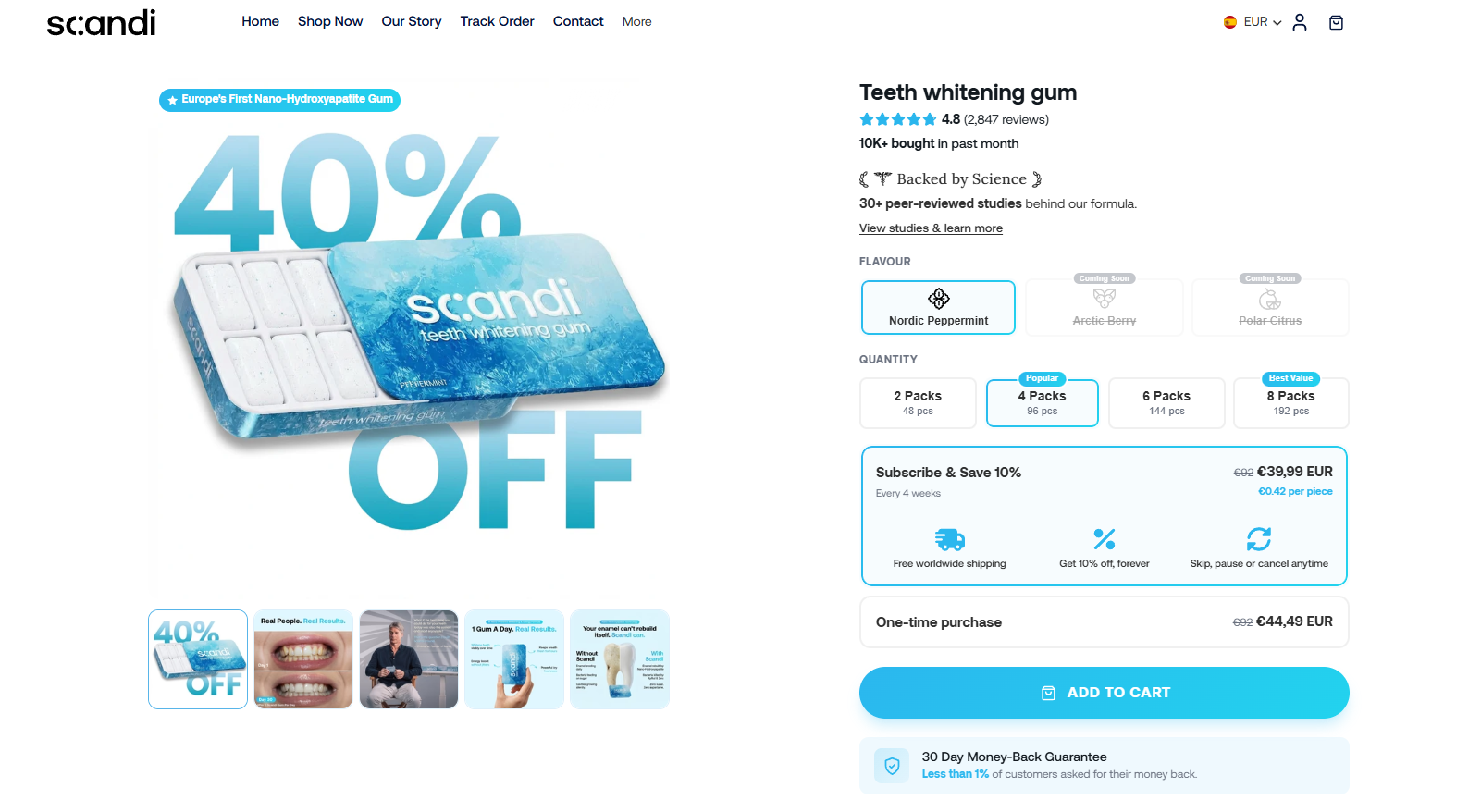
At Scandigum, we built our approach around the reality of busy schedules and high-pressure days. Our functional chewing gum works with the biology of your mouth, stimulating saliva flow, supporting remineralization, and delivering active compounds through the buccal mucosa for fast, efficient absorption. It fits into the gaps of your day without adding another task to your list. Explore oral care solutions designed for people who can’t afford to slow down, and pair them with the oral wellness guidance that makes the whole system work together.
Frequently asked questions
How does stress weaken dental health?
Stress raises cortisol levels, weakens the immune system, and increases habits like missed brushing and poor diet that directly harm your teeth and gums.
What is the connection between stress and gum disease?
High stress creates the conditions for gum inflammation and disease to accelerate, particularly when cortisol suppresses the immune response that normally keeps oral bacteria in check.
Can stress cause permanent tooth loss?
Chronic stress raises the risk of progressive gum disease that can eventually lead to tooth loss, but early intervention and consistent care can stop that progression entirely.
What is bruxism and how is it linked to stress?
Bruxism is teeth grinding triggered largely by stress, and it causes enamel wear, fractures, and jaw pain that compound over time without protective intervention.
What are quick solutions for oral health during stressful periods?
A night guard, a simplified hygiene routine, and brief daily stress reduction practices like mindfulness or exercise are the most effective and accessible starting points.