

TL;DR:
- Dental biofilm is a complex, living microbial community with protective structures and communication channels.
- Regular mechanical disruption within 24 to 48 hours prevents biofilm calcification into tartar.
- Promoting a balanced biofilm through saliva stimulation and maintaining oral pH is key for optimal oral health.
Most people think of plaque as a simple, passive film that coats their teeth after meals. That’s a significant underestimation. Dental biofilm is a structured microbial community with its own protective architecture, communication channels, and survival strategies. It’s not just buildup; it’s a living ecosystem actively responding to its environment. Understanding what dental biofilm actually is gives you a real foundation for protecting your teeth, managing gum health, and making smarter choices about the oral care tools you use every day.
Table of Contents
- What is dental biofilm?
- How does dental biofilm form? The life cycle explained
- Why does biofilm matter for your teeth and gums?
- How to control and disrupt dental biofilm effectively
- Our perspective: Biofilm management has changed — here’s how to stay ahead
- Support your oral health with innovative solutions
- Frequently asked questions
Key Takeaways
| Point | Details |
|---|---|
| Dental biofilm defined | Dental biofilm is a structured community of bacteria and other microbes living in a self-produced protective matrix. |
| Formation is rapid | Biofilm begins rebuilding within minutes after cleaning and can mineralize into tartar within 1-2 days. |
| Health risks | Unmanaged biofilm leads to cavities and gum disease, but healthy biofilms are essential for oral balance. |
| Best control methods | Brushing and flossing are the most effective ways to disrupt biofilm, supported by functional products and minerals. |
| Innovative solutions | Emerging gum products with remineralizing minerals and innovative ingredients help maintain a healthy oral environment. |
What is dental biofilm?
Dental biofilm is the scientific name for what most people call plaque. But calling it plaque undersells how complex and organized it really is. Dental biofilm is made of bacteria, fungi, and other microbes embedded inside a self-produced matrix called the extracellular polymeric substance, or EPS. Think of EPS as the scaffolding and glue that holds the entire community together.
The EPS matrix is predominantly water (roughly 80 to 90%), but the remaining fraction is anything but simple. It contains carbohydrates, proteins, nucleic acids, and lipids. These components aren’t just structural filler. They create a physical barrier that shields the bacteria inside from external threats like antimicrobial rinses and your immune system.
| Component | Role in biofilm |
|---|---|
| Bacteria and fungi | Core microbial community |
| EPS matrix | Protection and structural integrity |
| Water (80–90%) | Solvent; enables nutrient and waste exchange |
| Carbohydrates | Structural cohesion; bacterial adhesion |
| Proteins and enzymes | Metabolic activity; cell signaling |
| Nucleic acids (eDNA) | Biofilm stability; genetic exchange |
“Dental biofilm is not a random collection of bacteria. It is a highly organized, dynamic community that behaves more like a coordinated tissue than a simple contamination layer.”
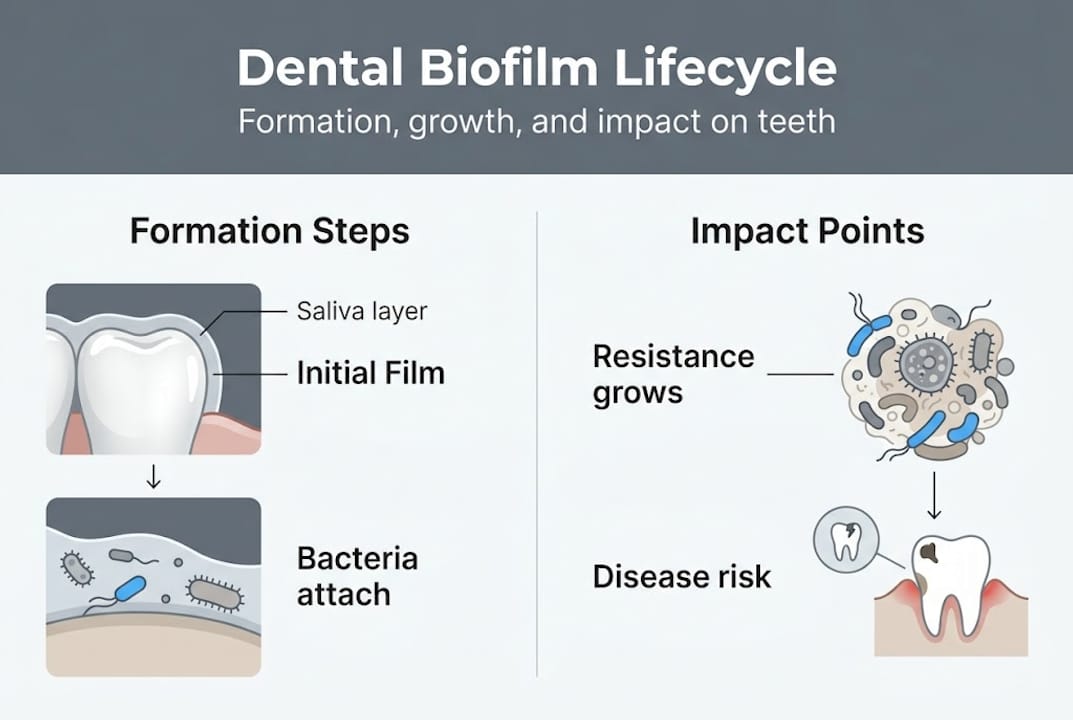
Saliva plays a critical founding role in all of this. Before any bacteria attach, saliva coats the tooth surface with a thin protein film. That coating, called the acquired pellicle, is what bacteria latch onto first. The quality and flow of your saliva directly shapes how this community gets started, which is one reason why understanding saliva and biofilm interaction is central to managing your oral environment effectively.
How does dental biofilm form? The life cycle explained
Biofilm doesn’t appear suddenly. It builds in distinct, predictable stages, and knowing each stage helps you understand exactly when and how to intervene.
- Pellicle formation. Within seconds of brushing, saliva proteins coat the clean tooth surface, forming the acquired pellicle. This thin glycoprotein film is not harmful on its own; it actually protects enamel. But it becomes the landing pad for bacteria.
- Initial colonization. Early colonizers, mostly Streptococcus species like S. mutans and S. sanguinis, attach to the pellicle using specialized surface proteins. These pioneer bacteria are relatively harmless but establish the foundation for everything that follows.
- Co-aggregation. Secondary colonizers arrive and bind to the early bacteria rather than directly to the tooth surface. This is called co-aggregation, and it rapidly diversifies the microbial population. Some of these secondary species are more aggressive and acid-tolerant.
- Maturation into 3D structures. The biofilm develops into layered, three-dimensional towers and channels. Nutrients flow inward; waste products flow outward. Biofilm forms immediately after cleaning and can mature into these structured communities within 24 to 48 hours.
- Possible dispersion. Mature biofilm periodically releases clusters of bacteria to colonize new tooth surfaces, spreading the ecosystem further.
Pro Tip: The 24-to-48-hour window is critical. If biofilm is not mechanically disrupted within that timeframe, it can begin mineralizing into tartar (also called calculus), which no amount of brushing will remove at home. Daily disruption is the only reliable strategy.
Building on proven strategies for oral health means respecting this timeline. Skipping a day of brushing or flossing is not a minor lapse; it’s enough time for the biofilm cycle to advance toward calcification.
Why does biofilm matter for your teeth and gums?
Here’s a counterintuitive truth: you cannot and should not eliminate all oral biofilm. A balanced biofilm community actively protects your mouth by outcompeting harmful organisms, maintaining local pH, and supporting enamel integrity. The problem is not biofilm; it’s imbalanced biofilm, also called dysbiosis.
When the microbial balance tips, the consequences are well-documented. Over 700 oral microbial species can be present in dental biofilm, and when pathogenic strains dominate, the risks are real:
- Dental caries (cavities): Acid-producing bacteria like S. mutans lower oral pH below 5.5, triggering enamel demineralization.
- Gingivitis: Early gum inflammation driven by biofilm toxins and immune response near the gum line.
- Periodontitis: Advanced gum disease where biofilm below the gumline destroys connective tissue and bone.
- Halitosis: Volatile sulfur compounds produced by specific anaerobic bacteria create persistent bad breath.
Pro Tip: Biofilm doesn’t cause disease on its own; it creates conditions where disease-causing bacteria thrive. Targeting the conditions (oral pH, salivary flow, mineral availability) is as important as targeting the bacteria themselves.
The EPS matrix is a major reason why this matters. It makes the biofilm community exponentially more resistant to antibiotics and immune cells compared to free-floating bacteria. This is why exploring how minerals and enamel strength interact with your oral environment matters so much. Also, evolving plaque biofilm research increasingly supports targeting dysbiosis rather than treating all biofilm as the enemy.
How to control and disrupt dental biofilm effectively
The single most effective tool against dental biofilm is still mechanical disruption. Brushing and flossing physically break apart the biofilm architecture in ways that chemical agents alone simply cannot match. Mature biofilms are resistant to antimicrobials because the EPS matrix blocks penetration and neutralizes active ingredients before they reach the bacteria inside.
| Method | Effectiveness against mature biofilm | Notes |
|---|---|---|
| Toothbrushing | High | Must reach all surfaces; twice daily minimum |
| Flossing/interdental brushes | High | Targets interproximal areas brushing misses |
| Antimicrobial mouthrinse | Moderate (adjunct only) | Effective against early-stage, not mature biofilm |
| Nanoparticle agents (silver, zinc oxide, TiO2) | Emerging | Penetrate EPS more effectively than traditional agents |
| Functional chewing gum | Supportive | Stimulates saliva, raises pH, supports remineralization |
Emerging research on biofilm succession mechanics points to promising new tools. Nanoparticles, such as silver, zinc oxide, and titanium dioxide, can penetrate the EPS matrix where conventional rinses fail. These aren’t mainstream yet, but they represent the next generation of biofilm management.
Functional products that influence oral pH and salivary flow are also gaining ground. Understanding the role of minerals in oral products helps explain why remineralizing agents work alongside mechanical cleaning rather than as replacements for it. Chewing stimulates saliva, and saliva neutralizes acids, buffers pH, and delivers calcium and phosphate ions back to the enamel surface. These oral health products represent a genuine complement to brushing, not just a novelty.
- Use a soft-bristled brush with proper technique for at least two minutes, twice daily.
- Floss or use interdental brushes once daily, focusing on the gum line where biofilm accumulates most aggressively.
- Mouthrinse adds value as a secondary tool but should not replace mechanical cleaning.
- Explore remineralizing products that support salivary function and pH balance after meals.
Our perspective: Biofilm management has changed — here’s how to stay ahead
For decades, the goal of oral hygiene was simple: remove all plaque, eliminate as much bacteria as possible, and repeat. Antibacterial rinses were marketed as the gold standard. Sterilizing the mouth was seen as the ideal outcome. That thinking is now being revised at the highest levels of dental science.
The shift to the specific plaque hypothesis recognizes that not all biofilm is pathogenic. Healthy oral biofilm is a protective community. Disrupting it indiscriminately with aggressive antimicrobials can remove beneficial species, leaving an opportunity for more resistant, harmful strains to fill the vacancy. It’s a microbial version of antibiotic resistance, happening right in your mouth.
What this means practically is that the goal should not be a sterile mouth. The goal should be a balanced mouth. Support the conditions that favor beneficial bacteria: adequate salivary flow, neutral to slightly alkaline pH, regular mechanical disruption, and mineral availability for enamel repair. Aggressive use of chlorhexidine or alcohol-based rinses every day, for example, may do more long-term harm than skipping them on most days.
We believe the future of oral health sits in targeted tools that work with your biology rather than against it. Exploring tailored adult oral health strategies that respect your oral microbiome is how you stay ahead of dental disease without collateral damage.
Support your oral health with innovative solutions
Understanding dental biofilm changes what you look for in an oral care routine. Mechanical cleaning is irreplaceable. But the environment you create between brushing sessions matters just as much.
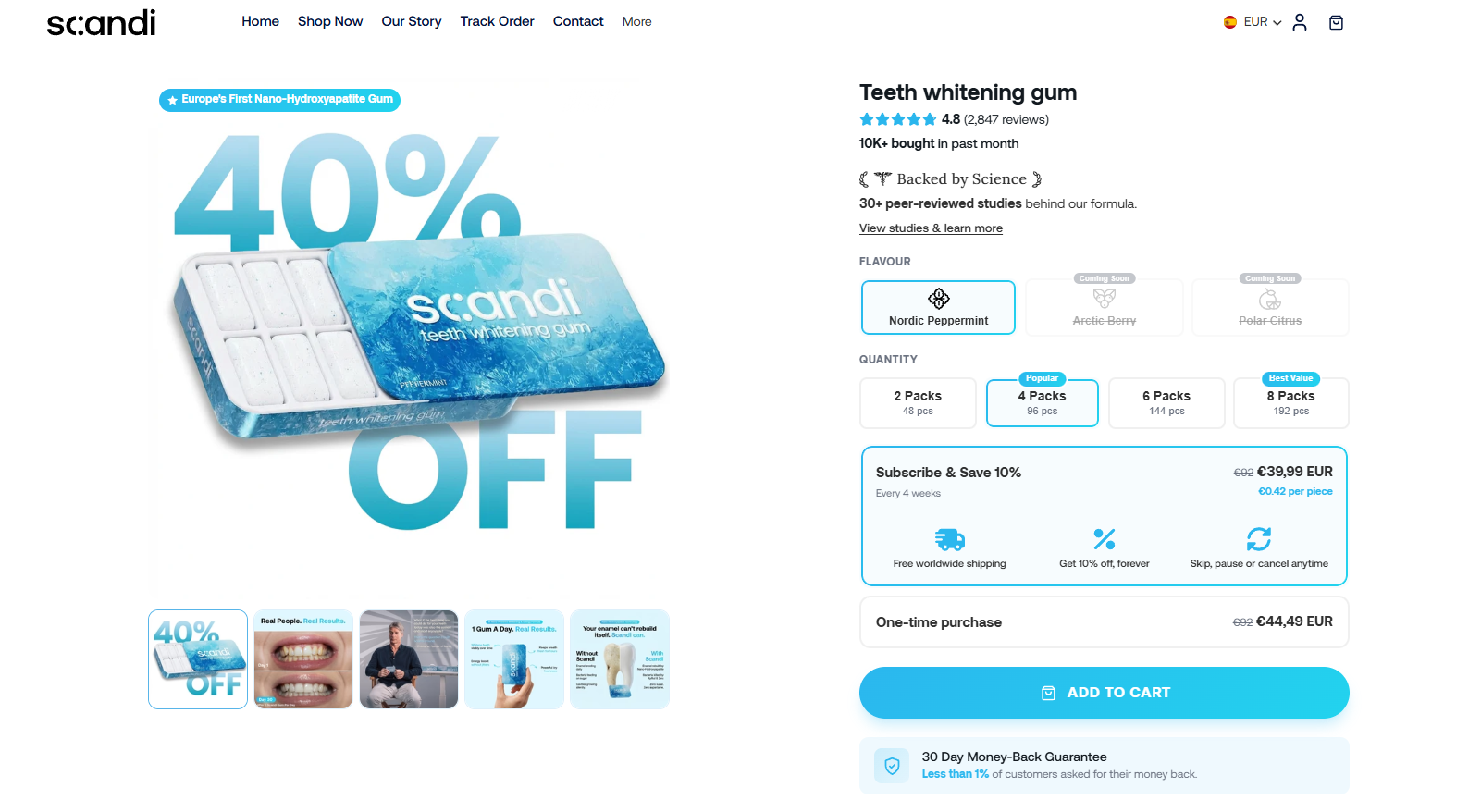
Scandigum is designed around exactly this logic. By stimulating salivary flow, supporting oral pH balance, and delivering remineralizing agents through the buccal mucosa, it addresses the conditions that determine whether your biofilm stays balanced or tips toward dysbiosis. If you’re looking to go beyond the basics, explore functional gum for oral health or read more about how oral care and minerals work together to strengthen enamel from within. Your daily routine just got a science-backed upgrade.
Frequently asked questions
Is dental biofilm the same as dental plaque?
Dental biofilm is dental plaque by another name, but the term biofilm better captures its layered, self-organizing structure rather than treating it as a simple surface deposit. Understanding the distinction guides smarter hygiene choices.
How fast does dental biofilm form after brushing?
Biofilm begins forming within minutes after you brush, and mineralization can occur within 24 to 48 hours if it’s not disrupted. That’s why daily mechanical cleaning isn’t optional.
Can chemical mouthrinses remove dental biofilm?
Mature biofilms are resistant to chemical agents; rinsing works best as an early-stage adjunct. Brushing and flossing remain far more effective at physically breaking apart the biofilm structure.
Are all dental biofilms harmful?
No. Not all biofilms are pathogenic; a healthy biofilm community actually protects enamel and crowds out pathogens. Disease starts when harmful species overgrow and create dysbiosis.
What role do minerals play in dental biofilm management?
Minerals support remineralization of enamel and help maintain the pH conditions that favor a healthy microbial balance, making them a meaningful part of any modern oral care approach.