

TL;DR:
- Distributors must prioritize ADA Seal-eligible, sugar-free gum with clinically supported dental benefits to succeed in a competitive market.
- Strategic sourcing involves focusing on birch-derived xylitol, premium formulations, and channel-specific positioning to drive volume and margins.
- Adapting to policy trends requires transparent ingredient sourcing, prevention-focused messaging, and collaboration with manufacturers to meet regulatory standards.
Distributors and retail buyers sourcing dental health gums right now face a deceptively complicated market. Therapeutic gum has moved far beyond mint-flavored impulse purchases. Buyers must now navigate competing ingredient claims, regulatory standards like the ADA Seal, a flood of new sweetener technologies, and health-conscious consumers who read labels before they chew. The segment is growing fast, but the wrong product choices lock shelf space without moving volume. This article maps the criteria, strategies, comparisons, and policy trends you need to source smarter, stock confidently, and sell more dental health gum in 2026.
Table of Contents
- Key criteria for distributing dental health gum products
- Top therapeutic gum strategies for dental health
- Comparison: Leading dental health gum options for distributors
- Responding to emerging sugar reduction and policy trends
- Our perspective: Why smart distributors must move beyond basic gum strategies
- Boost your dental health gum portfolio with Scandi Gum
- Frequently asked questions
Key Takeaways
| Point | Details |
|---|---|
| ADA Seal is crucial | Stock only sugar-free gum with ADA Seal for maximum dental claims and consumer trust. |
| Xylitol drives results | Prioritize xylitol-based gums, especially birch-derived, for proven cavity prevention and market appeal. |
| Supermarkets dominate | 67% of dental health gum sales occur in supermarkets, making offline retail channels vital. |
| Policy trends shift demand | Sugar reduction policies and foundation strategies are shaping distribution choices and messaging. |
| Multi-channel is essential | Combine offline and online distribution with transparent information to capture health-conscious buyers. |
Key criteria for distributing dental health gum products
Getting the sourcing criteria right is the foundation of every profitable dental health gum program. The most visible benchmark in the category is the ADA Seal of Acceptance, which signals third-party clinical credibility to consumers and retail pharmacy buyers alike. According to the ADA, only sugar-free gums qualify for the seal, and the evidence must demonstrate specific outcomes: reducing plaque acids, promoting remineralization, reducing cavities, or reducing gingivitis, using approved sweeteners such as xylitol. That is a precise evidence bar, not a marketing checkbox.
Understanding which ingredients meet that bar is essential before you build a category plan. Here are the criteria that matter most when evaluating a dental health gum for distribution:
- ADA Seal eligibility: Confirm the product is sugar-free and that the manufacturer holds or can provide evidence for one of the four accepted dental benefit claims.
- Xylitol source and purity: Birch-derived xylitol is widely regarded as the cleaner source compared to corn-derived alternatives. Purity levels affect both clinical performance and label positioning with natural-product buyers.
- Approved sweetener profile: Beyond xylitol, look for sorbitol, maltitol, or erythritol. Aspartame remains controversial with some consumer segments, which creates differentiation opportunities for brands that have reformulated away from it.
- Label claim specificity: Products with explicit remineralization, cavity reduction, or plaque acid neutralization language are far easier to merchandise in dental and pharmacy channels than vague “sugar-free” claims.
- Multi-channel readiness: The best dental health gum brands already have assets for offline retail and e-commerce. A product that sells only through one channel narrows your distribution leverage significantly.
- Brand credibility: Partnering with recognized names such as Haleon or Spry brings category credibility and consumer trust that reduces the need for heavy in-store education. Newer brands should bring documented clinical data to compensate.
Exploring the full range of chewing gum types for dental health helps buyers match product formats to specific channel requirements, from impulse checkout displays to pharmacy planograms.
Pro Tip: Before finalizing any sourcing agreement, ask the manufacturer for the specific clinical study or ADA submission documentation behind their dental benefit claim. A confident manufacturer will provide it immediately. Hesitation is a signal.
Top therapeutic gum strategies for dental health
With sourcing criteria locked in, the next question is which product strategies actually move volume in the dental health gum category. The evidence points clearly toward xylitol-centered formulas as the anchor of any serious dental health gum program. Xylitol reduces caries risk by increasing saliva flow, buffering organic acids in the mouth, and promoting the remineralization process when used as part of a regular oral care routine. That is a multi-mechanism benefit claim, and it is the kind of layered story that resonates both with dental professionals and with everyday consumers who want their habits to do more than one thing.
Here is a step-by-step strategic framework for building a winning dental health gum assortment:
- Lead with clinical proof. Your anchor SKUs should carry the ADA Seal or equivalent documentation. These items anchor the dental health section and provide credibility for everything else in your set.
- Layer in sweetener innovation. Xylitol remains the gold standard, but pairing it with erythritol or adding calcium and phosphate mineralizing compounds gives you differentiated SKUs for buyers who want something beyond the baseline.
- Prioritize birch-derived xylitol where possible. Birch xylitol positions better in natural food, specialty, and premium pharmacy channels. It is worth paying a small sourcing premium for the positioning advantage it creates.
- Maximize supermarket presence first. Offline retail, especially supermarkets, controls roughly 67% of sugar-free gum market share. Placement in supermarket oral care aisles converts at a higher rate than impulse locations for therapeutic products because shoppers are in a health-intent mindset.
- Build an e-commerce complement. Online channels represent around 33% of category sales and are growing faster than brick-and-mortar. Health-conscious consumers research ingredients online before buying, so your online product listings need full ingredient transparency and clinical language.
- Address aspartame proactively. A growing number of health-conscious consumers actively avoid aspartame. Stocking gums formulated without it, and flagging that clearly on the packaging and in your sell-in materials, is an easy differentiation win.
“Sugar-free chewing gum with xylitol reduces caries risk by increasing saliva flow, buffering acids, and promoting remineralization when used as part of an oral care routine.” — American Dental Association
Discovering how brands are using flavorful gum for oral wellness is increasingly important, because flavor is the consumer’s first sensory experience. A gum that tastes great and delivers dental benefits removes the biggest adoption barrier in the category.
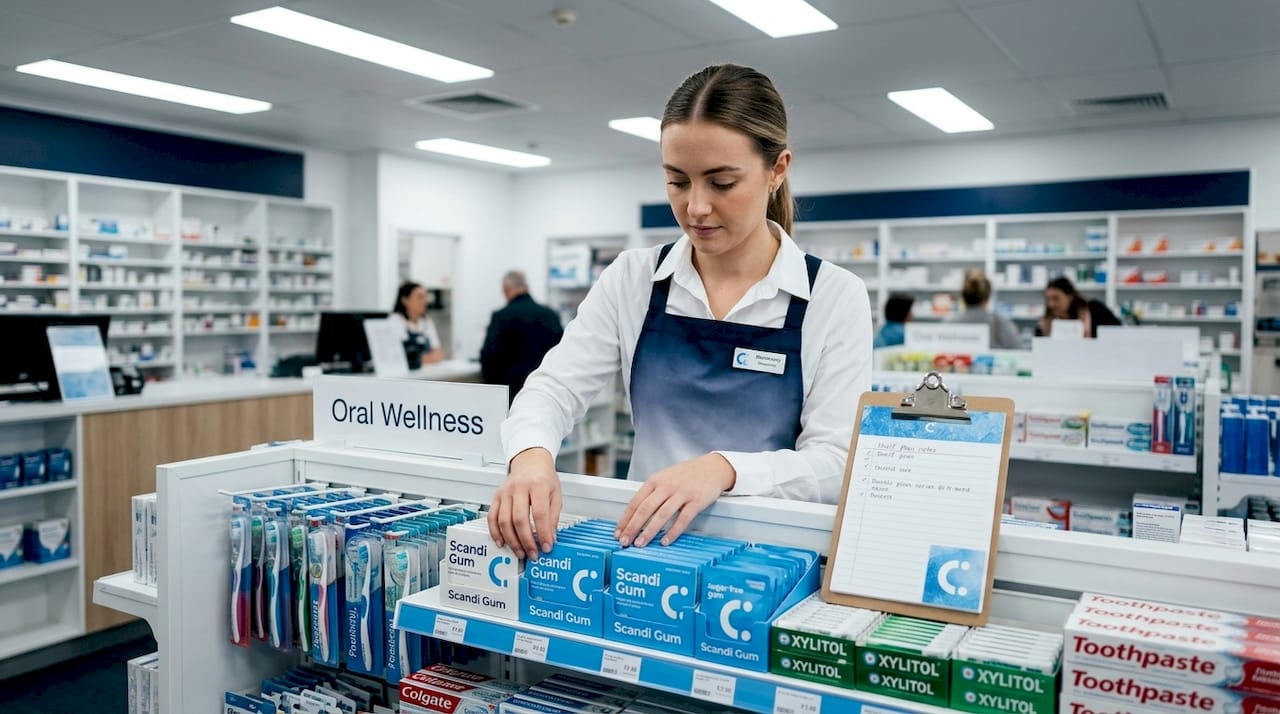
Pro Tip: Position xylitol gums alongside toothbrushes and toothpaste in pharmacy planograms rather than near confectionery. The adjacency shifts the perceived category from candy to oral care, which supports higher price points and more deliberate purchase behavior.
Comparison: Leading dental health gum options for distributors
After reviewing top strategies, let’s compare leading gum products side-by-side for easier decision-making. The sugar-free gum market is expanding, with 62% of buyers stating they prefer gum for oral health or weight management benefits. That figure matters because it tells you the majority of buyers in this category are shopping with intent, not on impulse.
Premium positioning is also holding up on the pricing side. Research into oral care trends projects the US toothpaste market growing to $7.2 billion by 2033, driven by gum health and enamel repair, with similar growth in the EU oral care space. Consumers are actively paying a premium for products that deliver therapeutic outcomes, and gum is part of that spending shift.
| Product type | Key ingredient | ADA Seal eligible | Channel strength | Price tier | Best distributor use case |
|---|---|---|---|---|---|
| Xylitol gum (birch) | Birch xylitol | Yes | Pharmacy, natural food | Premium | Lead SKU in dental health set |
| Xylitol gum (corn) | Corn xylitol | Yes | Supermarket, mass | Mid | Volume driver for mainstream accounts |
| Xylitol + calcium phosphate | Xylitol, CPP-ACP | Yes | Pharmacy, specialty | Premium+ | Clinical positioning, dental office sell-through |
| Erythritol gum | Erythritol | Potentially | Natural food, e-commerce | Mid-premium | Natural product buyers, aspartame avoiders |
| Standard sugar-free gum | Sorbitol, aspartame | No | Supermarket, c-store | Value | Baseline range filler, not a dental health anchor |
Reading this table, two things stand out. First, the most profitable and defensible SKUs are in the premium and premium-plus tier, not at value. Second, the brands with both pharmacy and natural food presence, such as Spry, have a dual-channel advantage that most value gums cannot replicate. Exploring advances in oral health gum technology helps buyers understand why the ingredient and formulation differences in the top rows of that table are not just marketing language but genuine functional differentiation.
Key stat: 62% of sugar-free gum buyers cite oral health as a primary purchase driver, making dental benefit claims the single most important category message for distributors to amplify at retail.
Responding to emerging sugar reduction and policy trends
With product comparisons in hand, distributors must now navigate evolving policy and sugar reduction trends. Regulatory and advocacy pressure on sugar in consumer products is accelerating globally, and confectionery distributors are directly in scope.
The Oral Health Foundation’s strategy to 2030 calls for active collaboration between manufacturers, retailers, and distributors to provide clearer product information and promote prevention as the primary consumer message. Separately, organizations such as the New Zealand Dental Association (NZDA) and the WHO continue to push for policies that directly reduce sugar content in confectionery and mandate clearer labeling. For distributors, this is not a distant concern. It is a category reality that will reshape shelf assortments within the current planning horizon.
Here is how smart distributors are responding:
- Shift the portfolio narrative from “sugar-free” to “actively protective.” Consumers no longer respond to “no sugar” as a standalone claim. They want to know what the product does for their teeth, not just what it avoids.
- Adopt prevention-first messaging. Retailers are increasingly receptive to dental health gum being merchandised alongside toothpaste and floss rather than in the candy aisle. Work with your retail partners to explore these adjacency shifts.
- Prioritize brands with transparent ingredient sourcing. Policy pressure will only increase. Brands with clean supply chains and verifiable ingredient documentation are significantly easier to defend when regulations tighten.
- Collaborate with manufacturers on retail sell-in materials. The Oral Health Foundation strategy specifically calls for manufacturer-retailer-distributor collaboration on clearer product information. Manufacturers who invest in retail education assets are the right long-term partners.
| Policy action | Source | Distributor response |
|---|---|---|
| Call for sugar reduction in confectionery | NZDA / WHO | Prioritize sugar-free gum assortments; reduce sugar-containing SKUs |
| Clear labeling mandates | EU, UK regulatory bodies | Source brands with ADA Seal or equivalent documentation |
| Prevention-focused messaging guidelines | Oral Health Foundation | Update sell-in decks to lead with dental benefit claims |
| Sweetener ingredient transparency | Consumer advocacy groups | Favor birch xylitol, erythritol; phase out aspartame-heavy lines |
The ADA Seal for gum functions as a pre-built answer to most of these policy pressures. Products carrying it already demonstrate evidence-based dental benefit claims, transparent ingredient standards, and sugar-free formulation. For distributors navigating regulatory uncertainty, it is the most efficient compliance signal available.
Our perspective: Why smart distributors must move beyond basic gum strategies
Here is the uncomfortable reality: stocking a few ADA-sealed xylitol gums and calling it a dental health program is table stakes, not strategy. It was sufficient five years ago. In 2026, it is the minimum entry point, not a competitive position.
What has changed is the consumer. Shoppers who are actively managing their dental health are now researching buccal absorption, checking for birch versus corn xylitol sourcing, and asking whether the gum they buy after lunch is actually shifting their oral pH or just freshening their breath. These consumers exist in large enough numbers to drive serious volume in pharmacy, natural food, and e-commerce channels. Reaching them requires more than shelf placement.
The distributors winning in this category right now are doing three things differently. First, they treat education as a sales asset. When retail buyers and store staff understand the remineralization mechanism, the clinical evidence, and the specific differences between ingredient tiers, sell-through improves. Trained shelf space outperforms generic placement consistently. Second, they integrate channels intentionally. A product stocked only in supermarkets without any online presence is invisible to the health-intent consumer who researches before buying. The brands worth distributing have already solved this problem; your job is to select them. Third, they build relationships with manufacturers who have genuine clinical depth, not just marketing claims. In a category where policy scrutiny is increasing, your supply chain partners need to be able to document everything they say on a label.
We would also push back on the instinct to lead with price when presenting dental health gum to retail buyers. Innovative gum distribution strategies consistently show that premium positioning with clinical backing holds its margin far better than value positioning. Selling on price in therapeutic gum usually just devalues the category without growing it.
Pro Tip: Build a one-page “science brief” for every dental health gum brand in your portfolio. Cover the core ingredient mechanism, the relevant clinical evidence, and the regulatory status. Give it to retail buyers at sell-in. It changes the conversation from price to value.
Boost your dental health gum portfolio with Scandi Gum
Ready to put these strategies into action? Scandi Gum brings a formulation philosophy built around the science of the mouth, not just flavor delivery. The products are designed to align with ADA criteria, sourced with ingredient transparency at the core, and built for both supermarket and online channel performance.
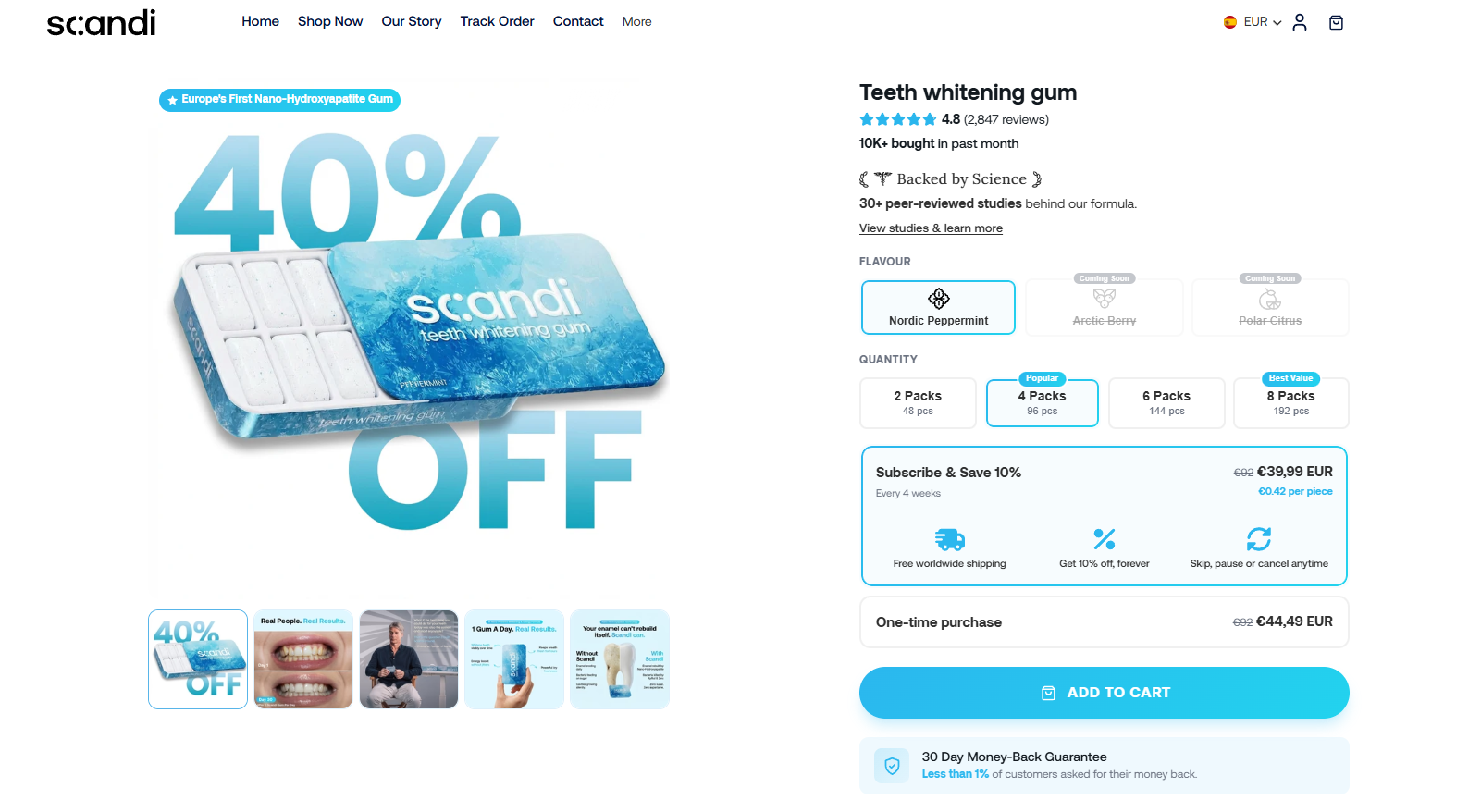
Scandi Gum’s range targets the exact intersection of clinical credibility and consumer appeal that retail buyers in pharmacy, natural food, and specialty channels are actively looking for. Whether you are building out a dental health gum section for the first time or upgrading an existing assortment with more defensible, premium-positioned SKUs, Scandi Gum is built to perform in both scenarios. Visit scandigum.com to explore the full product range, review distribution terms, and connect with the team about placement opportunities in your accounts.
Frequently asked questions
Why is xylitol preferred in dental health gum for distributors?
Xylitol reduces caries risk by increasing saliva flow, buffering plaque acids, and supporting enamel remineralization, making it the most evidence-backed sweetener for qualifying products for the ADA Seal and dental benefit claims.
What distribution channels are best for dental health gums?
Supermarkets lead with a 67% offline share of the sugar-free gum market, making them the highest-volume channel, while online sales at 33% are growing faster and reach the health-research-driven consumer segment most likely to buy on dental benefit claims.
Are premium-priced therapeutic gums worth stocking?
Yes. Research into oral care market trends confirms consumers consistently pay a premium for gum products with documented therapeutic dental benefits, supporting both better margins and stronger category positioning at retail.
How can distributors address emerging sugar reduction policies?
Collaborate closely with manufacturers to ensure clear product documentation and label compliance, shift portfolio messaging toward active prevention rather than simple sugar-free claims, and prioritize sugar-free formulations that already align with Oral Health Foundation and WHO guidance to stay ahead of tightening regulations.