

TL;DR:
- Proper daily habits like brushing, flossing, and tongue cleaning are essential for effective oral health.
- A diet rich in calcium, phosphate, and fibrous produce strengthens enamel and promotes gum resilience.
- Evidence-backed natural remedies like xylitol and baking soda support dental health without replacing fundamental practices.
You brush twice a day, you floss, you rinse. Yet plaque still builds up, your gums feel sensitive, and your smile isn’t as bright as you’d like. You’re not alone. Most adults follow the basics but miss the deeper layer of oral care, the diet choices, targeted remedies, and smarter habits that actually shift your mouth’s biology. The good news is that research-backed natural strategies can meaningfully improve enamel strength, gum health, and tooth color. This guide walks you through every proven layer, from daily technique to food choices, natural remedies, and safe whitening, so you can build a routine that works from the inside out.
Table of Contents
- Essential daily habits for natural dental health
- Eat for your teeth: Foods that boost enamel and gum health
- Natural remedies: Oils, xylitol, and herbal solutions
- Evidence-based natural whitening: What actually works?
- A fresh perspective: Why ‘natural’ dental care must blend evidence and tradition
- Next steps: Innovative products to boost your natural dental care
- Frequently asked questions
Key Takeaways
| Point | Details |
|---|---|
| Daily care is crucial | Proper brushing, flossing, and gentle technique are the foundation for natural oral health. |
| Smart diet choices | Eating crunchy produce, dairy, leafy greens, and green tea supports enamel and gum health. |
| Use remedies wisely | Xylitol, green tea, and select oils or herbs are beneficial adjuncts but not substitutes for standard oral care. |
| Safe whitening options | Baking soda whitens teeth safely while charcoal and excessive abrasion can do harm. |
Essential daily habits for natural dental health
Getting your daily habits right is the single highest-leverage thing you can do for your teeth. Not because it’s new information, but because most people execute these habits incorrectly, and small errors compound over years into real damage.
Here’s the correct sequence for a complete daily oral care routine:
- Brush for two full minutes, twice daily, using a soft-bristled brush. Use fluoride toothpaste or hydroxyapatite toothpaste, which mimics the mineral structure of enamel. Gentle, circular strokes clean far better than aggressive back-and-forth scrubbing, which wears enamel over time.
- Floss before brushing, not after. Flossing first loosens debris and bacteria between teeth so brushing can sweep them away. Skipping floss means roughly 35% of each tooth surface never gets cleaned.
- Brush your tongue every session. The tongue harbors more bacteria per square centimeter than almost any other oral surface, and those bacteria drive bad breath and plaque recolonization.
- Use a plaque-disclosing rinse once or twice a week. These rinses stain missed plaque red or blue, showing you exactly where your technique falls short. It’s the fastest feedback loop in oral hygiene.
- Rinse with water after every meal if brushing isn’t possible. This simple step clears food particles and dilutes acids before they can drop your oral pH below the critical 5.5 threshold.
Reducing plaque and gingivitis effectively comes down to brushing twice daily with a soft-bristled brush and the right toothpaste, flossing every day, and cleaning your tongue consistently.
| Habit | Frequency | Key benefit |
|---|---|---|
| Brushing | Twice daily | Removes plaque, protects enamel |
| Flossing | Daily | Cleans interproximal surfaces |
| Tongue brushing | Daily | Reduces bacteria, freshens breath |
| Disclosing rinse | 1-2x per week | Identifies missed areas |
| Water rinse | After every meal | Neutralizes acids |
Hydration also plays a bigger role than most people realize. A dry mouth means less saliva, and saliva is your body’s built-in remineralization system. It carries calcium and phosphate ions that redeposit into enamel after acid attacks. Chewing xylitol gum between meals stimulates saliva flow and adds a direct anti-bacterial benefit, making it one of the most underrated tools in a natural oral care routine.
“The best toothbrush is the one you use correctly. Technique and consistency outperform expensive tools every single time.”
Pro Tip: Set a two-minute timer when you brush. Most people stop at 45 seconds without realizing it. Those extra 75 seconds make a measurable difference in plaque removal.
Eat for your teeth: Foods that boost enamel and gum health
Your diet is either building your teeth up or breaking them down, every single day. Once your core habits are locked in, food becomes the most powerful natural lever for enamel strength and gum resilience.
The best foods for oral health share a few key properties: they stimulate saliva, deliver calcium and phosphorus, or contain compounds that reduce harmful oral bacteria. Here’s what to prioritize:
- Crunchy fruits and vegetables (apples, carrots, celery): Their fibrous texture acts like a natural scrub on tooth surfaces and stimulates saliva flow.
- Dairy products (cheese, plain yogurt, milk): Rich in calcium and casein protein, which buffers oral acids and helps remineralize enamel.
- Leafy greens (spinach, kale): High in calcium and folic acid, which supports gum tissue integrity.
- Nuts and seeds: Provide phosphorus and healthy fats that support the connective tissue around teeth.
- Fatty fish (salmon, sardines): Deliver vitamin D, which is essential for calcium absorption and therefore directly tied to enamel density.
- Green tea: Contains polyphenols called catechins that suppress S. mutans, the primary cavity-causing bacterium.
- Water: Fluoridated water remineralizes enamel and rinses away food debris and acids continuously.
Calcium and phosphorus work together to maintain the minerals for strong enamel that keep your teeth resistant to acid attack. When your diet is low in either mineral, your enamel becomes more vulnerable even if your brushing is perfect.

| Food group | Key nutrient | Dental benefit |
|---|---|---|
| Dairy | Calcium, casein | Remineralization, acid buffering |
| Fatty fish | Vitamin D | Enhances calcium absorption |
| Crunchy produce | Fiber, water | Mechanical cleaning, saliva flow |
| Green tea | Catechins | Reduces S. mutans, lowers inflammation |
| Leafy greens | Folic acid, calcium | Gum tissue support |
For practical application, try adding a small piece of cheese after acidic meals to buffer pH, snacking on raw carrots instead of crackers, and swapping one daily beverage for unsweetened green tea. These small swaps compound into real protection over months. You can also find more tips to reduce tooth decay by adjusting simple daily choices.
Pro Tip: After eating citrus or acidic foods, rinse with plain water immediately. Wait at least 30 minutes before brushing, because enamel is temporarily softened by acid and brushing too soon causes abrasion.
Natural remedies: Oils, xylitol, and herbal solutions
With your diet supporting your oral environment, targeted natural remedies can add a meaningful extra layer of protection. The key word is targeted. Not every popular remedy earns its reputation.
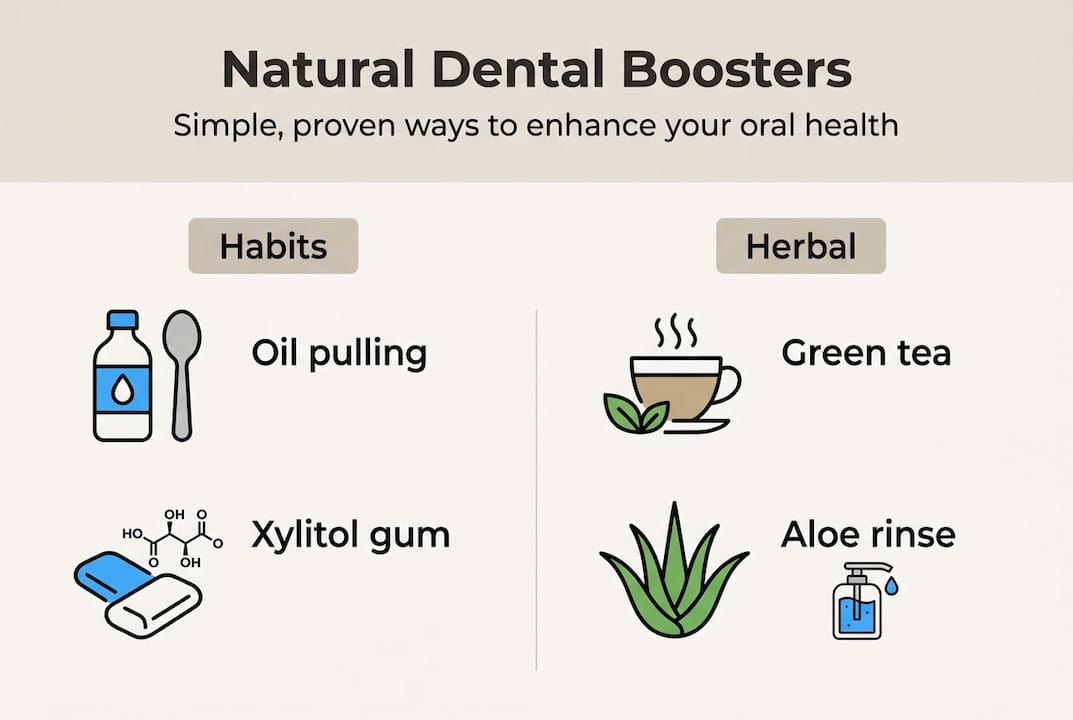
Oil pulling involves swishing a tablespoon of coconut or sesame oil for 10 to 20 minutes. Studies show it can reduce plaque index and gingivitis scores when used as an adjunct to regular brushing. However, oil pulling evidence from the Cleveland Clinic makes clear that neither the ADA nor leading dental institutions recommend it as a substitute for brushing and flossing. Use it as a complement, not a replacement.
Xylitol is where the evidence gets genuinely impressive. At 5 to 10 grams per day, delivered through gum or lozenges, xylitol reduces cavity risk by 17 to 80% by starving S. mutans of the fermentable sugars it needs to produce acid. Unlike sugar, xylitol is metabolized by bacteria but produces no acid byproduct, effectively disrupting the decay cycle at its source.
Xylitol at 5-10g/day reduces cavity risk by up to 80% by suppressing the primary cavity-causing bacterium.
Herbal remedies round out the natural toolkit. Antimicrobial effects from clove oil, cinnamon, honey, and chamomile are well-documented in lab settings, and some clinical studies support their use as adjuncts. Clove oil contains eugenol, a natural anesthetic and antimicrobial compound used in professional dentistry for decades. Chamomile rinses show anti-inflammatory effects on gum tissue.
Here’s a quick breakdown of what to use and how:
- Oil pulling: 1 tablespoon coconut oil, 10-15 minutes, 3-4x per week. Spit into trash, not the sink.
- Xylitol gum or lozenges: 2-3 pieces spread across the day, ideally after meals. Check for natural gum care tips to maximize benefit.
- Clove oil: Dilute with a carrier oil before applying to gums. Never use undiluted on tissue.
- Chamomile rinse: Steep strong chamomile tea, cool completely, rinse for 60 seconds.
Pro Tip: Never use any natural remedy as a reason to skip brushing or flossing. The research supports these tools as additions to a solid foundation, not shortcuts around one.
Evidence-based natural whitening: What actually works?
Everyone wants a brighter smile, and the natural whitening market is flooded with options that range from genuinely useful to quietly harmful. Here’s what the evidence actually shows.
Baking soda is the standout performer. Its mild abrasivity removes surface stains without the enamel damage associated with harsher abrasives. Used correctly, it can whiten teeth by 1 to 2 shades over 2 to 3 months. Use it 2 to 3 times per week, not daily, and mix a small amount with water to form a paste.
- Baking soda paste: Mix half a teaspoon with enough water to form a paste. Brush gently for 2 minutes. Rinse thoroughly. Use 2-3x per week maximum.
- Whitening toothpaste with hydroxyapatite: These combine mild abrasion with remineralization, making them the safest daily whitening option available.
- Enzyme-based options: Bromelain from pineapple and papain from papaya show some ability to break down protein-based stains. They work best as enhancers in commercial whitening formulas, not as standalone treatments.
| Method | Evidence level | Whitening effect | Enamel risk |
|---|---|---|---|
| Baking soda | Strong | 1-2 shades | Low if used correctly |
| Activated charcoal | Weak | Minimal | Moderate to high |
| Oil pulling | Weak | Minimal | Low |
| Enzyme pastes | Moderate | Mild | Very low |
| Hydroxyapatite toothpaste | Strong | 1-2 shades | Very low |
Activated charcoal deserves a specific warning. Despite its popularity, natural tooth whitening evidence consistently shows it lacks clinical proof of effectiveness and its high abrasivity risks long-term enamel thinning. “Natural” does not automatically mean safer, and charcoal is a clear example of that gap.
“The safest whitening approach is the one that removes stains without removing enamel. Baking soda, used correctly, does exactly that.”
For more on protecting enamel while brightening your smile, the natural whitening safety principles are worth reviewing before adding any new product to your routine.
A fresh perspective: Why ‘natural’ dental care must blend evidence and tradition
Here’s the uncomfortable truth about the natural oral care space: the word “natural” has become a marketing shortcut that bypasses critical thinking. We’ve seen this pattern repeatedly. A remedy gains cultural traction, social media amplifies it, and suddenly millions of people are replacing proven habits with unproven alternatives.
Oil pulling is a perfect example. It has genuine adjunct value, but the ADA’s position is unambiguous: it should not replace brushing or flossing. When people treat it as a substitute, they’re trading a proven intervention for an unproven one, and their gum health pays the price over time.
The smarter framework is this: treat evidence-based natural strategies as amplifiers of your core routine, not replacements for it. Xylitol, dietary calcium, green tea polyphenols, and remineralizing minerals are all backed by solid research and work with your biology. They belong in your routine. Charcoal toothpaste and oil-only protocols do not.
Exploring the role of minerals for oral care reveals how much of dental health comes down to chemistry, not trends. Tradition has real wisdom, but it earns its place when the evidence supports it.
Next steps: Innovative products to boost your natural dental care
You now have a complete, evidence-backed framework for natural dental health. The next step is finding products that actually fit this kind of intentional routine.
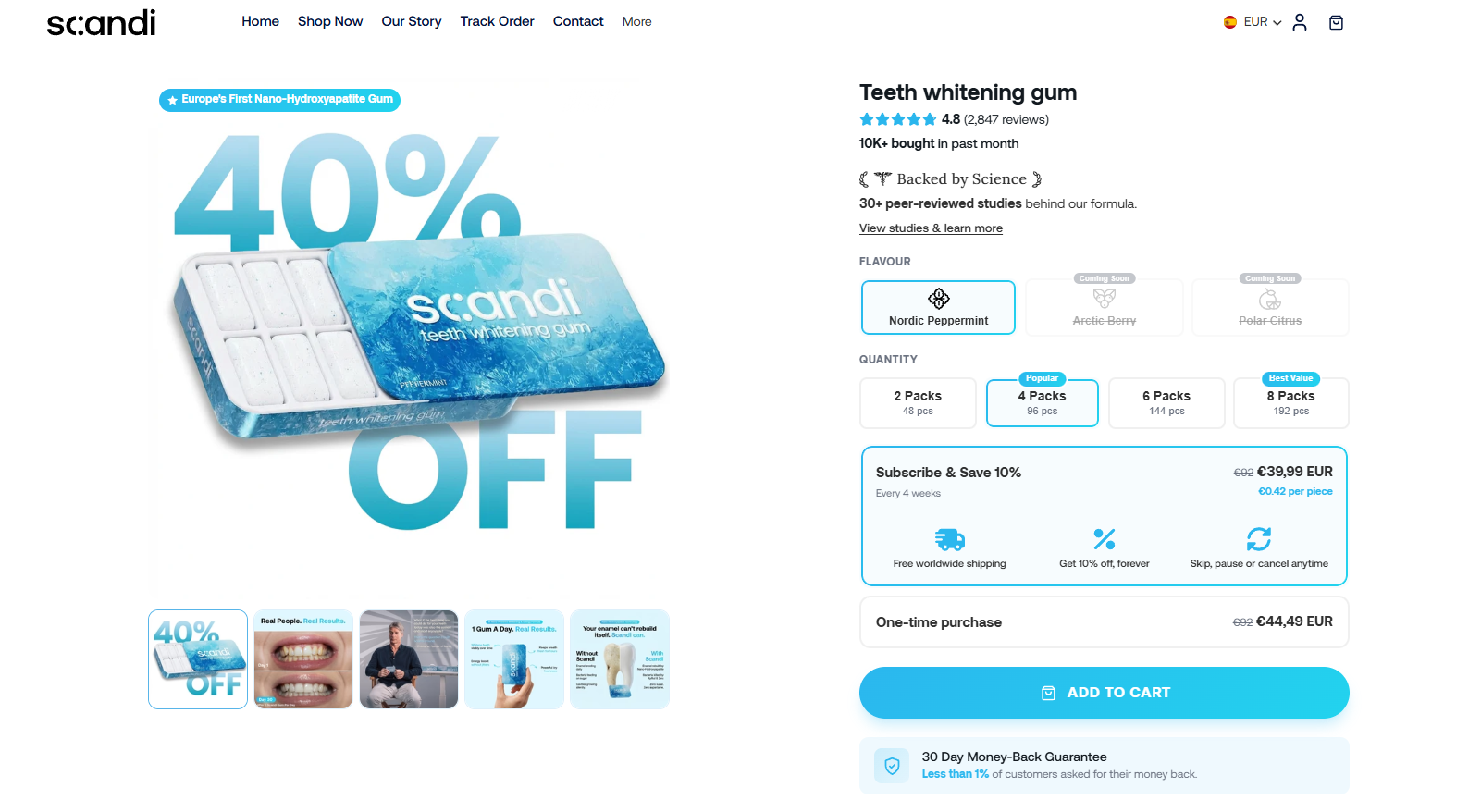
Scandigum was built for exactly this. It’s not a mint or a novelty. It’s a functional delivery system that uses the act of chewing to stimulate saliva, support remineralization, and deliver active compounds through the buccal mucosa directly into the bloodstream, bypassing the digestive system entirely. Every piece is designed to work with your oral biology, not just freshen your breath. If you’re ready to take your oral health beyond the basics, Scandi Gum oral care is a logical, science-grounded next step.
Frequently asked questions
Can you really improve dental health with only natural methods?
Natural methods can significantly improve dental health, but they work best as complements to brushing and flossing, not replacements. Oil pulling, for example, is not recommended by the ADA as a substitute for standard care.
What natural remedy has the best evidence for reducing cavities?
Xylitol at 5 to 10 grams per day, delivered through gum or lozenges, has the strongest research support, with studies showing it reduces cavity risk by 17 to 80% by suppressing harmful bacteria.
Is baking soda safe and effective for whitening teeth?
Yes, when used 2 to 3 times per week as a paste, baking soda can whiten teeth by 1 to 2 shades over 2 to 3 months with minimal enamel risk.
Are herbal mouth rinses as good as chlorhexidine for reducing bacteria?
Green tea rinses can reduce S. mutans and plaque at levels comparable to chlorhexidine, with fewer side effects like staining or taste disruption, making them a practical daily option.