

Your mouth operates like a precision chemistry lab, balancing acids and minerals every second. Most people assume brushing twice daily protects their teeth, yet saliva pH directly impacts demineralization at levels below 5.5, silently eroding enamel before symptoms appear. This guide reveals how saliva composition, chewing mechanics, dietary choices, and innovative products influence mouth chemistry to maintain healthier, whiter teeth. You’ll learn practical strategies to optimize your oral environment and prevent damage before it starts.
Table of Contents
-
Understanding Saliva’s Role In Mouth Chemistry And Tooth Health
-
Diet And Dental Erosion: Acids, Sugars, And Mouth Chemistry Interactions
-
Innovative Chewing Products To Optimize Mouth Chemistry And Improve Teeth
-
Explore Advanced Chewing Products That Support Your Mouth Chemistry
Key takeaways
| Point | Details |
| Saliva pH controls enamel fate | When pH drops below 5.5, tooth enamel demineralizes and calcium ions leach out, increasing cavity risk. |
| Chewing boosts protective saliva | Mechanical chewing stimulates glands to produce saliva that neutralizes acids and delivers calcium and phosphate for repair. |
| Xylitol reduces harmful bacteria | Chewing gums containing xylitol significantly decrease Mutans Streptococci counts, lowering plaque formation and caries risk. |
| Dietary acids erode enamel | Soft drinks and acidic juices expose teeth to prolonged acid attacks that overwhelm natural buffering systems. |
| Advanced products support remineralization | Formulations with CPP-ACP and calcium phosphate promote enamel repair and can remineralize up to 36% of subsurface lesions. |
Understanding saliva’s role in mouth chemistry and tooth health
Saliva functions as your mouth’s primary defense system, containing water, electrolytes, enzymes, immune proteins, and mucins that protect teeth from constant acid exposure. This complex fluid maintains a delicate pH balance near neutral (around 7.0) to prevent the critical threshold where enamel begins breaking down. When oral pH drops below 5.5, the hydroxyapatite crystal structure in enamel starts releasing calcium and phosphate ions, weakening the tooth surface and creating pathways for decay.
The buffering capacity of saliva determines how quickly your mouth can neutralize acids produced by bacteria or introduced through diet. Bicarbonate and phosphate ions act as chemical shock absorbers, intercepting hydrogen ions before they attack enamel. Research shows that saliva neutralizes bacterial acids, preventing erosion and cavity formation through this continuous buffering action. Without adequate saliva flow, even minor acid exposure can cause significant damage over time.
Increased saliva production raises oral pH by 0.5 to 1.0 units within minutes, dramatically accelerating the remineralization process. This elevation shifts the chemical equilibrium from enamel breakdown to active repair, allowing calcium and phosphate ions to redeposit into weakened crystal structures. The speed of this recovery depends entirely on saliva volume and composition, making flow rate a critical factor in dental health.
Beyond pH regulation, saliva contains antimicrobial proteins like lysozyme, lactoferrin, and immunoglobulin A that actively combat harmful bacteria. These immune components maintain a balanced oral microbiome by suppressing overgrowth of cariogenic species while supporting beneficial bacteria. A healthy microbial ecosystem reduces acid production and inflammation, creating conditions where teeth can thrive rather than merely survive.
Key protective mechanisms saliva provides:
-
Mechanical clearance of food particles and bacteria from tooth surfaces
-
Delivery of calcium, phosphate, and fluoride ions for enamel repair
-
Antimicrobial action against Streptococcus mutans and other cavity-causing species
-
Lubrication that protects soft tissues and enables comfortable chewing
Pro Tip: Staying hydrated throughout the day maintains optimal saliva production. Dehydration reduces flow rate and compromises your mouth’s natural defense systems, leaving teeth vulnerable to acid attacks.
Products like Scandi leverage saliva’s natural chemistry by stimulating increased flow through extended chewing, enhancing your mouth’s innate protective capabilities.
How chewing stimulates saliva and influences oral pH
The mechanical action of chewing triggers a neurological cascade that activates salivary glands throughout your mouth. Pressure receptors in the jaw and tongue send signals to the brainstem, which responds by increasing secretion rates from parotid, submandibular, and sublingual glands. This stimulated saliva contains higher concentrations of bicarbonate ions compared to resting saliva, providing superior buffering power against acids.
When you chew, saliva flow can increase by 10 to 20 times the baseline rate, flooding your mouth with protective fluid. This surge carries essential minerals directly to tooth surfaces where demineralization occurs. Chewing delivers calcium and phosphate ions that integrate into weakened enamel, reversing early-stage damage before cavities form. The longer you chew, the more pronounced these protective effects become.

Xylitol-containing chewing gums offer additional benefits beyond mechanical stimulation. Studies demonstrate that xylitol significantly decreases Mutans Streptococci compared to sorbitol gums, reducing the bacterial population responsible for most dental caries. Xylitol disrupts bacterial metabolism, preventing these organisms from producing the lactic acid that drives enamel demineralization.
The pH elevation from chewing can reach up to 1.0 unit above resting levels, creating an alkaline environment where remineralization dominates over breakdown. This shift is temporary but powerful, especially when timed strategically after meals or acidic beverage consumption. Regular chewing sessions throughout the day maintain higher average pH levels, reducing cumulative acid exposure and protecting enamel integrity.
Optimal chewing practices for pH management:
-
Chew sugar-free gum for 15 to 20 minutes after meals to neutralize dietary acids
-
Select products containing xylitol rather than sugar or non-beneficial sweeteners
-
Maintain consistent chewing motion to maximize saliva stimulation
-
Time chewing sessions when acid exposure is highest, such as after coffee or citrus fruits
Pro Tip: Chewing gum immediately after eating acidic foods provides the most protection. The saliva surge neutralizes acids before they can significantly damage enamel, effectively creating a chemical shield during the vulnerable post-meal period.
Not all chewing products deliver equal benefits. Teeth whitening gum formulations combine saliva stimulation with active ingredients that support both pH balance and aesthetic improvements, addressing multiple oral health goals simultaneously.
Diet and dental erosion: acids, sugars, and mouth chemistry interactions
Dental erosion stems from two primary acid sources: intrinsic acids from gastric reflux and extrinsic acids from dietary choices. Both overwhelm saliva’s buffering capacity when exposure is frequent or prolonged, creating conditions where enamel dissolves faster than it can repair. The cumulative effect of repeated acid attacks gradually thins enamel, exposing the softer dentin layer beneath and increasing sensitivity and decay risk.
Soft drinks and fruit juices increase erosion risk substantially due to their combination of low pH and high titratable acidity. A single cola beverage can drop mouth pH below the critical 5.5 threshold for 20 to 30 minutes, during which enamel continuously demineralizes. Citrus juices, despite their natural origin and vitamin content, pose similar threats with pH levels often between 2.5 and 3.5.
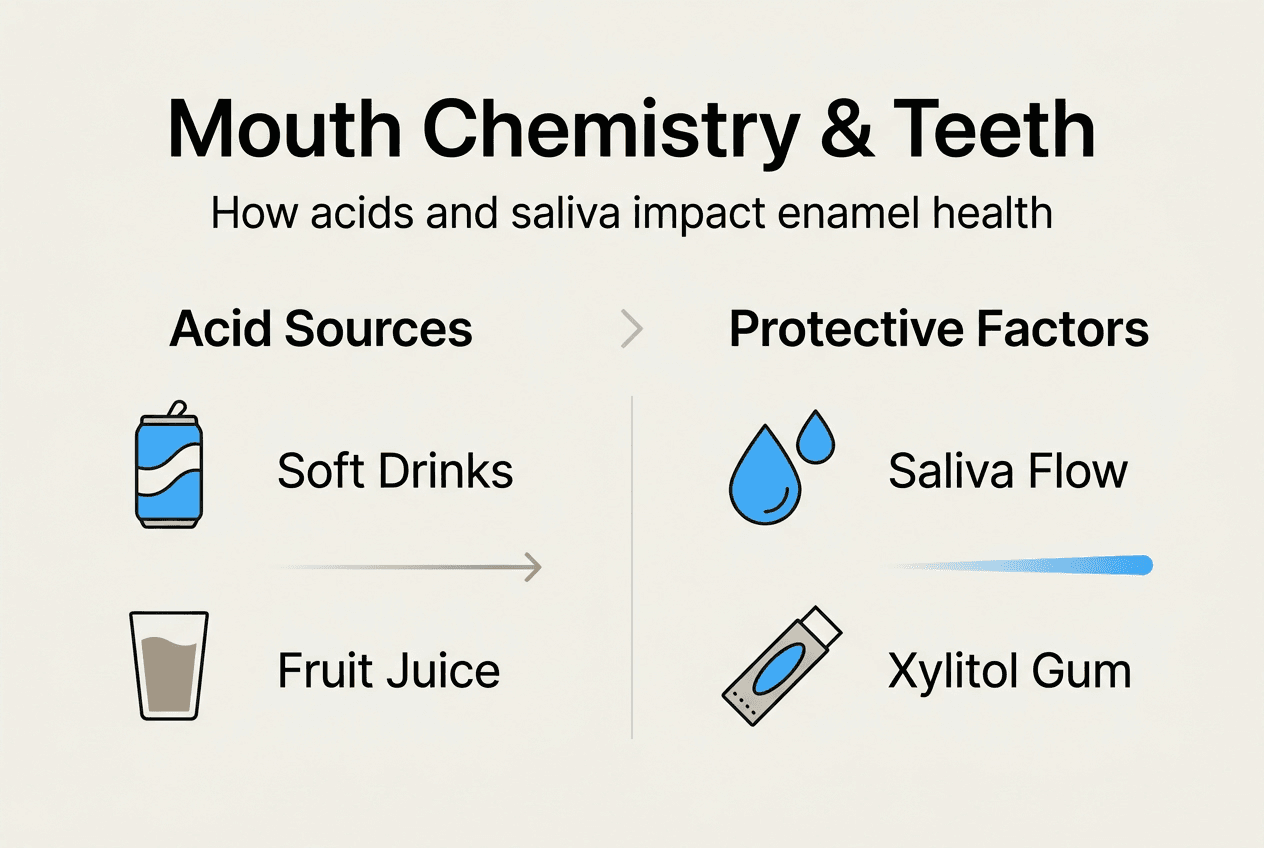
Sugar operates through a different mechanism but with equally damaging results. Oral bacteria ferment dietary sugars into lactic acid, creating localized pH drops on tooth surfaces where bacterial biofilms accumulate. Frequent sugar intake promotes acid production that demineralizes enamel from within plaque deposits, leading to cavity formation even when dietary acids are minimal. The frequency of sugar exposure matters more than total quantity, as each exposure triggers a new acid production cycle.
Nutritional strategies can support enamel strength and repair capacity. Diets rich in calcium, phosphorus, and vitamin D provide the raw materials necessary for remineralization, while adequate protein intake supports saliva production. Dairy products, leafy greens, and fortified foods deliver these nutrients in bioavailable forms that integrate into tooth structure.
| Dietary Factor | Effect on Mouth Chemistry | Enamel Impact |
| Soft drinks (pH 2.5-3.5) | Immediate pH drop lasting 20-30 minutes | Direct acid erosion of enamel surface |
| Sugary snacks | Bacterial fermentation produces lactic acid | Localized demineralization within plaque |
| Citrus fruits/juices | Prolonged acid exposure, high titratable acidity | Gradual enamel thinning and sensitivity |
| Calcium-rich foods | Provides ions for remineralization | Strengthens enamel crystal structure |
| Water | Maintains saliva production and pH | Supports natural buffering and clearance |
Reducing acid and sugar consumption protects enamel by limiting the duration and frequency of demineralization episodes. Simple modifications like drinking acidic beverages through straws, consuming them with meals rather than alone, and rinsing with water afterward can significantly reduce erosion risk. These behavioral changes work synergistically with saliva’s natural defenses to maintain balanced mouth chemistry.
Protective dietary habits:
-
Limit acidic beverage consumption to mealtimes when saliva flow is naturally elevated
-
Choose water or milk instead of soft drinks between meals
-
Consume calcium and vitamin D-rich foods daily to support enamel repair
-
Avoid frequent snacking on sugary foods that trigger repeated acid production cycles
Scandi 1 offers a practical way to counteract dietary acid exposure by stimulating protective saliva flow when you need it most, helping maintain optimal mouth chemistry despite modern dietary challenges.
Innovative chewing products to optimize mouth chemistry and improve teeth
Advanced chewing gum formulations represent a significant evolution beyond traditional products, incorporating ingredients specifically designed to enhance mouth chemistry and support dental health. These products leverage the natural saliva stimulation from chewing while adding compounds that actively promote remineralization, reduce harmful bacteria, and improve tooth appearance. The combination creates a multi-layered approach to oral care that complements brushing and flossing.
Xylitol remains the gold standard sweetener for dental health applications. Xylitol gums increase salivary flow while simultaneously reducing cariogenic bacteria populations, creating a dual benefit that sugar-containing or even other sugar-free gums cannot match. The bacteria cannot metabolize xylitol effectively, disrupting their energy production and reproduction cycles. Regular use can reduce Streptococcus mutans levels by up to 75% over several weeks.
Calcium phosphate technologies, particularly casein phosphopeptide-amorphous calcium phosphate (CPP-ACP), deliver bioavailable minerals directly to tooth surfaces in a stabilized form. Research demonstrates that high concentration CPP-ACP remineralizes enamel lesions and occludes dentinal tubules, addressing both structural repair and sensitivity reduction. Clinical studies show remineralization rates reaching 36% for subsurface lesions, reversing early-stage decay before it requires invasive treatment.
The delivery mechanism matters as much as the ingredients themselves. Chewing for 15 to 20 minutes allows sustained contact between active compounds and tooth surfaces, maximizing absorption and integration. This extended exposure period enables minerals to penetrate into enamel defects and weakened areas where they can rebuild crystal structure. Quick chewing or brief contact provides minimal benefit compared to this prolonged application.
| Product Type | Key Ingredients | Primary Benefits | Ideal Use Case |
| Xylitol gum | Xylitol, calcium carbonate | Bacterial reduction, pH elevation | After meals, between brushing |
| CPP-ACP formulations | Casein phosphopeptides, calcium phosphate | Enamel remineralization, sensitivity relief | Daily use for erosion prevention |
| Whitening gums | Sodium bicarbonate, calcium peroxide | Stain removal, pH neutralization | Aesthetic improvement, acid neutralization |
| Combination products | Xylitol, CPP-ACP, whitening agents | Multi-target oral health optimization | Comprehensive daily oral care |
Selecting products without added sugars or acids is essential, as these ingredients would counteract the protective benefits. Reading labels carefully ensures you’re choosing formulations that support rather than undermine mouth chemistry. Products marketed for dental health should list specific active ingredients like xylitol, calcium phosphate, or CPP-ACP rather than generic terms.
Evidence-based benefits of advanced chewing products:
-
Reduction in cavity-causing bacteria by up to 75% with regular xylitol gum use
-
Remineralization of early enamel lesions, potentially reversing pre-cavity damage
-
Decreased tooth sensitivity through dentinal tubule occlusion
-
Improved tooth appearance via gentle stain removal and enamel strengthening
Pro Tip: Chew advanced dental gums for the full recommended duration (usually 15-20 minutes) to maximize mineral delivery and bacterial reduction. Shorter chewing periods provide limited benefits compared to sustained contact time.
Teeth whitening gum and Scandi products exemplify this science-based approach, combining xylitol, calcium compounds, and whitening agents in formulations designed for extended chewing sessions that optimize mouth chemistry while improving aesthetic outcomes.
Explore advanced chewing products that support your mouth chemistry
Your mouth chemistry directly determines whether your teeth strengthen or weaken with each passing hour. Scandi has developed chewing gum formulations that work with your biology rather than against it, leveraging the science of saliva stimulation, pH management, and enamel remineralization. Each product contains carefully selected ingredients like xylitol for bacterial control, calcium phosphate for mineral delivery, and compounds that support both dental health and tooth whitening.
These products fit seamlessly into your daily routine, requiring only 15 to 20 minutes of chewing after meals or during acid exposure periods. For health-conscious individuals aged 30 to 50 seeking innovative approaches to maintain dental health and improve tooth appearance, Scandi offers a science-backed solution that complements traditional oral hygiene. Discover how teeth whitening gum, Scandi, and Scandi 1 can optimize your mouth chemistry and support the smile you want.
Frequently asked questions
How does saliva pH affect my teeth?
Saliva pH controls the balance between enamel breakdown and repair. When pH drops below 5.5, the critical threshold, tooth enamel begins demineralizing as calcium and phosphate ions leach from the hydroxyapatite crystal structure. This process creates microscopic defects that expand into cavities if acid exposure continues. Maintaining neutral or slightly alkaline pH through adequate saliva flow protects enamel by favoring remineralization over demineralization.
Can chewing gum really protect my teeth?
Yes, but only specific formulations provide genuine protection. Xylitol gum reduces harmful bacteria and plaque, lowering cavity risk through both mechanical saliva stimulation and antimicrobial effects. Sugar-containing gums do the opposite, feeding bacteria and promoting acid production. Choosing xylitol-based products ensures you receive protective benefits rather than increasing decay risk. The chewing action itself stimulates saliva that neutralizes acids and delivers repair minerals to tooth surfaces.
What dietary habits best support healthy mouth chemistry?
Limit consumption of acidic drinks like soft drinks and citrus juices that drop pH below the critical threshold for extended periods. Dietary acids and sugars increase erosion and cavity risk, while calcium, phosphorus, and vitamin D support enamel health and repair capacity. Eat these protective nutrients through dairy products, leafy greens, and fortified foods. Maintain hydration by drinking water throughout the day to support optimal saliva production and natural buffering systems.
How do medical conditions affect mouth chemistry and teeth?
Conditions like gastroesophageal reflux disease (GERD) cause frequent exposure to gastric acids that have extremely low pH (around 2.0). GERD increases dental erosion risk because stomach acid overwhelms saliva’s buffering capacity, causing rapid enamel dissolution. Medications that reduce saliva flow, such as antihistamines and antidepressants, also compromise mouth chemistry by limiting natural acid neutralization. If you have medical conditions affecting your mouth, consult healthcare providers about protective strategies and treatments that minimize dental damage while managing your underlying health issues.