

TL;DR:
- A comprehensive smile makeover begins with a thorough dental exam to assess oral health and identify issues like decay and gum disease before cosmetic treatments. Maintaining proper home care, regular professional cleanings, and avoiding habits that damage enamel are essential for preserving whitening results and overall radiance. Following a sequenced approach—treating disease, correcting alignment, and then performing cosmetic procedures—ensures durable, natural-looking, and healthy smile enhancements.
Many adults brush twice a day, grab a whitening strip, and still wonder why their smile looks dull or feels less than healthy. The truth is that radiant smiles aren’t built on a single product or a quick fix. Smile makeover planning starts with a comprehensive consultation and diagnostic sequence, then works through functional and biologic concerns before cosmetic finishing touches. This guide walks you through every stage of that process, in the right order, so you build real results that hold.
Table of Contents
- Assess your oral health first: The foundation for radiance
- Home care habits that maintain and enhance your smile
- Step-by-step to brightening: Whitening, restorations, and safe upgrades
- How to make your new smile last: Avoid regression
- Our take: Why the sequence—and not quick fixes—determines real results
- Discover tools that help you sustain your radiance
- Frequently asked questions
Key Takeaways
| Point | Details |
|---|---|
| Start with dental health | Address underlying gum and tooth issues before focusing on whitening or cosmetic changes. |
| Build daily routines | Maintain brushing, flossing, and smart snacking habits for brighter, lasting results. |
| Sequence matters | Follow the correct order—health, alignment, then cosmetic upgrades—for best outcomes. |
| Monitor and adjust | Regular dental visits and safe home habits are critical to preserving your radiant smile. |
Assess your oral health first: The foundation for radiance
Surface-level fixes fail because they ignore what’s happening below the gumline and inside the enamel. Before any whitening treatment, any cosmetic bonding, or any shade-matching conversation, a thorough dental exam is the non-negotiable first move.
During a professional exam, your dentist evaluates several things at once: the condition of your enamel, the depth of periodontal pockets, the presence of any active decay, and the alignment of your bite. Each of those factors directly shapes what cosmetic options are safe and appropriate for you. Skipping this step doesn’t save time. It creates setbacks.
Here’s what a baseline oral health assessment typically covers:
- Full-mouth X-rays to detect decay between teeth and below the gumline
- Periodontal probing to measure gum attachment and detect bone loss
- Soft tissue examination to identify lesions, inflammation, or recession
- Occlusal (bite) analysis to spot grinding patterns or uneven wear
- Shade mapping to document your current tooth color before any intervention
The sequencing matters enormously. Gum disease is a major “edge case” that must be resolved before brightness-focused care, because active gum inflammation distorts how the smile looks and how treatments respond. Similarly, whitening does not address the underlying pathology of decay. Bleaching over an untreated cavity accelerates damage instead of correcting it.
| Oral health status | What it means for cosmetic work |
|---|---|
| Healthy teeth and gums | You’re cleared for whitening and cosmetic upgrades |
| Active gum inflammation | Periodontal treatment must come first |
| Untreated cavities | Restorations required before any bleaching |
| Significant enamel erosion | Veneers or bonding may be safer than whitening |
| Crowns or older restorations | Those won’t respond to bleach; shade planning is needed |
Pro Tip: Ask your dentist specifically about bone and gum support at your next visit. Many adults over 30 have early-stage periodontal changes they’re completely unaware of. Catching it at stage one is far simpler and far less costly than treating it at stage three.
Once your oral health baseline is solid, exploring whiter teeth methods that are appropriate for your specific case becomes a much more productive conversation.
Home care habits that maintain and enhance your smile
With your baseline oral health secured, it’s time to build habits that keep your smile at its best every day. This phase is less dramatic than in-office treatments, but it’s where most adults either protect their investment or quietly undo it.
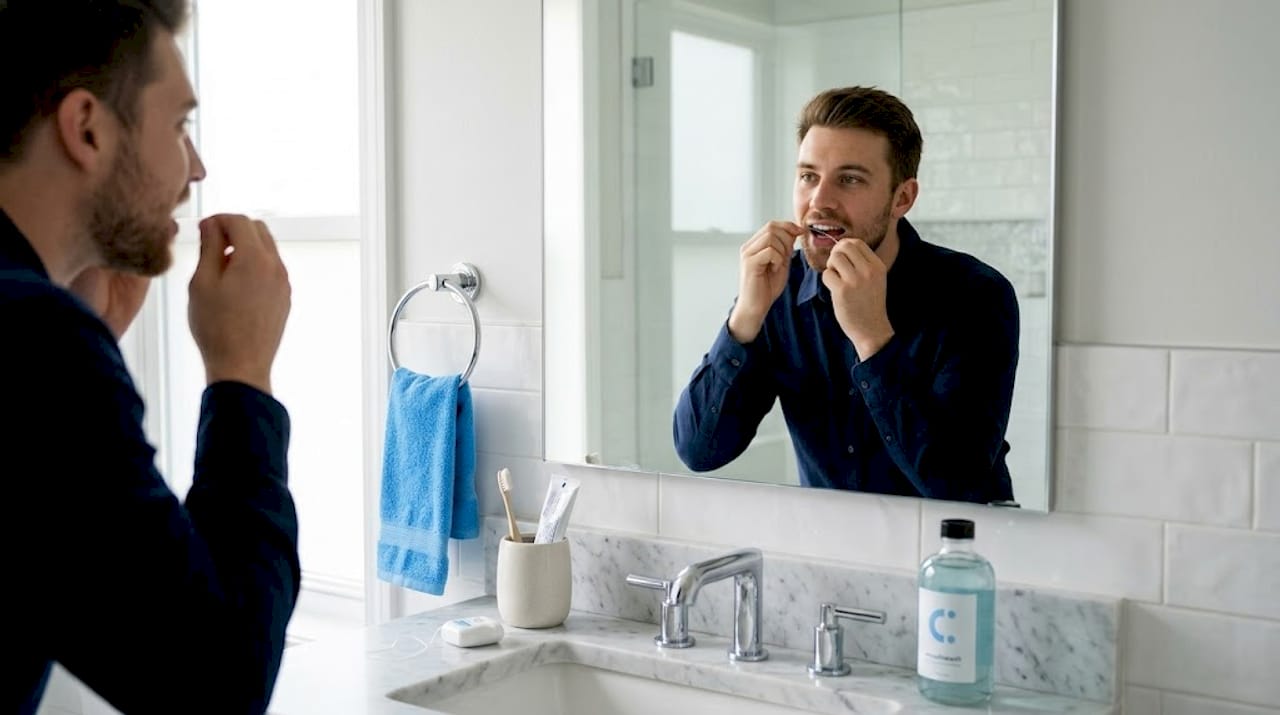
The fundamentals here are not optional. Core at-home mechanics include brushing twice daily with fluoride toothpaste, flossing or interdental cleaning daily, limiting frequent sugar and starch snacking, and maintaining regular professional cleanings. These four behaviors do more for long-term smile radiance than almost any cosmetic product on the market.
Here’s a practical breakdown of daily habits that genuinely move the needle:
- Brush for a full two minutes, not 40 seconds. Use a soft-bristled brush and gentle pressure. Scrubbing harder doesn’t clean better; it erodes enamel over time.
- Floss or use interdental brushes once daily. Plaque between teeth hardens into tartar within 24 to 72 hours. No toothbrush reaches those surfaces.
- Rinse with an alcohol-free antibacterial mouthwash to reduce the bacterial load that drives gum inflammation without drying out your oral tissues.
- Chew sugar-free gum after meals, particularly formulas containing xylitol. Chewing stimulates saliva flow, which naturally neutralizes acid and helps remineralize enamel. The connection between chewing and oral health is more significant than most people realize, because saliva is your mouth’s built-in repair system.
- Limit coffee, tea, and red wine to mealtimes rather than sipping throughout the day. Constant exposure to staining compounds is harder on enamel than a single daily cup.
Statistic to know: Adults who maintain twice-yearly professional cleanings have significantly lower rates of tooth loss and gum progression than those who skip them, according to long-term population studies. Regular cleanings also remove calculus (hardened tartar) that no amount of at-home brushing can eliminate.
Pro Tip: Avoid highly abrasive whitening toothpastes as your everyday product. Check for the ADA Seal and look for a Relative Dentin Abrasivity (RDA) score below 70 for daily use. High-abrasion formulas can strip enamel gradually, which makes teeth look more yellow over time, not less. Also watch for soft tissue changes: bleeding gums, recession, or persistent soreness are signals your routine needs professional review.
For more targeted information, reviewing tips for whiter teeth that go beyond the basics can help you customize your approach based on your specific enamel condition and lifestyle habits.
Step-by-step to brightening: Whitening, restorations, and safe upgrades
Having mastered the daily essentials, you’re ready for the final phase: safe, effective brightening and smile upgrades. The order here is just as important as in the earlier phases. Cosmetic work comes last, not first.
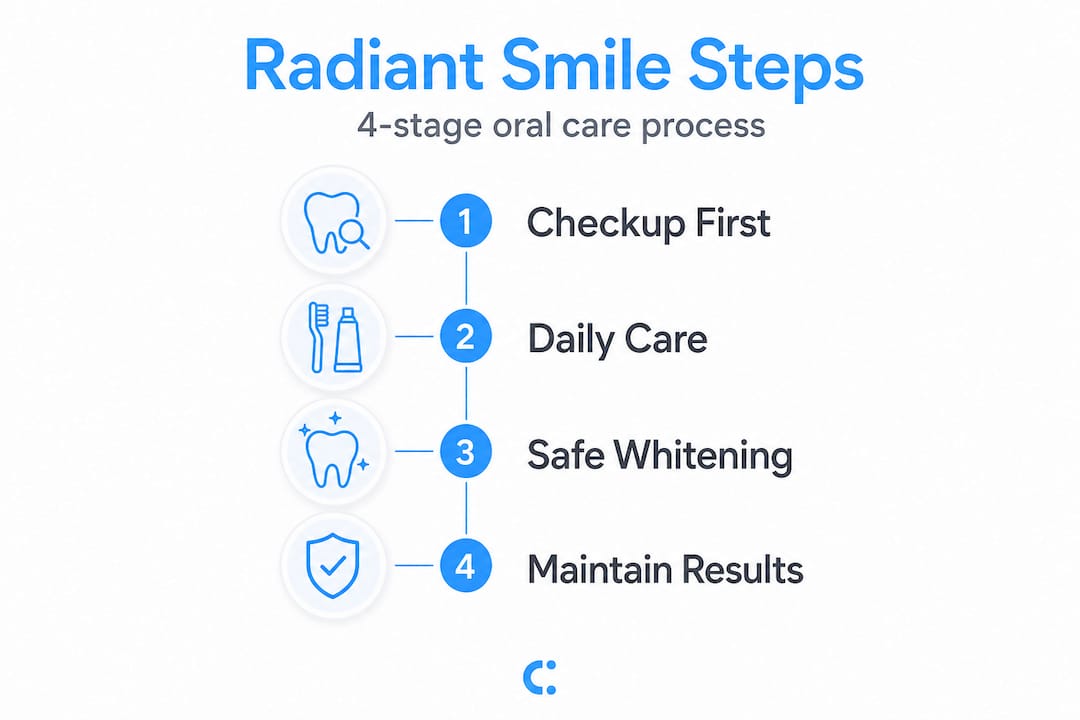
The most effective smile upgrade workflow is order-sensitive: correct biology and occlusion first (decay, infection, alignment, gingival symmetry), then finalize color and shape once tissues are stable. Skipping ahead creates problems that cost more to fix than the original treatment.
Here’s the sequenced approach that works:
- Treat all active disease. Decay is restored. Gum disease is treated. Any infections are resolved completely before moving forward.
- Address alignment if needed. Even mild crowding affects how light reflects off teeth and how easy it is to keep them clean. Clear aligner therapy or minor orthodontic work may precede cosmetic finishing.
- Evaluate gingival (gum) symmetry. Uneven gumlines change how the smile reads visually. In some cases, minor gum contouring makes a larger aesthetic difference than shade adjustment.
- Choose your whitening approach. In-office bleaching uses higher-concentration peroxide (usually 25 to 40 percent hydrogen peroxide) and achieves faster results in one to two sessions. Dentist-supervised take-home trays use lower concentrations applied over two to four weeks. Both are effective when matched to the right candidate.
- Plan restorations last. Crowns, veneers, and bonding are matched to your post-whitening shade. This is why whitening must precede any cosmetic restorations: you can’t bleach porcelain or composite.
Teeth whitening works through peroxide chemistry, using either carbamide peroxide or hydrogen peroxide to oxidize intrinsic stain molecules within enamel. Dentists stress correct candidacy and safe use protocols because the risks of misuse, including chemical burns to gum tissue, increased sensitivity, and uneven results, are real.
| Whitening option | Peroxide concentration | Typical timeline | Best for |
|---|---|---|---|
| In-office bleaching | 25 to 40% hydrogen peroxide | 1 to 2 sessions | Fast, supervised results |
| Dentist take-home trays | 10 to 20% carbamide peroxide | 2 to 4 weeks | Controlled, gradual change |
| OTC strips (drugstore) | 5 to 10% hydrogen peroxide | 2 to 4 weeks | Surface stain, mild cases |
| Whitening toothpaste | Abrasive or low-level peroxide | Ongoing maintenance | Surface upkeep only |
“Whitening should be approached as a medical procedure, not a beauty product. Anyone with existing sensitivity, cracked enamel, or untreated restorations needs professional evaluation before use.” — Hopkins Medicine oral health guidance
For safe teeth whitening that aligns with your health history, always confirm your candidacy with a dentist before starting any bleaching protocol, including over-the-counter options.
How to make your new smile last: Avoid regression
Once your brighter smile is achieved, these ongoing steps help make it truly lasting. Achieving results is one challenge. Protecting them over the next five to ten years is an entirely different discipline, and it’s where many adults over 30 lose ground quietly.
Ongoing gum health is the most overlooked piece of long-term smile maintenance. Gum disease can progress to tooth support loss, which changes smile aesthetics and significantly increases treatment complexity. A smile that looks radiant at 35 can shift considerably by 45 if periodontal health isn’t actively maintained.
Key habits that protect your investment long-term:
- Schedule cleanings every three to six months, especially if you have a history of gum disease. Twice-yearly appointments are the minimum, not the ideal, for many adults over 30.
- Quit smoking completely. Smoking is one of the strongest risk factors for periodontal disease, staining, and poor healing after cosmetic procedures. No whitening protocol compensates for active tobacco use.
- Moderate your intake of chromogenic (staining) foods and beverages. Coffee, red wine, balsamic vinegar, and dark berries are the primary culprits. Using a straw and rinsing with water after consumption meaningfully reduces surface contact.
- Get a custom nightguard if you grind or clench. Bruxism (tooth grinding) destroys enamel, fractures restorations, and reverses cosmetic work faster than almost any other behavior. Many adults develop grinding habits under stress and don’t realize it until damage is visible.
- Watch for the early warning signs of regression: bleeding when you brush, new tooth sensitivity, visible gum recession, or changes in how your teeth fit together. Any of these warrant a call to your dentist, not a wait-and-see approach.
Keeping an eye on oral health and gum interactions is an active practice, not a passive one. The adults who maintain their results longest are the ones who treat their ongoing dental visits with the same seriousness as the initial treatment phase.
Pro Tip: Chew sugar-free gum after meals when brushing isn’t immediately possible. The mechanical act of chewing stimulates saliva production, which buffers oral pH and helps protect enamel between meals. This simple, low-cost habit actively supports remineralization every time you use it.
Our take: Why the sequence—and not quick fixes—determines real results
Here’s the honest perspective: the oral care market spends enormous resources convincing you that a new formula, a stronger strip, or a celebrity-endorsed treatment will deliver the smile you want. It rarely delivers on that promise for adults over 30 because the underlying biology of the mouth is more complex than a surface stain.
Quick whitening works fine when your teeth are already healthy. But when gum disease is present, when enamel is eroded, or when restorations don’t match your current shade, whitening alone makes the problem more visible, not less. You end up with whiter decay or brighter crowns that clash with bleached natural teeth.
The sequenced approach we’ve outlined isn’t a slow path. It’s actually the faster route to results that hold. Treating gum disease before cosmetic work means your gums don’t recede and expose dark root surfaces after your veneers are placed. Whitening before restorations means your crowns are matched to your new shade, not your old one. Every step in sequence prevents a corrective step down the road.
Clinicians often pair whitening with restorative color adjustments when existing restorations or intrinsic staining limit how much bleaching alone can change. This “bleach and restore” approach consistently outperforms whitening in isolation because it accounts for the full dental picture, not just enamel shade.
The role of chewing in oral health is similarly underestimated. Saliva stimulated during chewing actively participates in remineralization, the redeposition of calcium and phosphate ions into enamel that has been mildly demineralized by acid exposure. This is a biological process, not a marketing claim, and it’s one of the most accessible tools available between dental visits.
Real, lasting smile transformation is a biology project. When you work with that biology in the right sequence, results compound. When you work against it with shortcuts, results fade fast.
Discover tools that help you sustain your radiance
If you’re seeking a solution that reinforces the steps above, here’s where to learn more.
Building a radiant smile takes more than a whitening kit. It takes daily support for your oral chemistry, and that’s exactly where Scandigum was designed to help.
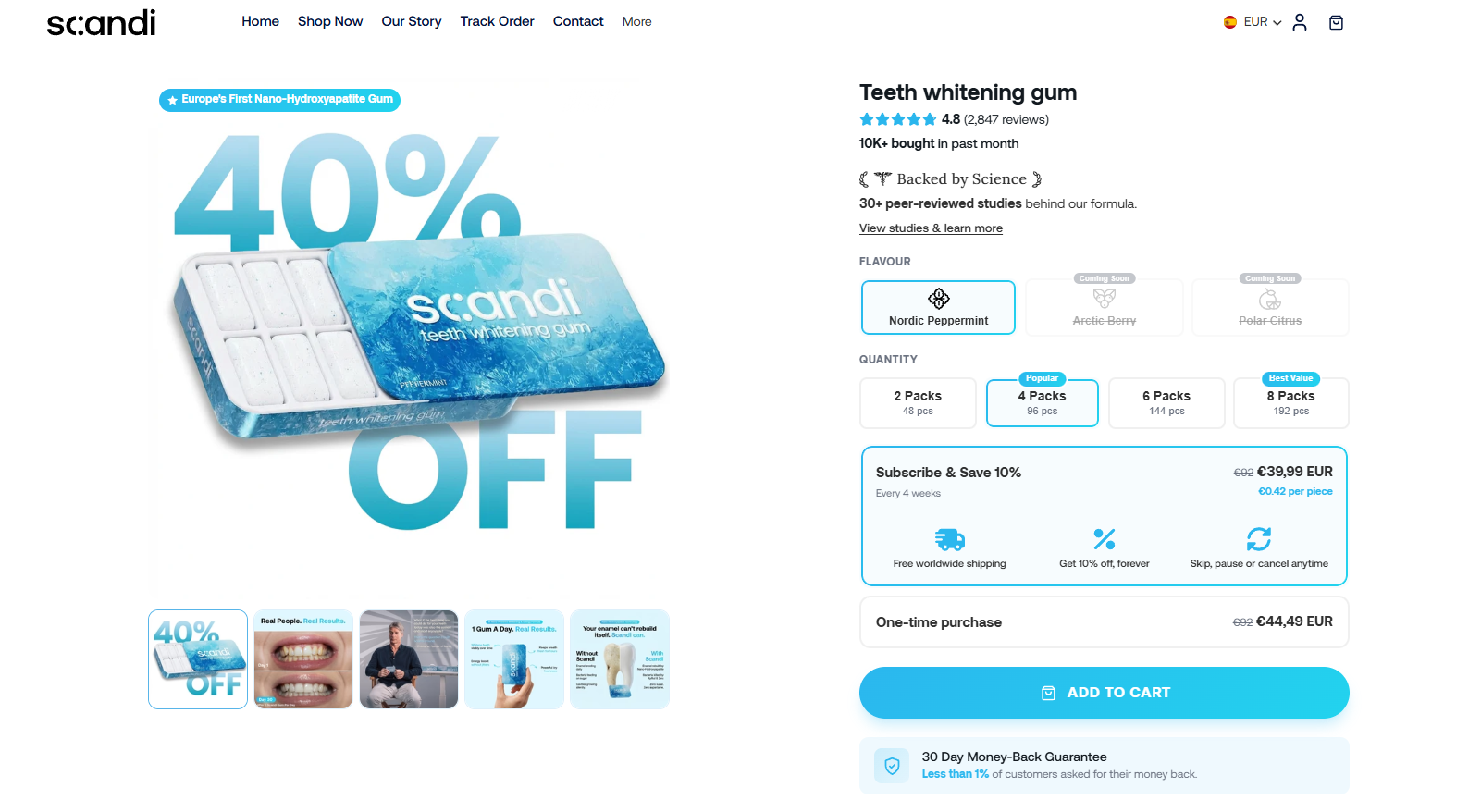
Scandigum’s functional chewing gum works by stimulating salivary flow and supporting the remineralization process that keeps enamel strong between brushing. Unlike flavor-focused gum, Scandigum targets the biological environment of the mouth directly, shifting oral pH away from the acidic range where enamel breaks down. It’s a daily tool that fits seamlessly into the maintenance phase you’ve just learned about. Visit Scandigum to explore formulas designed to support everything from enamel chemistry to daily oral wellness, and find the right fit for your routine.
Frequently asked questions
Can I skip a professional dental checkup before whitening my teeth?
No. Diagnostic sequencing is essential before any whitening treatment, because active decay or gum disease can worsen under bleaching conditions and lead to serious complications.
Is whitening toothpaste enough to achieve a radiant smile?
Whitening toothpaste removes surface stains through mild abrasion but cannot address underlying pathology like decay or change the color of existing restorations. See your dentist for a complete plan.
How long does teeth whitening last if I follow the full process?
With consistent home care and regular dental visits, peroxide-based whitening results typically last several months to a year, though diet, habits, and individual enamel porosity all influence longevity.
Is it safe to use store-bought whitening trays as an adult over 30?
They can be used safely for mild surface staining, but dentists emphasize correct candidacy to prevent gum irritation and uneven results, especially if you have restorations or sensitive teeth.
What’s the best way to keep my teeth bright after whitening?
Brush twice daily with fluoride, floss daily, limit staining foods, use a straw with dark drinks, and attend professional cleanings on schedule. These habits do more for long-term brightness than any single product.