

TL;DR:
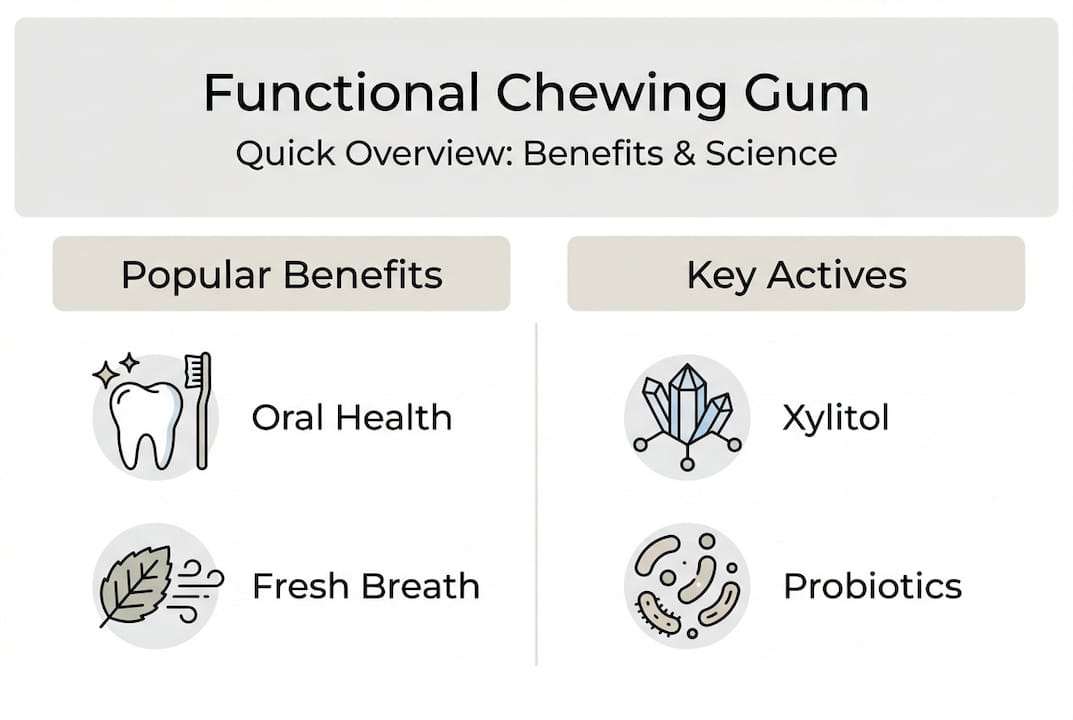
- Functional gum is fortified with active ingredients to deliver specific health benefits like dental health and focus.
- Chewing increases saliva and brain blood flow, providing mechanical and neurological benefits independently of actives.
- Evidence supports dental benefits from xylitol and probiotics, while claims about weight loss or jaw sculpting lack credible science.
Most people reach for a stick of gum to cover coffee breath or kill time in a waiting room. That’s a significant underestimation of what modern gum can do. Functional chewing gum is gum fortified with active ingredients designed to deliver specific health outcomes, from remineralizing enamel to supporting focus and reducing harmful oral bacteria. This guide breaks down the science, the proven benefits, the overhyped claims, and how to actually use functional gum as a smart addition to your daily routine.
Table of Contents
- What makes chewing gum ‘functional’?
- How functional gum works: Mechanisms and benefits
- Evidence-backed benefits and what’s proven
- How to choose and use functional gum wisely
- The real promise and pitfalls: An expert’s perspective
- Discover effective functional gum options
- Frequently asked questions
Key Takeaways
| Point | Details |
|---|---|
| What functional gum is | It’s chewing gum enhanced with active ingredients that target health benefits beyond breath freshening. |
| Best-proven benefits | Strongest evidence supports improved dental health from xylitol and probiotics, not unproven cognitive or weight loss claims. |
| How it works | Chewing stimulates saliva and brain activity, while added ingredients like xylitol and probiotics boost oral wellness. |
| Smart use matters | Choose gums with proven actives, use as an addition to oral care, and avoid being misled by market hype. |
What makes chewing gum ‘functional’?
Traditional gum is built around a gum base, sweeteners, and flavoring. That’s it. Functional gum starts with that same foundation and adds a layer of purposeful chemistry. The goal shifts from taste to targeted physiological effect.
Functional gum includes actives such as xylitol, probiotics, vitamins, herbal extracts, and nutraceuticals, each chosen for a specific role in the body. The science of functional gum goes well beyond flavor delivery. It’s about using the mouth as a biological entry point.
Here’s a quick look at the most common active ingredients and what they’re designed to do:
- Xylitol: A sugar alcohol that starves harmful oral bacteria, reducing acid production and cavity risk
- Probiotics: Live beneficial bacteria that help balance the oral microbiome
- Vitamins (B12, C, D): Delivered buccally for faster absorption than traditional pills
- Herbal extracts (ashwagandha, green tea): Targeted for stress modulation or antioxidant support
- Nicotine: Used in cessation products to manage cravings through controlled release
- Caffeine or adaptogens: Formulated for sustained energy or cognitive support
The table below shows how functional gum compares to regular gum at a glance:
| Feature | Regular gum | Functional gum |
|---|---|---|
| Primary purpose | Flavor, breath freshening | Targeted health outcomes |
| Active ingredients | None or minimal | Xylitol, probiotics, vitamins, herbs |
| Ingredient transparency | Low | High (label-driven) |
| Health claims | None | Dental, cognitive, energy, stress |
| Evidence base | Minimal | Varies by ingredient |
The key distinction is intent. Functional gum is engineered, not just flavored. When you pick one up, you should be able to read the label and understand exactly what each ingredient is doing and why it’s there.
How functional gum works: Mechanisms and benefits
Understanding what goes into functional gum is crucial, but it’s just as important to explore how chewing and these actives work together inside your body.
The physical act of chewing is itself a biological lever. Chewing increases saliva, which neutralizes oral acids, washes away food debris, and creates the conditions for enamel remineralization. Saliva carries calcium and phosphate ions that redeposit into softened enamel, essentially reversing early decay. That’s a powerful mechanical benefit before a single active ingredient even enters the picture.
On the cognitive side, chewing boosts cerebral blood flow to the prefrontal cortex and hippocampus, the regions responsible for decision making and memory. The trigeminal nerve, activated by jaw movement, sends direct signals to the brain’s reticular activating system, which governs alertness. This is why how functional gum works at the neurological level is so relevant to its design.

Here’s how the key mechanisms map to specific benefits:
| Ingredient/Mechanism | Primary action | Targeted benefit |
|---|---|---|
| Xylitol | Inhibits S. mutans growth | Reduced cavities and plaque |
| Probiotics | Rebalances oral microbiome | Lower harmful bacteria counts |
| Mechanical chewing | Increases saliva flow | Enamel remineralization |
| Caffeine (buccal) | Absorbed via cheek lining | Faster, smoother energy onset |
| Chewing rhythm | Trigeminal nerve activation | Improved alertness and focus |
| Herbal adaptogens | Cortisol modulation | Stress reduction |
Key insight: Buccal absorption (through the cheek lining) bypasses the digestive system entirely. This means active compounds reach the bloodstream faster and at higher concentrations than the same ingredients swallowed in a pill or drink.
The combination of mechanical stimulation and targeted ingredient delivery is what separates a well-formulated functional gum from a novelty product. Both systems work simultaneously, which is a delivery advantage that no capsule or beverage can replicate.
Evidence-backed benefits and what’s proven
Now that we’ve explored the mechanisms, it’s time to break down which benefits are backed by real data versus those that are driven by trends or marketing.
Here’s the honest breakdown, ranked by strength of evidence:
- Dental health (strong evidence): Xylitol and probiotic gums consistently show measurable reductions in Streptococcus mutans (the primary cavity-causing bacterium), plaque accumulation, and caries risk. Xylitol and probiotic gums reduce S. mutans, plaque, and cavity risk across multiple clinical populations, including children.
- Attention and alertness (moderate evidence): Chewing, functional or not, reliably improves attention and reaction time. The act itself is the driver. Chewing enhances cognition, but functional additives typically don’t outperform plain gum on cognitive benchmarks.
- Stress and energy (limited evidence): Some herbal extracts show promise in isolation, but evidence for their effectiveness when delivered via gum specifically is thin. Caffeine via buccal absorption is the exception, with faster onset than swallowed forms.
- Weight loss and jawline sculpting (no credible evidence): These claims are marketing constructs. No peer-reviewed data supports functional gum as a meaningful tool for either outcome.
| Claimed benefit | Evidence quality | Key active |
|---|---|---|
| Cavity reduction | Strong | Xylitol |
| Plaque reduction | Strong | Xylitol, probiotics |
| Improved attention | Moderate | Chewing mechanism |
| Energy boost | Moderate | Caffeine (buccal) |
| Stress relief | Limited | Ashwagandha, adaptogens |
| Weight loss | None | N/A |
| Jaw toning | None | N/A |
For chewing gum for dental health, the science is genuinely compelling. For everything else, apply healthy skepticism and look for products that cite specific studies, not just ingredient lists.
How to choose and use functional gum wisely
With the scientific evidence in mind, the next step is understanding how you can maximize benefits and sidestep common mistakes with functional chewing gum.
Start with these non-negotiables when evaluating any product:
- Xylitol content: Look for gums that deliver 5 to 10 grams of xylitol per day across multiple pieces. Lower doses don’t reach the threshold needed for meaningful dental benefit.
- ADA Seal of Acceptance: For dental claims specifically, this seal indicates the product has met independent standards for safety and effectiveness.
- Ingredient transparency: Every active should be listed with its dose. Proprietary blends that hide quantities are a red flag.
- Realistic claims: If a product promises jaw sculpting or significant weight loss, put it back on the shelf.
Here’s a practical framework for daily use:
- Chew after meals, not instead of brushing. Functional gum is an addition to your oral hygiene routine, not a replacement.
- Limit sessions to 15 to 20 minutes per piece. Extended chewing beyond this offers diminishing returns and increases risk of jaw fatigue or TMJ strain.
- Space your pieces throughout the day rather than chewing multiple pieces at once. This maintains a more consistent salivary pH benefit.
- If you have IBS or digestive sensitivity, monitor your xylitol intake. High doses can cause bloating or loose stools in some people.
Pro Tip: Use functional gum immediately after coffee or a meal when oral pH is at its lowest. This is when the acid-neutralizing and remineralizing effects of xylitol and stimulated saliva are most valuable.
Also worth noting: most conventional gum bases are not biodegradable. If environmental impact matters to you, look for brands using natural gum bases like chicle. It’s a small choice with a real downstream effect, and it’s one more reason to be intentional about what you’re putting in your mouth.
The real promise and pitfalls: An expert’s perspective
Functional gum is not a magic bullet. But for oral health specifically, it’s one of the most underrated tools available to health-conscious adults. The evidence for xylitol and probiotics is not marginal. It’s robust, replicated, and clinically meaningful. The problem is that this legitimate science gets lumped in with far weaker claims about jawlines and metabolic transformation, which muddies the water for everyone.
What most guides miss is the delivery advantage. The mouth is highly vascularized. Buccal absorption is real, and it’s faster than swallowing. A well-formulated gum can deliver compounds into your bloodstream in minutes, not hours. That’s not a marketing claim. That’s anatomy.
The cognitive benefits of chewing are also real, but they’re largely mechanical, not ingredient-driven. Don’t pay a premium for a “focus blend” if the product doesn’t also have strong dental credentials. The chewing itself is doing most of that work.
Our take on functional gum is simple: validate the actives, respect the mechanism, and ignore the hype. Used smartly, it’s a genuinely useful addition to a health-forward routine.
Discover effective functional gum options
You now have a clear picture of what functional gum can and can’t do. The next step is finding products that actually live up to the science. Not every gum on the market earns that label.
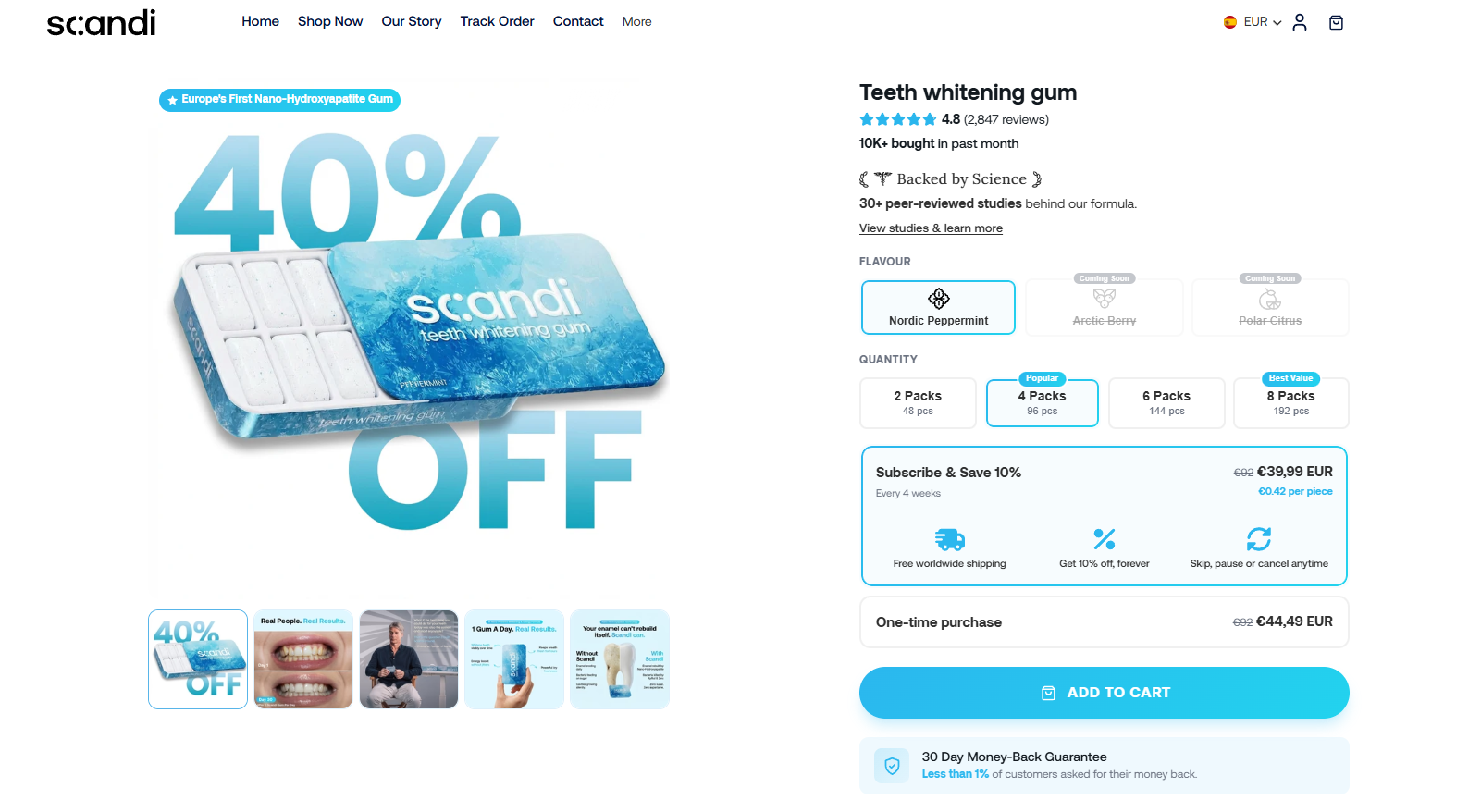
Scandigum is built around bio-optimization, not marketing buzzwords. Each formula is designed to leverage the buccal delivery advantage, support enamel remineralization, and work with your body’s own chemistry rather than against it. If you’re ready to move beyond basic oral care and into something that actually supports your biology, explore Scandi Gum options and find the formula that fits your goals.
Frequently asked questions
What is the main difference between functional and regular chewing gum?
Functional gum contains added actives like xylitol, probiotics, or vitamins that produce specific health benefits, while regular gum is formulated primarily for flavor and breath freshening with no therapeutic intent.
Does functional gum really improve dental health?
Yes. Xylitol and probiotic gums significantly reduce harmful oral bacteria, plaque buildup, and cavity risk, with consistent results across multiple clinical studies.
Can functional chewing gum boost focus or energy?
Chewing itself reliably improves attention and alertness through trigeminal nerve activation and increased cerebral blood flow, but functional additives show little additional cognitive benefit over plain gum in most studies.
Is it safe to use functional gum daily?
Daily use is safe for most adults in moderate amounts. Limit intake to avoid jaw fatigue or digestive symptoms, especially if you are sensitive to sugar alcohols like xylitol.
Are claims about jawline or weight loss with functional gum real?
No. Jawline and weight loss claims are not supported by credible research. These are marketing narratives that outpace the available science by a wide margin.