

Most adults carry a pack of gum for fresh breath and leave it at that. But the act of chewing, when paired with the right formula, triggers a cascade of biological responses that touch your teeth, your bloodstream, and your brain. Sugar-free gum stimulates saliva, neutralizes plaque acids, and lowers cavity risk, especially when xylitol is in the mix. That is just the starting point. For health-conscious adults juggling demanding schedules, chewing gum is one of the most underrated tools in a daily wellness routine.
Table of Contents
- Dental health benefits of chewing gum
- Boosting energy and alertness through gum chewing
- Cognitive and mood effects: What functional gum really delivers
- How to maximize your gum-chewing routine for health
- Discover functional gum options for modern lifestyles
- Frequently asked questions
Key Takeaways
| Point | Details |
|---|---|
| Dental benefits | Chewing sugar-free xylitol gum reduces cavity risk and strengthens teeth if used after meals. |
| Energy and alertness | Short gum-chewing sessions can improve focus, attention, and provide a quick boost for mild fatigue. |
| Routine optimization | For best results, chew gum 20 minutes post-meal for dental effects and 5-10 minutes before tasks for cognitive benefits. |
| Functional gum limits | Research finds regular sugar-free gum works as well as functional gum with added ingredients for cognitive and mood improvements. |
Dental health benefits of chewing gum
Your mouth is a chemistry lab running 24 hours a day. Every meal, every coffee, every acidic drink shifts the pH of your oral environment. When that pH drops below 5.5, your enamel starts losing calcium and phosphate ions, a process called demineralization. The good news is that saliva reverses this process naturally, and chewing gum accelerates saliva production dramatically.

Research confirms that gum chewing stimulates saliva up to 10x the resting rate, reducing plaque buildup and lowering caries risk, particularly when the gum contains xylitol. Xylitol is a sugar alcohol that harmful oral bacteria cannot metabolize. They absorb it, starve, and die off. Over time, this shifts the bacterial balance in your mouth toward a healthier profile.
The oral health science advances behind modern functional gum go well beyond simple saliva stimulation. Mineralizing agents can now be delivered directly through the gum matrix, encouraging the redeposition of calcium and phosphate back into enamel. This is active repair, not passive protection.
Key dental benefits at a glance:
- Neutralizes plaque acids within minutes of chewing
- Stimulates saliva flow to remineralize enamel
- Xylitol reduces Mutans streptococci (the primary cavity-causing bacteria)
- Lowers overall caries risk with consistent daily use
- Freshens breath by reducing bacterial load, not just masking odor
| Gum type | Saliva boost | Cavity protection | Enamel support |
|---|---|---|---|
| Regular (sugared) | Moderate | None (sugar feeds bacteria) | Minimal |
| Sugar-free | High | Good | Moderate |
| Xylitol sugar-free | High | Excellent | Strong |
“The evidence is clear: xylitol-containing sugar-free gum consistently outperforms other gum types for reducing caries risk and improving plaque index scores across multiple clinical trials.” — Meta-analysis, BMC Oral Health, 2025
Pro Tip: Chew xylitol gum for 20 minutes after each meal. This is the window when your mouth is most acidic and saliva stimulation delivers the greatest protective effect. Aim for 5 to 10 grams of xylitol spread across the day for optimal results, as confirmed by the Harvard gum health guide.
Boosting energy and alertness through gum chewing
While dental benefits are well-established, chewing gum also offers immediate cognitive and energy perks. The mechanism is more direct than most people realize. The rhythmic motion of chewing activates the trigeminal nerve, which sends signals straight to the brain’s reticular activating system, the network responsible for wakefulness and sustained attention.
Studies show that gum chewing increases cerebral blood flow and prefrontal cortex oxygenation, while measurably reducing errors in attention-based tasks. This is not a placebo effect. It is a direct neurological response to jaw movement.
The benefits are most pronounced during:
- Short, repetitive tasks that require sustained focus
- Mild stress situations like pre-meeting preparation
- Periods of mental fatigue in the mid-afternoon
- Low-stimulation environments where alertness tends to drift
For optimizing health and focus, the research points to a specific window. Five to ten minutes of chewing before or during a demanding task produces the strongest alertness response. Beyond that window, the effect plateaus rather than compounds.
How to use gum for a cognitive boost:
- Start chewing 2 to 3 minutes before a task begins
- Maintain a steady, moderate chewing rhythm
- Choose a firmer gum texture for stronger trigeminal activation
- Stop after 10 minutes and let the alertness carry you through the task
- Repeat before the next demanding block, not continuously throughout the day
Statistic: Adults who chewed gum during attention tasks made significantly fewer errors compared to non-chewers, with the effect strongest in the first 10 minutes of chewing.
Harder gum textures appear to generate more trigeminal nerve stimulation, which translates to a stronger alertness signal. This is one reason that functional gum designed for cognitive support tends to use a denser base than standard confectionery gum.
Cognitive and mood effects: What functional gum really delivers
As gum varieties evolve, the question arises: are functional gums with extra ingredients worth the investment? The honest answer is more nuanced than most marketing suggests.
Short-term attention and alertness gains are real and repeatable. The chewing mechanism itself drives these benefits. But when researchers tested functional gums loaded with B-vitamins, Rhodiola rosea, and other botanicals, the results were sobering. Functional gum with B-vitamins and Rhodiola does not outperform regular sugar-free gum for cognition or mood in controlled trials.
The chewing act is the active ingredient for alertness. The add-ons, at least in current formulations, do not move the needle further.
| Benefit | Regular sugar-free gum | Functional gum (vitamins/botanicals) |
|---|---|---|
| Alertness boost | Strong | Strong (no added benefit) |
| Attention improvement | Moderate to strong | Moderate to strong |
| Mood improvement | Mild | Mild (no added benefit) |
| Memory enhancement | Minimal | Minimal |
| Dental protection | Strong (with xylitol) | Varies by formula |
“The cognitive benefits of gum chewing are primarily driven by the act of mastication itself, not by added functional ingredients. Attention and alertness improve with regular gum just as reliably as with enhanced formulas.”
Where functional gum does have a legitimate edge is in delivery mechanism. Buccal absorption, meaning absorption through the lining of the cheeks and gums, allows certain compounds to bypass the digestive system entirely. This matters for bioavailability, not necessarily for the cognitive effects measured in short-term trials.
Pro Tip: Do not pay a premium for functional gum based on cognitive or mood claims alone. The chewing mechanism delivers the alertness benefit. Prioritize xylitol content for dental protection and look for innovative gum technology that focuses on delivery efficiency rather than ingredient lists.
How to maximize your gum-chewing routine for health
Armed with evidence and comparisons, here is how you can put gum chewing to work for your health goals. The research points to clear, practical benchmarks that make it easy to build an effective routine.
Timing your chewing for maximum impact:
- After meals: Chew for 20 minutes post-meal for peak dental protection
- Before tasks: Start 2 to 3 minutes before demanding cognitive work
- During low-energy windows: Use 5 to 10 minutes of chewing to restore alertness
- Avoid: Chewing continuously all day, which can cause jaw fatigue and digestive discomfort
| Goal | Timing | Duration | Xylitol target |
|---|---|---|---|
| Dental protection | After each meal | 20 minutes | 5 to 10g per day |
| Cognitive boost | Before or during tasks | 5 to 10 minutes | Not required |
| Energy support | Mid-afternoon slump | 5 to 10 minutes | Optional |
| Stress reduction | Before high-pressure events | 5 minutes | Optional |
For optimizing chewing routines, consistency matters more than intensity. Three to four chewing sessions per day, timed around meals and work blocks, delivers the most reliable results across both dental and cognitive outcomes.
A few practical guardrails worth keeping in mind. If you have a history of temporomandibular joint (TMJ) issues, limit sessions to 5 minutes and choose a softer gum texture. Xylitol in large amounts can cause digestive discomfort in some people, so build up gradually if you are new to it. And always check that your gum is genuinely sugar-free, not just low-sugar, since even small amounts of fermentable sugar can undermine the dental benefits.
Discover functional gum options for modern lifestyles
The science is clear: the right gum, used at the right time, supports your teeth, sharpens your focus, and fits seamlessly into a demanding adult schedule. But not all gum is built with this level of intention.
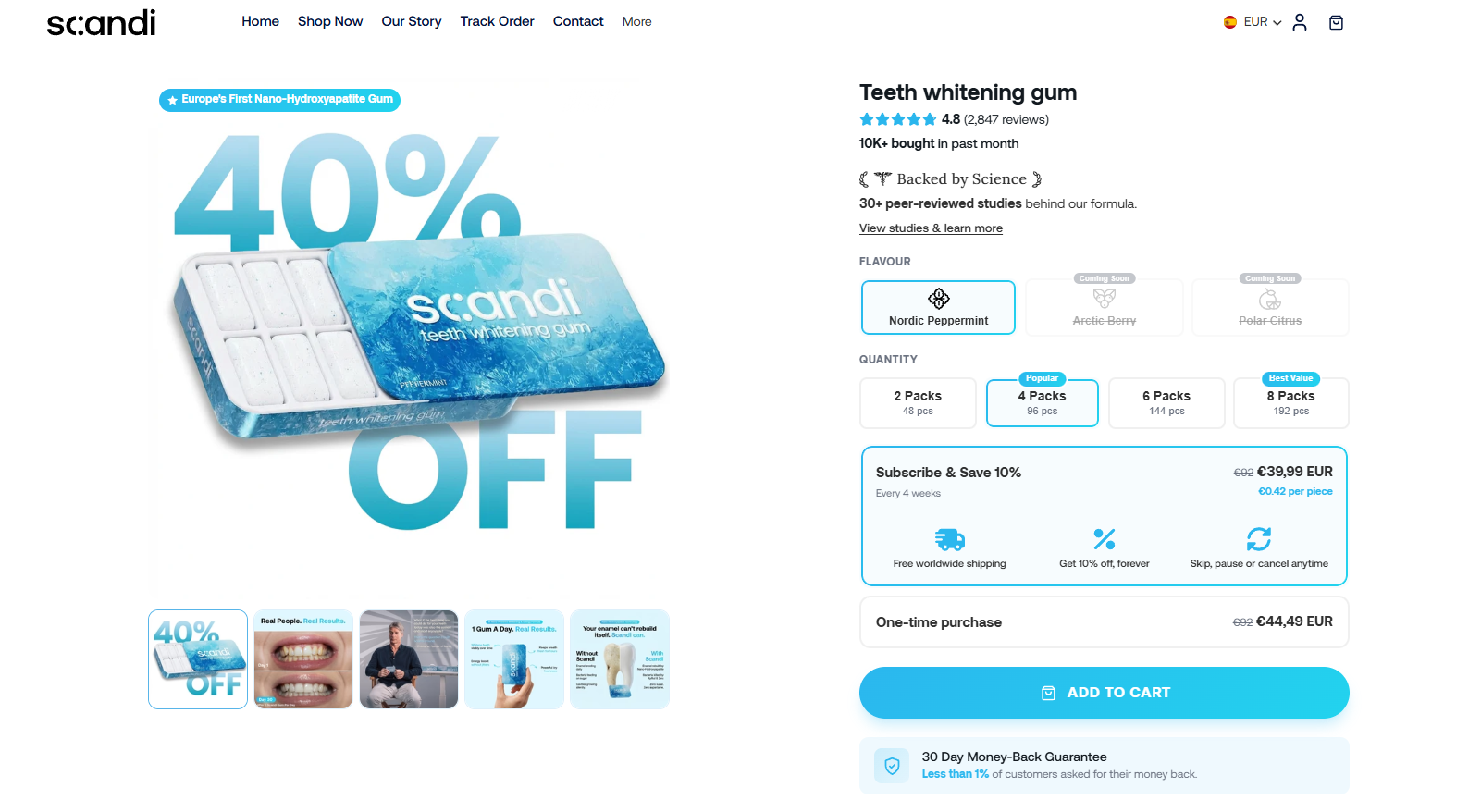
Scandigum is designed around the biology covered in this article. Every formula is built to leverage buccal absorption, stimulate salivary remineralization, and activate the mastication-brain loop that drives real alertness. If you are ready to move beyond convenience gum and into something engineered for your biology, explore Scandi Gum to see the full product range. For a deeper look at the science behind the formulas, learn about gum health technology and how delivery innovation is changing what gum can actually do for you.
Frequently asked questions
Is chewing gum safe for your teeth every day?
Yes. Daily sugar-free gum, especially with xylitol, actively supports dental health. Clinical data shows xylitol gum reduces caries risk by 17% and is safe for consistent daily use.
How long should I chew gum for optimal health benefits?
Research supports 20 minutes after meals for dental protection and 5 to 10 minutes before or during tasks for cognitive benefits. These empirical benchmarks are the most reliable targets in the current literature.
Do gums with added vitamins or botanicals work better for mood and memory?
Not according to controlled research. Functional gums with B-vitamins or Rhodiola show no added cognitive or mood benefit over regular sugar-free gum in head-to-head trials.
Can chewing gum help with energy before meetings or workouts?
Yes. The act of chewing activates brain regions tied to alertness and attention, increases cerebral blood flow, and reduces task errors, making it a practical, zero-calorie energy tool before high-demand situations.