

TL;DR:
- Therapeutic oral care products contain active ingredients proven to improve oral health outcomes.
- Fluoride is the most effective ingredient for cavity prevention and enamel protection.
- Always check for active ingredients and ADA Seal to ensure a product’s therapeutic efficacy.
Walk down any drugstore oral care aisle and you’ll face a wall of products all promising whiter teeth, fresher breath, and stronger enamel. The ingredient lists read like chemistry textbooks. Some actives genuinely prevent decay or fight gum disease; others just make your mouth feel clean for twenty minutes. Knowing which ingredients actually deliver clinical results is the difference between maintaining your oral health and spending money on products that do nothing more than mask symptoms. This guide cuts through the noise so you can choose based on evidence, not marketing.
Table of Contents
- How to evaluate oral care ingredients: What matters most
- Fluoride: The gold standard for cavity prevention
- Plaque and gum defense: CPC, essential oils, and chlorhexidine
- Evidence matters: How to spot truly therapeutic oral care products
- Why ingredient choice in oral care is more personal than you think
- Explore functional oral care options for your needs
- Frequently asked questions
Key Takeaways
| Point | Details |
|---|---|
| Fluoride tops cavity defense | Fluoride is the leading evidence-backed ingredient for preventing tooth decay. |
| Multiple actives for gum health | CPC, essential oils, and chlorhexidine are each proven options for reducing plaque and improving gum health. |
| Therapeutic labels matter | Check for clinically supported ingredients and ADA recognition to ensure true oral care benefits. |
| Personal fit trumps hype | The best ingredient is one you’ll use consistently and that matches your oral health needs. |
How to evaluate oral care ingredients: What matters most
Before you spend another dollar on a new toothpaste or rinse, it helps to understand a basic but powerful distinction: therapeutic versus cosmetic. Therapeutic products contain active ingredients that change the biology of your mouth in a measurable way. They reduce bacteria, remineralize enamel, or prevent gum inflammation. Cosmetic products, on the other hand, improve appearance or smell without producing any lasting biological change.
When evaluating any oral care ingredient, ask three questions:
- Is it clinically supported? Look for peer-reviewed studies or guidelines from recognized dental organizations, not just brand-funded claims.
- Is it safe for regular use? Some actives are powerful short-term tools but can cause problems over weeks or months of daily exposure.
- Is it targeted to your actual concern? Cavity prevention, gum health, and whitening each call for different chemistry.
The American Dental Association (ADA) Seal of Acceptance adds an extra layer of confidence. Products carrying that seal have been independently tested and meet the ADA’s standards for safety and effectiveness. The ADA is clear that therapeutic vs. cosmetic mouthrinses behave very differently in your mouth. A cosmetic rinse freshens breath; a therapeutic rinse actually reduces plaque bacteria or helps prevent cavities.
“Therapeutic mouthrinses contain active ingredients intended to help with specific oral health problems. Cosmetic mouthrinses may temporarily control bad breath and leave your mouth with a pleasant taste, but they do not address the underlying cause.” — American Dental Association
Once you have those criteria locked in, optimizing oral health routines becomes a lot more straightforward. You stop chasing trends and start building a stack of ingredients that actually match your oral health goals.
Fluoride: The gold standard for cavity prevention
If you could pick only one ingredient to protect your teeth, fluoride would be the clear answer. It is the most studied, most consistently recommended therapeutic active in dentistry, and ADA topical fluoride guidelines confirm it as a proven tool for preventing tooth decay across all age groups.
Fluoride works by integrating into the hydroxyapatite structure of tooth enamel, making it harder and more resistant to acid attacks. It also inhibits the enzymes that cavity-causing bacteria use to metabolize sugar. Three main forms show up in consumer products:
- Sodium fluoride (NaF): The most common form. Found in most over-the-counter toothpastes at 1,000 to 1,500 ppm (parts per million).
- Stannous fluoride (SnF2): Offers dual action, fighting both cavities and gum inflammation. Often found in sensitivity and gum health formulas.
- Fluoride varnish: Applied professionally in a dental office for high-risk patients; delivers a concentrated dose that slowly releases over hours.
For most healthy adults, a standard fluoride toothpaste at 1,000 to 1,450 ppm used twice daily provides solid protection. Children under six need lower concentrations, and high-risk patients may benefit from prescription-strength 5,000 ppm products on a dentist’s recommendation.
Pro Tip: Check your toothpaste’s active ingredient panel. If it lists sodium fluoride, stannous fluoride, or sodium monofluorophosphate (MFP), you’re in therapeutic territory. If fluoride doesn’t appear under “Active Ingredients,” the product likely won’t protect your enamel the way you expect.
If you are exploring best gums for dental health, note that some functional gums now work alongside fluoride by stimulating saliva, which naturally carries phosphate and calcium ions that support remineralization.
Plaque and gum defense: CPC, essential oils, and chlorhexidine
Cavity prevention is only half the battle. Gum disease, which starts with plaque accumulation along the gumline, affects nearly half of American adults over 30. Three categories of ingredients are most studied for fighting plaque and gingivitis, and each comes with its own profile of strengths and trade-offs.
Cetylpyridinium chloride (CPC) is a quaternary ammonium compound that disrupts bacterial cell membranes, killing plaque bacteria on contact. It’s widely available in over-the-counter rinses and is gentle enough for daily long-term use.
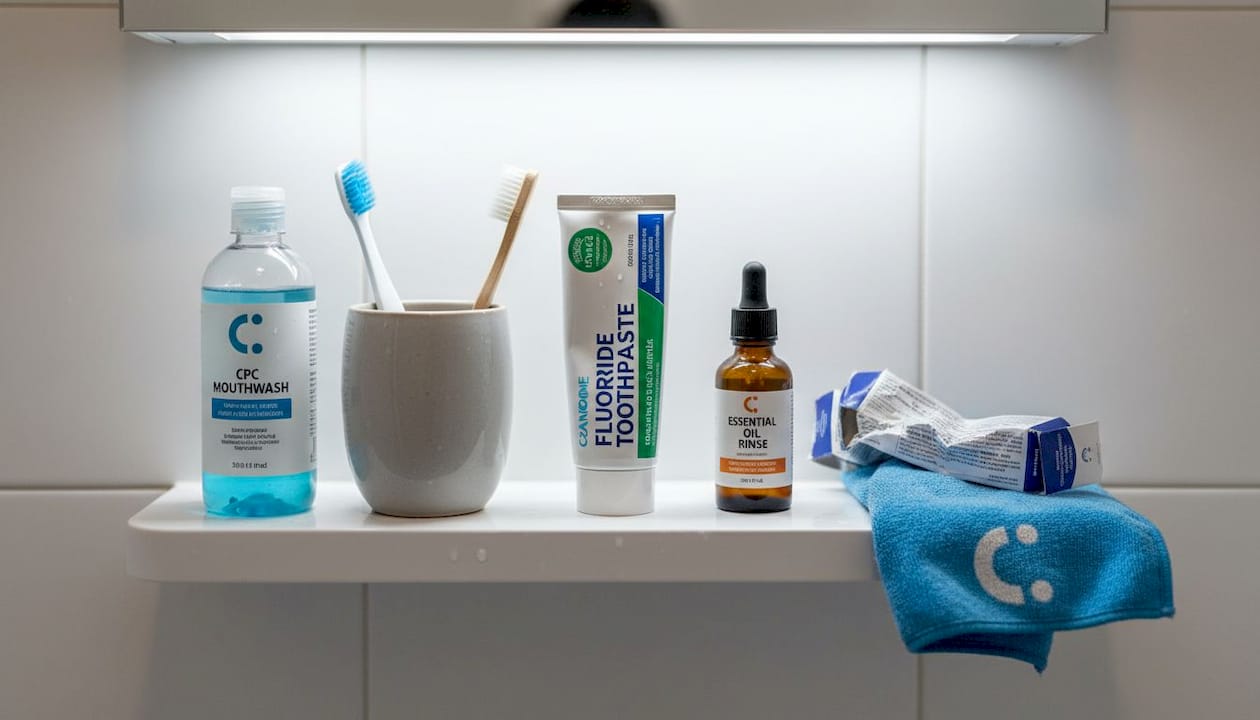
Essential oils (thymol, eucalyptol, menthol, and methyl salicylate in the original Listerine formula) work by penetrating the plaque biofilm and disrupting bacterial metabolism. They have a longer safety record than most alternatives.
Chlorhexidine is the prescription-strength option. It binds to oral surfaces and keeps killing bacteria for hours after rinsing, a property called substantivity.
| Ingredient | Effectiveness | Duration of action | Key side effects | Best use case |
|---|---|---|---|---|
| CPC | High | Short to medium | Minimal | Daily maintenance |
| Essential oils | High | Medium | Slight burning for some | Long-term plaque control |
| Chlorhexidine | Very high | Long (substantivity) | Staining, taste disruption | Short-term, post-procedure |
A 2025 systematic review found that CPC and essential oils are equally effective over the long term, while chlorhexidine reduces plaque significantly but carries notable side effects. A separate Frontiers in Oral Health systematic review reinforces that chlorhexidine side effects, including tooth staining and altered taste, make it a poor long-term daily option for most people.
“The clinical data increasingly suggests that daily use of CPC or essential oil mouthrinses can be as beneficial as chlorhexidine over extended periods, with a considerably better tolerance profile for the average patient.”
Pro Tip: If you find the intense flavor of essential oil rinses irritating at first, try diluting with a small amount of water or switching to a CPC-based alternative. Tolerance and consistency matter more than raw potency. For additional ways to work these actives into your routine, functional oral care confections offer interesting delivery formats worth exploring. You might also consider pairing your rinse with oral care mints that support salivary flow between brushing sessions.
Evidence matters: How to spot truly therapeutic oral care products
Knowing which ingredients work is only useful if you can actually identify therapeutic products at the point of purchase. Labeling rules in the U.S. make this easier than it seems once you know what to look for.
Here is a straightforward process to check any oral care product before buying:
- Find the “Active Ingredients” box. FDA regulations require that all drug products, including therapeutic oral care items, list active ingredients separately from inactive ones. No active ingredients panel means the product is cosmetic only.
- Match the active to your goal. Fluoride for cavities, CPC or essential oils for plaque, stannous fluoride for sensitivity and gums. If the ingredient does not match your concern, the product won’t help with it.
- Check the ADA Seal. Not every good product carries it, but its presence is a shortcut for verified effectiveness.
- Read the “Use” or “Purpose” statements. Therapeutic labels will say things like “prevents cavities” or “reduces gingivitis.” Cosmetic labels say “freshens breath” or “whitens teeth.”
- Verify the concentration. Even the right ingredient at the wrong dose does little. Compare ppm or percentage against established benchmarks.
| Feature | Therapeutic product | Cosmetic product |
|---|---|---|
| Active ingredient list | Yes, required | No, or none present |
| Clinically proven claim | Prevents cavities, reduces plaque | Freshens breath, whitens |
| ADA Seal eligible | Yes | Usually not |
| Regulatory category | OTC drug | Cosmetic |
| Example actives | Fluoride, CPC, chlorhexidine | Flavoring agents, whitening dyes |
The ADA is explicit that therapeutic vs. cosmetic mouthrinses belong in different categories with fundamentally different outcomes. Knowing this framework also helps you evaluate newer formats like functional gums or lozenges. For example, checking the active ingredient panel on Winterfresh ingredients quickly shows whether a gum offers any therapeutic actives in gum or just flavor.
Why ingredient choice in oral care is more personal than you think
The evidence for fluoride, CPC, and essential oils is solid. But here is something the clinical trials rarely say out loud: the most effective ingredient for you is the one you will actually use every day without stopping after two weeks.
Chlorhexidine might be the most potent option on paper, but if it stains your teeth and kills your sense of taste, you will quit using it. A slightly milder CPC rinse that you stick with for six months will outperform the “strongest” option you abandoned after ten days. That is not a knock on the science. It is an honest reading of how real-world habits work.
Your main oral health concern matters too. Cavity-prone patients prioritize fluoride. Those dealing with chronic gum inflammation may benefit more from CPC or essential oils. People with dry mouth need formulas that support saliva production rather than alcohol-heavy rinses that dry the mouth further.
Personalizing your ingredient stack around your actual biology and daily habits, rather than chasing the highest-potency option, is what leads to genuinely better outcomes over time. Getting good gum ingredient advice tailored to your situation is worth more than following any generic “top ingredient” list.
Explore functional oral care options for your needs
Now that you know the difference between ingredients that genuinely protect your oral health and those that just smell nice, you can make smarter choices every single day. The right format matters just as much as the right active.
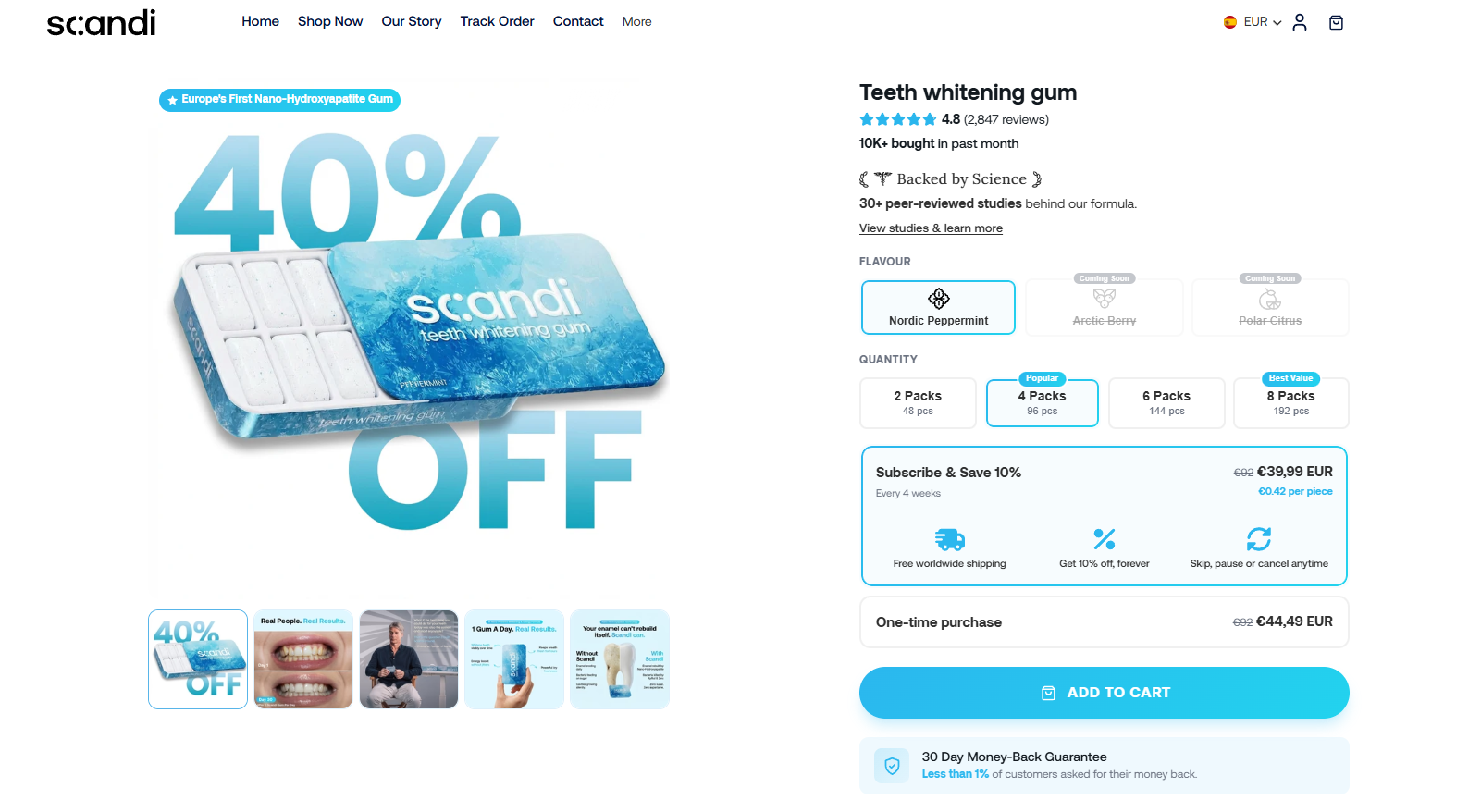
Scandigum builds on this exact logic. Our functional gum is designed to stimulate saliva flow, support the remineralization environment of your mouth, and deliver active compounds through buccal absorption, giving your oral chemistry a meaningful boost between brushing sessions. If you are ready to see how evidence-backed ingredients can fit into an enjoyable daily routine, explore Scandi Gum products and find the format that matches your goals. Your mouth’s biology works constantly. Your oral care routine should too.
Frequently asked questions
Which oral care ingredient is best for preventing cavities?
Fluoride prevents tooth decay and is widely recognized by major dental organizations as the most effective cavity prevention ingredient available in consumer products today.
Are essential oils as effective as chemical plaque fighters?
Yes. A 2025 systematic review confirms that CPC and essential oils are equally effective against plaque and gingivitis over the long term, making them solid choices for daily use.
Should everyone use chlorhexidine for oral care?
Not routinely. Chlorhexidine side effects including tooth staining and taste disruption make it better suited for short-term or post-procedure use under dentist guidance rather than as a daily rinse.
How can I tell if a mouthrinse is really therapeutic?
Look for an “Active Ingredients” panel on the label and an ADA Seal of Acceptance. The ADA mouthrinse page explains that only products with clinically proven actives qualify as genuinely therapeutic.