

TL;DR:
- Targeted daily habits like brushing, flossing, and using fluoride toothpaste are essential for older adults.
- Addressing sensitivity and gum recession with gentle tools and specific toothpaste prevents costly dental issues.
- Adaptive aids and caregiver support improve oral hygiene and reduce barriers for aging individuals.
Keeping your teeth healthy, bright, and affordable gets harder every decade after 40. Enamel thins, gums recede, joints stiffen, and dental bills climb. Yet most oral care advice was written for a 25-year-old with full grip strength and perfect recall. That gap matters. The good news is that targeted daily habits, the right tools, and smarter whitening choices can protect your smile without draining your savings. This article walks through practical, science-backed strategies built specifically for the biology and realities of aging adults.
Table of Contents
- Set daily habits: Foundation of oral wellness
- Address sensitivity and root exposure: Protect enamel as you age
- Safe and affordable teeth whitening options
- Adaptive aids and support: Overcoming arthritis and cognitive decline
- What most lists miss about oral health for older adults
- Next steps: Effective solutions for oral wellness
- Frequently asked questions
Key Takeaways
| Point | Details |
|---|---|
| Daily routines matter | Brushing and flossing every day dramatically lowers tooth loss and cavity risks in aging adults. |
| Sensitivity solutions | Using specialized toothpaste can protect exposed roots and relieve age-related discomfort. |
| Safe whitening | Supervised, at-home whitening is affordable and gentle, while harsh DIY methods should be avoided. |
| Adaptive aids boost hygiene | Aids and caregiver support improve cleaning efficiency by up to 33% for adults facing mobility or memory issues. |
| Preventive saves on costs | Proactive oral care and accessible tools reduce expensive dental procedures over time. |
Set daily habits: Foundation of oral wellness
The foundation of every healthy smile is the same regardless of age: brush twice daily, floss every day, and use a fluoride toothpaste. But for adults over 40, the stakes attached to skipping these steps are considerably higher. Gum tissue pulls back over time, exposing tooth roots that have no enamel coating. Cavities form faster on those exposed surfaces. The window for catching problems early shrinks.
Research confirms that twice-daily brushing with floss and fluoride meaningfully cuts the risk of both cavities and gum disease, two of the most common and costly dental problems in older adults. That same evidence shows whitening is safe under supervision, though 30 to 50 percent of users experience transient sensitivity. Understanding that trade-off helps you plan smarter.
Flossing specifically deserves its own spotlight. Brushing alone clears the flat surfaces of teeth but leaves the tight spaces between them untouched. Plaque sits in those gaps for hours, producing acids that chip away at enamel and irritate gum tissue at the base of each tooth. Consistent daily flossing with interdental cleaners prevents the kind of plaque accumulation that leads to tooth loss over time. Think of the spaces between teeth as the back corners of a room. A broom handles the open floor, but the corners still need a different tool.
Here are the core daily habits worth building into your routine:
- Brush for a full two minutes, morning and evening, using fluoride toothpaste
- Floss or use an interdental brush once per day, preferably before bed
- Rinse with an alcohol-free fluoride mouthwash to extend mineral exposure
- Drink water after meals to rinse away food debris and neutralize acid
- Replace your toothbrush or brush head every three months
“The most expensive dental procedure is always the one you needed five years ago.” Consistent daily care is the only reliable way to postpone or avoid it entirely.
Pro Tip: If arthritis or reduced grip strength makes standard flossing difficult, a water flosser or a floss pick with a wide handle delivers comparable plaque removal with far less finger dexterity required. Electric toothbrushes are also worth considering because the motorized head does the oscillating work for you. Exploring proven oral health strategies for adults shows just how much the right tools can close the gap between intention and execution.
For caregivers supporting aging parents or spouses, building a healthier gums workflow into the daily routine transforms oral care from a neglected task into a predictable habit with measurable results.
Address sensitivity and root exposure: Protect enamel as you age
Once the basics are locked in, it is vital to address sensitivity and enamel challenges that come with age. These are not minor inconveniences. They signal real structural changes in the teeth that, if ignored, lead to accelerated decay and significantly higher dental costs.
Enamel is the hardest substance in your body, but it thins steadily over decades of use, acidic foods, and grinding. Once it wears down, it does not regenerate on its own. Gum recession exposes the softer root surfaces below, and those roots are far more vulnerable to cavities because they lack the protective enamel layer that covers the upper part of each tooth. For adults over 50, root caries (cavities forming on exposed root surfaces) account for a growing share of new dental problems.
Research supports using sensitivity toothpaste specifically formulated for enamel wear, gum recession, and root caries risk in aging adults. Two active ingredients stand out:
- Potassium nitrate: Calms the nerve signals inside the tooth that trigger sharp pain from temperature changes
- Stannous fluoride: Creates a protective layer over exposed dentin (the tissue beneath enamel) and delivers fluoride ions that support remineralization
Key callout: Up to 57 percent of adults over 65 show signs of root surface exposure, according to clinical surveys, yet fewer than 30 percent report using toothpaste specifically designed to address it. That gap represents a large and entirely preventable category of dental expenses.
Beyond toothpaste, the way you brush matters just as much as what you brush with. Hard bristles and aggressive scrubbing accelerate enamel wear rather than clean it. Switch to a soft-bristled brush and use gentle, circular strokes rather than horizontal scrubbing. The goal is to remove plaque, not to sand the tooth surface.
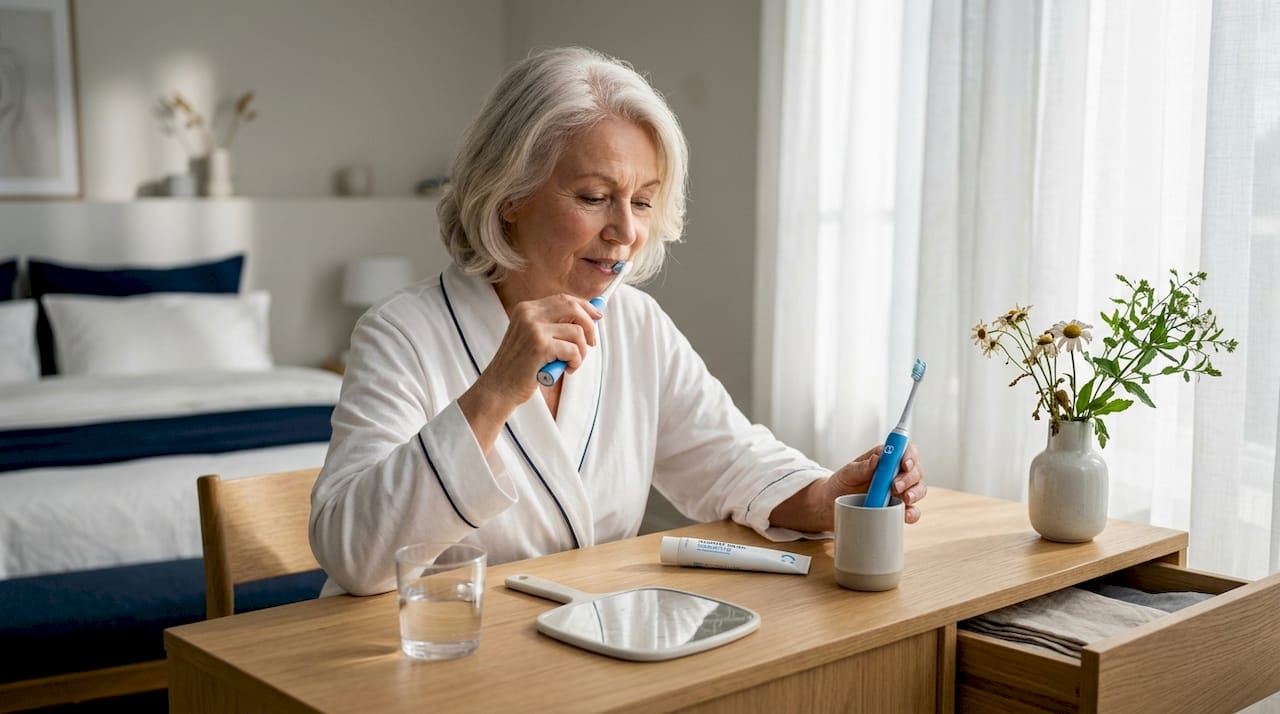
Building up minerals for enamel strength through the right product choices creates a meaningful defense against the accelerated wear that shows up in your 50s and 60s.
Pro Tip: Avoid whitening toothpastes with high abrasivity scores if you already have sensitivity. Look for the Relative Dentin Abrasivity (RDA) value on the packaging. Anything above 150 is too harsh for adults dealing with recession or enamel thinning. Mineralizing formulas with low RDA scores protect structure while still cleaning effectively.
Safe and affordable teeth whitening options
Once sensitivity is managed, many adults want whiter teeth. Here is how to choose safely and affordably without making existing enamel problems worse.
The whitening market divides broadly into two camps: in-office professional treatments and at-home kits. Both use peroxide-based chemistry to break up stain molecules inside enamel, but they differ significantly in concentration, speed, cost, and the sensitivity they cause.
| Option | Cost range | Speed | Sensitivity risk | Best for |
|---|---|---|---|---|
| In-office laser/light | $500 to $1,200 | 1 to 2 sessions | High | Fast results, supervised |
| Dentist-dispensed take-home | $200 to $400 | 1 to 2 weeks | Moderate | Gradual, lower sensitivity |
| Over-the-counter strip kits | $30 to $60 | 2 to 4 weeks | Low to moderate | Budget-conscious adults |
| Charcoal or lemon methods | Near zero | Unpredictable | Very high | Not recommended |
According to whitening research and comparisons, in-office treatments deliver faster results but carry a considerably higher sensitivity burden. At-home kits are more affordable, more gradual, and generally safer for seniors managing existing enamel thinning or recession. Charcoal and lemon-based DIY methods, despite their social media popularity, are both abrasive and acidic, two properties that actively damage enamel and worsen sensitivity over time.
A few practical guidelines for aging adults pursuing whiter teeth:
- Choose low-concentration peroxide strips (6 to 10 percent) for the most manageable sensitivity profile
- Apply sensitivity toothpaste in the hour before using any whitening product to reduce nerve irritation
- Space whitening sessions to allow remineralization time between treatments
- Always consult your dentist before starting any whitening program if you have crowns, veneers, or active gum disease
- Avoid whitening entirely during any period of active tooth pain or visible gum inflammation
The real win for older adults is not the fastest whitening option. It is the one that fits within your existing sensitivity management plan and does not undo the remineralization work you have built with fluoride and mineralizing toothpaste.
Adaptive aids and support: Overcoming arthritis and cognitive decline
But what about those living with arthritis or memory loss? Adaptive solutions can make all the difference between a functional oral hygiene routine and one that quietly falls apart.
Arthritis affects the hands and wrists in ways that make the precise grip and motion required for brushing and flossing genuinely difficult. Cognitive decline, including early-stage memory loss, disrupts the habit formation and sequencing that daily oral care depends on. Together, these two factors represent some of the most underappreciated barriers to oral wellness in the 65-and-older population.
Evidence shows that adaptive aids and caregiver education can improve hygiene outcomes by 33 percent in adults dealing with these challenges. That is not a marginal difference. It means significantly fewer cavities, less gum disease progression, and lower dental spending.
Here is a practical breakdown of adaptive tool options and their impact:
| Challenge | Adaptive aid | Benefit |
|---|---|---|
| Weak grip (arthritis) | Wide-handle or foam-wrapped brush | Reduces strain, improves control |
| Fine motor loss | Electric toothbrush with timer | Consistent coverage without precise movement |
| Flossing difficulty | Water flosser | Effective plaque removal with no finger dexterity needed |
| Forgetting to brush | Timer or scheduled phone reminder | Keeps the habit anchored to a reliable cue |
| Caregiver-assisted care | Wall-mounted dispensers, pre-loaded flossers | Reduces setup time and friction |
For caregivers and family members supporting older adults, here is a step-by-step approach that works in real household settings:
- Place all oral care tools in a visible, organized spot near the sink. Reducing visual clutter removes a common reason for skipping.
- Set a phone alarm or smart speaker reminder tied to an existing anchor habit, such as right after breakfast.
- Use an electric toothbrush set to a two-minute timer. Remove the decision of “how long is long enough.”
- Pre-load a water flosser each morning so that flossing requires only pressing one button.
- Do a weekly check on toothpaste levels, brush head condition, and flosser water supply to prevent any gap in supplies.
- For adults with significant memory decline, gentle caregiver-assisted brushing two to three times per week dramatically improves outcomes over self-care alone.
The gum health workflow approach is particularly useful here. Breaking oral care into a sequence of small, predictable steps reduces the cognitive load for both the older adult and the caregiver, making consistency far more achievable.
Investing in the right adaptive tools typically costs between $50 and $150 upfront. A single dental procedure to treat a preventable cavity starts at $200 and climbs quickly. The math is straightforward.
What most lists miss about oral health for older adults
Having explored key strategies, it is worth challenging some common assumptions and highlighting practical wisdom that most oral health lists overlook entirely.
The dominant narrative in oral health content is that adults just need to “brush and floss better.” That advice ignores the physical and cognitive realities of aging. Telling someone with rheumatoid arthritis to floss daily without addressing their grip limitation is not helpful guidance. It is an instruction without a path.
What the evidence actually shows is that the method of care matters far less than consistency over time, and that consistency is primarily a function of how easy the tools make the task. When we look at the 33 percent improvement that adaptive aids produce, we are not seeing better technique. We are seeing the same people performing the same tasks with equipment that actually works for their current abilities.
The second overlooked reality is family and caregiver engagement. Most oral health advice is written for solo adults managing their own care. But for a large share of adults over 70, the most effective intervention is a family member who understands the problem and helps remove friction from the daily routine. A caregiver who learns to use a water flosser alongside their parent creates a shared habit. That is more powerful than any product recommendation alone.
There is also a financial psychology problem that goes unaddressed. Adults who face tight budgets often delay dentist visits to save money, which guarantees more expensive treatment later. The counterintuitive but correct approach is to spend modestly and consistently on prevention. A $35 electric toothbrush head subscription and a $45 water flosser represent an annual spend that is a fraction of one cavity filling.
Pro Tip: Prioritize adaptive tools before investing in whitening. A white smile that is sitting in a mouth with advancing gum disease is a short-term aesthetic gain and a long-term financial liability. Get the foundation right first, then whiten.
The most effective proven oral health strategies are not the most glamorous ones. They are the ones that remove barriers, reduce friction, and work with where you are physically and cognitively today, not where you were at 30.
Next steps: Effective solutions for oral wellness
For those ready to act, here are accessible solutions aligned with the tips above.
Understanding the science is the first step. Putting the right tools in place is the second. Scandigum’s approach to oral wellness connects directly to the biology behind everything covered in this article, from the remineralization process that rebuilds enamel to the saliva-stimulating effects that keep oral pH in a healthy range. Prevention-focused, science-driven, and built for real daily life.
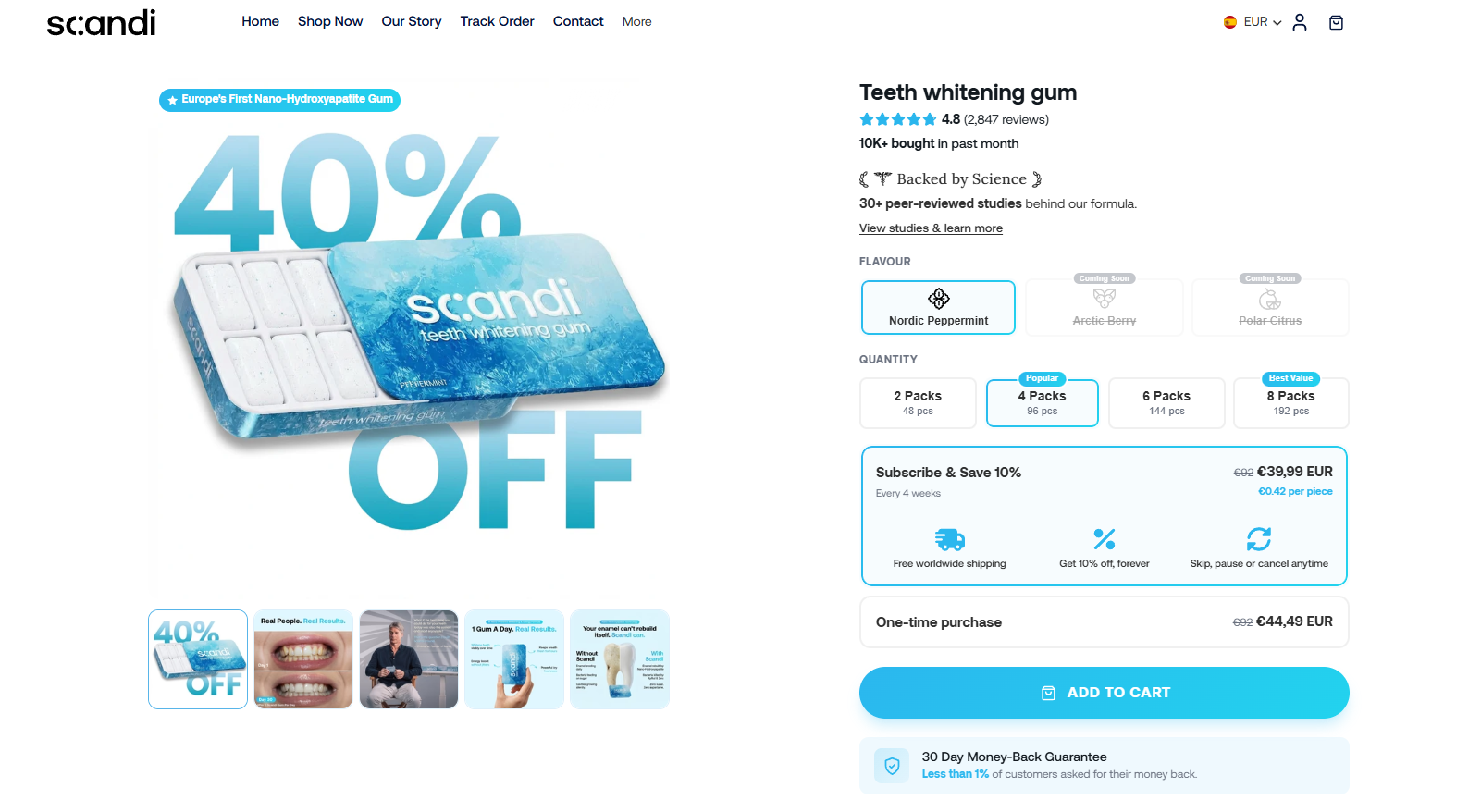
If you want a starting point for accessible, functional oral wellness products that support the kind of daily prevention this article describes, explore the range of oral wellness products designed to work with your body’s own chemistry. These are not gimmicks. They are tools built around the same bio-optimization principles that make daily oral care both effective and sustainable for aging adults.
Frequently asked questions
How often should aging adults floss?
Daily flossing is recommended because consistent interdental cleaning is the most reliable way to prevent the plaque buildup that leads to tooth loss over time.
Is sensitivity toothpaste really effective for older adults?
Yes. Sensitivity toothpaste formulas with potassium nitrate or stannous fluoride address exposed roots and enamel wear directly, reducing discomfort while also supporting remineralization.
Are at-home whitening kits safe for seniors?
At-home kits with low-concentration peroxide are generally safe when used as directed, but charcoal and lemon based methods are abrasive and acidic and should be avoided entirely.
What tools help older adults brush and floss with arthritis?
Electric toothbrushes, water flossers, and wide-handle brushes are the most effective adaptive aids. Studies show these tools improve hygiene by up to 33 percent in adults managing arthritis or reduced dexterity.
What is the best affordable way to prevent dental expenses?
Consistent daily care with the right tools is the most cost-effective defense. Twice-daily brushing with fluoride and daily flossing measurably reduces the cavities and gum disease that drive expensive dental visits.