

TL;DR:
- Hydroxyapatite is a biomimetic mineral that repairs and strengthens teeth naturally.
- Clinical studies show hydroxyapatite is as effective as fluoride in cavity prevention.
- HAp offers safety benefits for children and sensitive teeth, promoting healthier enamel.
Fluoride has dominated dental care for over 60 years, and most people have never questioned it. But a growing body of research points to a biomimetic mineral already built into your teeth as a genuinely powerful alternative. Hydroxyapatite (HAp) is not a marketing trend or a fringe wellness experiment. It is the primary mineral your enamel is made of, and when delivered in nano-sized particles, it can rebuild what acid, age, and diet have worn away. This guide covers the science, proven benefits, honest comparisons with fluoride, and practical ways to use HAp to protect and brighten your teeth.
Table of Contents
- What is hydroxyapatite and how does it work?
- Proven benefits of hydroxyapatite for your teeth
- Hydroxyapatite vs. fluoride: which is right for you?
- Who should use hydroxyapatite? Special advantages and best practices
- Why hydroxyapatite is reshaping dental care (and what most people miss)
- Try hydroxyapatite for yourself: your journey to healthier teeth starts now
- Frequently asked questions
Key Takeaways
| Point | Details |
|---|---|
| Natural enamel booster | Hydroxyapatite rebuilds and protects your tooth enamel, mimicking your body’s own minerals. |
| Proven cavity protection | Clinical studies show HAp toothpaste prevents cavities as well as fluoride, offering a fluoride-free choice. |
| Safe for all ages | HAp is non-toxic and suitable even for children and those with sensitive teeth. |
| Whitening without harshness | By repairing microscopic flaws, HAp provides a whiter smile gently and effectively. |
| Ideal for modern wellness | HAp supports holistic, health-conscious dental routines without compromising results. |
What is hydroxyapatite and how does it work?
Your teeth are not static structures. Enamel, the hard outer layer, is constantly gaining and losing minerals depending on what you eat, drink, and how acidic your mouth becomes. Hydroxyapatite is the crystalline calcium phosphate compound that makes up roughly 97% of tooth enamel and about 70% of dentin underneath it. It is literally what your teeth are made of.
The innovation in modern oral care is nano-hydroxyapatite, or nHAp. These are ultra-fine particles engineered to be the same size and structure as the mineral crystals in natural enamel. Because they are biomimetic (meaning they mimic biology), they integrate directly with existing enamel rather than sitting on top of it. As a biomimetic toothpaste ingredient, HAp fills microscopic enamel defects and remineralizes the surface, making it harder and more resistant to future acid attacks.
Here is how the repair process actually works:
- Acid exposure drops your oral pH below 5.5, the point at which enamel begins to dissolve and lose calcium and phosphate ions
- nHAp particles deposit into those newly opened gaps, physically filling the micro-cracks and porous areas
- A protective layer forms on the enamel surface, reducing its permeability and blocking the tubules that cause sensitivity
- Saliva and nHAp work together to shift the oral environment back toward remineralization rather than decay
This is meaningfully different from how fluoride works. Fluoride converts hydroxyapatite into fluorapatite, a harder but foreign compound. nHAp restores the original material. Think of it as patching a wall with the same material it was built from rather than a different substitute.
For people focused on minerals for stronger enamel, understanding this mechanism matters. The repair is not cosmetic. It is structural.
Pro Tip: If you experience cold sensitivity or notice your enamel looks translucent at the edges of your teeth, those are early signs of enamel erosion. HAp is especially suited for this stage, before damage becomes irreversible.
| Feature | Nano-hydroxyapatite (nHAp) |
|---|---|
| Particle size | 20 to 80 nanometers |
| Composition | Identical to natural enamel |
| Function | Fills defects, remineralizes, protects |
| Safety profile | Biocompatible, non-toxic |
Proven benefits of hydroxyapatite for your teeth
The science on HAp is not preliminary. Multiple clinical trials have tested it against fluoride, and the results are worth paying attention to.
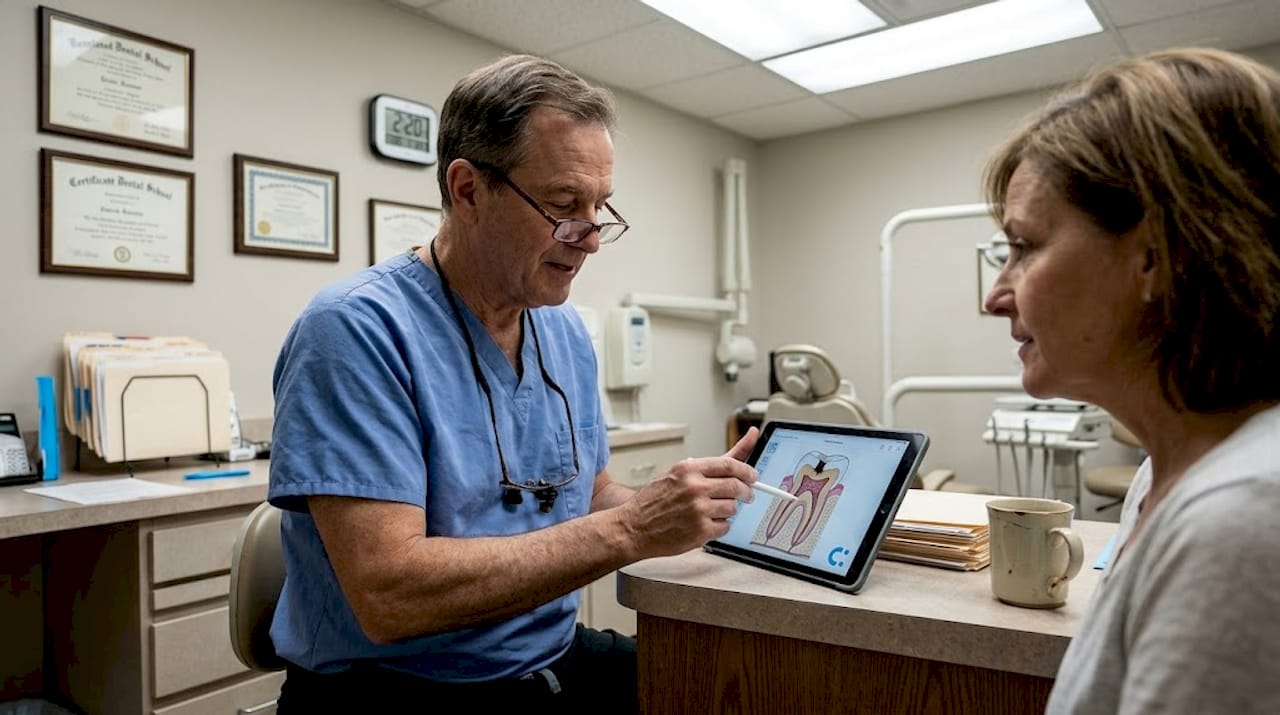
Starting with cavity prevention, nHAp prevents cavities by reducing demineralization and performs as well as fluoride in clinical settings. That is not a minor claim. For decades, fluoride was considered irreplaceable in this role. The fact that a biomimetic mineral can match it changes the math for health-conscious adults who want effective care without fluoride.
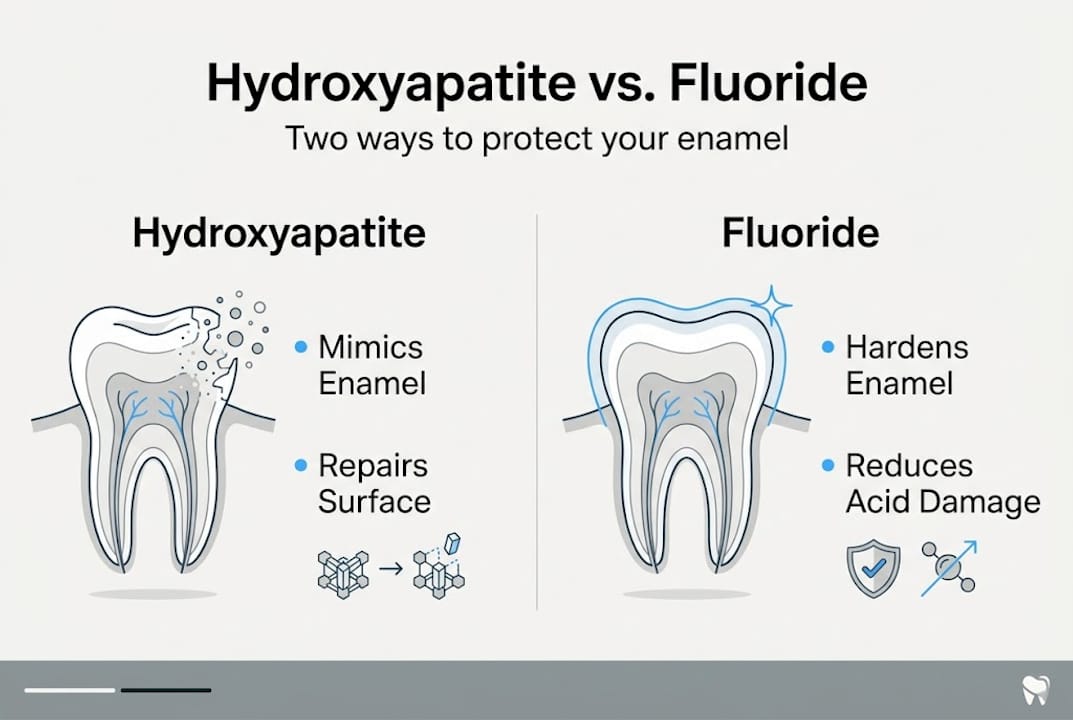
Randomized controlled trials (RCTs), the gold standard in clinical research, confirm this directly. RCTs demonstrate that HAp toothpaste is non-inferior to fluoride for cavity prevention. Non-inferior is clinical language for “equally effective.”
Beyond cavities, the benefits stack up:
- Remineralization: nHAp actively deposits minerals back into weakened enamel, reversing early-stage decay
- Whitening: By filling surface defects and micro-pores, HAp creates a smoother, more reflective enamel surface. The result is natural brightening without bleaching agents or abrasives that thin enamel over time
- Sensitivity reduction: HAp occludes (blocks) the dentinal tubules, the tiny channels that carry pain signals when exposed to heat, cold, or pressure
- Safe for kids: Unlike fluoride, which poses toxicity risks if ingested in large amounts, HAp is biocompatible and safe even when swallowed, making it a practical choice for children
“Hydroxyapatite is a biocompatible material that integrates with natural enamel structure, offering remineralization benefits without the systemic concerns associated with fluoride ingestion.”
One important caveat: HAp does not yet carry ADA or FDA approval as an anti-cavity agent in the United States, although it is recognized as safe by European regulators. This does not reflect a safety concern. It reflects the slower pace of regulatory change relative to science.
For those exploring minerals in oral care or researching remineralizing gum benefits, HAp is a foundational piece of the picture.
Hydroxyapatite vs. fluoride: which is right for you?
This is not a competition. It is a question of fit. Both compounds prevent cavities. They do it differently, and they suit different people.
10% nHAp toothpaste is equivalent to standard fluoride for caries prevention in clinical trials, but it lacks US regulatory approval as an anti-cavity agent. That single regulatory gap is the main practical distinction between them for American consumers right now.
| Factor | Nano-hydroxyapatite | Fluoride |
|---|---|---|
| Cavity prevention | Clinically equivalent | Gold standard |
| Remineralization method | Biomimetic repair | Converts enamel to fluorapatite |
| Whitening | Natural, structural | Minimal |
| Sensitivity relief | Strong (tubule occlusion) | Moderate |
| Safe if swallowed | Yes | Not in large amounts |
| US regulatory status | Not FDA approved as anti-cavity | FDA approved |
| EU regulatory status | Recognized safe | Approved |
Who benefits most from choosing HAp:
- Adults who want fluoride-free care without sacrificing effectiveness
- People dealing with enamel sensitivity who have not found relief with standard toothpastes
- Parents looking for a toothpaste their young children can use without swallowing risk
- Anyone recovering from teeth whitening who needs gentle remineralization
- People with orthodontic appliances who face higher white-spot lesion risk around brackets
Who may still prefer fluoride:
- Those with very high cavity risk who need maximum clinical backing
- Anyone whose dentist specifically recommends fluoride based on individual risk factors
- People in regions with low natural fluoride in water who need supplemental protection
Pro Tip: Some dentists now recommend using HAp toothpaste in the morning and fluoride at night, or alternating by week, to capture the benefits of both. Ask your dentist if your oral health profile makes this worth exploring. For supporting enamel between brushings, look into stronger enamel minerals delivered through other formats.
Who should use hydroxyapatite? Special advantages and best practices
HAp is not exclusively for people with dental problems. It is a strong choice for healthy adults who want to stay ahead of enamel loss rather than treat it after the fact.
That said, certain groups see outsized benefits. HAp is superior for orthodontic white spot prevention, post-whitening sensitivity, and as a safer option for children who are at risk with fluoride. These are not edge cases. They describe a substantial portion of health-conscious dental care users.
Who gains the most from HAp:
- Orthodontic patients: Braces and aligners create difficult-to-clean zones where acid attacks concentrate. nHAp reduces white spot lesion formation in these areas
- Post-whitening users: Bleaching agents temporarily increase enamel porosity. HAp fills those pores and reduces sensitivity during recovery
- Children: The swallow-safe profile removes the anxiety around fluoride ingestion entirely
- Adults with enamel erosion: From acid reflux, frequent citrus consumption, or acidic beverages, erosion creates exactly the kind of micro-defects nHAp is designed to repair
- Sensitive teeth sufferers: If cold drinks or sweet foods cause a sharp response, HAp’s tubule-blocking action often delivers noticeable relief within weeks
For best results, consistency matters more than frequency. Brushing twice daily with an nHAp toothpaste for two minutes each session gives the mineral enough contact time to integrate with enamel. Do not rinse immediately after brushing. Let the HAp remain on your teeth for at least 30 seconds.
Pairing HAp toothpaste with a mineral-rich diet (calcium, phosphate, and vitamin D) amplifies results. So does addressing the root cause of acid exposure, whether that is diet, dry mouth, or reflux.
Pro Tip: Chewing a remineralizing gum between meals stimulates salivary flow, which raises oral pH and creates the right environment for HAp to do its job. Explore enamel-strengthening minerals and the evidence behind benefits of remineralizing gum for a more complete approach.
Why hydroxyapatite is reshaping dental care (and what most people miss)
Here is the uncomfortable truth about dental recommendations: many dentists still hesitate to suggest HAp not because the science is weak, but because regulatory frameworks move slowly and professional habits are hard to shift. The evidence for HAp has been building for over two decades. The clinical trials are solid. The safety profile is excellent. Yet in the US, fluoride remains the default almost by inertia.
What the mainstream conversation misses is that HAp does not just prevent cavities. It restores enamel using the body’s own material. That distinction matters enormously for people dealing with sensitivity, early erosion, or the aftermath of orthodontic treatment. These are conditions where fluoride’s mechanism simply does not address the root structural problem.
The mineral-based oral care insights driving this shift parallel what has already happened in holistic nutrition: people are not just avoiding harmful things. They are actively seeking ingredients that support biology rather than work around it. HAp fits that framework perfectly. It is not a fluoride workaround. It is a fundamentally different and arguably more elegant approach to enamel health.
Try hydroxyapatite for yourself: your journey to healthier teeth starts now
If you have read this far, you already understand what most people are still guessing about. Hydroxyapatite is a credible, well-researched option for anyone who wants cavity protection, natural whitening, and sensitivity relief without relying solely on fluoride. The science is real. The benefits are measurable.
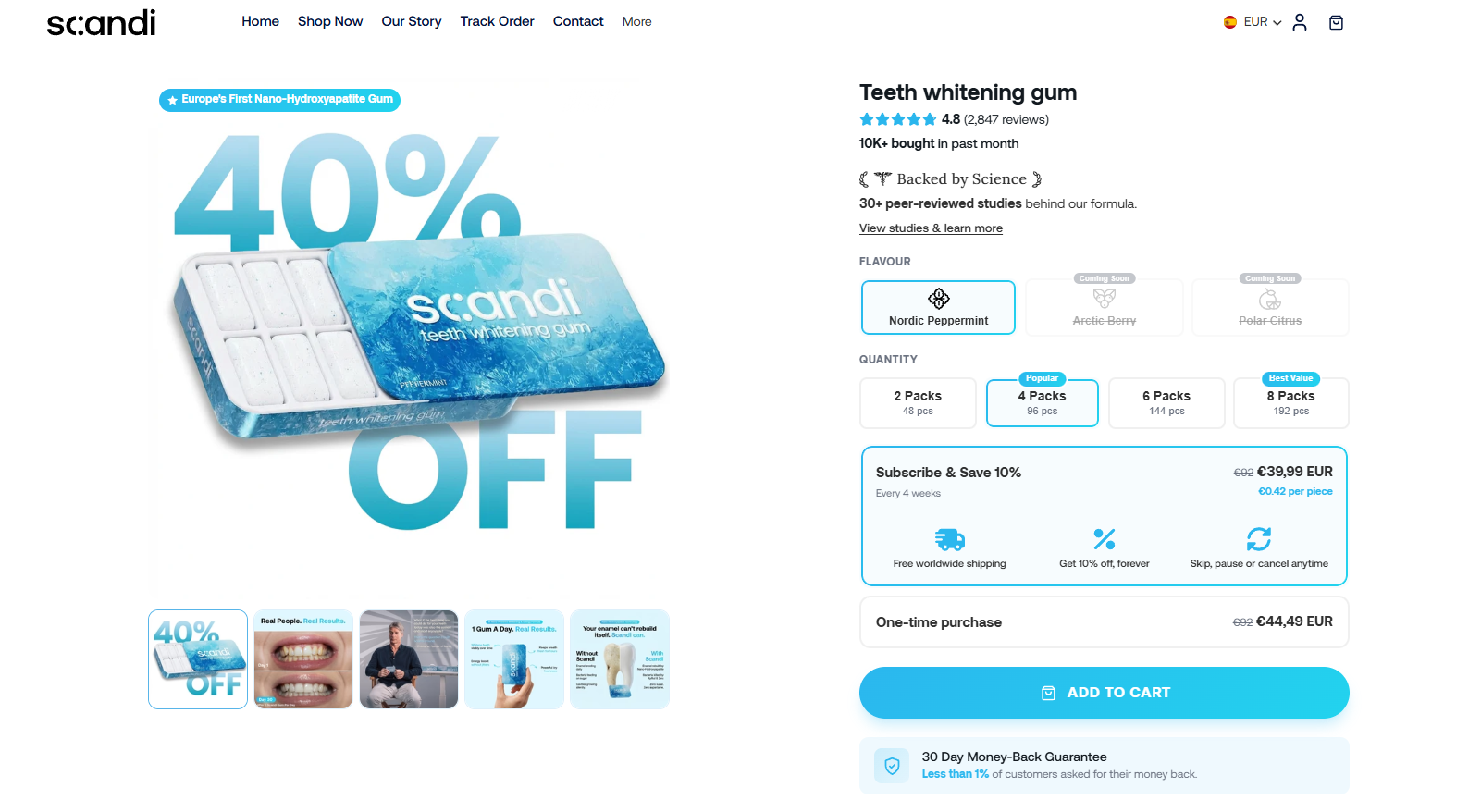
Scandigum has applied the same bio-optimization logic to oral care delivery. If you are ready to experience what a mineral-first approach feels like in practice, Scandi Gum hydroxyapatite toothpaste is formulated for exactly the kind of results this article has covered. Explore the product range and find the option that fits your specific oral health goals.
Frequently asked questions
Is hydroxyapatite toothpaste better than fluoride?
RCTs demonstrate HAp is non-inferior to fluoride for cavity prevention, meaning it is equally effective clinically. The main difference is regulatory status, not performance.
Can children use hydroxyapatite toothpaste safely?
Yes. HAp is biocompatible and safe even when ingested, making it a practical and low-risk choice for children who have not yet mastered spitting.
Does hydroxyapatite really whiten teeth?
HAp whitens by repairing enamel from the inside out. The biomimetic toothpaste ingredient fills surface defects and micro-pores, creating a smoother, brighter enamel surface without bleaching agents.
Is hydroxyapatite FDA approved?
No. HAp is not yet ADA/FDA approved as an anti-cavity agent in the US, though European regulators recognize it as safe and effective. Regulatory approval is expected to follow the science over time.