

TL;DR:
- Standard oral care is reactive rather than regenerative, often failing to prevent early enamel erosion caused by acid attacks. Remineralization supports natural enamel repair by depositing calcium and phosphate ions from saliva, especially when using specialized remineralizing gum alongside proper habits. Consistent routine, including fluoride toothpaste, xylitol gum, water intake, and dietary awareness, optimizes oral chemistry for gradual enamel strengthening and early lesion prevention.
You brush twice a day, use a whitening paste, and rinse after meals. Yet your dentist still mentions early enamel erosion. The frustrating truth is that standard oral care is reactive, not regenerative. Enamel loss is happening constantly, driven by every acidic meal, every coffee, and every dip in oral pH. The good news is that dental chemistry optimization using specialized remineralizing gum gives your mouth an active repair window several times a day. This guide walks you through the science, the setup, the step-by-step process, and how to verify it’s actually working.
Table of Contents
- Understanding the basics of dental remineralization
- What you need for the dental chemistry optimization process
- Step-by-step dental chemistry optimization with remineralizing gum
- Troubleshooting and overcoming common pitfalls
- How to measure success: Verification and expected outcomes
- What most guides miss about remineralization and dental chemistry
- Ready to optimize your oral health? Discover next steps
- Frequently asked questions
Key Takeaways
| Point | Details |
|---|---|
| Remineralization is ongoing | Supporting enamel repair daily can reduce sensitivity and help prevent cavities. |
| Chewing gum as a tool | Specialized gums containing xylitol and minerals can enhance oral chemistry when used properly. |
| Optimize with consistency | Chewing after meals, correct timing, and dosage drive the best scientific results. |
| Adjunct, not a cure | Remineralizing gum is a helpful adjunct but should be paired with fluoride toothpaste for true protection. |
| Track and verify progress | Observe reduced sensitivity and enamel improvement to measure success over time. |
Understanding the basics of dental remineralization
Remineralization is the natural process by which minerals lost from tooth enamel are replenished. It’s not enamel regrowth, which is impossible once enamel is fully formed. It is the redeposition of calcium and phosphate ions into microscopic voids created by acid attacks. Think of it as filling in cracks in a crystal lattice before they become holes.
Your saliva is the primary vehicle for this repair. It carries calcium, phosphate, and sometimes fluoride in a supersaturated solution, meaning it holds more minerals than it would normally dissolve at neutral pH. When oral pH drops below 5.5 after eating or drinking acidic foods, that equilibrium shifts and minerals leach out of enamel. Remineralization occurs near-neutral pH and is driven by calcium and phosphate in saliva, and chewing specialized gum can support this process by stimulating salivary flow.
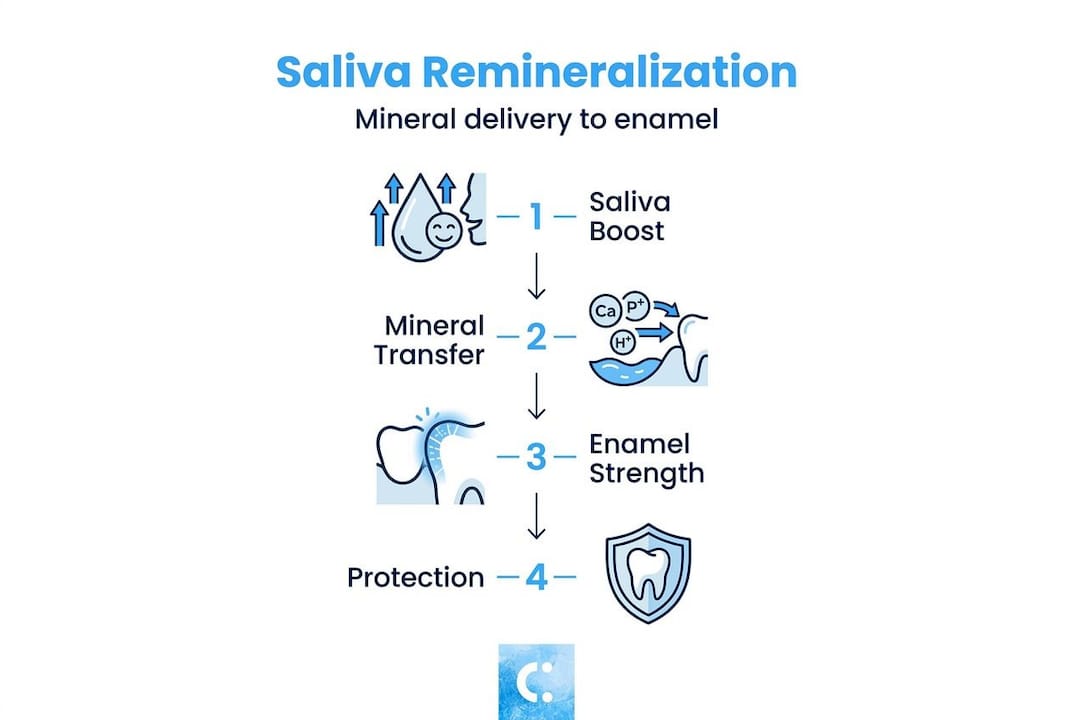
The problem is that most people experience multiple acid attacks per day and don’t give saliva enough time to recover pH before the next attack. This is where dental chemistry optimization, a systematic approach to engineering your oral environment, becomes meaningful.
Key remineralization drivers:
- Saliva volume and mineral concentration (your body’s baseline defense)
- Oral pH and how quickly it recovers after meals
- Presence of mineralizing agents like xylitol, calcium, phosphate, or fluoride
- Chewing activity, which mechanically stimulates salivary gland output
- Time between acid exposure events
Diet matters enormously here. Acidic beverages, fermentable carbohydrates, and frequent snacking all shorten the window between pH drops. Researchers use real enamel benchmarks like Vickers microhardness and surface roughness to quantify remineralization, and those same principles apply when you’re tracking your own progress at home. If you want a deeper look at which minerals in oral care create the strongest enamel outcomes, the interplay between calcium and phosphate is where the chemistry gets particularly interesting.

Pro Tip: Watch for early warning signs before enamel damage becomes visible. Tooth sensitivity to cold or sweet foods, a chalky appearance on enamel surfaces, or slight roughness when running your tongue across teeth are all signals that demineralization is outpacing repair. Catching these signs early is when remineralizing gum has the greatest impact.
What you need for the dental chemistry optimization process
Getting the practical setup right matters just as much as understanding the science. The barrier to entry here is genuinely low. You don’t need a clinical lab or a dentist’s toolkit to run an effective at-home optimization process.
Core essentials:
| Item | Purpose | Notes |
|---|---|---|
| Remineralizing chewing gum | Stimulates saliva, delivers xylitol and minerals | Look for xylitol, calcium phosphate, or fluoride content |
| Clean water | Rinses residual acids, supports hydration | Use between meals and after acidic drinks |
| Soft-bristled toothbrush | Gentle enamel maintenance | Avoid brushing immediately after acid exposure |
| Fluoride toothpaste | Foundation layer of caries protection | Use twice daily, non-negotiable |
| Meal timing awareness | Reduces acid exposure frequency | Space meals to allow pH recovery windows |
Optional but useful:
- A small mirror for spotting visible enamel changes
- A simple food diary to track acidic food frequency
- A notes app to log sensitivity changes over weeks
The reminder on gum health benefits is worth reviewing before you pick a product. Not all chewing gum contributes to remineralization. In fact, gum formulated with xylitol and minerals can measurably boost remineralization by raising saliva flow and buffering plaque acids after meals. Standard sugar-sweetened gum does the opposite.
What to avoid during your optimization process:
- Sugary gum or mints (feed acid-producing bacteria)
- Acidic drinks immediately after chewing (resets your pH recovery)
- Brushing within 30 minutes of eating (enamel is temporarily softened)
- Skipping water intake (saliva is 99% water)
- Inconsistent timing (sporadic use doesn’t build cumulative benefit)
The setup phase is simple, but discipline around these avoidance factors separates people who see results from those who don’t.
Step-by-step dental chemistry optimization with remineralizing gum
Here is where the process comes together. The goal is to engineer multiple daily windows of favorable oral chemistry, allowing remineralization to outpace demineralization over time.
Daily optimization routine:
- Brush with fluoride toothpaste in the morning and before bed. This is your baseline. Don’t treat it as optional.
- Wait 30 minutes after breakfast before chewing your first piece of remineralizing gum. This allows initial salivary recovery from any morning coffee or juice.
- Chew for a minimum of 10 minutes per session. This is the threshold at which salivary flow is meaningfully elevated and buffering capacity kicks in.
- Repeat after every major meal or snack, targeting 3 to 5 chewing sessions per day. Distributing your exposure across the day is more effective than one long session.
- Drink water between sessions to maintain salivary hydration and support mineral transport.
- Avoid acidic drinks for at least 20 minutes after each chewing session to preserve the alkaline pH window you just created.
- Track your routine weekly. Note sensitivity levels, comfort while eating, and any visible surface changes.
The optimization levers for chewing-gum strategies are straightforward: maximize salivary recovery, shorten low-pH intervals after meals, and use evidence-based dosages like 5 to 8 grams of xylitol daily. Splitting that dose across 3 to 5 sessions hits the sweet spot for both antibacterial effect and salivary stimulation.
Comparison: Remineralization approaches
| Approach | pH buffering | Mineral delivery | Bacterial reduction | Daily effort |
|---|---|---|---|---|
| Fluoride toothpaste only | Low | Moderate | Low | Minimal |
| Remineralizing gum only | High | Moderate | High | Moderate |
| Combined (gum + fluoride) | Very high | High | High | Moderate |
The combined approach wins, and that’s the direction every optimization protocol should lean. Benchmarking your results against recognized remineralization chemistry tests from the research world confirms what the comparison table suggests: layering multiple mechanisms produces compounding benefits. For a closer look at how gum’s effects on bacteria factor into this equation, the xylitol mechanism is particularly worth understanding.
Pro Tip: Log your routine in a simple notes app. Record what you ate, when you chewed, and how your teeth felt each day. After four weeks, patterns become visible. You’ll know which meals trigger the most sensitivity and exactly which chewing windows are giving you the most relief.
Troubleshooting and overcoming common pitfalls
Even a well-designed protocol hits friction. Most people who don’t see results aren’t using the wrong product. They’re making avoidable process mistakes.
Common mistakes that undermine results:
- Using the wrong gum. If it contains sucrose or glucose, you’re feeding the bacteria that produce the acids attacking your enamel.
- Not chewing long enough. A two-minute chew does almost nothing for salivary stimulation. Ten minutes is the minimum.
- Skipping fluoride toothpaste. Fluoride toothpaste remains a foundation for caries control, with adjuncts like gum helping mainly in specific contexts. Gum does not replace brushing.
- Expecting too much too fast. Remineralization is slow and cumulative. Weekly check-ins matter more than daily obsessing.
- Ignoring diet. Drinking acidic beverages throughout the day completely erases whatever buffering benefit your gum creates.
There’s also an important boundary to acknowledge. Remineralizing gum and mineral adjuncts offer measurable but often modest improvements, especially for early-stage lesions, not deep cavities. If you have active decay, a broken filling, or gum disease, gum is not a treatment. It is a preventive and supportive tool, not a substitute for dental care.
“The primary value of remineralizing adjuncts is creating a less hostile oral environment. They protect what you have. They are most effective at the earliest stages of enamel challenge, not after damage becomes structural.”
If you find that sensitivity is worsening rather than improving after six weeks of consistent use, that is your signal to book a dental appointment rather than adjust your gum schedule. For a broader view of the advances in oral gum science and where functional products sit in the clinical landscape, that context helps set realistic expectations.
How to measure success: Verification and expected outcomes
Knowing your protocol is working keeps motivation high. The challenge is that enamel chemistry changes are invisible to the naked eye for months. What you can track are proxy signals.
Week-by-week verification steps:
- Week 1 to 2: Baseline your current sensitivity. Rate it on a simple 1 to 10 scale when drinking cold water or biting into something sweet. Write it down.
- Week 3 to 4: Check for any shift in sensitivity score. A one or two point reduction is a genuine signal of progress.
- Week 5 to 8: Note any change in surface texture. Smoothness when running your tongue across enamel is an early sign of mineral redeposition.
- Week 9 to 12: Look for visual consistency in enamel color and the absence of new white spot lesions, which are early cavities.
- Month 3 onward: Schedule a professional cleaning and ask your dentist specifically about enamel surface quality and any change in lesion status from previous visits.
Home vs. lab verification methods:
| Indicator | Home observation | Lab equivalent |
|---|---|---|
| Sensitivity | Self-rated cold/sweet response | Quantitative sensory testing |
| Surface texture | Tongue-feel assessment | Profilometry (surface roughness) |
| White spots | Visual check in bright light | Fluorescence imaging |
| Overall oral comfort | Daily rating during chewing | Salivary pH measurement |
Lab and clinical verification use enamel microhardness and imaging. For home users, the proxy signs above give a reasonable and actionable read on whether your protocol is generating real benefit. The key insight is that bacterial reduction with gum contributes to better overall oral pH, which is why even indirect measures like comfort and sensitivity track closely with what researchers see in the lab.
True progress is cumulative. It requires layering good brushing habits, strategic gum use, dietary awareness, and hydration. None of those levers alone moves the needle fast. Together, they shift the balance.
What most guides miss about remineralization and dental chemistry
Most content in this space either oversells the promise or undersells the process. You’ll see claims about “enamel regrowth” next to product listings, which is biologically impossible. Enamel doesn’t regenerate. It remineralizes. That distinction matters because it reframes the goal entirely.
Responsible dental chemistry optimization is not about reversing years of enamel loss with a piece of gum. It’s about working with your body’s existing repair mechanism, specifically the salivary system, and giving it better tools and more favorable timing. The shift is from hoping your enamel stays intact to actively engineering conditions where it can recover between acid exposures.
The evidence is clear that remineralization adjuncts yield context-dependent, typically modest effects. The main benefit is supporting a healthy oral environment rather than producing any kind of miraculous enamel repair. Small and steady is the right mental model. A 5% improvement in enamel microhardness measured over 12 months sounds underwhelming until you consider that it represents the difference between a tooth that holds and one that continues to degrade. That’s a meaningful clinical outcome dressed in modest language.
The smartest approach is to filter product claims through the question: “Does this work with my saliva and oral chemistry, or is it asking me to believe in something outside known biology?” Gum that stimulates salivary flow, delivers xylitol at evidence-based doses, and includes a calcium-phosphate system passes that test. Everything else is marketing.
For more on the mineral science behind strong enamel and how the hydroxyapatite lattice actually responds to these inputs, it’s worth reading beyond the product page level.
Pro Tip: Combine approaches deliberately. Fluoride toothpaste at night, remineralizing gum 3 to 5 times during the day, a balanced low-acid diet, and adequate water intake. No single lever produces dramatic results. The combination creates a consistently favorable oral environment, and consistency is where the real chemistry happens.
Ready to optimize your oral health? Discover next steps
If you’ve read this far, you understand the science, the process, and the realistic expectations. The next move is putting a product in your routine that actually aligns with these principles.
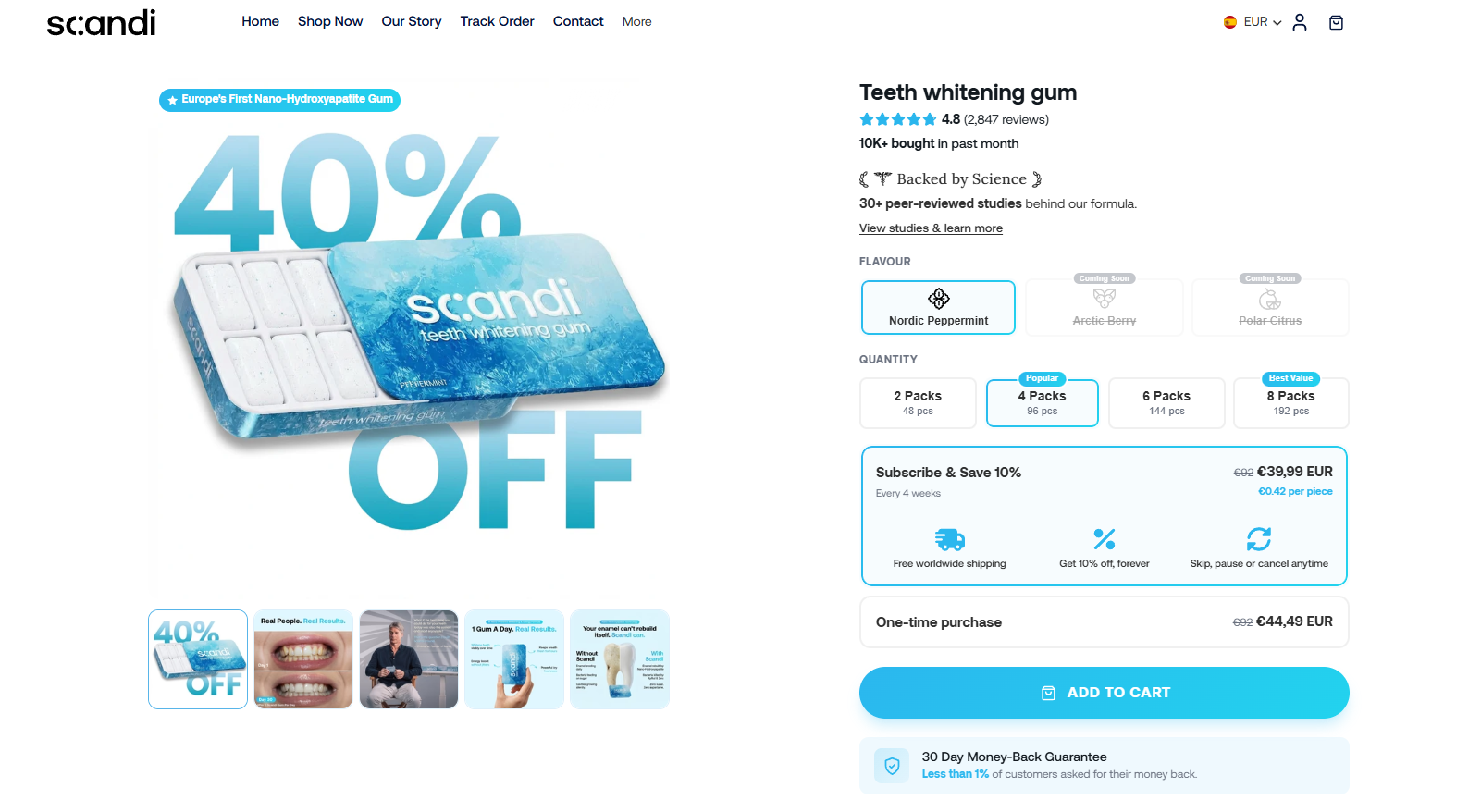
Scandigum is built around the exact dental chemistry logic this guide covers, using xylitol and mineral delivery to shift your oral environment toward active repair rather than passive decay. It’s not a novelty product. It’s a delivery system designed around buccal absorption, salivary stimulation, and evidence-based ingredient dosing. If you’re ready to move from understanding remineralization to actually practicing it every day, starting with a product that takes the science seriously is the right call. Your enamel doesn’t need a miracle. It needs better daily conditions and the right chemistry behind every chew.
Frequently asked questions
How long does it take to see results from remineralizing gum?
You may notice subtle improvements like reduced sensitivity within a few weeks, but measurable enamel change takes several months with consistent use, as remineralization supported over 12 months with fluoride and adjuncts shows meaningful cumulative progress.
Can remineralizing gum reverse cavities?
Remineralizing gum helps with early, non-cavitated lesions but is not effective for deep cavities, which require dental treatment. Adjunct remineralizers show modest but useful benefits specifically at the earliest stages of enamel challenge.
What is the best ingredient in chewing gum for oral remineralization?
Xylitol is the most evidence-backed ingredient for boosting salivary flow and supporting remineralization. Xylitol is the main polyol used in remineralizing chewing gum and has the strongest research support.
Do I need to use fluoride toothpaste if I use remineralizing gum?
Yes, fluoride toothpaste is necessary. Gum works as an adjunct, not a replacement, because fluoride toothpaste remains the foundation of remineralization and caries control.
How much xylitol is recommended daily for maximum effect?
A total of 5 to 8 grams of xylitol per day, divided into multiple doses, is suggested for optimal impact. Optimal daily xylitol intake across several uses provides both antibacterial and salivary stimulation benefits.