

TL;DR:
- Oral pH fluctuates constantly, influenced by food, drinks, and habits, affecting enamel health.
- The key is managing how often and how long pH drops below critical levels rather than individual readings.
- Continuous buffering and remineralization support, like chewing sugar-free gum, help protect teeth daily.
You buy a saliva test strip, dip it in, and suddenly feel like you have the full picture of your oral health. That single reading, though, captures only a frozen moment in a system that shifts dozens of times a day. Oral pH is not a fixed number on a strip. It is a living, moving target shaped by every sip of coffee, every bite of food, and every minute between your last meal and your next chew. Understanding what oral pH actually is, how to measure it meaningfully, and what moves it in your favor gives you real leverage over your dental health in a way that any one-time test simply cannot.
Table of Contents
- What does oral pH actually mean?
- Why oral pH matters for your teeth
- Not all oral pH tests are equal: How measurement works
- The real-world influences: Why context and habits matter
- The truth most people miss about oral pH
- Optimize your oral pH with smart support
- Frequently asked questions
Key Takeaways
| Point | Details |
|---|---|
| Oral pH is dynamic | Your oral pH changes throughout the day and is affected by diet and habits. |
| Critical pH signals risk | Enamel starts to lose minerals when pH drops below about 5.5, increasing cavity risk. |
| Accurate measurement matters | Testing methods and sample sites affect results; quick tests may lack precision. |
| Functional products help buffer | Functional chewing gums can increase saliva flow and help keep oral pH in a healthy zone. |
What does oral pH actually mean?
pH is a measurement of hydrogen ion concentration in a solution, expressed on a scale from 0 to 14. Values below 7 are acidic, 7 is neutral, and anything above 7 is alkaline. Your mouth is not a single, uniform environment, so the term “oral pH” is broader than most people realize.
As salivary pH research confirms, “oral pH” generally refers to the acidity and alkalinity level of the oral environment, most commonly assessed as the pH of saliva and/or plaque fluid. But plaque biofilm, the mucosal lining of your cheeks, and the fluid directly at the enamel surface can all read differently at the same moment. A saliva sample in a cup does not tell you what is happening right up against your tooth enamel where decay actually begins.
“Understanding oral pH is not about chasing a number. It is about managing an environment that changes constantly and has direct consequences for the integrity of your enamel.”
Here is what oral pH actually encompasses in practical terms:
- Salivary pH: The most commonly tested value, reflecting the buffering capacity and composition of your whole saliva
- Plaque pH: The acidity within bacterial biofilm on your teeth, which can drop faster and lower than saliva pH after sugar exposure
- Mucosal surface pH: The pH at the lining of your cheeks and gums, relevant for tissue health and drug absorption
- Enamel surface pH: The critical microenvironment where minerals are either deposited back into your teeth or stripped away
Each of these values tells a different part of the story. Salivary pH is the easiest to access at home, but it is plaque pH that most directly controls whether your enamel gains or loses minerals on any given day.
Why oral pH matters for your teeth
A slightly neutral to mildly alkaline mouth is the baseline your enamel needs to stay intact. Resting salivary pH in healthy adults typically falls between 6.8 and 7.4, and this value tends to rise when saliva flow is stimulated by chewing or eating. That upward shift during stimulation matters more than most people appreciate.
When something acidic enters your mouth, whether it is a sports drink, a piece of fruit, or fermented food, pH can drop sharply within seconds. The real danger zone for enamel is below critical pH 5.5, the commonly accepted threshold at which the hydroxyapatite crystals that make up your enamel begin to lose calcium and phosphate ions. Demineralization is not dramatic or painful in the short term. It is cumulative, microscopic, and entirely reversible in early stages if the oral environment returns to neutral quickly enough.
The key word there is quickly. The longer your mouth spends near or below that 5.5 threshold, the greater the cumulative mineral loss. Think of it less as a single attack and more like erosion from repeated tides.
| Oral pH range | What it means for enamel |
|---|---|
| 7.0 to 7.4 | Optimal remineralization zone |
| 6.5 to 6.9 | Slightly acidic but generally safe |
| 5.5 to 6.4 | Approaching risk; buffering needed |
| Below 5.5 | Active demineralization zone |
Statistic to note: Enamel demineralization begins within minutes of a pH drop below 5.5, but saliva alone can take 20 to 40 minutes to fully buffer the mouth back to a safe range without assistance. That recovery window is where habits and functional products make a measurable difference.
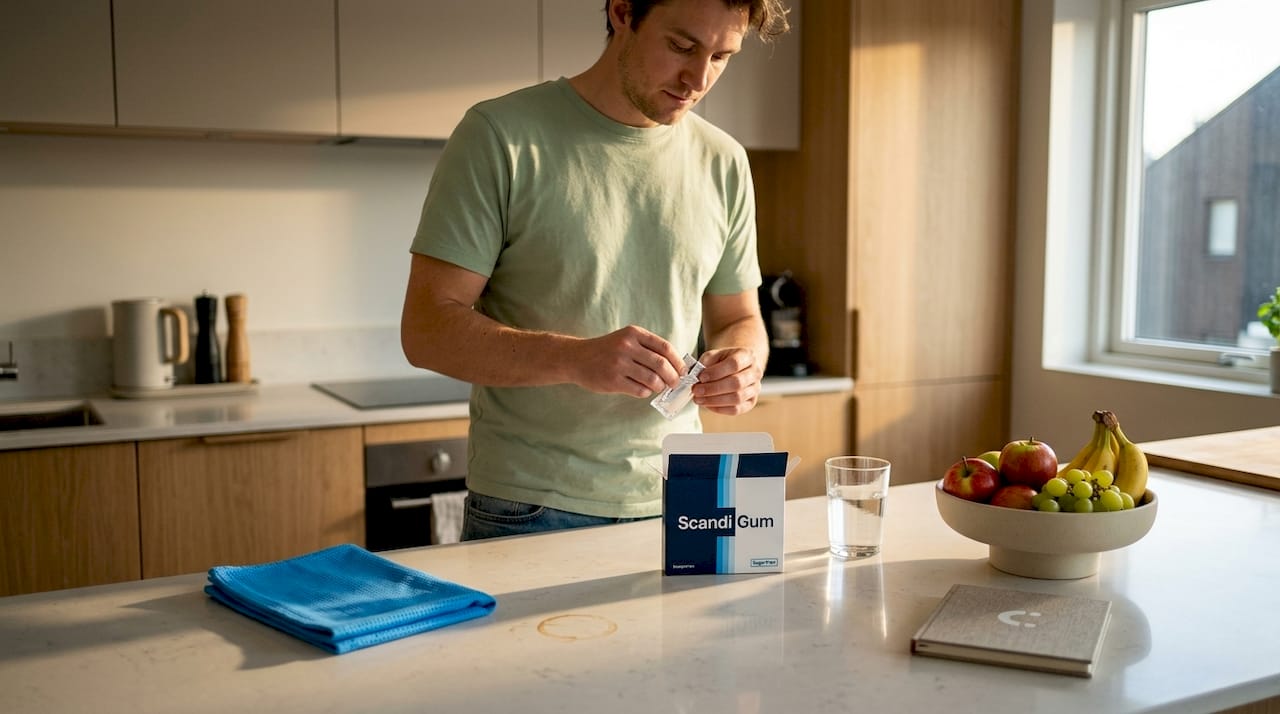
Pro Tip: Chewing a piece of sugar-free functional gum immediately after an acidic meal or drink is not just habit. It is a direct intervention. Chewing increases salivary flow rate, which raises buffering capacity and speeds the recovery of a safe oral pH, shortening the time your enamel spends in the demineralization zone. You can learn more about the connection between oral pH and dental health and why timing matters so much.
Understanding the relationship between saliva, buffering, and enamel means you stop thinking of your mouth as a static environment that just needs cleaning twice a day. It is a dynamic biochemical system you can actively support throughout the day.
Not all oral pH tests are equal: How measurement works
Knowing your oral pH is one thing. Knowing that your measurement is actually telling you something useful is another problem entirely. The method you choose, the site you sample, and even the time of day all change what the number means.
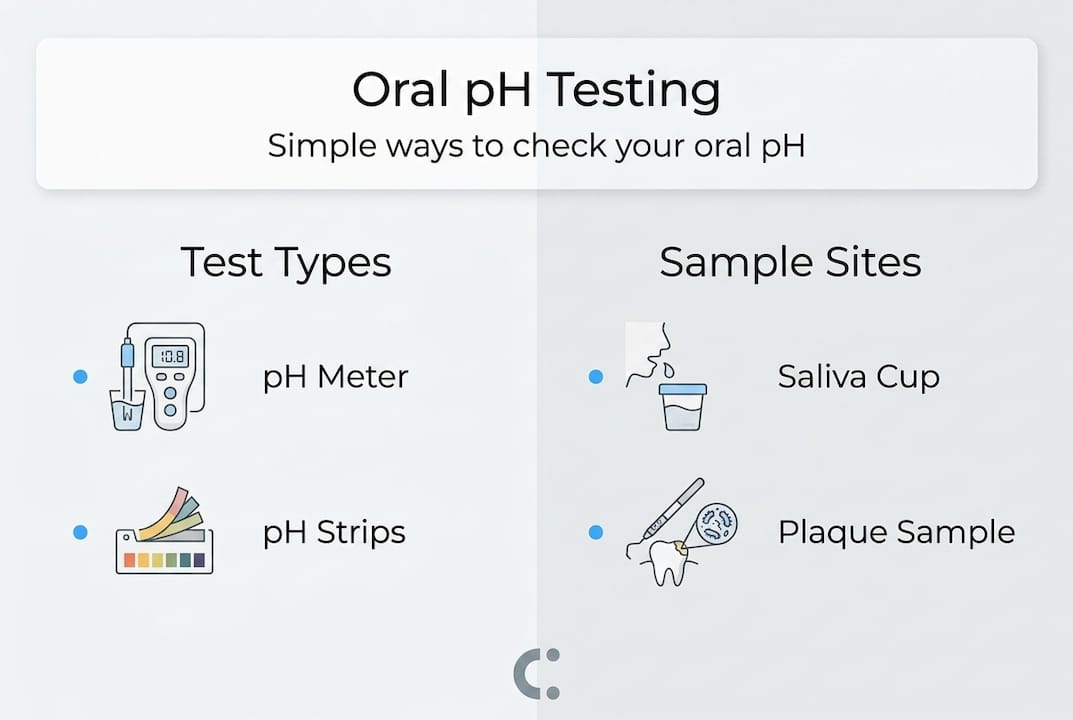
Three main approaches exist for measuring oral pH: digital pH meters with electrodes, pH indicator strips, and newer wireless intraoral telemetry devices. Each one comes with trade-offs in accuracy, cost, and practical usability.
Here is how the options stack up against each other:
| Method | Accuracy | Cost | Convenience | Best for |
|---|---|---|---|---|
| Digital pH meter | High | Moderate | Requires calibration | Research, clinical use |
| pH indicator strips | Moderate | Low | Very easy | Home screening |
| Wireless intraoral device | Very high | High | Continuous monitoring | Clinical research |
Step-by-step: What measuring oral pH at home actually looks like
- Choose your timing. Saliva composition changes significantly depending on whether you have just eaten, been asleep, or exercised. For consistency, measure at least one hour after eating or drinking anything other than water.
- Stimulate or don’t stimulate, but be consistent. Unstimulated saliva (collected passively) and stimulated saliva (chewing or using a citric acid tablet) produce different pH readings. Pick one approach and stick to it.
- Collect your sample. Let saliva pool on your tongue and transfer it to a spoon or collect it directly in a small container, depending on your device instructions.
- Apply your measurement tool. For strips, dip for the time specified and match the color under natural light. For a digital meter, ensure calibration with a known buffer solution before use.
- Interpret in context. A single reading is a snapshot, not a diagnosis. Record readings at the same time each day over several days to see a pattern.
As mucosal pH assessment research makes clear, pH meters require precise calibration and controlled sampling timing, while strips trade precision for convenience and can be influenced by contact time and color interpretation. This means a home strip reading of 6.5 and a clinical meter reading of 6.5 are not necessarily the same value. The device matters and so does the protocol.
The sampling site matters just as much as the device. Saliva collected in a cup reflects average whole-mouth buffering, while a measurement taken at the gumline or within a plaque biofilm gives a much more localized and often more alarming picture. This is why clinicians who study cavities focus heavily on plaque pH rather than salivary pH alone. Understanding the science behind mouth chemistry and teeth helps clarify why the location of measurement changes everything about what the number means.
The real-world influences: Why context and habits matter
You now understand the science and the measurement. The most valuable piece is what you actually do with that knowledge every day. Because oral pH is dynamic and context-dependent, looking at a single reading without knowing the circumstances produces a number without meaning. A reading of 6.2 right after a morning coffee is very different from a reading of 6.2 two hours after eating breakfast.
The following are the most significant daily factors that shift your oral pH:
- What you drink: Carbonated drinks, fruit juices, coffee, and alcohol all lower oral pH significantly, some within seconds
- Meal frequency and composition: Grazing and snacking throughout the day means your mouth rarely gets a sustained recovery period above the critical threshold
- Hydration level: Dehydration reduces saliva flow and buffering capacity, leaving your mouth less equipped to neutralize acid
- Chewing frequency: Mechanical stimulation through chewing raises salivary flow, increases bicarbonate concentration in saliva, and accelerates pH recovery
- Breathing patterns: Mouth breathing reduces saliva and creates a drier, more acidic environment at the tooth surface
- Sleep: Saliva production drops significantly during sleep, which is why the hours after your last meal and before you wake are a particularly vulnerable period for enamel
Pro Tip: Think of your oral pH not as a number to hit but as a recovery curve to shorten. Every acidic event creates a curve downward. Your goal is to get back above the 5.5 threshold faster, more often. Chewing a functional chewing product after meals or acidic drinks is one of the most direct, evidence-backed ways to accelerate that recovery curve.
The timing of chewing is worth emphasizing because it is counterintuitive for many people. Most people associate gum with fresh breath or a casual habit. But the physical act of chewing triggers a cascade that is directly relevant to oral chemistry. Increased chewing stimulates the parotid, submandibular, and sublingual glands to produce more saliva. That saliva carries bicarbonate ions, the primary buffer in your mouth. More bicarbonate means faster neutralization of acid and a shorter window of enamel vulnerability.
Functional products take this one step further. When the chewing stimulus is combined with remineralizing agents like calcium and phosphate, the mouth receives both the mechanical benefit of raised salivary flow and the chemical benefit of mineral ions that can redeposit into softened enamel. This is the principle behind Scandigum’s approach: not treating the mouth as a passive cavity to be cleaned, but as an active biochemical environment that responds to targeted intervention.
When enamel drops below critical pH 5.5, the goal of a functional product is not to eliminate acid entirely. It is to shorten and soften the time your enamel spends near or below that threshold. That shift from “cleaning up after damage” to “reducing the duration of damage” is the practical reframe that changes how you approach your daily routine.
The truth most people miss about oral pH
Here is the uncomfortable truth: most mass-market saliva pH tests are sold as if one reading tells you something definitive about your oral health. They do not. A strip dipped in your saliva on a Tuesday morning before breakfast is capturing a moment that says almost nothing about what your enamel experiences over the course of a full day.
The obsession with finding your “optimal pH number” misses the point entirely. What actually determines your cavity risk and enamel integrity is not where your saliva pH sits at 8 AM. It is how many times each day your oral environment crashes below 5.5, how long it stays there, and how effectively your mouth buffers itself back to safety after each acid challenge.
We have seen this pattern repeatedly in how people approach oral health. Someone tests well in the morning, feels reassured, then spends the rest of the day grazing on snacks and sipping acidic drinks without realizing their enamel is cycling through demineralization events every 40 minutes. The test gave them false confidence.
The real story goes beyond quick saliva tests. It lives in the dynamic, moment-to-moment chemistry of your oral environment. And the tools that change that dynamic are not tests. They are habits and functional products that actively manage the buffering cycle throughout your day.
This does not mean ignoring measurements entirely. It means using them correctly: as a rough tracking tool over time rather than a verdict on your oral health. Pair consistent measurement habits with targeted interventions, and you stop reacting to your oral pH and start managing it.
Optimize your oral pH with smart support
The science points clearly in one direction. Oral pH optimization is not about finding a perfect number once. It is about building a system that keeps your oral environment buffered, mineralized, and resilient across the full day.
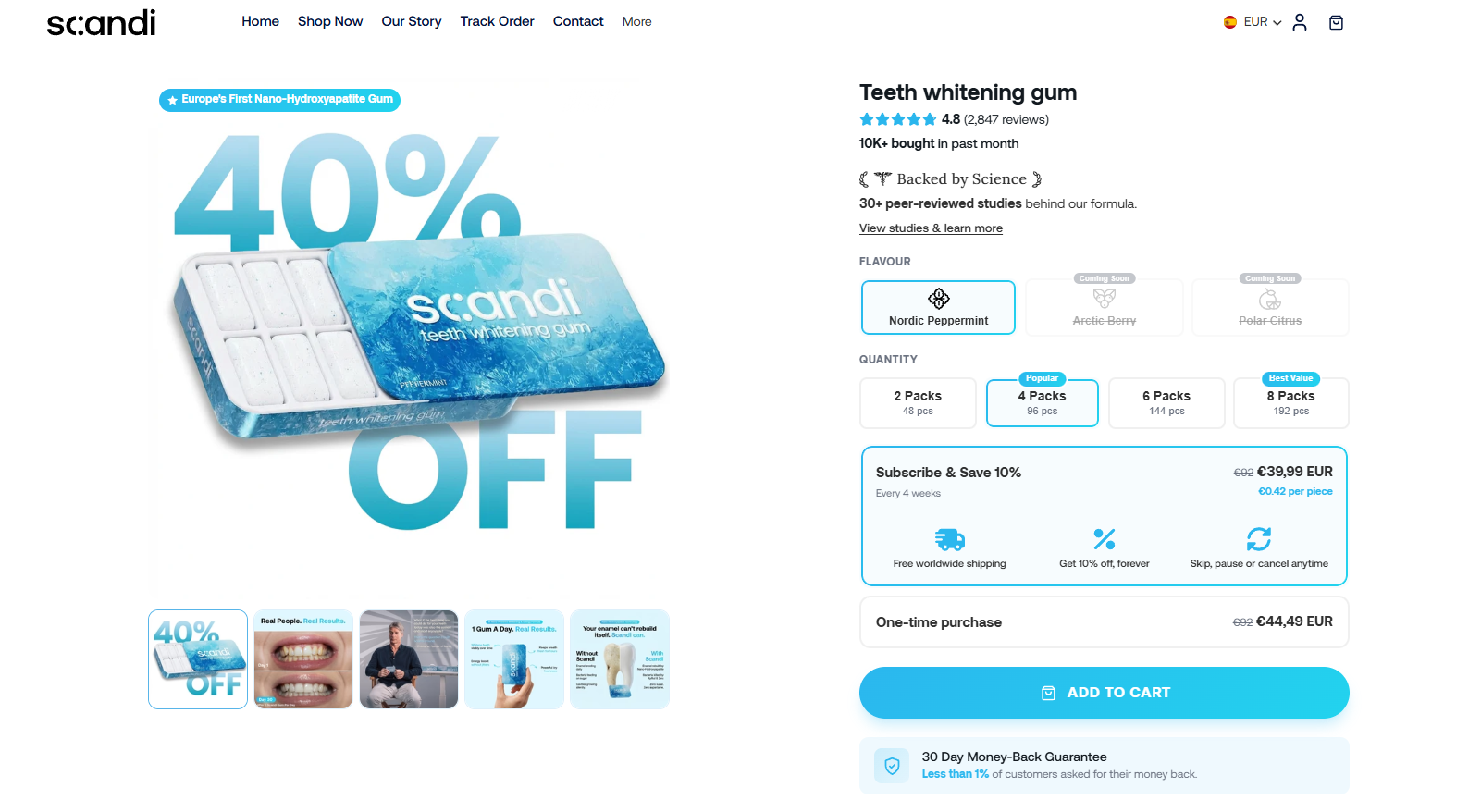
Scandigum’s functional chewing products are designed around exactly this principle. By combining the mechanical stimulus of chewing to raise salivary flow with active mineralizing compounds, each piece works as a delivery system for oral chemistry support when your enamel needs it most: after meals, after acidic drinks, and during long gaps between eating. The buccal mucosa absorbs active compounds directly into the bloodstream, which means no waiting for a pill to pass through digestion. You get faster support, right when your mouth needs it. Explore the full range of Scandigum products and see how functional chewing can become your most practical daily oral health habit.
Frequently asked questions
What is the ideal oral pH for healthy teeth?
The ideal unstimulated salivary pH for healthy teeth is typically between 6.8 and 7.4, as this range supports active remineralization of enamel rather than mineral loss.
How often should I check my oral pH at home?
Regular testing is not necessary for most people. Prioritizing consistent dietary habits, hydration, and evidence-based oral care routines does more for your enamel than frequent pH strip readings.
Can chewing gum help maintain healthy oral pH?
Yes. Functional chewing gum stimulates saliva flow, and salivary pH rises with stimulation, which buffers acids and helps stabilize the oral environment after eating or drinking.
What’s the difference between pH meters and pH strips?
pH meters require calibration and controlled sampling timing for accurate results, while strips are quicker and more convenient but inherently less precise and susceptible to color interpretation errors.
At what pH does enamel start to demineralize?
Enamel typically starts to demineralize when oral pH drops below the critical threshold of 5.5, at which point the hydroxyapatite structure begins leaching calcium and phosphate ions into the surrounding fluid.