

TL;DR:
- Enamel is the hardest yet most vulnerable layer of teeth, with no natural repair once lost. Daily acid exposure and habits like dry mouth, grinding, or overbrushing threaten its integrity, making early protection essential. Supporting enamel through fluoride or nano-hydroxyapatite, xylitol, and smart habits can strengthen teeth and prevent irreversible damage over time.
Most adults brush twice a day, use a decent toothpaste, and assume their teeth are well protected. They’re not wrong to try. But here’s the reality almost no one talks about: the outer shell of your teeth, the enamel, is under constant chemical attack from the moment you wake up and eat breakfast. And unlike your skin, your liver, or even your bones, enamel has zero ability to repair itself once it’s genuinely gone. This isn’t a scare tactic. It’s biology. Understanding how enamel works, what destroys it, and how to actively support its integrity gives you a real, evidence-based advantage in keeping your teeth healthy well into your 50s, 60s, and beyond.
Table of Contents
- What is enamel and why is it essential?
- The surprising vulnerability of enamel and why it can’t heal itself
- Enamel erosion: How acids and bacteria tip the balance
- Modern solutions: Remineralization agents and how to support your enamel
- When enamel protection isn’t enough: Special risks and advanced cases
- Our take: The new era of enamel protection requires smarter daily actions
- Support your enamel daily with smarter solutions
- Frequently asked questions
Key Takeaways
| Point | Details |
|---|---|
| Enamel is irreplaceable | Once lost, enamel does not grow back—making protection your best strategy. |
| Daily habits matter | Food choices, hygiene, and product selection all impact enamel’s survival. |
| Modern remineralization works | Fluoride, nano-hydroxyapatite, and xylitol gum offer proven ways to strengthen enamel. |
| Prevention beats cure | Catching damage early allows remineralization—severe cases require a dentist. |
What is enamel and why is it essential?
Enamel is the outermost layer of your teeth, and it’s remarkable. Tooth enamel is the hardest substance in the human body, composed primarily of 95 to 98% hydroxyapatite crystals (a form of calcium phosphate) that protect the dentin and pulp from wear, acids, bacteria, and mechanical forces. That’s more mineralized than bone. Think of it as a ceramic shield wrapped around every tooth.
Its functions go beyond just hardness. Enamel acts as a mechanical barrier against the grinding forces of chewing (which can generate up to 200 pounds of force per square inch in the back molars), a chemical barrier against acids that want to dissolve it, and a defense against bacterial activity that produces those acids in the first place. Without enamel, the softer dentin underneath becomes exposed, leading to sensitivity, discoloration, and accelerated decay.
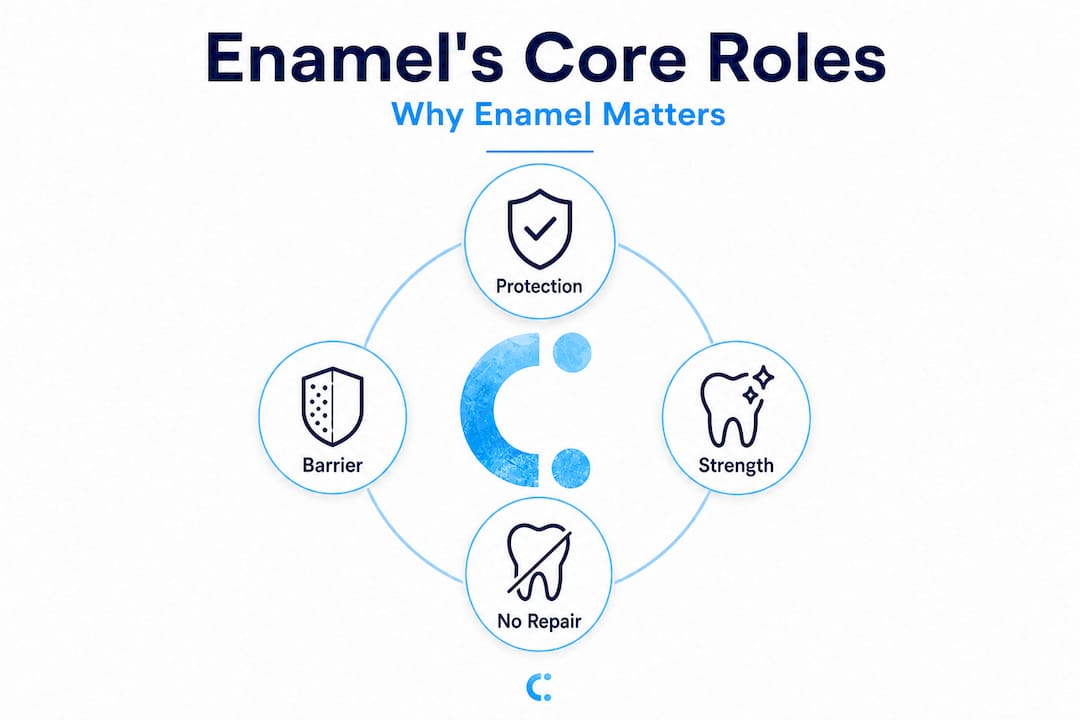
What makes enamel unique in the body, and also its biggest vulnerability, is that it contains almost no living cells. It is built during tooth development by cells called ameloblasts. Once the tooth erupts, those cells are gone. That minerals for strong enamel relationship becomes entirely dependent on external sources. There is no internal repair crew.
| Property | Enamel | Bone |
|---|---|---|
| Mineral content | 95 to 98% | 60 to 70% |
| Living cells present | No | Yes |
| Self-repair capacity | None (without intervention) | Yes |
| Primary mineral | Hydroxyapatite | Hydroxyapatite |
Enamel is literally standing between your habits and dental pain. Every acidic drink, every grinding episode, every poorly chosen snack is a direct challenge to that mineralized shield.

The surprising vulnerability of enamel and why it can’t heal itself
Understanding enamel’s strong but brittle nature makes one thing very clear: once it’s gone, the game changes entirely. Enamel cannot regenerate once lost due to the absence of living cells (ameloblasts), which makes early protection and remineralization of initial demineralization absolutely critical.
The daily threats to enamel are more common than most people realize:
- Acidic foods and beverages: Citrus fruits, vinegar-based foods, carbonated drinks (even sparkling water), and wine all drop oral pH below the danger threshold.
- Dry mouth: Reduced saliva flow, whether from medication, dehydration, or certain medical conditions, removes your mouth’s natural buffering system.
- Bruxism (tooth grinding): The physical abrasion of grinding can wear through enamel even without any chemical involvement.
- Overbrushing: Brushing too hard, or immediately after eating acidic food while enamel is softened, accelerates surface erosion.
- Genetics: Some individuals carry genetic variations that result in thinner enamel or reduced mineral density from birth.
- Medical conditions: Acid reflux (GERD), eating disorders, and certain autoimmune diseases expose teeth to unusually high levels of acid over time.
“Once enamel erosion begins and progresses beyond the early demineralization stage, no amount of brushing, fluoride, or remineralization therapy can restore what was lost. The window for intervention is early.” Dr. Mark Wolff, Dean of the University of Pennsylvania School of Dental Medicine, on enamel’s irreversibility.
Pro Tip: Don’t wait for sensitivity to tell you your enamel is under stress. Start incorporating remineralization habits now, before visible or tactile damage appears. Demineralization often runs ahead of symptoms by months.
Some people are genuinely at higher risk due to their genetic makeup, producing enamel with lower mineral density or a thinner overall layer. Others face elevated risk from lifestyle factors like frequent acidic beverage consumption, night grinding, or taking medications that reduce saliva output. Knowing your personal risk profile is the first step toward doing something useful about it.
Enamel erosion: How acids and bacteria tip the balance
Since enamel can’t heal itself, the ongoing battle between breakdown (demineralization) and repair (remineralization) happening in your mouth every day becomes the central story of your dental health. When oral pH drops below 5.5, calcium and phosphate ions dissolve out of enamel. When pH returns to neutral and saliva is saturated with those same ions, remineralization occurs.
Here’s the step-by-step chemistry of what happens when you eat a sugary or acidic food:
- Bacteria activate: Oral bacteria metabolize sugars and produce organic acids as byproducts, primarily lactic acid.
- pH crashes: Acid production drives oral pH from a neutral 7.0 down to 5.5 or lower within minutes.
- Hydroxyapatite dissolves: At pH below 5.5, calcium and phosphate ions begin leaching out of the enamel crystal lattice.
- Saliva responds: Your salivary glands release buffering agents and mineral-saturated fluid to neutralize the acid.
- Remineralization begins: As pH recovers, saliva deposits calcium and phosphate ions back into the enamel surface.
- Window closes: The remineralization window stays open as long as pH remains neutral and saliva flow is adequate.
The problem is frequency. If you snack constantly, sip a coffee slowly over two hours, or drink sparkling water throughout the day, your oral pH never gets the chance to recover. You’re in a near-constant state of demineralization.
| Factor | Demineralization | Remineralization |
|---|---|---|
| Oral pH | Below 5.5 | Above 5.5 |
| Key drivers | Sugar, acid, bacteria | Saliva, fluoride, n-HA, xylitol |
| Speed | Minutes | Hours |
| Reversibility | Early stage: yes | Advanced: no |
| Your control | Diet and frequency | Products and habits |
Pro Tip: Chewing sugar-free gum for enamel for 20 minutes after meals stimulates saliva flow rapidly, neutralizes residual acids, and delivers mineral ions directly to the tooth surface. It’s one of the fastest, simplest ways to tip the balance back toward remineralization.
Modern solutions: Remineralization agents and how to support your enamel
Given how demineralization and remineralization work, the question becomes practical: what actually moves the needle? There are three main evidence-based agents you should know.
Fluoride remains the gold standard. When fluoride is present during remineralization, it incorporates into the enamel crystal structure to form fluorapatite, which is more acid-resistant than the original hydroxyapatite and is clinically validated by the ADA. Fluoride toothpaste twice daily is non-negotiable for most adults. Full stop.
Nano-hydroxyapatite (n-HA) is the leading fluoride-free alternative, and the research behind it is compelling. Nano-hydroxyapatite in gums and toothpastes at approximately 20 nanometers fills enamel microporosities directly and performs comparably to fluoride in remineralizing early lesions according to multiple randomized controlled trials. For people who prefer to avoid fluoride or need additional options, n-HA is no longer a fringe choice. It’s a scientifically substantiated one.
Xylitol works differently from both. It doesn’t directly deposit minerals. Instead, it creates the right conditions for remineralization to happen. Sugar-free xylitol gum chewed for 20 minutes after meals increases saliva flow, buffers acids, and reduces caries risk by 23 to 40%. Bacteria can’t ferment xylitol the way they ferment sucrose, so acid production drops, pH stabilizes, and the remineralization window stays open longer. The ADA recommends it specifically for enamel protection.
Smart daily habits and ingredients to prioritize:
- Use fluoride or n-HA toothpaste twice daily (choose based on your preference and dentist’s advice)
- Chew xylitol gum for 20 minutes after meals, especially high-sugar or acidic ones
- Stay hydrated to maintain adequate saliva flow throughout the day
- Wait 30 minutes before brushing after consuming acidic food or drink
- Look for products combining n-HA and xylitol for a synergistic effect on pH management and mineral delivery
- Limit snacking frequency, since acid exposure duration matters as much as total sugar intake
The oral minerals for remineralization picture is becoming clearer in clinical research: combining agents is more effective than relying on a single intervention. Fluoride handles the chemistry of acid resistance. N-HA physically fills early lesions. Xylitol maintains the pH environment that makes both work better. Used together, they represent a genuinely modern approach to enamel protection.
When enamel protection isn’t enough: Special risks and advanced cases
While most people can meaningfully strengthen and protect their enamel with the right habits, there are situations where remineralization strategies hit real limits.
At-risk groups who need more than standard care:
- Amelogenesis imperfecta: A genetic condition where enamel develops improperly, resulting in severely weakened or absent enamel from childhood.
- GERD patients: Chronic acid reflux exposes teeth to gastric acid repeatedly. This is stomach acid, far more corrosive than dietary acids, and it attacks enamel from the inside out.
- Orthodontic patients: Braces and aligners create areas that are difficult to clean properly. White spot lesions (WSL) develop in up to 50% of orthodontic patients, representing active demineralization under poor hygiene conditions.
- Eating disorder patients: Purging exposes teeth to stomach acid repeatedly over time, often causing dramatic erosion on the palate-facing surfaces of upper teeth.
- Dry mouth from medications: Hundreds of common medications list dry mouth as a side effect, and long-term reduced saliva flow is a serious enamel risk factor.
“When enamel loss has progressed beyond the early demineralization stage, no topical remineralization agent will restore the missing structure. At that point, restorative intervention with composite, veneer, or crown becomes the clinical path forward.” This is the hard truth many patients don’t hear until damage is already visible.
Remineralization works on early, subsurface lesions before cavitation occurs. It does not work on existing cavities, exposed dentin, or large erosive lesions. If you’re in one of the higher-risk categories above, self-care habits matter even more because prevention is the only real strategy. But you also need a dental professional involved. Regular clinical monitoring makes it possible to intervene before damage crosses the irreversible line.
Our take: The new era of enamel protection requires smarter daily actions
The standard advice of brush, floss, and see your dentist twice a year is not wrong. It’s just incomplete for the reality of modern diets, increased longevity, and what we now understand about enamel chemistry.
We’ve watched the research landscape shift meaningfully over the past decade. Fluoride’s gold standard status remains deserved, but n-HA now offers a fluoride-free alternative with comparable benchmarks in randomized controlled trials, and combining it with xylitol creates synergistic effects on both pH control and mineral delivery. That’s not marketing language. That’s what the clinical data shows.
What frustrates us is the gap between what the science says and what most people actually do. Most adults over 30 are still using the same oral care routine they built in their 20s, without adjusting for the compounding acid exposure, reduced saliva production that comes with age, and the higher stakes that come with irreplaceable enamel. A 45-year-old with early enamel thinning has far less margin for error than a 22-year-old.
The practical shift we advocate is this: stop treating enamel care as reactive and start treating it as a daily protocol. Your enamel is not getting stronger on its own. Every day is either a net gain or a net loss depending on your choices.
Pro Tip: Build your routine around your actual risk profile. If you drink coffee every morning and snack frequently, prioritize effective oral care minerals and post-meal xylitol gum above everything else. If you’re on medication that causes dry mouth, hydration and remineralization agents become your first line of defense, not your afterthought.
The people who protect their teeth best in their 50s and 60s aren’t doing anything exotic. They’re applying current evidence consistently. That’s the bar. And it’s a bar that’s absolutely achievable.
Support your enamel daily with smarter solutions
Every strategy in this article, from managing pH and boosting saliva to delivering n-HA and xylitol at the right time, points toward one practical truth: your daily habits are where enamel is won or lost. Scandigum was designed around exactly this biology.
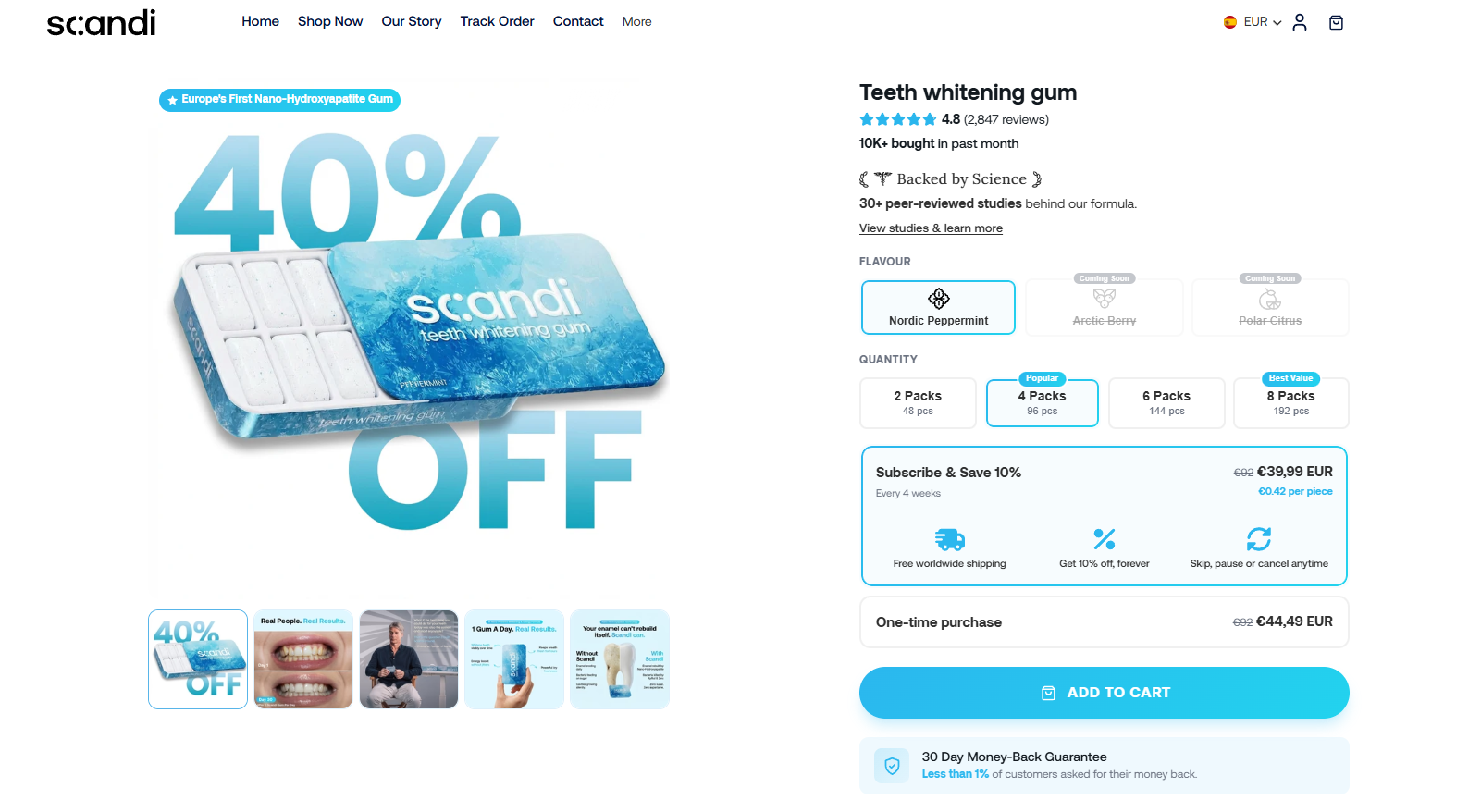
By combining nano-hydroxyapatite, xylitol, and the buccal delivery advantage of functional chewing gum, Scandigum creates a genuinely useful post-meal ritual that supports remineralization while you go about your day. No extra steps. No complicated routines. Just functional science in a format your body already knows how to use. If you’re ready to move beyond basic brushing and apply what the evidence actually supports, explore what Scandigum has built at scandigum.com.
Frequently asked questions
Can tooth enamel really grow back after damage?
No. Once enamel is lost, it cannot regenerate because it contains no living cells capable of rebuilding the structure. Early demineralization can be reversed, but actual enamel loss is permanent.
How can I tell if my enamel is eroding?
Common signs include increased sensitivity to hot, cold, or sweet foods, yellowing or translucency at the tooth edges, and a rougher or shinier surface texture than normal. Early erosion often has no obvious pain.
Is fluoride or nano-hydroxyapatite better for my enamel?
Both are clinically validated for remineralizing enamel. Fluoride remains the gold standard, but n-HA performs comparably in randomized controlled trials and is the proven choice for those avoiding fluoride.
What role does chewing gum play in protecting enamel?
Sugar-free xylitol gum chewed for 20 minutes after meals boosts saliva flow, buffers acids, and reduces caries risk by 23 to 40%, creating ideal conditions for remineralization.
Who should see a dentist about enamel problems?
Anyone experiencing persistent sensitivity, visible enamel loss, or belonging to a high-risk group such as GERD patients, orthodontic patients, or those with genetic enamel conditions should seek professional evaluation without delay.