

TL;DR:
- Different oral delivery systems vary significantly in how effectively they target dental health, metabolism, and cognition, with mechanisms like buccal, sublingual, and nano-formulations offering faster, more bioavailable options than traditional tablets or drinks. They permit direct absorption into the bloodstream, bypassing first-pass metabolism, and enhance the repair and protection of oral tissues by delivering antimicrobials and remineralizing agents precisely where needed. Chewing or using functional gums not only stimulates arousal and focus through mastication but also allows actives like caffeine to work more efficiently, provided their molecular chemistry suits oral absorption.
Not every product you put in your mouth works the same way. Some sit in your stomach for an hour before doing anything. Others barely cross into your bloodstream before the body breaks them down. The reality is that oral delivery systems vary dramatically in how well they target dental health, metabolic function, and cognitive performance. If you have been spending money on energy drinks, supplements, or dental rinses and wondering why the results feel underwhelming, the answer almost certainly lives in the delivery mechanism, not just the ingredient list. This article breaks down exactly how these systems work, what the science proves, and how to make choices that actually move the needle.
Table of Contents
- How oral delivery systems work: More than just swallowing
- Dental health: Targeted protection and repair
- Boosting energy and cognition through oral delivery
- Limitations and the real determinants of success
- Comparing gums, sprays, and beverages: What works fastest?
- What most people miss about oral delivery systems
- Experience innovative oral delivery for yourself
- Frequently asked questions
Key Takeaways
| Point | Details |
|---|---|
| Targeted oral delivery matters | Advanced systems offer direct dental and cognitive health benefits that basic pills or rinses cannot match. |
| Gums and candies act fast | Functional gums and glucose candies can rapidly boost mental clarity and response time. |
| Limits depend on active molecules | The effectiveness of oral delivery hinges on the properties of the ingredient, not just how it’s delivered. |
| Chewing alone has benefits | Even without added actives, chewing enhances alertness and cognitive function. |
| Choose the right system | Understanding the differences between gums, sprays, and drinks ensures you get the results you want. |
How oral delivery systems work: More than just swallowing
Most people think of the mouth as a passageway. Food and pills go in, and the stomach does the work. But the mouth is also a sophisticated absorption site, lined with highly vascularized tissue that can shuttle compounds directly into the bloodstream. That is the core insight behind modern oral delivery systems.
There are three primary categories worth understanding:
Buccal delivery targets the inner lining of the cheeks. The tissue there, called the buccal mucosa, sits close to a dense network of capillaries. Compounds pressed against it, through a gum or an adhesive patch, can absorb directly without touching the gastrointestinal (GI) tract at all.
Sublingual delivery places active ingredients under the tongue, where another cluster of blood vessels sits even closer to the surface. Absorption here can be fast, sometimes measurable in minutes.
Nano-enabled delivery uses engineered particles at the nanoscale to carry active ingredients past biological barriers. These nanocarriers can be designed to target specific tissues, release their contents at a precise pH, or stick to mucous membranes far longer than conventional formulas.
According to published pharmacological research, key mechanisms include mucoadhesive polymers for prolonged tissue contact, nanoparticles for targeted release, and cold-compression processing in gums that preserves heat-sensitive actives for sublingual uptake. The science of functional gum extends well beyond flavor or marketing.
Here is how these formats compare against traditional tablets and drinks:
| Delivery format | Onset speed | Bioavailability | GI bypass | Sustained release |
|---|---|---|---|---|
| Oral tablet/capsule | 30-60 min | Moderate | No | Depends on coating |
| Energy drink/beverage | 20-45 min | Moderate | No | Low |
| Functional chewing gum | 5-15 min | High (buccal) | Yes | Yes, during chew |
| Sublingual spray | 5-10 min | High | Yes | Low |
| Nano-enabled formulation | Variable | Very high | Yes (targeted) | Controlled |
Key advantages of buccal and sublingual systems at a glance:
- No first-pass liver metabolism, meaning more of the active ingredient reaches circulation intact
- Faster onset compared to swallowed tablets or drinks
- Easier to titrate dosing by controlling chew time or spray volume
- Better suited for heat-sensitive or gut-degradable compounds
Dental health: Targeted protection and repair
Oral delivery systems are not just for energy or focus. Some of the most clinically significant applications sit squarely in the domain of dental health, specifically in how the right formulation can shift your mouth from a state of ongoing damage to one of active repair.
The key mechanism here is chemistry. Tooth enamel is in a constant state of dissolution and remineralization. When oral pH drops below 5.5, a threshold set by the solubility of hydroxyapatite (the mineral that makes up enamel), the surface begins to leach calcium and phosphate ions. If nothing corrects that acidic environment, the process keeps moving in one direction: decay.

Modern oral delivery systems can intervene at this level precisely. Research confirms that antimicrobials and remineralizing agents delivered directly to oral tissues through buccal and nanoformulation routes actively inhibit biofilm formation and support enamel repair. Biofilm, which is the sticky bacterial community that eventually becomes plaque, is the primary driver of cavities and gum disease. Delivering antimicrobials through a mucoadhesive vehicle means the compound stays in contact with the tissue far longer than a rinse you spit out in thirty seconds.
The remineralization side is equally important. Products that introduce calcium phosphate compounds in a sustained-release format give your saliva the raw materials it needs to redeposit mineral back into enamel lesions. That is not theoretical. That is chemistry working at the tooth surface in real time.
“The shift from passive protection to active repair is the defining difference between legacy dental products and advanced oral delivery systems. One maintains the status quo. The other changes it.”
Practical integration is straightforward. Using a functional chewing gum after meals, when salivary pH is recovering from a food-acid challenge, can accelerate that recovery and supply remineralizing ions during the window when enamel is most vulnerable. Explore the functional chewing gum benefits to understand which actives matter most for your specific dental goals.
Pro Tip: Time your use of a remineralizing gum to 10-15 minutes after eating or drinking anything acidic. That is the window when oral pH is lowest and the enamel is most receptive to mineral redeposition.
For a practical daily framework, the oral health workflow tips from Scandigum lay out exactly how to sequence products for maximum protective effect throughout your day.
Boosting energy and cognition through oral delivery
Oral delivery is not just about your teeth. It is a shortcut to sharper thinking and more stable energy, and the mechanism is different from anything you get from a drink or a pill.
Here is a step-by-step look at what actually happens when you chew a functional gum containing caffeine:
- Minutes 1-3: Chewing begins. The physical act of mastication immediately increases blood flow to the prefrontal cortex (the brain’s decision-making center) and hippocampus (memory formation). This happens before a single milligram of caffeine enters your bloodstream.
- Minutes 3-8: Caffeine releases from the gum matrix and contacts the buccal mucosa. Absorption into the bloodstream begins, bypassing the stomach entirely.
- Minutes 8-15: Blood caffeine levels rise steadily. Because delivery is gradual, there is no sharp spike. The increase is more of a plateau than a spike, which corresponds to a cleaner, more sustained feeling of alertness.
- Minutes 15-25: Peak buccal absorption occurs. Cognitive performance metrics including reaction time, working memory, and sustained attention are measurably improved.
Research published in Foods confirms that caffeine gum enhances cognitive performance on measures like the Stroop test (which evaluates selective attention) as well as heart rate metrics, while glucose-based candy formulations improve sustained attention following smartphone-induced mental fatigue. These are not marginal effects. They are measurable, clinically relevant changes in how your brain operates.
The chewing mechanism itself carries independent cognitive weight. Mastication stimulates the trigeminal nerve, which connects directly to the reticular activating system, the brain region responsible for baseline arousal and alertness. You are essentially sending a wakefulness signal through your jaw before any active compound has even absorbed.
Pro Tip: If you need to perform at your best for a meeting or a focused work block, start chewing 10 minutes before, not right as the meeting begins. The mastication-induced arousal effect takes a few minutes to peak, and front-loading it gives you a noticeable cognitive edge by the time you actually need it.
For a deeper look at the neuroscience here, the oral delivery for cognition breakdown covers the specific pathways in more detail.
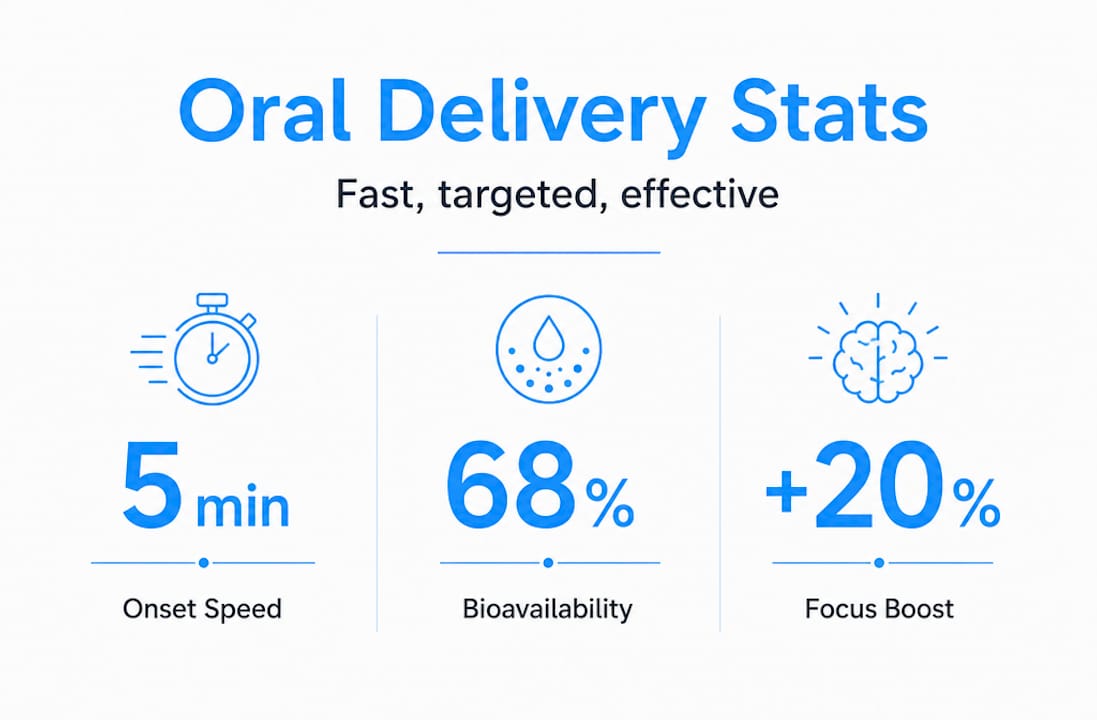
Stat callout: In clinical trials, caffeine gum produced measurable improvements in selective attention and cognitive test performance within 10-30 minutes, significantly faster than equivalent doses in beverage form.
Limitations and the real determinants of success
Even with all these benefits, oral delivery systems are not a universal solution. Let us get honest about where they struggle.
The biggest challenge is molecular size and chemistry. Peptides and protein-based drugs (think insulin or GLP-1 receptor agonists) are particularly difficult to deliver orally because:
- They are large molecules that do not pass easily through mucosal membranes
- Proteolytic enzymes in saliva begin breaking them down almost immediately
- Stomach acid degrades most peptides before they reach absorption sites
Published research on oral peptide delivery shows that low bioavailability peptides require advanced permeation enhancers and precisely engineered nanocarriers, and even then, success varies significantly depending on the molecular weight, charge, and lipophilicity (fat-loving nature) of the specific compound.
This matters for you as a consumer because it means claims about certain “bioactive peptide supplements” delivered in gum or candy form should be scrutinized carefully. The chemistry has to support the claim.
What actually determines whether an oral delivery system works?
- Molecular weight: Smaller molecules cross mucosal membranes far more easily
- Lipophilicity: Fat-soluble compounds absorb better through buccal tissue
- pH stability: The compound must survive the oral environment long enough to absorb
- Formulation quality: The matrix holding the active ingredient controls release rate and contact time
Pro Tip: When evaluating any oral delivery product, look for published research specifically on the delivery mechanism, not just the ingredient in isolation. An ingredient that works in an IV does not automatically work through the mouth.
Comparing gums, sprays, and beverages: What works fastest?
This is the question most people care about practically: when you need results and you need them soon, which format actually delivers?
Here is what the evidence shows:
| Format | Onset speed | Peak bioavailability | Sustained effect | Ease of use |
|---|---|---|---|---|
| Functional chewing gum | 5-15 min | High | Yes (chew duration) | Very high |
| Sublingual spray | 5-10 min | Moderate to high | Low | High |
| Energy beverage | 20-45 min | Moderate | Low | High |
| Capsule or tablet | 30-60 min | Moderate | Low | High |
Research comparing these formats found that gums offer faster onset than beverages in caffeine delivery, but sublingual sprays may not accelerate absorption beyond what standard ingestion achieves. That last point surprises a lot of people. The sublingual spray market leans heavily on rapid-absorption claims, but the pharmacokinetic data does not always back that up for every compound.
Key factors that influence how fast any oral format works:
- Formulation matrix: How the active is embedded determines how quickly it releases
- Concentration gradient: Higher surface concentration means faster passive diffusion across membranes
- Individual metabolism: Saliva pH, mucosal thickness, and blood flow vary between people
- Chew intensity: With gums, more vigorous chewing accelerates active release
For a practical guide to sequencing these formats in your daily routine, the functional confectionery workflow provides a structured framework that maps delivery windows to real-world use cases.
What most people miss about oral delivery systems
Here is an opinion you will not hear from most supplement brands: the delivery vehicle is less important than what goes into it.
The industry conversation defaults to format. Gum vs. spray vs. drink. But the actual research tells a different story. Success depends more on molecular properties than on the delivery system itself. A poorly chosen molecule in a beautifully engineered gum will underperform a well-matched molecule in a simple tablet.
That reframing matters because it shifts the burden of evaluation. Instead of asking “which format is best,” you should be asking “which format best matches the specific active ingredient I want, for the specific outcome I need.” Caffeine is genuinely well-suited to buccal delivery. It is small, lipophilic, and stable in the oral environment. Many other compounds are not.
The second thing most people overlook is the cognitive benefit of chewing itself. No actives required. The mastication-induced arousal loop we described earlier is a real physiological phenomenon that has measurable effects on prefrontal blood flow and trigeminal nerve signaling. Chewing something plain during a mentally demanding task can improve your focus. Actives amplify that effect, but they are not the whole story.
This is why Scandigum’s approach centers on bio-optimization rather than just ingredient delivery. The act of chewing, the chemistry of the mouth, and the formulation all work together. Understanding the relationship between oral delivery and cognition means recognizing that no single variable drives the outcome in isolation.
The uncomfortable truth is that most consumers and many brands are making product decisions based on format trends rather than molecular compatibility. The brands that get this right will be the ones that match mechanism to molecule and personalize from there.
Experience innovative oral delivery for yourself
If the science here resonates with how you want to manage your dental health, energy, and mental performance, there is a direct and practical next step available to you.
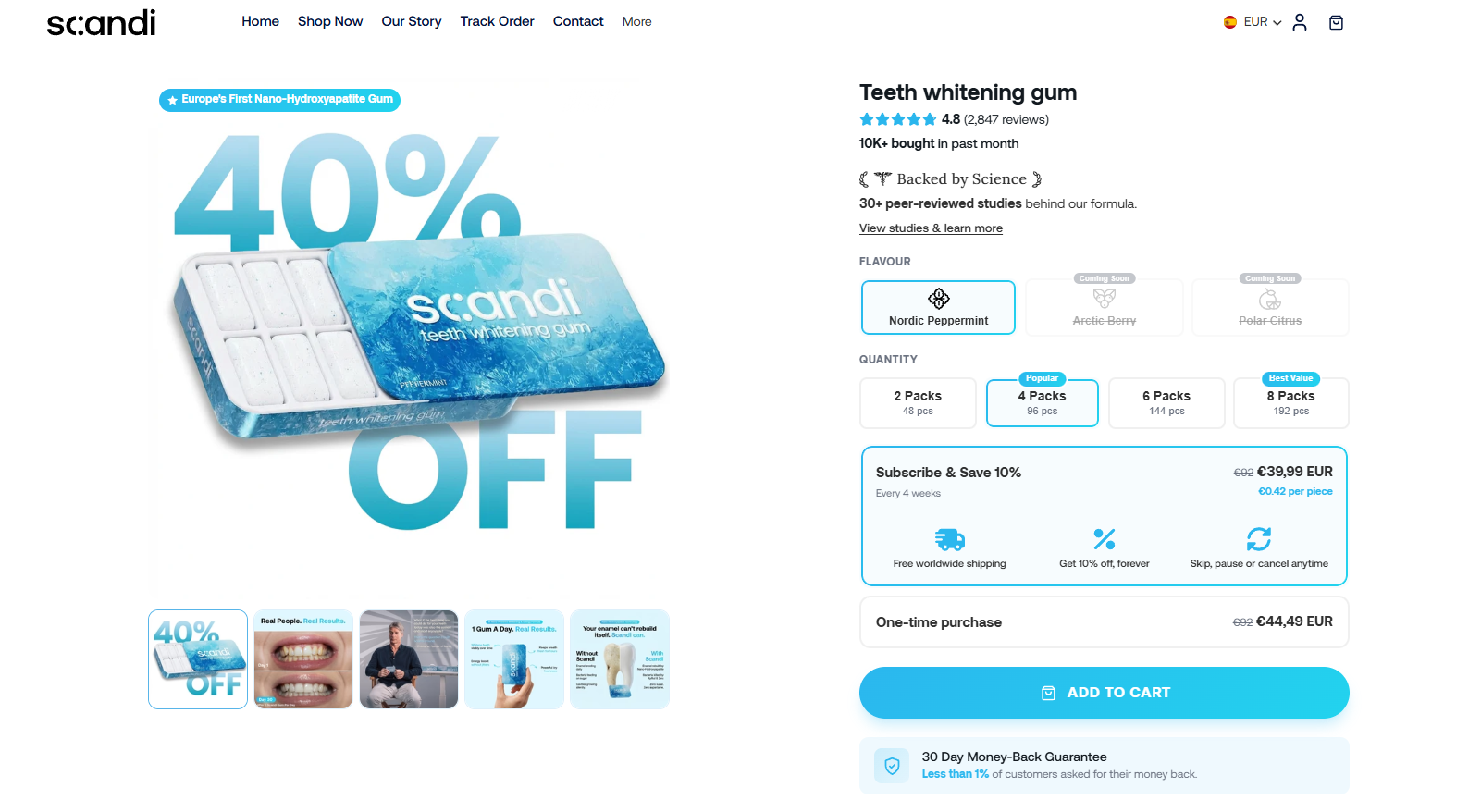
Scandigum builds functional chewing gums from the inside out, starting with the chemistry of the active ingredients and engineering the delivery format around what those molecules need in order to actually work. The result is a product line that reflects the biological logic described throughout this article rather than just following supplement market trends. If you are ready to put the science into practice, explore the Scandi Gum product collection and find the formulation built for your specific goals, whether that is enamel protection, clean energy, or sharper cognitive performance. Every product in the lineup is built around the same core principle: deliver the right compound, to the right tissue, at the right time.
Frequently asked questions
How do oral delivery systems enhance dental health?
They deliver antimicrobials and remineralizing agents directly to oral tissues, helping reduce harmful biofilm and actively supporting enamel repair through sustained contact with the tooth surface.
Can functional gums really improve cognitive function?
Clinical trials show functional gums with caffeine or glucose can quickly enhance alertness and mental focus, with Stroop test performance and sustained attention measurably improving within 10 to 30 minutes of use.
Are there limitations to what oral delivery systems can do?
Yes, effectiveness depends heavily on the molecule being delivered. Peptide and protein drugs often face significant absorption challenges and require advanced formulation strategies to achieve meaningful bioavailability.
Which works fastest: functional gums, sprays, or beverages?
Gums generally provide a faster onset than beverages for compounds like caffeine, while sublingual sprays may not always outperform standard ingestion depending on the specific formulation and compound.
Does simply chewing enhance cognitive function, even without actives?
Yes, research confirms that chewing alone boosts focus and attention through mastication-induced blood flow changes and trigeminal nerve signaling, with functional actives amplifying but not replacing that baseline benefit.