

TL;DR:
- Dental erosion results from acid chemical processes dissolving enamel, independent of bacterial decay.
- Frequent acidic foods or drinks lower oral pH, causing progressive enamel softening and loss.
- Preventive strategies include timing food intake, rinsing after acids, and stimulating saliva to support remineralization.
Most people point to sugar when they think about tooth decay. And while sugar certainly plays a role, the real villain behind enamel loss is often something far more subtle: acid attack, or what dentists call dental erosion. This is a direct chemical process where acids dissolve the minerals in your enamel, and it can happen with foods many of us think of as healthy. Lemon water, sparkling water, smoothies, kombucha, wine with dinner. None of these sound like dental disasters, but they all lower oral pH in ways that put your enamel at serious risk. This article walks you through exactly what acid attack is, how it progressively damages your teeth, what raises your personal risk, and what actually works to stop it.
Table of Contents
- What is acid attack on teeth?
- How acid attack damages your teeth over time
- What increases your risk of acid attacks?
- How to protect your teeth from acid attack
- The overlooked reality of acid attacks and what most people miss
- Innovative solutions for protecting your enamel
- Frequently asked questions
Key Takeaways
| Point | Details |
|---|---|
| Acid erosion threat | Acid attacks from foods and drinks are a leading cause of tooth enamel loss alongside cavities. |
| Warning signs | Early signs of enamel erosion include sensitivity, dullness, and yellowing of the teeth. |
| Risk factors | Frequent acid exposure, not just sugar, and certain health issues greatly increase dental erosion risk. |
| Prevention strategies | Smart habits like managing oral pH and using remineralizing products can help protect your enamel. |
| Long-term care | Ongoing awareness and science-backed oral care are vital for sustaining dental health as you age. |
What is acid attack on teeth?
Acid attack, also called dental erosion, is the chemical process by which acids dissolve the mineral structure of tooth enamel. This is not the same as a cavity. Cavities (dental decay) develop when bacteria in the mouth metabolize sugars and produce acids as a byproduct. Acid attack, on the other hand, can happen without bacteria at all. It occurs the moment an acidic substance contacts your enamel directly.
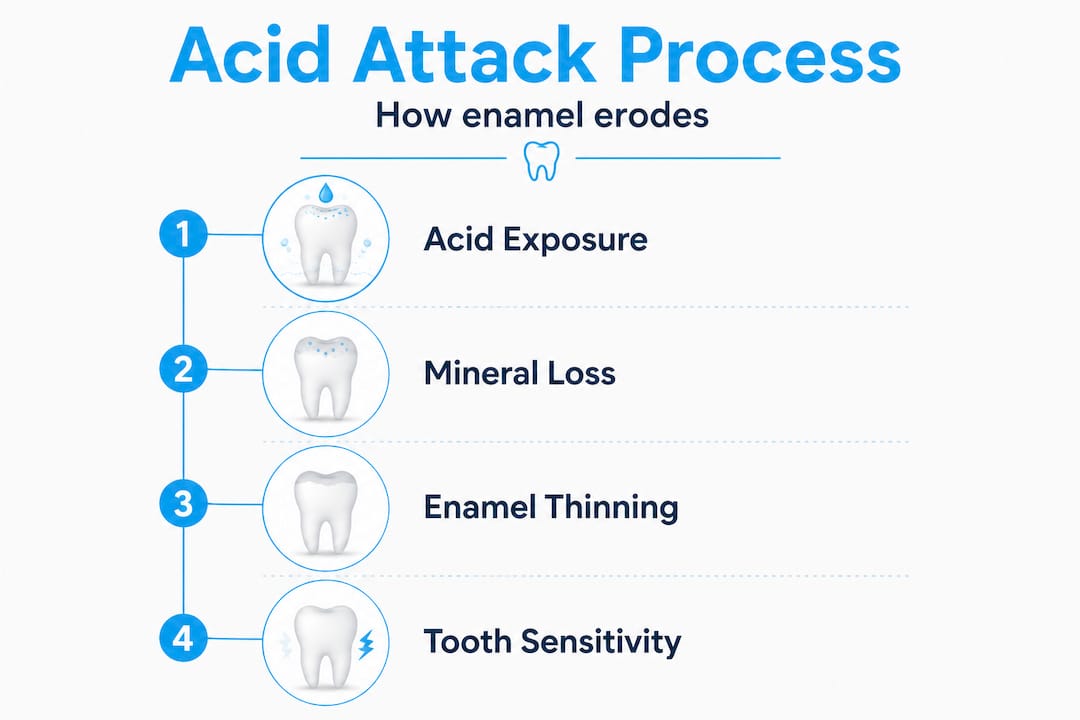
Your enamel is made primarily of hydroxyapatite, a calcium phosphate crystal. It is the hardest material in the human body. But hard does not mean invulnerable. When oral pH and enamel meet at a pH below 5.5, that crystalline structure starts to break down, leaching calcium and phosphate ions into your saliva. If this happens repeatedly, the enamel surface softens, thins, and eventually disappears.
Common food and drink pH values:
| Food or drink | Approximate pH | Erosion risk |
|---|---|---|
| Distilled water | 7.0 | None |
| Black coffee | 5.0 | Moderate |
| Wine (red or white) | 3.3 to 3.6 | High |
| Orange juice | 3.3 to 4.2 | High |
| Soda (cola) | 2.4 to 3.4 | Very high |
| Sports drinks | 2.9 to 3.7 | Very high |
| Lemon juice | 2.0 to 2.6 | Extreme |
| Kombucha | 2.5 to 3.5 | High |
As acidic foods and drinks lower oral pH, enamel starts to dissolve at a chemical level, and that dissolution is cumulative. Each exposure adds up.
Top dietary acid sources affecting adults:
- Citrus fruits and juices (lemon, lime, grapefruit, orange)
- Carbonated beverages, including sparkling water with citric acid
- Sports and energy drinks
- Wine and cider
- Vinegar-based dressings and condiments
- Fermented foods and drinks like kombucha and pickles
- Fruit smoothies and blended drinks with high fruit content
The critical distinction between erosion and decay matters for prevention. You cannot use the same strategy for both. Fluoride toothpaste helps protect against bacterial decay, but remineralization is the key response to erosion. Knowing which problem you are fighting is the first step to fighting it correctly.
How acid attack damages your teeth over time
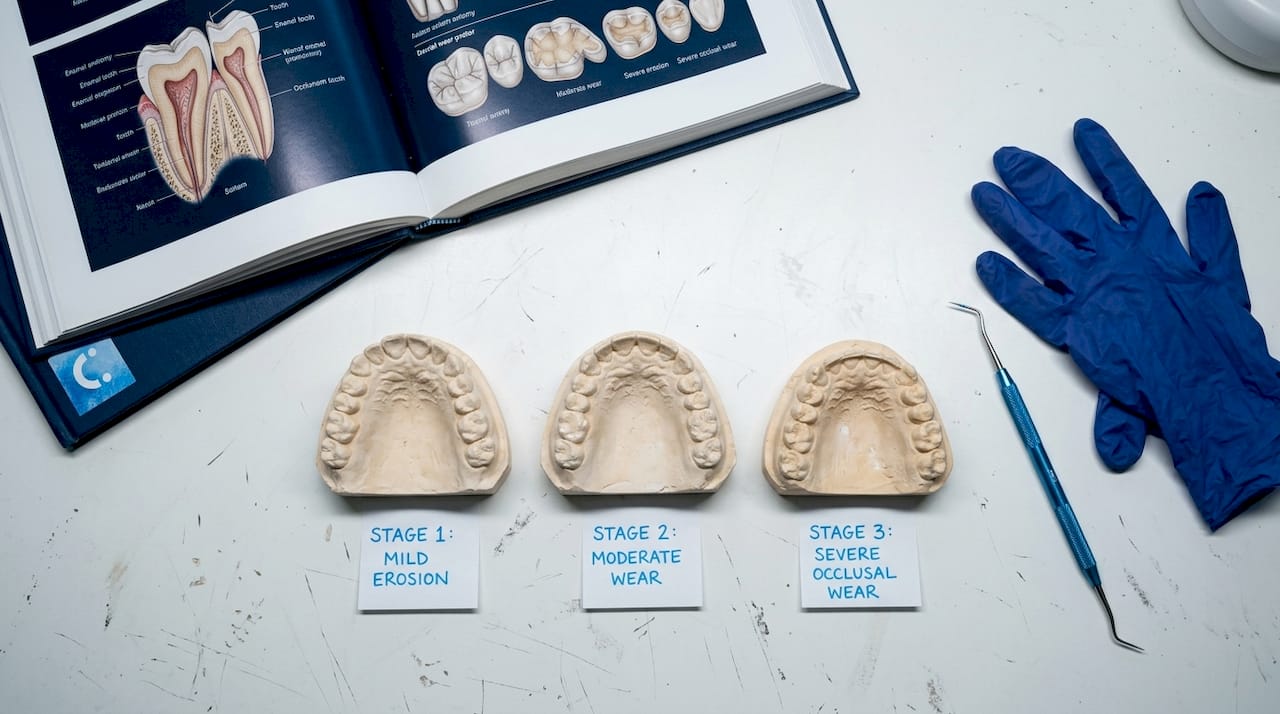
Understanding the mechanism is one thing. Seeing how it plays out in your mouth day after day is another. Dental erosion progression is gradual, and that is exactly what makes it dangerous. By the time most people notice it, significant enamel loss has already occurred.
Step-by-step erosion process:
- Acid contact: An acidic food or drink lowers oral pH below 5.5. The hydroxyapatite in enamel begins dissolving, releasing calcium and phosphate ions.
- Softening phase: The enamel surface becomes temporarily softened and more porous. This lasts roughly 30 to 60 minutes after acid exposure.
- Partial recovery: Saliva works to neutralize the acid and redeposit some minerals back into enamel. Recovery is possible here if acid exposure stops.
- Repeated exposure: With frequent acid intake throughout the day, the enamel does not have enough time to remineralize between exposures. Net mineral loss begins to accumulate.
- Surface wear: The enamel layer physically thins. Teeth may start to look flatter, shinier, or slightly translucent at the edges.
- Dentin exposure: As enamel thins further, the underlying layer called dentin becomes exposed. Dentin is softer and yellower, and much more sensitive to temperature and pressure.
- Advanced erosion: At this stage, teeth may develop visible cupping (small depressions on the chewing surface), significant discoloration, and severe sensitivity. Restorative dental treatment is typically required.
Common warning signs to watch for:
- Increased sensitivity to hot, cold, or sweet foods
- Teeth that appear duller, shorter, or more translucent at the edges
- A yellowish tint developing even with regular brushing
- Slight “scooping” or cupping on the biting surfaces of back teeth
- Discomfort when eating citrus or drinking cold water
“Dental erosion can progress from sensitivity and surface wear to significant enamel loss if not managed, making early intervention the most effective form of protection.”
Pro Tip: Run your tongue along the inner edges of your front teeth. Healthy enamel feels slightly rounded. If those edges feel sharp, thin, or you can almost see light through them, that is a warning sign worth discussing with your dentist at your next visit.
The speed of erosion varies by individual, but the pattern is consistent: frequent, low-dose acid exposure across years quietly strips enamel layer by layer. The damage is silent until it is not.
What increases your risk of acid attacks?
Not everyone who drinks orange juice develops severe erosion. Risk is cumulative and context-dependent. Several factors either amplify or reduce the impact of any single acid exposure. Understanding your personal risk profile gives you real leverage over this process.
Risk factor comparison:
| Risk factor | Lower risk scenario | Higher risk scenario |
|---|---|---|
| Dietary pattern | Acidic foods at mealtimes | Sipping acidic drinks all day |
| Saliva production | Normal flow | Dry mouth (xerostomia) |
| Brushing habits | Waiting 30+ min after acid | Brushing immediately after eating |
| Health conditions | No reflux | GERD or frequent vomiting |
| Beverage habits | Drinking through a straw | Swishing drinks around teeth |
| Frequency of exposure | One coffee in the morning | Multiple acidic drinks throughout day |
Frequent snacking on acidic foods and conditions like acid reflux (GERD) significantly increase erosion risk by extending the time teeth spend bathed in low-pH environments. Dry mouth is particularly dangerous because saliva is your natural buffer and remineralizing agent. Without adequate saliva flow, enamel has no recovery mechanism between acid exposures.
What trips up many health-conscious adults is the “healthy food paradox.” A morning smoothie packed with berries, citrus, and kombucha, followed by sparkling water through the day, followed by wine with dinner, represents continuous acid exposure for twelve-plus hours. The individual items seem virtuous. The cumulative mouth chemistry and acid erosion effect is significant.
Habits that meaningfully reduce acid exposure:
- Drink acidic beverages quickly rather than sipping slowly over long periods
- Use a straw positioned toward the back of the mouth to minimize enamel contact
- Rinse your mouth with plain water immediately after consuming acidic foods or drinks
- Finish meals with alkaline foods like cheese, milk, or plain nuts to help neutralize pH
- Chew sugar-free, remineralizing gum after meals to stimulate saliva production
- Avoid brushing for at least 30 minutes after acid exposure, as enamel is temporarily softened
- Stay well hydrated throughout the day to support consistent saliva flow
The frequency principle is worth emphasizing. Someone who drinks one large glass of orange juice with breakfast causes less erosion damage than someone who sips a small bottle of sports drink slowly across three hours. Enamel needs recovery time. Deny it that time, and the acid wins.
How to protect your teeth from acid attack
Prevention is not complicated, but it requires consistency. The good news is that the oral environment can shift in your favor relatively quickly with the right habits. These strategies work at the biological level to maintain enamel integrity.
Science-backed prevention steps:
- Time your acid exposure. Consume acidic foods and drinks at mealtimes rather than as standalone snacks. Mealtimes naturally boost saliva production, providing a buffer.
- Rinse immediately. After any acidic food or drink, rinse your mouth with plain water within 60 seconds. This dilutes acid and begins restoring pH without mechanical abrasion.
- Wait before brushing. Allow at least 30 minutes before brushing after acid exposure. Brushing softened enamel accelerates surface wear.
- Use remineralizing products. Fluoride toothpaste supports cavity prevention, but products specifically formulated for remineralization, including hydroxyapatite-based options, help restore the mineral content that acid strips away.
- Stimulate saliva actively. Chewing sugar-free gum, particularly after meals, significantly increases saliva flow. More saliva means faster pH recovery and more mineral redeposition into enamel.
- Monitor sensitive spots. Track any areas that feel increasingly sensitive. Sensitivity that worsens over weeks, not days, is a sign that erosion may be progressing in a specific area.
- See your dentist proactively. Ask your dentist to specifically assess enamel thickness, not just for cavities. Many adults with erosion have no cavities at all, so a cavity-focused exam misses the real problem.
Regular use of remineralizing products and intentional control of acid exposure timing are the two levers that consistently reduce erosion risk in adults with active dietary acid exposure.
Pro Tip: Your oral pH typically returns to a safe level (above 5.5) within 20 to 40 minutes after acid exposure, assuming normal saliva flow. If you chew a remineralizing gum immediately after a meal, you accelerate that recovery window significantly, which matters most if you eat multiple meals or snacks that contain acidic components.
The goal is not to eliminate all acidic foods. That is neither realistic nor necessary. The goal is to manage the frequency, timing, and recovery cycle so your enamel spends more time remineralizing than demineralizing. That balance is achievable with intentional daily habits.
The overlooked reality of acid attacks and what most people miss
Here is the part most oral health conversations skip entirely: the real risk of acid attack is not in what most people would call “bad” eating. It is hiding inside routines that feel healthy, responsible, and even optimal.
We see this pattern consistently. Someone cuts out soda, switches to sparkling water with lemon, adds daily kombucha for gut health, starts making morning smoothies with berries and citrus, and pairs all of this with a glass of wine in the evening. On paper, that looks like an upgrade. For enamel, it is a six-exposure acid day.
The oral pH misconceptions around “healthy” foods are genuinely damaging. Citric acid, which appears in almost every fruit-based drink and many flavored sparkling waters, is highly erosive. Acetic acid in apple cider vinegar (a supplement trend with dedicated followers) sits around pH 2.5 to 3.0. These are not edge cases. They are mainstream wellness habits that directly expose enamel to aggressive acid.
The other thing most advice misses is the role of personal biology. Saliva composition varies significantly between individuals. Some people naturally produce saliva with a higher buffering capacity, meaning they recover from acid exposure faster. Others, particularly those on medications that reduce saliva (antihistamines, antidepressants, diuretics) or those with autoimmune conditions affecting salivary glands, are working with a compromised defense system from the start.
Effective prevention is not a single product swap or a single habit change. It is a daily, whole-mouth awareness that connects what you eat, when you eat it, how you drink it, and how you support your saliva in between. Your dentist can measure enamel wear over time and help you see your personal erosion trajectory. That data is far more actionable than generic advice.
Innovative solutions for protecting your enamel
Proactive enamel protection requires more than brushing twice a day. It needs a strategy that works between brushing, at the moments when acid exposure actually happens.
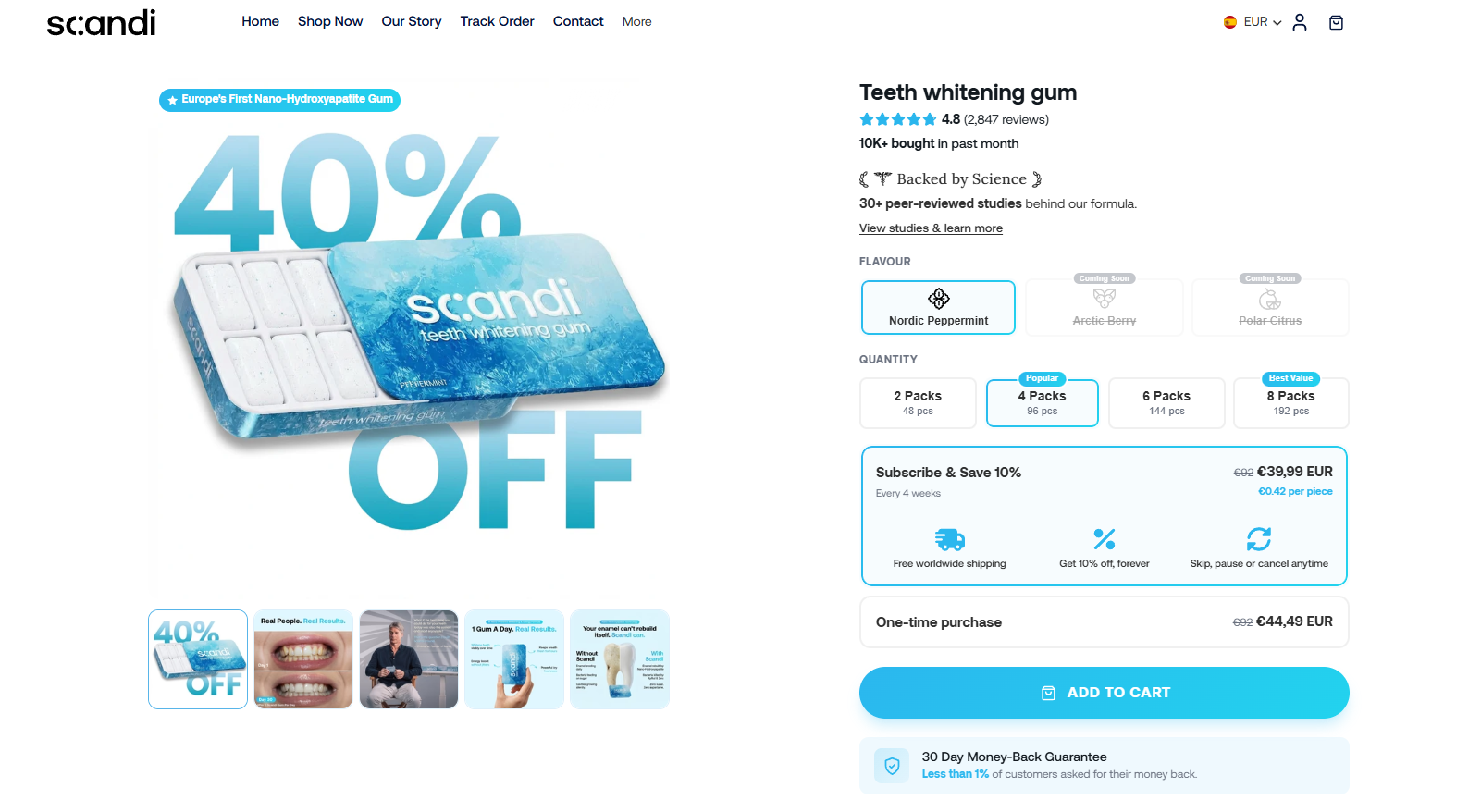
Scandi Gum for enamel health was built around exactly this gap. Scandigum’s functional formula leverages the biology of chewing to stimulate salivary flow, introduce mineralizing agents through the buccal mucosa, and actively shift oral pH back toward a safe range after acid exposure. Chewing a piece after meals or after any acidic drink works with your body’s natural recovery process instead of waiting for it. For health-conscious adults who know their daily diet includes acidic components and want a tool that supports enamel between dental visits, Scandigum delivers a genuinely different approach to daily oral care.
Frequently asked questions
What foods and drinks cause the most acid attacks on teeth?
Citrus fruits, soda, sports drinks, wine, and vinegar-based foods are the top dietary sources of acids that trigger enamel erosion. As acidic foods and drinks lower oral pH, enamel begins to dissolve at the surface level.
How quickly can acid attack damage your teeth?
Repeated acid exposure can cause noticeable enamel damage within a few months, especially with daily acidic food or drink consumption. Significant enamel loss can develop gradually from sensitivity and surface wear if the exposure pattern is not changed.
Can tooth enamel lost from acid attack be restored?
Lost enamel cannot regenerate, but remineralizing products can strengthen weakened areas and stop further breakdown. Regular use of remineralizing products helps redeposit calcium and phosphate ions into softened enamel before full loss occurs.
Is brushing immediately after eating acidic foods safe?
It is best to wait at least 30 minutes after consuming acids before brushing, because enamel is temporarily softened and brushing can spread the damage. Frequent acidic food exposure already stresses enamel, and immediate brushing compounds that mechanical wear.