

TL;DR:
- Most energy gums contain a combination of active stimulants, dental-supportive sweeteners, and cognitive modifiers, which collectively influence alertness, oral health, and focus quality. The effectiveness depends on ingredient type, dosage, chewing behavior, and third-party certification, not just caffeine content. Choosing well-formulated energy gum aligned with your health needs ensures safe, sustained performance without detrimental side effects.
Most people reaching for an energy gum assume it works like a mint with caffeine. That assumption misses two-thirds of what’s actually happening. The types of energy gum ingredients span three distinct functional layers: active stimulants that drive alertness, sugar-free sweeteners that protect your enamel, and cognitive modifiers that shape the quality of your focus, not just its presence. Understanding these layers matters because the wrong combination can leave you jittery, spike your blood sugar, or quietly erode the dental health you’re trying to protect. This guide breaks down each category so you can make a genuinely informed choice.
Table of Contents
- Criteria for evaluating types of energy gum ingredients
- Active stimulant ingredients: caffeine and dosing
- Sugar-free sweeteners and their role in dental health
- Cognitive modifiers and oral-health functional additives
- Comparing energy gum ingredient types: stimulant, sweetener, and functional layers
- Choosing the right energy gum ingredients for your lifestyle
- Why most energy gum ingredients are more complex than you think
- Explore Scandi Gum’s functional energy gum range
- Frequently asked questions
Key Takeaways
| Point | Details |
|---|---|
| Multi-layered ingredients | Energy gums combine stimulants, sweeteners, and cognitive additives to create a balanced energy and health effect. |
| Caffeine dosage matters | Typical caffeine per gum ranges from 40 to 100 mg, influencing the energy intensity and duration. |
| Dental-friendly sweeteners | Xylitol and sorbitol are preferred sugar-free sweeteners that support oral health while sweetening gum. |
| Functional extracts benefit oral health | Plant extracts like spent coffee grounds can inhibit harmful oral bacteria and promote dental hygiene. |
| Chewing controls absorption | How long and actively you chew affects caffeine release and cognitive effects of energy gum. |
Criteria for evaluating types of energy gum ingredients
Before picking any energy gum off the shelf, you need a clear framework. Commercial energy gum formulas usually combine active stimulant delivery, sugar-free sweeteners, and cognitive modifiers to shape user experience effectively. That combination isn’t accidental. Each component is chosen for a specific physiological purpose. Here’s what to actually evaluate:
- Stimulant type and dose. Caffeine is the primary driver in nearly every formula. The dose per piece varies widely, and that range matters for how fast and how hard the energy hits.
- Sweetener choice. Sugar-free doesn’t automatically mean dental-safe. The specific sweetener, whether xylitol, sorbitol, or stevia, determines the actual oral health impact.
- Cognitive modifiers. Ingredients like L-theanine or plant extracts go beyond raw energy. They shape whether your focus feels smooth or frantic.
- Third-party certification. For athletes or anyone on a tested program, NSF or similar certification confirms what’s actually in the gum and what isn’t.
- Chewing behavior compatibility. The buccal mucosa (the inner lining of your cheeks) absorbs active compounds during chewing. Gums formulated for longer chew times release ingredients more gradually, which changes the entire user experience.
Understanding the benefits of energy gums starts with recognizing that ingredient quality determines whether a product supports your biology or simply stimulates it. With these evaluation criteria in mind, let’s explore the main ingredient types found in energy gums.
Active stimulant ingredients: caffeine and dosing
Caffeine is the anchor of every energy gum formula on the market, and the dosing range is wider than most consumers expect. Energy gum products commonly contain caffeine ranging from 40 mg to 100 mg per piece, with some formulas designed for high caffeine delivery like Military Energy Gum’s 100 mg per piece. For context, a standard cup of coffee sits around 95 mg, meaning a single high-dose gum piece effectively replicates a full coffee, without the liquid, the wait, or the digestive lag.
Military Energy Gum contains 100 mg caffeine per piece and is recommended to be consumed carefully, considering daily limits of up to 400 mg per day. That ceiling matters. Chewing two pieces back to back in a high-stress situation can push you toward the kind of jitters that actively degrade performance rather than support it.
Here’s what determines how caffeine actually works in gum form:
- Buccal absorption speed. Unlike a coffee that clears your stomach before entering the bloodstream, caffeine in gum absorbs through oral tissue within minutes of chewing. This is both faster and more consistent than GI delivery.
- Chew duration. The longer you chew, the more caffeine is released. Most formulas are optimized for a 10 to 20-minute window.
- Tolerance baseline. A 40 mg piece is appropriate for low-tolerance users or those looking for a subtle lift. 100 mg is territory for experienced caffeine consumers with a clear reason for the higher dose.
- Synergy with other ingredients. Caffeine alone produces a narrower, more volatile effect. Combined with L-theanine, the curve flattens into something more useful.
Understanding chewing and caffeine absorption is critical because it changes how you think about timing. You’re not waiting for digestion. You’re using your mouth as the delivery route. You can also check the caffeine content in foods and gums to benchmark any formula you’re considering against your total daily intake.
Pro Tip: If you’re new to energy gums, start with a 40 to 50 mg piece and chew for a full 15 minutes before assessing whether you need a second piece. The buccal absorption route is faster than you expect.
Beyond caffeine, the sweeteners in energy gum largely influence its dental health profile and taste.

Sugar-free sweeteners and their role in dental health
This is where energy gum separates itself from energy drinks in a meaningful way. Sugar feeds the oral bacteria (primarily Streptococcus mutans) that produce the acids dissolving your enamel. Sugar-free gums sidestep that mechanism entirely, but not all sugar-free sweeteners are created equal.
Xylitol and sorbitol are the most common sugar-free sweeteners in energy gums, chosen for their dental health benefits and low impact on blood sugar. What makes xylitol particularly valuable is its active antibacterial action. Harmful oral bacteria absorb xylitol but cannot metabolize it, which effectively starves them. Consistent xylitol exposure reduces bacterial populations over time, not just in the moment you’re chewing. Military Energy Gum formulations also use sorbitol or xylitol as sugar-free sweeteners to replace added sugars and support dental health.
Key points on sweeteners and oral health:
- Xylitol (typically 1 to 3 grams per piece) actively inhibits S. mutans colonization and supports enamel remineralization by stimulating saliva flow.
- Sorbitol is gentler on bacterial populations but still provides a sugar-free, low-glycemic base that won’t drive acid production.
- Stevia appears in some natural energy gum ingredients as a plant-derived, zero-calorie option with no known dental downside.
- Acesulfame potassium and sucralose are sometimes added for sweetness intensity but contribute no dental benefit.
The dental benefit of xylitol-based gum compounds when chewing stimulates saliva flow. Saliva is your mouth’s natural buffer, raising oral pH above the critical 5.5 threshold where enamel begins to dissolve. Every piece of well-formulated sugar-free energy gum is, in that sense, doing active repair work while it delivers your caffeine.
Pro Tip: Look for xylitol listed as the first or second ingredient. Position in the ingredient list reflects quantity, and higher xylitol content means more meaningful antibacterial and remineralizing effects.
Besides sweeteners and caffeine, many energy gums include additional functional ingredients to boost cognitive benefits.
Cognitive modifiers and oral-health functional additives
This is the fastest-evolving category in energy gum components, and it’s where the biggest differences between basic and advanced formulas show up. Some energy gums incorporate cognitive modifiers like L-theanine to reduce caffeine jitters and plant extracts with antimicrobial properties, such as spent coffee grounds extract, that inhibit oral bacteria.
L-theanine is an amino acid found naturally in green tea. When paired with caffeine, it blunts the adrenergic spike (the jittery, overstimulated feeling) without reducing the alertness benefit. The result is what researchers call “calm alertness,” a state of focus without the restlessness that makes high-caffeine products difficult to use during tasks requiring concentration.
Beyond L-theanine, the category of functional gum additives now includes plant-based extracts with measurable oral health properties:
- Spent coffee grounds extract at 25% concentration showed significant inhibition zones against oral pathogens in controlled studies, meaning it actively reduces harmful bacterial populations in the mouth.
- Green tea extract contributes both antioxidant activity and mild antimicrobial properties through its catechin content.
- Adaptogens like ashwagandha are beginning to appear in types of energy gum for adults, targeting stress response alongside alertness.
- Natural gum bases (chicle, for example) are gaining traction as biodegradable alternatives to synthetic polyvinyl acetate, adding an environmental dimension to formulation choices.
“The 25% spent coffee grounds gum formulation demonstrated clear antimicrobial activity against Streptococcus mutans and other oral pathogens, suggesting that functional plant extracts in chewing gum can deliver meaningful dental health benefits alongside energy effects.”
| Functional additive | Primary benefit | Secondary benefit |
|---|---|---|
| L-theanine | Reduces caffeine jitters | Promotes calm focus |
| Spent coffee grounds | Antimicrobial (oral) | Antioxidant activity |
| Green tea extract | Antioxidant | Mild antibacterial |
| Xylitol | Dental remineralization | Inhibits S. mutans |
| Adaptogens (ashwagandha) | Stress modulation | Cognitive resilience |
Combining these ingredient types creates varied user experiences. The comparison below highlights their differences and key benefits.
Comparing energy gum ingredient types: stimulant, sweetener, and functional layers
Understanding how these three categories interact is what separates informed choices from marketing-driven ones. Third-party certifications like NSF Certified for Sport add assurance about ingredient safety and quality in high-caffeine gums. For athletes and tested professionals, that certification is not optional. It’s the difference between confidence and risk.
| Category | Key ingredients | Energy impact | Dental impact | Cognitive effect |
|---|---|---|---|---|
| Active stimulant | Caffeine (40 to 100 mg) | High, fast-acting | Neutral | Alertness, focus |
| Sugar-free sweetener | Xylitol, sorbitol, stevia | None | Positive (antibacterial) | None |
| Cognitive modifier | L-theanine, adaptogens | Modulates caffeine | Neutral to positive | Calm focus, reduced cortisol |
| Functional plant extract | Coffee grounds, green tea | Mild | Positive (antimicrobial) | Antioxidant support |
What this table makes visible is that a well-constructed energy gum isn’t doing one thing. It’s doing four, simultaneously, through a single 15-minute chew.
Key selection signals to watch for:
- NSF or Informed Sport certification confirms the product is free of banned substances and contamination.
- Caffeine dose transparency means the brand lists exact milligrams, not just “contains caffeine.”
- Xylitol as a primary sweetener (not buried fifth on the list) signals a genuine dental health commitment.
- Presence of L-theanine alongside caffeine indicates the formula is designed for quality of focus, not just intensity.
For a deeper look at where oral health science intersects with chewing technology, the advances being made in gum delivery systems are worth understanding before your next purchase.
Pro Tip: If a product lists “natural flavors” and “caffeine” without specifying cognitive modifiers or sweetener type, it’s a basic formula. The absence of L-theanine and xylitol on the label tells you a lot about what the brand actually prioritized.
Understanding these differences sets up how to match energy gum ingredients to your personal health and energy needs.
Choosing the right energy gum ingredients for your lifestyle
The framework you use to choose matters as much as the options available. Chewing duration and caffeine dose both influence how effective the gum is for sustained energy and alertness, so matching the formula to your actual use case is essential.
Here’s how to approach the decision by priority:
- For fast, strong energy: Choose a gum with 80 to 100 mg caffeine per piece. Chew for the full recommended duration (usually 15 to 20 minutes) to maximize buccal absorption. This is the category for pre-workout use, long drives, or early-morning high-performance windows.
- For dental-first performance: Prioritize formulas with xylitol as the lead sweetener, ideally above 1 gram per piece, combined with plant extracts that add antimicrobial activity. Energy is secondary here. Enamel protection is the goal.
- For smooth cognitive performance: Look for formulas pairing 40 to 60 mg caffeine with L-theanine. This stack is well-studied and consistently produces focused alertness without the anxiety spiral that high-caffeine products can create.
- For active adults and athletes: Confirm third-party certification before using any gum in a tested sport context. An uncertified 100 mg caffeine gum is a risk, regardless of how clean its other ingredients look.
- For sustained daily use: Rotate between lighter-dose gums (40 to 50 mg) and higher-dose options based on demand rather than habit. Tolerance builds fast with caffeine. Keeping your baseline low preserves the effect when you actually need it.
You can explore the full scope of choosing energy gum for your specific context, whether that’s cognitive work, physical training, or dental maintenance. Having these criteria clear before you buy saves you from the common trap of choosing by flavor and wondering why the results don’t match the label.
Why most energy gum ingredients are more complex than you think
Here’s the perspective most energy gum marketing actively avoids giving you: the caffeine in your gum is almost never the most important decision in the formula. It’s the least important.
Many consumers overlook how energy gums combine stimulants, sugar substitutes, and cognitive modifiers to balance energy onset, dental impact, and user comfort. The brands that do this well aren’t leading with caffeine dose in their messaging because they understand that experienced users don’t want raw stimulation. They want a specific physiological state. That state is built by the interaction between three layers, not by one ingredient at a high dose.
The chewing behavior point is also consistently underestimated. How long you chew and how you chew controls the release kinetics of everything in that piece of gum. A gum with excellent ingredients chewed for two minutes delivers a fraction of its potential. The mouth is the delivery system. Using it correctly is part of the product’s function.
Third-party certification, finally, is not a marketing badge for the risk-averse. It’s the only credible signal that what’s on the label is actually in the gum, at the stated dose, without contaminants that weren’t listed. For anyone competing, for anyone managing a health condition, or frankly for anyone who wants to know what they’re actually consuming, it’s non-negotiable.
The full picture of energy gum formulation complexity rewards the consumer who looks beyond the front of the package. The brands building three-layer formulas with certified ingredients and research-backed additives are doing something categorically different from gums that just add caffeine to a base and call it functional.
Explore Scandi Gum’s functional energy gum range
If the criteria above match how you think about your energy and dental health, Scandigum was built for exactly that standard. The formulas are designed around buccal absorption, not GI delivery, which means the ingredients reach your bloodstream faster and more consistently than what you get from drinks or capsules.
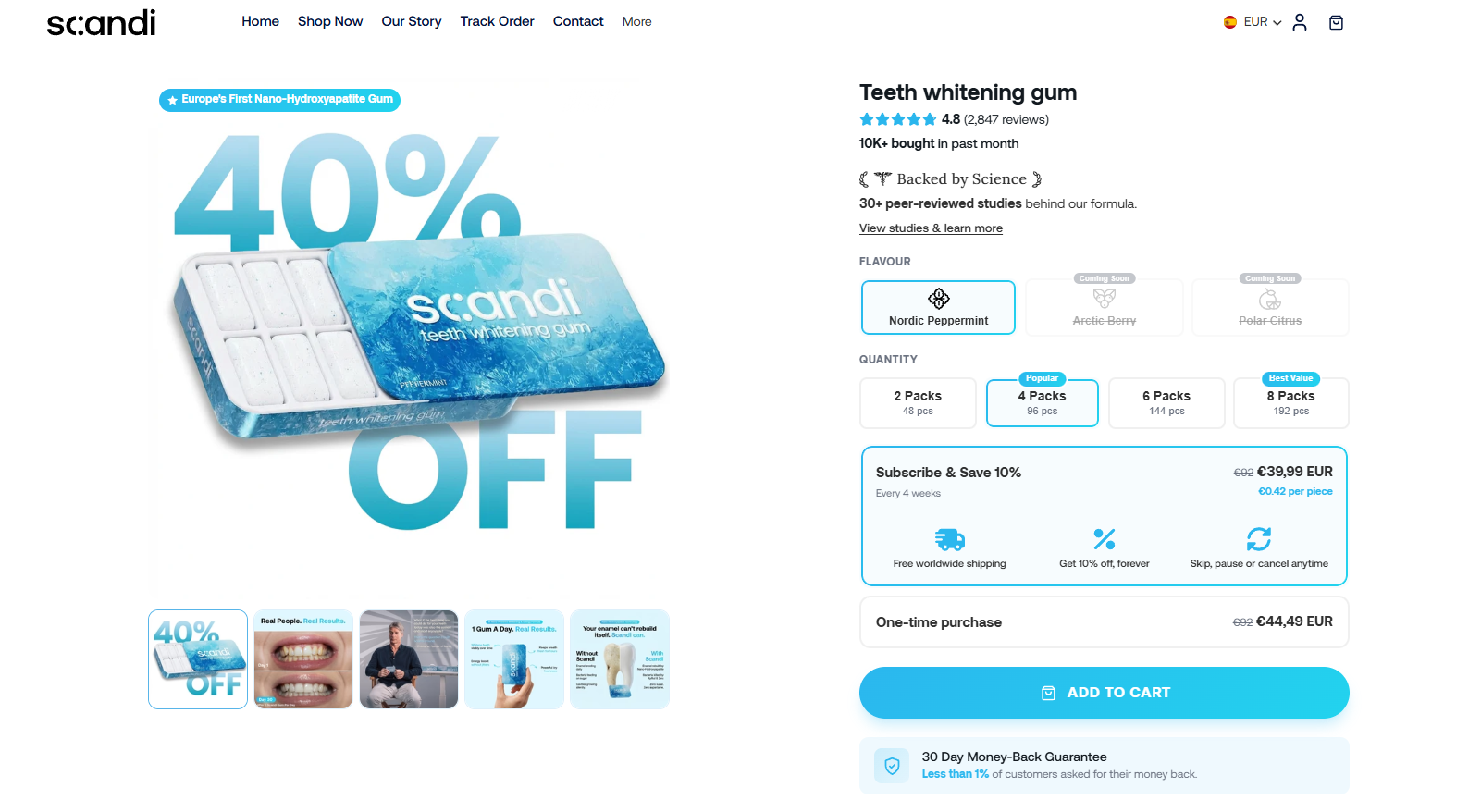
Every piece of Scandi Gum reflects a three-layer approach: stimulant levels calibrated for sustained alertness (not a spike), sweetener choices that actively support enamel remineralization, and cognitive additives that smooth the energy curve rather than amplify its rough edges. If you want the full breakdown of how each formula supports your biology, the energy gum health benefits page gives you the science behind every ingredient decision. This is functional gum built for people who take their performance and their oral health seriously.
Frequently asked questions
What is the typical caffeine amount in energy gum?
Energy gums generally contain 40 to 100 mg of caffeine per piece. Products like Military Energy Gum deliver 100 mg per piece, designed for users who need a strong, fast-acting effect.
Are sugar-free sweeteners in energy gum good for dental health?
Yes. Xylitol and sorbitol are the most common sugar-free sweeteners in energy gum, and both actively reduce harmful oral bacteria while keeping blood sugar stable, making them genuinely superior to regular sugar in a gum formula.
Can energy gum ingredients improve cognitive performance?
Some formulas include L-theanine and plant-based extracts alongside caffeine to sharpen focus and reduce jitters. L-theanine and other nootropics promote cognitive benefits that go beyond raw stimulation, supporting a calmer, more sustained alertness.
How does chewing affect caffeine absorption from energy gum?
Chewing behavior controls how quickly and completely caffeine is released through the oral mucosa into the bloodstream. Longer, consistent chewing over 15 to 20 minutes produces more complete absorption than a short chew.
Why is third-party certification important for energy gum ingredients?
NSF Certified for Sport evaluates energy gum for banned substances and contaminants, giving athletes and health-conscious consumers verified confidence that the label accurately reflects what’s inside.